Mold Exposure Long Term Effects: Beyond Black Mold
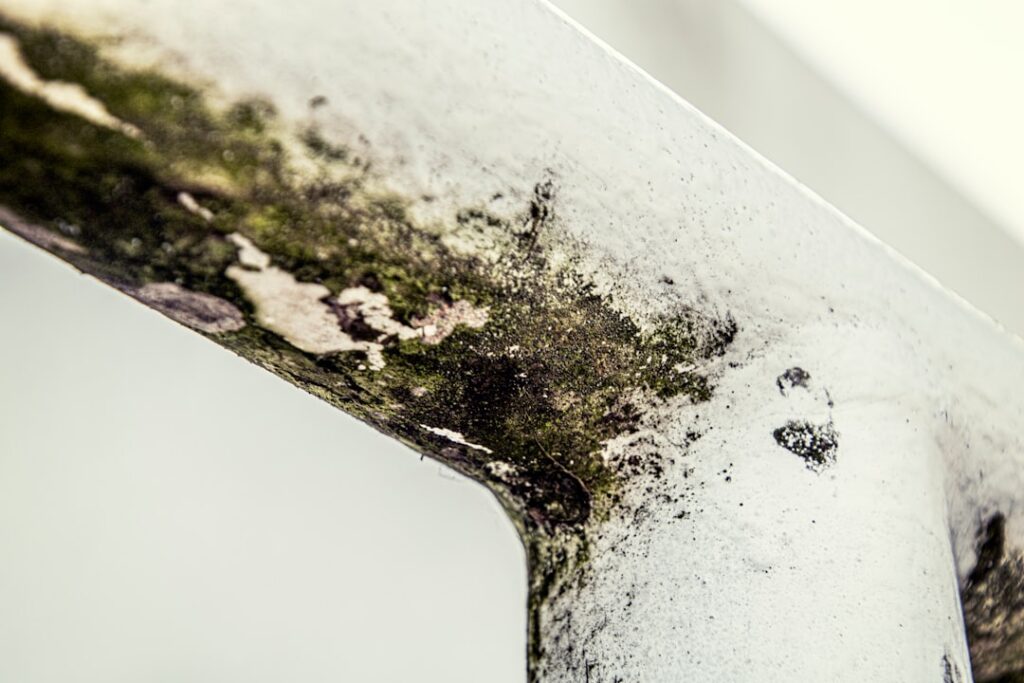
Mold exposure long term effects extend well beyond Stachybotrys chartarum, the species popularly labeled “black mold.” Indoor environments host dozens of fungal genera, and the long-term occupant impact in a damp home is the cumulative effect of all of them, not the singular contribution of one. This guide summarizes EPA, CDC, and NIEHS guidance from the broader indoor-mold standpoint for homeowners. It is not medical advice. If anyone in the household has persistent respiratory or systemic symptoms they believe relate to mold exposure, consult a physician — diagnosis and treatment of mold-related illness require professional medical evaluation. The aim here is to widen the lens from “is there black mold” to “what is the actual indoor fungal burden and what does it do over time.”
Part of our Black Mold & Your Health guide — start there for the full picture →
Is this mold, asbestos, or water damage? Get a free instant screen
Upload a clear photo of the suspect area. You'll get an instant AI screening opinion and what to do next. This is screening guidance, not a professional determination.
Screening guidance only. AI can be wrong. Confirm asbestos, mold type, or lead with lab testing or a licensed professional before acting.
The actual indoor fungal community in U.S. homes
Routine spore-trap air sampling in U.S. residences typically identifies Aspergillus and Penicillium as the dominant genera by count, often accompanied by Cladosporium, Alternaria, and Basidiospores from outdoor air infiltration. Stachybotrys appears in damp, water-damaged homes but is not usually the most abundant species even there. CDC and EPA materials describe the indoor mold environment as a community rather than a single-species presence, and long-term occupant impact reflects the community.
This matters for the long-term-effects question because health outcomes documented in the literature are tied to broader damp-indoor-environment exposure rather than to specific species. The IOM 2004 Damp Indoor Spaces and Health report frames findings at the building-condition level: “damp” buildings produce documented health associations regardless of which species dominates the colony.
Outcomes documented across the indoor mold spectrum
Respiratory outcomes
The most consistent finding across NIEHS-funded research, CDC reviews, and the IOM report is increased upper- and lower-respiratory symptoms in occupants of damp, mold-burdened buildings. Cough, wheeze, sinus congestion, and asthma exacerbation in existing asthmatics carry the strongest evidence base. New-onset asthma in children growing up in damp homes carries sufficient evidence according to the IOM framework. These outcomes are not specific to black mold and appear in studies that did not separately quantify Stachybotrys.
Allergic sensitization
Mold-specific IgE sensitization develops in a fraction of occupants of damp homes. Alternaria and Cladosporium are the most commonly identified sensitization antigens because they are abundant in both indoor and outdoor air. Aspergillus and Penicillium also produce sensitization. Once developed, sensitization persists and produces reactivity to mold-containing environments outside the original home.
Hypersensitivity pneumonitis
HP is the more serious long-term outcome documented in case reports of severely water-damaged homes. It is typically associated with thermophilic fungi or actinomycetes in occupational settings (farmer’s lung), but residential cases linked to Aspergillus, Penicillium, and several other species exist. HP can produce permanent lung scarring if exposure continues.
Invasive infection in immunocompromised hosts
Aspergillus is the principal driver of long-term invasive-mold-infection risk in immunocompromised patients. Aspergillus fumigatus is the most common pathogenic species. Stachybotrys, despite its public-attention share, is a rare cause of invasive infection. CDC guidance for protecting immunocompromised patients includes indoor-environment recommendations that address mold burden generally rather than only black mold.
Differences among common indoor mold genera
Aspergillus
Genus with several hundred species, of which Aspergillus fumigatus, A. niger, A. flavus, A. terreus, and A. versicolor are most commonly identified indoors. Tolerates low moisture (water activity ~0.78–0.85) and grows on a wide range of substrates. Health relevance includes allergic responses, ABPA in asthma and cystic fibrosis patients, and invasive infection in immunocompromised patients. Several Aspergillus species produce mycotoxins including aflatoxin (A. flavus) and ochratoxin A (A. ochraceus), though residential inhalation exposures to these are typically very low.
Penicillium
Genus closely related to Aspergillus, similarly broad substrate range, similarly low moisture requirement. Penicillium chrysogenum and P. citrinum are common indoor species. Health relevance is primarily allergic and irritant. Penicillium and Aspergillus together account for the majority of identifications on most residential spore-trap reports.
Cladosporium
Most abundant outdoor mold genus globally; appears indoors largely through air infiltration but can colonize damp surfaces. Major sensitization antigen for allergic occupants. Long-term residential exposure correlates with allergic rhinitis and asthma trigger patterns.
Alternaria
Outdoor mold that infiltrates indoors. Significant sensitization antigen, especially in childhood asthma. Less commonly establishes indoor colonies but contributes to indoor air spore count.
Stachybotrys chartarum
Slow-growing, requires sustained wet substrate, produces trichothecene mycotoxins in vitro. Real-world residential inhalation exposure to mycotoxins is debated in the literature. Health relevance is primarily allergic and irritant; severe outcomes documented but uncommon at residential exposure levels.
Chaetomium
Often grows alongside Stachybotrys in chronically wet cellulose substrates. Indistinguishable from Stachybotrys to many occupants. Same remediation approach.
Why the community matters more than the species
A house with visible Aspergillus and Penicillium growth on a humidified bathroom ceiling produces meaningful long-term occupant impact even without any Stachybotrys present. A house with a small, contained Stachybotrys patch behind a sealed wall and no other significant fungal burden may produce less impact than a house with widespread Aspergillus/Penicillium contamination. Long-term-effects assessment that asks only “is the black stuff toxic black mold” misses most of the actual indoor fungal exposure.
This is why EPA’s mold guidance does not single out specific species for special remediation procedures. The agency’s recommendation across visible mold of any kind is the same: identify and stop the moisture source, contain the work area, physically remove affected porous materials, verify dryness, and document. The mold inspection hub applies this universal workflow to homeowner-facing scenarios.
What modulates long-term outcome severity
Total fungal burden, not species identity
Spore-trap counts in the thousands of spores per cubic meter indoors, especially when significantly higher than outdoor controls, indicate substantial indoor reservoir. These elevated counts are the strongest available environmental predictor of occupant impact, more so than identification of any single species.
Mycotoxin exposure question
Many indoor mold species produce mycotoxins in laboratory conditions. Whether residential occupants inhale meaningful mycotoxin doses is an active research question. NIEHS-funded work continues to examine this, and current public-health framing treats the question as scientifically unsettled rather than definitively answered in either direction. Mold-burdened homes warrant remediation regardless of mycotoxin-quantification status.
Ventilation and HVAC distribution
Mechanical ventilation determines whether a localized colony stays localized or distributes throughout the home. Forced-air HVAC systems with returns near damp basements or crawlspaces effectively transport spores room to room. Heat-recovery ventilators and balanced ventilation systems can dilute indoor spore concentration substantially.
Occupant time in affected spaces
A basement office, basement bedroom, or basement family room used 6+ hours daily produces meaningfully different cumulative exposure than a basement used only for storage. Long-term-effects probability tracks daily occupancy hours in affected zones.
What chronic damp homes do to building fabric — and how that feeds back
Mold colonies remove the cellulose-based structural components of drywall, OSB, framing lumber, and cellulose insulation. As substrate degrades, the moisture-holding capacity of the cavity changes, and the colony often expands into adjacent dry-but-vulnerable substrates. The result is a slow widening of contamination over years. Long-term occupant impact then escalates because contamination extent grew. The two trends — material damage and occupant impact — accelerate together. A material-focused walkthrough of damage progression sits alongside this occupant-focused view.
Front Range realities for indoor mold exposure
Colorado’s semi-arid climate produces lower baseline mold pressure than humid coastal climates, but the specific failure modes that produce chronic indoor mold are common. Foothill homes with ice-dam water intrusion, basement seepage during spring snowmelt, evaporative-cooler overflow, dishwasher and refrigerator supply-line slow leaks, and bathroom exhaust fans terminating in attics all produce long-term reservoirs that mirror what humid-climate homes experience. The cumulative occupant exposure depends on the local failure mode and duration, not on regional climate averages.
Home-side response that addresses the whole community
Universal indoor-mold response priorities apply regardless of species identification: maintain indoor relative humidity below 50% (a $25 hygrometer makes this measurable), ventilate bathrooms and kitchens to outside, inspect plumbing fixtures and supply lines on a regular cycle, replace HVAC filters at MERV 11 or higher and inspect coils annually, address visible mold promptly and at source, and document remediation when it occurs. A spread-pattern explainer rounds out the homeowner’s mental model.
Why long-term symptoms persist after visible cleanup
One of the more confusing aspects of mold-exposure recovery is that symptoms sometimes continue for weeks or months after the visible colony is removed. Several factors contribute. Dead biomass left in soft furnishings (carpet, upholstery, curtains, mattresses) can continue to release particulate during normal use. Mold-allergic sensitization, once developed, produces ongoing reactivity to any subsequent mold exposure even in less-contaminated environments. Chronic sinus inflammation triggered during long exposure can take months to fully resolve even after antigen load drops. Asthma triggered during exposure sometimes persists as an ongoing condition requiring management. Occupants who relocate from chronically damp homes often improve substantially within weeks but a tail of residual sensitivity may persist longer.
Indoor humidity as the underlying control variable
Below the species-level differences, indoor relative humidity is the single most important environmental control over which indoor mold community establishes and how aggressively. Sustained humidity below 50% suppresses Stachybotrys, Chaetomium, and most other water-demanding fungi while still permitting modest Aspergillus and Penicillium presence at background levels. Sustained humidity above 60% in conditioned spaces, especially in basement-level living areas, allows the full community to thrive. A homeowner who maintains stable indoor humidity in the 30%–50% range manages the underlying conditions that determine long-term community composition more reliably than any species-specific remediation effort.
Diet, water, and ambient environment context
Public-health agency framing on long-term mold exposure consistently emphasizes that mold is one input among many to overall respiratory and allergic health. Tobacco-smoke exposure, traffic-related air pollution, ozone, indoor combustion byproducts, dust mites, and pet allergens all contribute to the same outcome categories. A home-environment improvement that addresses mold without addressing the other factors captures only part of the available benefit. The EPA’s Indoor Air Quality umbrella covers the broader picture, and long-term-outcome optimization usually involves attention to several indoor-air factors rather than mold alone.
References
- EPA Mold and Health — U.S. Environmental Protection Agency
- CDC About Mold — Centers for Disease Control and Prevention
- NIEHS Mold Health Topic — National Institute of Environmental Health Sciences
- American Lung Association Mold and Dampness — American Lung Association
Frequently asked questions
Which mold species cause the most long-term health problems?
Aspergillus and Penicillium together drive most documented allergic and irritant outcomes in U.S. homes because they are the most abundant indoor genera. Stachybotrys gets more public attention but is rarely the principal indoor species.
Is exposure to non-black mold less harmful long term?
No. Long-term outcomes documented in the literature are associated with damp-building exposure broadly rather than with one species. A house heavy in Aspergillus and Penicillium can produce greater occupant impact than one with a small Stachybotrys patch.
Do mycotoxins from indoor mold cause lasting illness?
Whether residential inhalation produces meaningful mycotoxin doses remains an active research question. Public-health agencies recommend remediating any visible mold regardless of mycotoxin status.
How do I find out what species are in my home?
Surface tape lifts and bulk samples identify genus to a qualified lab. Air sampling captures airborne spores. Identification supports remediation planning but does not, by itself, predict individual health outcomes.
Front Range homeowners wanting to evaluate their full indoor mold burden rather than focus on a single species can reach out through our contact page for a vetted local inspector connection.