Black Mold Exposure Long Term: What Homeowners Need to Know
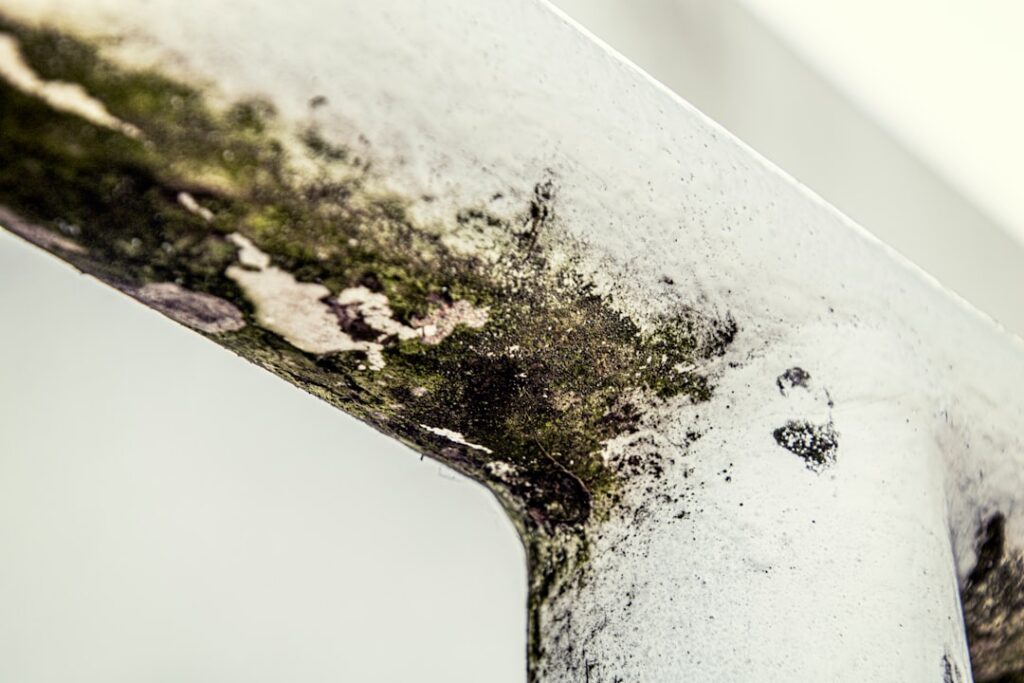
Homeowners asking about long-term black mold exposure are usually thinking about two horizons at once: what extended exposure may mean for health, and what it does to the home over months and years. This guide summarizes EPA, CDC, and NIEHS guidance on residential mold for homeowners current as of 2026. It is not medical advice. Anyone with health concerns about possible long-term mold exposure should consult a physician — only a clinician can evaluate individual symptoms, history, and risk factors. The home-side conversation below covers what the public health agencies say about long-term residential mold, the structural and material consequences of chronic indoor mold, and the remediation actions homeowners can take when they discover the problem has been present for some time.
Is this mold, asbestos, or water damage? Get a free instant screen
Upload a clear photo of the suspect area. You'll get an instant AI screening opinion and what to do next. This is screening guidance, not a professional determination.
Screening guidance only. AI can be wrong. Confirm asbestos, mold type, or lead with lab testing or a licensed professional before acting.
What CDC and EPA actually say about long-term exposure
CDC guidance is consistent: exposure to damp and moldy environments can cause upper respiratory tract symptoms in otherwise healthy people. People with asthma or mold allergies may have more severe reactions. People with immune-compromising conditions or chronic lung disease may develop serious infections. The agency does not publish a residential time-exposure threshold above which specific long-term outcomes are predicted; the public health recommendation across exposure duration is to identify and remediate the indoor mold source.
EPA’s “A Brief Guide to Mold, Moisture, and Your Home” treats the duration question the same way: indoor mold growth deserves removal regardless of how long it has been present. The agency does not endorse the popular framing that specific mycotoxin syndromes are well-established outcomes of residential exposure. NIEHS notes that research on long-term effects of indoor mold continues to evolve, particularly around specific species and biological mechanisms, but the operational recommendation remains stable: control moisture, remove growth, evaluate symptoms clinically.
The honest summary for a homeowner: prolonged indoor mold exposure is a recognized public health concern with documented respiratory effects in sensitive individuals, but the magnitude and specific outcomes vary by person, species, concentration, and duration. The clinical interpretation of any specific situation belongs to the physician. The home-side response is the same regardless: remove the indoor environmental contributor.
What “long-term exposure” actually means at home
The phrase covers several distinct home-side scenarios.
Chronic low-level exposure with no acute event
A basement at 65 percent relative humidity for years, with mold colonies on stored cardboard and along the bottom of finished walls, exposes occupants to elevated spore concentrations without any specific water event. The exposure is continuous and low to moderate in concentration. The remediation is humidity reduction plus cleanup.
Recurrent acute events that were never fully resolved
Multiple past water events — a basement flood three years ago, an ice dam two winters ago, a slow plumbing leak last year — that were dried but never professionally assessed for hidden growth. Cumulative effect over time. Inspection and remediation address the accumulated problem.
Single chronic source running unnoticed
A bathroom exhaust fan that vents into the attic instead of outside, producing mold growth on attic sheathing for years. A slow under-sink drip that has wetted the cabinet base and wall cavity for two seasons. The source is single but the duration is long. Source repair plus scoped remediation handles it.
Inheritance of a previously-undisclosed problem
A home purchased without thorough inspection that turns out to have had mold problems before transfer. The new owners discover the situation after taking possession. Forensic assessment, scoped remediation, and possibly recourse against the prior owner via real-estate-disclosure mechanisms.
Health-side: documentation for the medical visit
For households where occupants have lived with possible mold exposure for an extended period and are now concerned about health, the home-side documentation supports the medical visit. The clinician decides what testing and evaluation are appropriate.
Useful documentation includes the time period over which exposure may have occurred, the rooms involved, whether visible mold was seen and where, water history including any events that were not professionally remediated, indoor humidity readings if recorded, ventilation system status, household member symptoms and their onset, whether symptoms improve during multi-day absences from the home, and the home’s age and construction details. Our guide on how fast black mold affects you covers the time-course question from the home-side angle.
The physician interprets. Allergy testing, pulmonary function testing, imaging, and specialist referral are clinical decisions. A homeowner does not need to arrive at the visit with a diagnosis — only with accurate documentation.
What chronic indoor mold does to the home itself
Long-term exposure has a home-structural side that is often underemphasized. Mold metabolizes the organic substrates it grows on. Over months and years, that consumption produces measurable damage.
Drywall and ceiling tile
Paper-faced drywall colonized by mold loses structural integrity. The paper face delaminates, the gypsum core softens, and replacement is required. Ceiling tiles are similar — they cannot be reliably cleaned once colonized and must be replaced. Cost scales with affected area; large basement or attic affected areas can run into thousands of dollars in materials and labor before remediation costs are added.
Framing and structural wood
Sustained moisture on framing produces wood rot in addition to mold colonization. Wood-rotting fungi often accompany mold in chronically wet conditions and progressively reduce structural capacity. Sill plates, rim joists, floor joists in crawl spaces and basements, and roof sheathing are all vulnerable. Severe rot warrants structural evaluation and possible repair.
Insulation
Fiberglass batt insulation colonized by mold cannot be cleaned and must be removed and replaced. Cellulose insulation is similar. Insulation removal in wall cavities means opening drywall, adding to project scope. The home inspection tools pillar covers thermography useful for identifying wet or compromised insulation.
HVAC system contamination
Long-term mold in the home often reaches the air-handling system. Coils, plenums, ductwork interior, and supply registers can accumulate growth that distributes spores throughout the conditioned space. Professional duct cleaning, possible coil cleaning or replacement, and full system assessment are typical when contamination has reached the HVAC.
Resale and disclosure
Disclosed mold history affects resale negotiations, may complicate insurance, and may require pre-listing remediation documentation. Most states require disclosure of known material defects including mold history. Buyers’ inspections during transactions frequently identify mold issues, with negotiation or remediation occurring before closing.
The remediation pathway for chronic situations
When chronic mold is identified, the remediation pathway scales with size and complexity. EPA residential guidance and IICRC S520 professional standards apply.
Step one: source identification
Before any cleanup work, identify every moisture source that has contributed. This typically requires a thorough inspection including moisture meter readings, infrared thermography, attic inspection, foundation perimeter assessment, plumbing leak checks, ventilation verification, and possible limited investigative cuts. The mold inspection and testing pillar walks through the standard assessment sequence.
Step two: scope determination
Visible affected areas plus suspected hidden areas plus HVAC involvement plus any sewage-related history determine the scope. Under 10 square feet on hard surfaces is generally homeowner-manageable; larger or complex scopes warrant a professional remediation contractor.
Step three: containment and remediation
Professional remediation uses plastic containment, negative air machines with HEPA filtration, removal of affected porous materials, HEPA vacuuming of adjacent surfaces, antimicrobial treatment where appropriate, and verification testing if specified by contract. Family members may temporarily relocate during larger work, particularly any immune-compromised members.
Step four: source moisture correction
Concurrent with remediation, the moisture sources are corrected. Roof repair, plumbing replacement, ventilation upgrades, dehumidification installation, envelope improvements as appropriate. Without source correction, remediation fails.
Step five: verification and documentation
Post-remediation verification — visual inspection, moisture readings, and in some contracts third-party clearance testing — confirms the work is complete. Documentation supports insurance, future disclosure, and the homeowner’s own records.
Immune-compromised household members and chronic exposure
For households with immune-compromised members, the chronic-exposure framing shifts significantly. CDC’s mold guidance specifically calls out the immune-compromised population as warranting greater caution. Households with members on chemotherapy, post-transplant, with HIV/AIDS, with cystic fibrosis, or with similar immune-compromising conditions default to professional remediation rather than family DIY work. Temporary relocation during remediation is reasonable. Medical consultation about the timing of returning to the home after remediation is appropriate.
Our health issues from black mold guide covers the sensitivity factor in more detail, and the mold toxic guide addresses the toxicity-vocabulary question that often accompanies chronic-exposure conversations.
What to do if the exposure has already happened
A common situation: a homeowner discovers significant mold problems after living in the home for some time. The retrospective question — “what does the exposure I’ve already had mean?” — belongs to the physician for any health implications. The forward-looking home-side actions are:
- Get the source identified and the mold remediated promptly. Every additional day of continued exposure is one more day of exposure.
- Document everything: photos, dates, inspection reports, contractor estimates. This documentation supports insurance, potential disclosure-related claims, and the household’s own records.
- Schedule medical evaluation for any household member with symptoms that might be related. Bring the documentation. Let the clinician interpret.
- Verify the remediation worked. Dry conditions over a full weather cycle, no musty smell, indoor humidity 40-50 percent, no new visible growth over a 30-day window.
- Build an annual maintenance habit so a future chronic situation does not develop. Hygrometer check, leak survey, ventilation verification, gutter cleaning, HVAC service including condensate drain flushing.
Insurance considerations for chronic mold
Insurance coverage for chronic mold situations is one of the more complex areas of homeowners insurance. Standard policies typically cover mold remediation only when the mold results from a sudden, covered loss (e.g., a burst pipe). Chronic mold from gradual seepage, long-term humidity, or maintenance neglect is usually excluded.
Several practical implications follow. The remediation documentation matters — clearly establishing the moisture source, the duration, and the relationship to a covered event (if applicable) can support claims. Some policies include limited mold coverage by endorsement; reviewing the policy with the agent clarifies what is available. Disputed claims sometimes proceed to mediation or litigation; documentation supports either outcome.
For chronic situations that do not fall under insurance coverage, the homeowner pays out of pocket. Costs commonly range from several thousand to tens of thousands of dollars depending on scope. Financing through home equity products or specialty restoration financing is sometimes available.
Real estate disclosure obligations
Most U.S. states require sellers to disclose known material defects, including known mold history, on real estate disclosure forms. The specific requirements vary by state. Front Range homeowners selling a property with a known prior mold situation typically must disclose, regardless of whether the situation has been fully remediated.
The disclosure does not necessarily impair the sale — remediated mold history with proper documentation is far better than undisclosed history that the buyer’s inspector discovers. Documentation of professional remediation, including post-remediation verification, supports the seller’s position that the situation has been properly addressed.
Buyers, in turn, should request seller disclosures and read them carefully. The hiring process pillar covers buyer-side inspection vetting that catches issues regardless of seller disclosure completeness.
References
- Basic facts about mold and dampness — Centers for Disease Control and Prevention
- A brief guide to mold, moisture, and your home — U.S. Environmental Protection Agency
- Mold and indoor air quality — National Institute of Environmental Health Sciences
Front Range homeowners discovering chronic indoor mold and ready to scope a professional remediation can connect with a vetted local inspector through our contact page for a moisture and source assessment.