Mold Testing in Federal Heights, Colorado
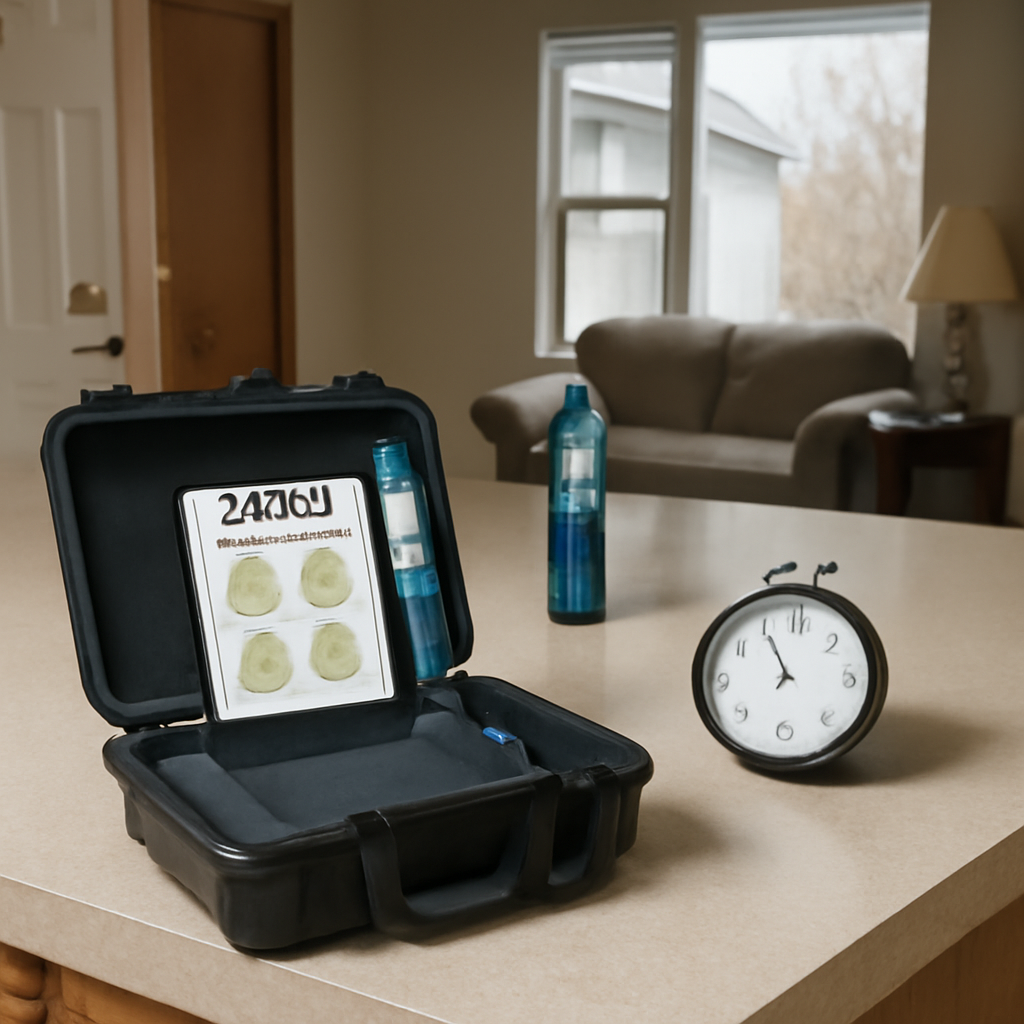
Federal Heights is a dense, older north-metro city in Adams County, where 1960s-to-1980s apartments, condos, and modest single-family homes sit along the Federal Boulevard corridor and evaporative “swamp” coolers are common. When a musty smell appears or a past leak raises concern in this kind of housing, mold testing federal heights residents arrange puts numbers behind the question of whether spore levels are genuinely elevated. Testing measures what a visual inspection can only suggest. This page summarizes EPA and CDC guidance current as of 2026; consult a certified professional for testing decisions and your physician for any health symptoms.
Part of our Mold Testing & Inspection guide — start there for the full picture →
Is this mold, asbestos, or water damage? Get a free instant screen
Upload a clear photo of the suspect area. You'll get an instant AI screening opinion and what to do next. This is screening guidance, not a professional determination.
Screening guidance only. AI can be wrong. Confirm asbestos, mold type, or lead with lab testing or a licensed professional before acting.
Mold testing in Federal Heights: what to know
Mold testing collects samples, usually air or surface, and sends them to a laboratory that identifies the mold types present and estimates their concentration. The standard approach pairs an indoor air sample with an outdoor baseline taken the same day, so the lab can compare interior spore counts against the surrounding outdoor air rather than against an abstract standard.
Testing and inspection serve different roles. An inspection finds the water source and visible growth; testing quantifies what is in the air or on a surface. In Federal Heights, where older homes hide aging plumbing and swamp-cooler ducting behind walls, testing helps when growth is suspected but not visible, or when a buyer wants documentation before closing. For the broader framework, our mold inspection and testing hub explains how the two services fit together.
Not every situation calls for a lab test. When visible mold and an obvious water source are both present, the EPA’s guidance is to fix the moisture and remove the growth rather than spend money confirming what is already clear. Testing earns its cost when the picture is ambiguous: a recurring odor with no visible source, a post-remediation clearance check, or a transaction where a documented number carries weight, all common scenarios in Federal Heights’s older housing.
Why Federal Heights homes warrant mold testing
The local conditions that make testing worthwhile center on moisture sources particular to this city. Evaporative coolers add humidity to indoor air by design, and a swamp cooler running through the cooling season in a tight older home can raise indoor humidity enough to support growth in poorly ventilated spaces. When a homeowner notices a musty room but cannot find the source, air sampling can confirm whether the cooler-driven humidity is producing an elevated spore picture.
Aging housing adds hidden-leak risk. Federal Heights’s 1960s-to-1980s plumbing, roofing, and windows develop slow leaks over time, and water seeping into wall cavities or under flooring feeds growth where no one can see it. Testing is the tool that answers the ambiguous case, an odor or a suspected past leak with no visible evidence, where a homeowner needs to know whether a real problem exists.
Dense multifamily living raises the stakes. In a Federal Heights condo or apartment, moisture from a neighbor’s leak can affect an adjacent unit, and a tenant or owner may want documented air sampling to support a claim or a remediation request. The CDC notes that mold exposure can trigger respiratory symptoms in sensitive individuals, so for a household with a member who has asthma or allergies, putting a number on the indoor spore picture can guide both cleanup and medical conversations.
What Federal Heights mold testing covers
A testing visit begins with a brief visual survey to choose sampling locations, then collects samples under controlled conditions, documenting where each was taken and the conditions at the time.
Air sampling
An air sample draws a measured volume of air through a spore trap, which the lab analyzes to count and identify airborne spores. Pairing an indoor sample with an outdoor baseline is standard, since every home carries some background spore load from the outdoor environment. A reading meaningfully above the outdoor baseline, especially of water-loving species, points to an indoor source worth investigating, such as a swamp-cooler humidity problem or a hidden leak.
Surface and post-remediation testing
Surface samples, taken by swab or tape lift, confirm whether a stain is actually mold and what type. After remediation, a clearance test verifies that cleanup worked and that indoor counts have returned to a level comparable with the outdoor baseline. For homeowners who have visible growth and want help deciding whether to test at all, our Federal Heights mold inspection page covers the source-finding step that should come first.
Mold testing cost in Federal Heights
Individual mold samples in the Federal Heights market generally run $100 to $300 each once laboratory fees are included. A common indoor-plus-outdoor air comparison therefore lands in the few-hundred-dollar range, and because the city’s homes tend to be smaller, a thorough survey typically needs fewer samples than a large suburban house would.
Some providers bundle a limited number of samples into a visual inspection package, which is often the most economical route for a homeowner who wants both source-finding and lab confirmation. Standalone post-remediation clearance testing is priced separately and is worth budgeting for after a contractor finishes a cleanup, particularly in a condo or apartment where verifying the work matters for shared-building reasons.
The value calculation favors testing when the answer changes a decision. Spending a few hundred dollars to confirm whether a musty older basement or a swamp-cooled room has elevated counts can prevent an unnecessary remediation, or catch a real problem before it spreads through aging building materials. For a Federal Heights homeowner managing costs on an older property, that decision-quality, knowing whether the problem is real, is what the test buys.
Colorado regulations and disclosure
Colorado does not license mold testers or set legal indoor mold limits, so lab results are interpreted against the outdoor baseline and professional judgment rather than a state standard. Choose a provider who follows recognized sampling protocols and uses an accredited laboratory. Colorado’s Seller’s Property Disclosure asks sellers to report known mold and water damage, which is where documented test results often matter during a sale.
In a Federal Heights transaction, a clean clearance test after a repaired leak reassures a buyer of an older home more effectively than a verbal assurance. In a condo, building-wide moisture history held by the HOA is relevant alongside unit-level testing, and a buyer should review both. Independent air sampling can also support a buyer’s request for remediation during the inspection contingency.
What affects mold testing results in Federal Heights
A mold test in Federal Heights is only as reliable as the conditions under which it is taken, and several local factors shape the numbers a lab returns. The outdoor baseline is the most important. Pairing an indoor air sample with a same-day outdoor sample lets the lab tell whether an indoor reading reflects a genuine indoor source or simply the background spores every home draws from the surrounding air. Without that comparison, a normal older home can look alarming or a real problem can hide, which is why a disciplined tester never skips the outdoor sample.
The swamp cooler is a Federal Heights-specific variable that can move a result. An evaporative cooler running through the cooling season adds humidity to the indoor air by design, and a home tested with the cooler active will show a different moisture and spore picture than the same home in the sealed, drier heating season. A careful tester notes whether the cooler was running, whether windows have been open, and how recently any water event occurred, because each of those changes what the air sample captures.
Sampling placement and recent activity matter as much as season. A probe held near a suspect basement wall or a swamp-cooled room captures a different reading than one in a dry, well-ventilated space, so a professional chooses locations deliberately. Vacuuming, moving stored boxes, or running a forced-air furnace just before sampling stirs settled spores into the air and can temporarily inflate an air count, so a tester controls for disturbance. In a condo or apartment, moisture migrating from a neighbor’s unit can register in shared walls, which is another reason placement and an understanding of the building matter. These variables are what separate a defensible result a buyer, seller, or association can act on from a number that means little.
A Federal Heights mold testing scenario
Consider a homeowner in the original Federal Heights neighborhood who notices a musty smell in a finished basement room each summer while the swamp cooler runs, yet finds no visible growth on any wall or floor. This is the ambiguous case where testing earns its cost. A visual inspection alone cannot confirm whether spores are elevated behind the finished surface, so the homeowner arranges an indoor air sample in the affected room paired with an outdoor baseline taken the same day.
If the lab returns an indoor count meaningfully above the outdoor reading, especially of water-loving species, the result points to a real moisture source, perhaps the cooler raising humidity past the threshold mold needs, or a slow leak from aging plumbing behind the wall, and justifies investigating further before the problem spreads through older building materials. If the indoor count instead tracks the outdoor baseline, the homeowner has spent a modest sum to rule out a costly, unnecessary remediation. Either way the test produces decision-grade information. The same logic extends to the city’s multifamily housing: a Federal Boulevard corridor condo owner who suspects a neighbor’s leak is affecting their unit can use documented air sampling to support a remediation request, and a clearance test after cleanup verifies the work, which matters for shared-building accountability and the association’s records. A Hidden Lake homeowner near the water, where ground moisture runs higher, faces the same ambiguous-symptom question in a basement and benefits equally from a properly baselined sample before deciding whether to remediate.
Neighborhoods and areas served
Mold testing serves homes across Federal Heights, from the original Federal Heights neighborhoods to the Hidden Lake area and the dense housing along the Federal Boulevard corridor. The shared building pattern, older swamp-cooled apartments, condos, and single-family homes, means the same testing rationale applies citywide.
Coverage typically reaches adjacent Westminster, Thornton, Northglenn, and Denver in the north metro. Homeowners comparing their situation to the wider region can review our Adams County mold testing guide, which frames the county’s older, denser housing and the moisture patterns that make sampling worthwhile.
How to choose a Federal Heights mold testing provider
Ask which laboratory the provider uses and whether it is accredited, since the lab’s quality determines the reliability of the result. A trustworthy tester pairs indoor samples with an outdoor baseline, documents placement, and explains what the numbers mean in plain language rather than pushing remediation on every reading. Independence matters: a tester who does not also sell remediation has no incentive to inflate the findings.
For a borderline result in an older Federal Heights home, a good provider walks you through options, including re-testing or addressing swamp-cooler humidity, instead of recommending immediate teardown. That measured guidance protects a homeowner from an expensive overreaction. Choose the provider who tells you when not to test as readily as when to, and who understands the moisture sources specific to the city’s older, cooler-equipped housing.
References
- Mold testing and sampling guidance — U.S. Environmental Protection Agency
- Mold and respiratory health — Centers for Disease Control and Prevention
- Mold sampling standards — International Association of Certified Home Inspectors
Frequently asked questions
When is mold testing worth it in Federal Heights?
Testing helps when growth is suspected but not visible, when verifying a remediation cleanup, or when documenting a problem for a sale. If mold is visible and the water source is obvious, the EPA recommends fixing the moisture and removing the growth rather than testing first.
How much does mold testing cost in Federal Heights?
Individual samples generally run $100 to $300 each including lab fees. A standard indoor-plus-outdoor air comparison lands in the few-hundred-dollar range, and the city's smaller homes often need fewer samples.
Can a swamp cooler show up in mold testing?
Indirectly. A swamp cooler that raises indoor humidity can promote growth in poorly ventilated rooms, and air sampling can confirm whether that cooler-driven humidity is producing an elevated spore picture compared with the outdoor baseline.
Does Colorado set a legal mold limit?
No. Colorado does not license mold testers or set legal indoor mold limits, so results are interpreted against the outdoor baseline and professional judgment. Use an accredited lab and a tester who follows recognized sampling protocols.
Should I test mold in a Federal Heights condo?
Documented air sampling can support a remediation request when a neighbor's leak affects your unit, and a clearance test verifies cleanup. Review the HOA's building-wide moisture records alongside unit-level testing.
If a room in your Federal Heights home smells musty or you want clearance after a repair, lab sampling turns guesswork into a number. To connect with a vetted Front Range professional, get in touch through our contact page.