Lead Testing in Federal Heights, Colorado | InspectandTest
Federal Heights is a small, densely built inner-ring city in Adams County, wedged along the US-36 and Federal Boulevard corridor between Westminster, Thornton, and Northglenn. Much of its housing stock dates to the 1960s, 1970s, and early 1980s, which means a meaningful share of local apartments, condos, and modest single-family homes were built before the 1978 federal ban on lead-based residential paint. That makes lead a genuine concern here, not a theoretical one. This page explains how lead testing federal heights families should approach, why the local housing pattern matters, and what testing costs. This summary reflects EPA, HUD, and CDC guidance current as of 2026; consult a certified professional before making decisions about a specific property.
Part of our Lead Paint & Lead Testing guide — start there for the full picture →
Asbestos or biohazard concern? Speak with a certified contractor.
📞 Call (877) 742-8496Lead testing in Federal Heights: what to know
Lead testing identifies lead in the materials and dust inside a home, most commonly in paint applied before 1978. The federal government banned lead-based paint for residential use that year, so the age of a building is the single strongest predictor of risk. In Federal Heights, where so much of the housing went up in the decades straddling that cutoff, the original units and the earliest additions are the ones worth checking first. Lead is a serious neurotoxin, especially for young children and pregnant women, and there is no safe blood-lead level, which is why testing rather than guessing is the responsible approach.
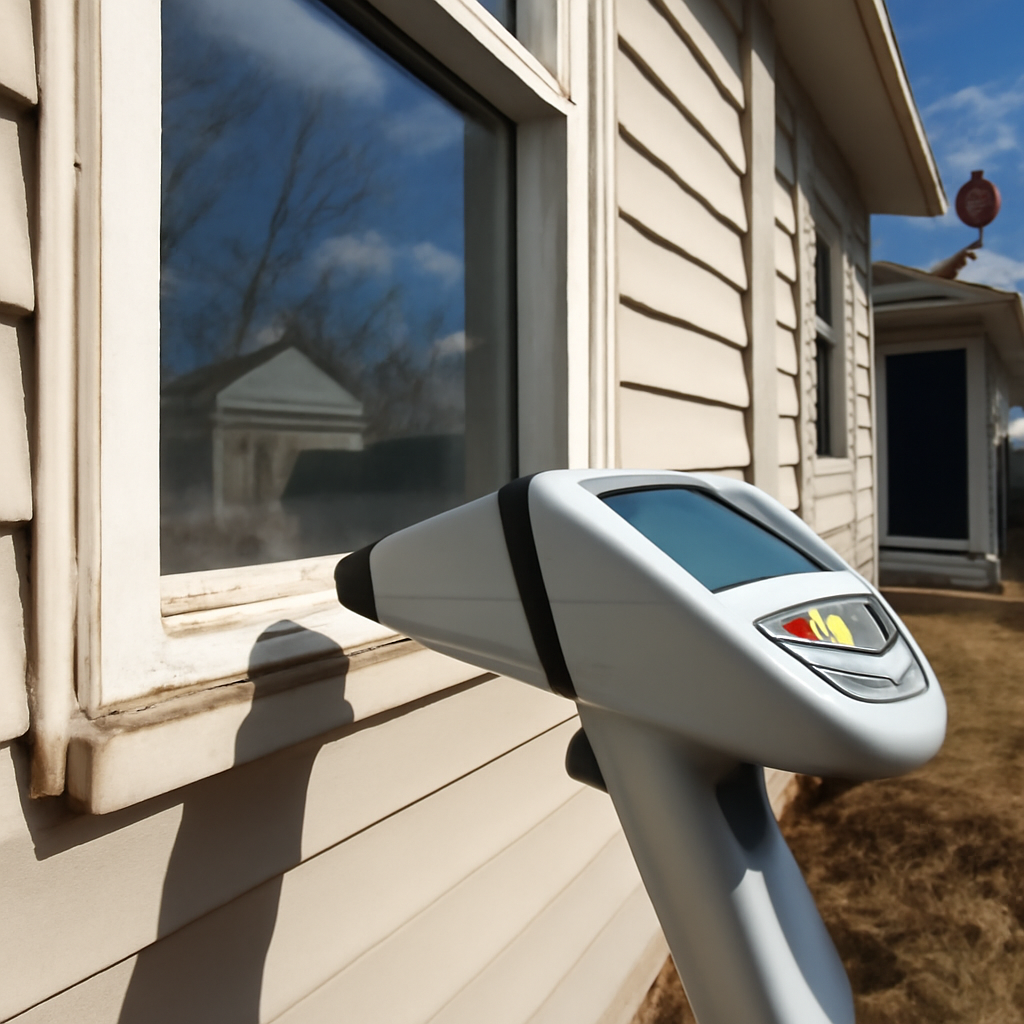
Two main methods dominate residential lead testing. An XRF (X-ray fluorescence) analyzer reads the lead content of painted surfaces in place without damaging them, and a paint-chip or dust-wipe sample sent to an accredited laboratory confirms results with quantitative numbers. For families with small children, dust-wipe sampling of floors and window troughs is often the most useful first step because lead dust, not intact paint, is the most common exposure route. For the broader picture of how lead and asbestos sit together in older housing, our pre-1978 housing hazard guide walks through both hazards in plain language.
It helps to understand why intact lead paint is less dangerous than deteriorating paint. A well-maintained painted surface that is not chipping, chalking, or rubbing against another surface generally keeps its lead locked in place. The hazard emerges when that paint ages, peels, or is disturbed during a renovation, sending fine lead dust into the air and onto floors where toddlers crawl and put hands in their mouths. In a Federal Heights apartment or condo where decades of repainting may have layered newer coats over original lead paint, friction surfaces like window sashes and door jambs are the places where that buried lead grinds back into circulation.
Why Federal Heights homes need lead testing
Housing era is the driver. Federal Heights grew quickly as a working-class north-metro community, and its dense mix of garden apartments, condominium complexes, and small single-family homes reflects 1960s-to-1980s construction. Buildings completed before 1978 are presumed to contain lead-based paint somewhere in their layered finish history unless testing proves otherwise, and the older original Federal Heights neighborhood and the Federal Boulevard corridor hold a concentration of that earlier stock.
The city’s rental-heavy housing pattern raises the stakes. Apartments and condos turn over tenants frequently, and each move-in and move-out cycle brings repainting, patching, and minor renovation that can disturb old paint layers. A landlord or new owner who sands a window frame or scrapes a door without lead-safe precautions can spread contaminated dust through a unit in an afternoon. Families with young children who rent in the older complexes along Federal Boulevard are exactly the households most exposed to that risk, and they are often the least able to control the renovation history of the unit they occupy.
Local climate adds an indirect factor. Federal Heights homes, like much of the north metro, often rely on evaporative swamp coolers in summer and stay tightly sealed through cold winters. Swamp coolers raise indoor humidity, which can accelerate paint deterioration on window troughs and sills where condensation collects, and sealed winters keep any lead dust generated by friction or repair circulating indoors rather than venting outside. Neither factor creates lead, but both can move existing lead from a stable surface into the breathing space of a home.
What a Federal Heights lead test covers
A professional lead assessment looks at the surfaces and dust most likely to carry lead in a pre-1978 building. A risk assessor or lead inspector documents the home’s age, identifies suspect painted components, and either reads them with an XRF analyzer or collects samples for an accredited lab.
Paint, dust, and soil pathways
Painted friction and impact surfaces come first: window sashes and troughs, door edges and jambs, stair treads, and porch floors. These are the components where paint wears and sheds dust. Floor and windowsill dust-wipe samples reveal whether lead has already settled into the living space, which is the most direct measure of a child’s exposure. In older Federal Heights properties with bare-soil yards, soil near the foundation drip line can also carry lead from decades of exterior paint weathering, so a thorough assessment may include a soil sample.
XRF analysis versus laboratory samples
An XRF analyzer gives an immediate, non-destructive reading of a painted surface, which is efficient for surveying many components quickly. Laboratory dust-wipe and paint-chip analysis returns quantitative numbers against federal hazard standards and is the gold standard for confirming a borderline result or documenting a clearance after lead-safe work. For a family deciding whether a unit is safe for a toddler, the combination of an XRF survey plus targeted dust wipes usually answers the question with confidence.
Lead testing cost in Federal Heights
A focused lead inspection or risk assessment in the Federal Heights market typically runs from roughly $300 to $600 depending on the size of the unit and the number of surfaces and samples involved. A simple set of dust-wipe samples sent to a lab can cost less, while a full whole-home XRF survey with a written risk-assessment report sits at the higher end. DIY swab kits sold at hardware stores cost only a few dollars but give a presence-or-absence screen, not a quantitative result, and they miss lead dust entirely.
Weigh the cost against what it protects. Childhood lead exposure causes irreversible neurological harm, and the CDC stresses that prevention is far cheaper and more effective than treating an elevated blood-lead level after the fact. For a family renting or buying an older Federal Heights condo, a few hundred dollars spent confirming that window troughs and floors are clean is small against the lifetime stakes for a child. Bundling lead testing with a broader inspection during a purchase often reduces the per-test cost because the assessor is already on site.
The choice between a DIY swab and a professional assessment usually comes down to purpose. A hardware-store swab can confirm that a suspect surface contains lead, which is occasionally useful before a small repair, but it cannot tell a parent whether lead dust has already reached the floor where a child plays. For any decision that affects a child’s environment, the professional dust-wipe and XRF assessment is the standard because it measures actual exposure pathways and produces documentation a landlord, buyer, or contractor can act on.
Federal Heights regulations and disclosure
Federal rules govern lead in housing regardless of city. Under the EPA and HUD Lead Disclosure Rule, sellers and landlords of most pre-1978 housing must disclose known lead-based paint and hazards, provide any available reports, and give buyers and tenants the federal lead-hazard pamphlet. The EPA Renovation, Repair, and Painting (RRP) Rule requires contractors who disturb paint in pre-1978 homes and child-occupied facilities to be certified and to follow lead-safe work practices. Colorado follows these federal frameworks, and the state seller’s property disclosure asks about known lead conditions in residential transactions.
Disclosure shapes both renting and buying in a place like Federal Heights, where so much stock predates 1978. A landlord who has tested and can document a unit as lead-safe offers real reassurance to a family with children, while one who has never tested leaves the question open. Buyers of older condos and single-family homes should not waive the federal 10-day lead inspection opportunity that the disclosure rule grants them; it is a low-cost window to confirm the condition of an older property before committing.
Neighborhoods and areas served
Lead risk in Federal Heights tracks building age more than any single neighborhood, but the original Federal Heights core, the older complexes along the Federal Boulevard corridor, and the Hidden Lake area hold much of the pre-1978 and early-1980s stock most worth checking. Service typically extends to adjacent Westminster, Thornton, Northglenn, and north Denver, all part of the same older inner-ring north-metro housing pattern where lead-based paint is common.
Because Federal Heights sits inside Adams County, its lead picture mirrors the broader county pattern of mid-century and older housing. Households comparing options across the area can see the county-wide context in our guide to lead testing in Adams County, which frames the same pre-1978 hazard across the county’s older communities. Wherever a Federal Heights home sits, the deciding factor is whether it was built or last fully repainted before the 1978 ban.
How to choose a Federal Heights lead testing provider
Ask whether the provider is an EPA or state-certified lead inspector or risk assessor and whether they use a calibrated XRF analyzer alongside accredited-lab dust and paint analysis. A good assessor documents the home’s age, the components tested, and the results against federal hazard standards so the report stands up for a landlord, buyer, or RRP-certified contractor. Confirm they collect floor and windowsill dust wipes, not just paint readings, because dust is the exposure route that matters most for children.
For renovation work in an older Federal Heights unit, confirm that any contractor disturbing paint is RRP-certified and follows lead-safe practices, since improper sanding or scraping is one of the fastest ways to create a hazard where none existed before. If a result comes back borderline, a competent assessor explains options, including a clearance test after lead-safe repairs, rather than pushing unnecessary full abatement. That kind of measured guidance is the mark of a provider worth hiring in a city with as much pre-1978 stock as Federal Heights.
For families who simply want a baseline, a professional risk assessment is the most reliable first step because it measures actual dust and paint pathways rather than screening a single surface. Pairing that assessment with a broader look at an older property, including asbestos in mid-century materials, gives the fullest picture of what a pre-1978 Federal Heights home may hold.
Lead, children, and renters in Federal Heights
Federal Heights’ rental-heavy, family-occupied housing makes the human stakes of lead testing concrete. Young children are the most vulnerable to lead because their developing nervous systems absorb it more readily and the damage, lowered IQ, attention and behavioral problems, is permanent. The CDC’s guidance is built around prevention precisely because there is no medical treatment that reverses the developmental harm once it has occurred. In a city where many families with small children live in older garden apartments and condos along the Federal Boulevard corridor, that means testing the unit before a toddler moves in is the single most protective step a parent can take.
Renters face a particular challenge because they rarely control the renovation history of their unit. A landlord who repaints between tenants, patches a window frame, or sands a door without lead-safe practices can leave behind contaminated dust that a new family never sees. Tenants in pre-1978 Federal Heights buildings have the right to the lead disclosure and the federal pamphlet, and they can ask whether the unit has been tested, but a dust-wipe assessment is the only way to know the current condition of the floors and sills a child will actually touch. For families who own, the same logic applies: a one-time professional assessment establishes a clean baseline and identifies any friction surfaces worth repainting with lead-safe methods.
Blood-lead screening is the complementary medical step. Colorado and federal guidance recommend blood-lead testing for young children, especially those living in older housing, and a pediatrician can order it during routine well-child visits. Environmental testing of the home and blood-lead screening of the child work together: the home test finds the source, and the blood test measures whether exposure has already occurred. For a Federal Heights family in older housing, doing both gives the fullest protection, addressing the hazard in the home while monitoring the child’s actual exposure.
References
- Lead in paint, dust, and soil — U.S. Environmental Protection Agency
- Lead disclosure and healthy homes — U.S. Department of Housing and Urban Development
- Childhood lead poisoning prevention — Centers for Disease Control and Prevention
Frequently asked questions
Does my Federal Heights home likely have lead paint?
If it was built before 1978, assume it may contain lead-based paint somewhere in its finish history until testing proves otherwise. Much of Federal Heights' housing dates to the 1960s through early 1980s, so a meaningful share of units fall into that pre-1978 risk window.
How much does lead testing cost in Federal Heights?
A professional lead inspection or risk assessment typically runs about $300 to $600 depending on unit size and the number of samples. A small set of lab dust wipes costs less, while a full XRF survey with a written report sits at the higher end.
What is the most important thing to test for lead?
Lead dust on floors and windowsills, not just intact paint. Dust is the main way young children are exposed, so dust-wipe sampling of living areas is often more revealing than paint readings alone.
Are Federal Heights landlords required to disclose lead?
Yes. Under the federal Lead Disclosure Rule, landlords and sellers of most pre-1978 housing must disclose known lead-based paint and hazards, share any reports, and provide the federal lead-hazard pamphlet to tenants and buyers.
Can I just use a hardware-store lead swab?
A swab can confirm whether a surface contains lead, but it cannot measure lead dust on floors or quantify a hazard. For any decision affecting a child's environment, a professional dust-wipe and XRF assessment is the reliable standard.
Federal Heights has the older housing stock where lead-based paint still hides, so testing an apartment, condo, or home before children move in is basic protection, not overcaution. To connect with a vetted local lead assessor, reach out through our contact page.