Mold Toxic: What the Word Means for Homeowners
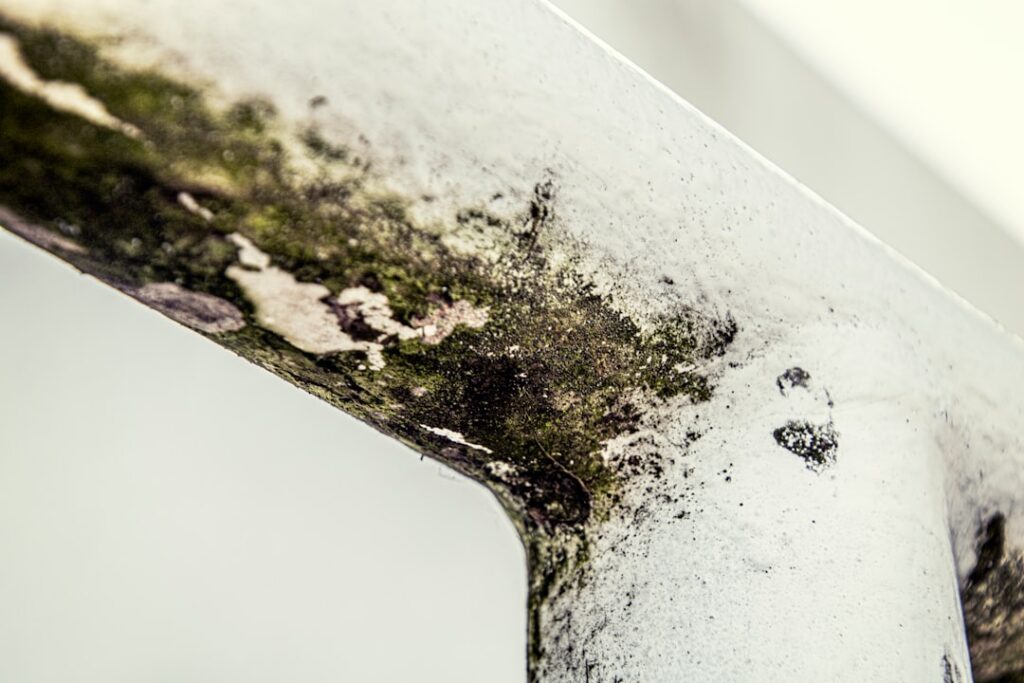
The phrase “mold toxic” is the short form of a long question: are the molds growing in homes capable of producing toxic effects in the occupants, and if so, under what conditions? The CDC and EPA both acknowledge that certain molds can produce mycotoxins under specific growth conditions, but they are careful to note that the connection between residential mycotoxin exposure and serious illness in occupants is not as well-established in scientific literature as popular framing suggests. The home-side action, fortunately, does not depend on resolving the toxicity debate — visible indoor mold growth should be remediated regardless. This guide summarizes EPA, CDC, and NIEHS guidance and is general information for homeowners, not medical advice. For symptoms you suspect are mold-related, consult a physician.
Is this mold, asbestos, or water damage? Get a free instant screen
Upload a clear photo of the suspect area. You'll get an instant AI screening opinion and what to do next. This is screening guidance, not a professional determination.
Screening guidance only. AI can be wrong. Confirm asbestos, mold type, or lead with lab testing or a licensed professional before acting.
What “Toxic” Actually Means in Mold Discussions
“Toxic” in everyday speech and “toxic” in mold-specific scientific usage are different. In general use, toxic means harmful to health. In mold-specific usage, the term often refers narrowly to mycotoxins — secondary metabolites that certain fungi produce under specific growth conditions. Mycotoxins are real compounds. Stachybotrys chartarum can produce trichothecenes. Certain Aspergillus species can produce aflatoxins. Penicillium species can produce ochratoxin. None of that is in dispute at the microbiology level. The dispute is about what those mycotoxins do to people who live in homes where mycotoxin-producing molds are growing, at the typical indoor exposure levels involved.
CDC’s position is that while certain molds produce mycotoxins under certain conditions, the connection between residential mycotoxin exposure and serious human illness is not well-established. That framing is more measured than popular “mycotoxin poisoning” narratives, and it is the framing this guide follows.
What CDC and the National Academies Say
CDC describes the symptoms most consistently associated with damp indoor environments as respiratory irritation, allergic-type reactions, and worsening of asthma in some occupants. The agency notes that immunocompromised individuals can develop serious infections from certain mold species. The National Academies’ Damp Indoor Spaces and Health review, which synthesized the available scientific literature on indoor mold and health, found sufficient evidence for an association with respiratory symptoms and asthma exacerbation, and noted that evidence for many of the systemic symptoms popularly attributed to mold exposure was more limited.
NIEHS describes individual variation in susceptibility and notes that respiratory and irritation effects are the most commonly documented response to indoor mold for most occupants. The American Lung Association presents a similar picture. None of these sources says mold is harmless. None says it causes the wide range of systemic illnesses popular frameworks attribute to it either. The position is measured.
Conditional Mycotoxin Production
One reason scientific framing on residential mycotoxin exposure is cautious is that mycotoxin production is conditional rather than automatic. A Stachybotrys colony does not necessarily produce trichothecenes; production depends on substrate composition, moisture availability, growth phase, temperature, and other factors. Two colonies of the same species on different materials can produce different mycotoxin profiles. The same colony at different points in its life cycle can produce different amounts. Quantifying actual occupant exposure to airborne mycotoxins in a residential setting is methodologically difficult, and the published exposure data is more limited than the published health-claim literature would suggest.
The allergen versus mycotoxin guide for homeowners on this site walks through the difference between allergic response (more common, better characterized) and mycotoxin-mediated effects (more debated, less characterized at residential exposure levels).
The Home-Side Response Is the Same
The good news for a homeowner is that the toxicity debate does not change the action plan. EPA guidance treats visible indoor mold growth as a problem to be removed regardless of species, regardless of mycotoxin potential. The agency’s Brief Guide to Mold, Moisture, and Your Home outlines the standard sequence: find and correct the moisture source, contain the work area, remove porous materials with embedded growth, clean semi-porous and non-porous materials, dry the cavity, and verify the work. That protocol applies whether the colony is Cladosporium on a window sill (rarely flagged as a mycotoxin producer in residential settings) or Stachybotrys on a basement wall (often flagged in mycotoxin literature).
For areas smaller than about 10 square feet with the moisture source corrected and proper personal protective equipment used, homeowners can typically handle the project themselves. Larger areas, HVAC contamination, category-three water sources, and any situation with susceptible occupants warrant a remediation contractor.
Susceptibility Tilts the Risk Picture
Even within the calibrated framing, several groups face genuinely higher risk and should not wait. Immunocompromised patients can develop invasive fungal infections that are well-documented in medical literature. Infants and young children have developing respiratory systems. Elderly people with chronic respiratory or cardiovascular conditions may experience more severe respiratory effects. People with diagnosed mold allergies or severe asthma may react at levels other occupants tolerate. For these groups, the toxicity debate becomes less relevant — the practical answer is to remediate promptly, contain the work carefully, relocate the susceptible occupant, and verify with post-clearance air sampling.
Building Damage Does Not Depend on Toxicity
The building-damage side of the question is unambiguous. Long-term mold growth degrades cellulose substrates (drywall paper, wood fiber, paper-backed insulation), fails paint and finishes, warps flooring, softens cabinetry, and accumulates in HVAC components. None of this is debated. The black mold damage walkthrough on this site catalogs each failure mode. A homeowner who is uncertain about the health-effect picture can confidently remediate based on the building-damage reality alone.
Why the Toxicity Debate Got So Loud
Three forces amplified the public framing. A 1990s Cleveland investigation initially linked an infant pulmonary hemorrhage cluster to Stachybotrys, and subsequent CDC review concluded that the original methodology had not adequately established causation, but the case became cultural memory. Insurance and legal disputes generated extensive media coverage of severe-outcome cases that are not representative of typical residential exposure. Direct-to-consumer testing, remediation services, and supplement vendors have economic incentives to emphasize worst-case framing. The result is a public discussion that often does not match the measured tone of CDC, NIEHS, and the National Academies.
What Sampling Adds and What It Does Not
Air-cassette sampling and bulk surface samples produce useful building information — what is growing, at what concentration, in which species mix. Targeted sampling with proper protocol supports remediation scoping and post-clearance verification. What sampling cannot do is quantify any individual’s mycotoxin exposure dose, establish causation for a specific symptom, or substitute for medical evaluation. The environmental versus medical testing guide covers the split in detail.
For Homeowners Reading Conflicting Sources
A homeowner researching “mold toxic” online will encounter sources at every point on the spectrum — from dismissive (“mold is everywhere, ignore it”) to alarmist (“mycotoxin poisoning explains everything”). The calibrated middle is uncomfortable because it does not offer the simplicity either extreme provides. CDC, EPA, NIEHS, and the National Academies all sit in the middle: indoor mold is a real building problem worth remediating, respiratory effects are well-documented for some occupants, severe systemic outcomes are concentrated in susceptible populations and unusual exposures, and the science on residential mycotoxin-mediated systemic illness is not fully settled. That is the answer.
The Practical Decision
For a homeowner facing visible growth or a confirmed moisture problem, the practical decision is straightforward regardless of where on the toxicity spectrum they personally land. Remediate the visible growth. Correct the moisture source. Verify the work. If susceptible occupants are in the household, add containment and clearance testing. If the project exceeds 10 square feet or involves HVAC or hidden sources, bring in a mold inspector and a remediation contractor. The toxicity debate does not change any of this.
When to Call a Professional
Larger growth areas, hidden moisture sources, multiple-room contamination, HVAC involvement, and susceptible occupants are all reasons to bring in a mold inspector for assessment and a remediation contractor for execution. For Front Range homeowners, our mold inspection and testing pillar walks through the inspection-to-remediation handoff. The home-side mold infection response guide covers susceptible-occupant containment in detail.
References
- About Mold — Centers for Disease Control and Prevention
- A Brief Guide to Mold, Moisture, and Your Home — U.S. Environmental Protection Agency
- Mold Health Information — National Institute of Environmental Health Sciences
- Damp Indoor Spaces and Health — National Academies / NCBI
- Mold and Dampness — American Lung Association
If you want an objective assessment of a mold finding that does not depend on which side of the toxicity debate you lean toward, a Front Range inspector can scope the building independently — contact us to begin.