Can You Test for Black Mold Exposure: Yes, in Two Ways
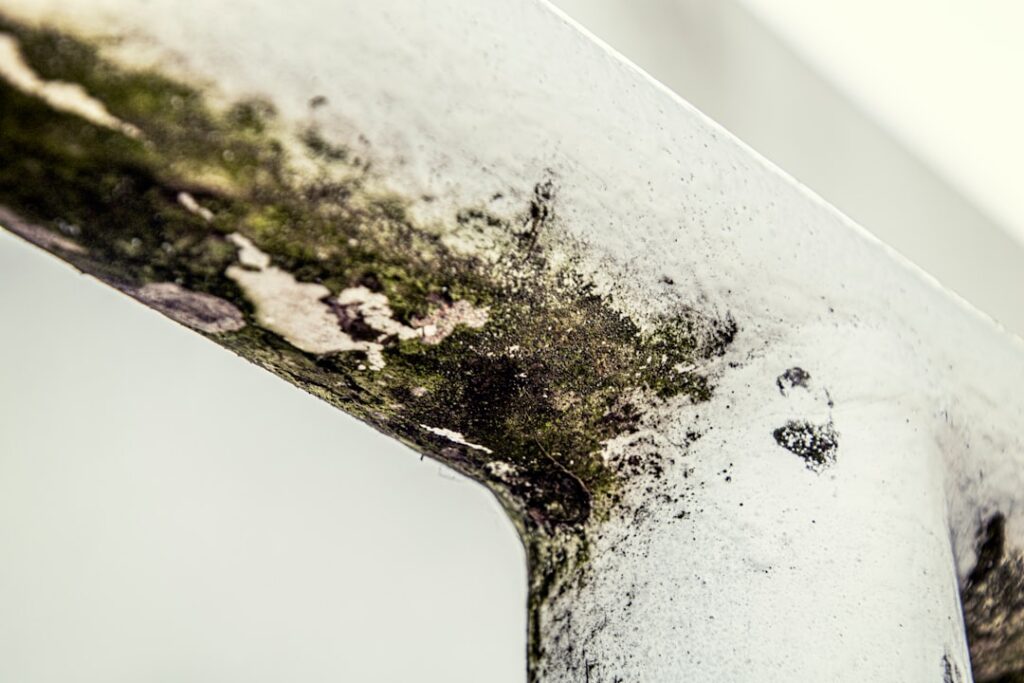
Yes, you can test for black mold exposure, but the question splits in two and only one half belongs in this guide. Environmental testing examines the home — air samples, bulk samples, swabs, ERMI dust analysis — and is the homeowner’s domain. Medical testing examines the person — blood panels, allergy tests, clinical workups — and is the physician’s domain. This article walks through what is possible on the environmental side, what is possible on the medical side, and how the two tracks fit together. Framing summarizes EPA, CDC, and NIEHS guidance and is general information for homeowners, not medical advice. For health symptoms you suspect are mold-related, consult a physician.
Part of our Black Mold & Your Health guide — start there for the full picture →
Is this mold, asbestos, or water damage? Get a free instant screen
Upload a clear photo of the suspect area. You'll get an instant AI screening opinion and what to do next. This is screening guidance, not a professional determination.
Screening guidance only. AI can be wrong. Confirm asbestos, mold type, or lead with lab testing or a licensed professional before acting.
The Short Answer: Yes, Twice
Environmental yes — air-cassette spore traps, surface samples, dust DNA analysis, and post-remediation clearance testing are all real procedures with established protocols and microbiology labs that process them. Medical yes, with caveats — a physician can order specific IgE allergy panels, evaluate for hypersensitivity pneumonitis when history supports it, refer to specialists, and in some cases use mycotoxin or antibody assays whose clinical utility is debated. The split matters because it determines who handles which test, who pays for it, and what the result actually means.
Environmental Testing in Practice
Air-cassette sampling is the most common environmental test ordered for a homeowner-scale project. An inspector connects a calibrated pump to a sticky-strip cassette, pulls a measured volume of air through it over a fixed time, and ships the cassette to a microbiology lab. The lab identifies spore types and counts per cubic meter, with an outdoor reference sample for comparison. The result tells a building story — what is in the indoor air relative to outdoors, which species are responsible, and whether water-damage-associated genera like Stachybotrys or Chaetomium are present.
Bulk surface samples are more direct because they capture the colony itself. A piece of suspect drywall, a tape lift from a window casing, a swab of grout — each can go to the lab for species-level identification. Surface samples answer the question “what is growing here” rather than “what is in the air.” For a wall with visible staining, a surface sample produces firmer identification than an air sample would.
ERMI dust analysis processes settled-dust samples to detect DNA from a defined panel of species. CDC and EPA note that ERMI was developed as a research tool and that its commercial application to individual homes for remediation decisions is not validated in the same way as air-cassette sampling. Useful in context; not always the right first tool.
What Can Make an Environmental Test Misleading
An environmental test is only as good as its protocol. Several conditions matter. Windows and doors closed for at least 24 hours before sampling. HVAC in normal operating state. Sampling volume documented. Outdoor reference sample collected on the same day under the same conditions. Multiple indoor samples for internal comparison rather than a single shot. Chain-of-custody documentation. Sample interpretation that reads the genus mix and indoor-outdoor ratio together rather than chasing absolute spore counts.
A house that has just had windows open all morning, or HVAC off, or a single indoor sample compared to a single outdoor sample without context, can produce results that look definitive but are not. The companion piece on environmental versus medical testing covers protocol pitfalls in more detail.
When Environmental Testing Is Worth Doing
Not every homeowner needs to pay for sampling. EPA guidance considers visible mold growth sufficient evidence on its own to justify remediation. Testing adds value when the source or growth location is hidden, when insurance or legal documentation is needed, when post-remediation verification is the goal, when occupants are concerned despite no visible growth, or when a buyer is making a purchase decision and wants documentation. For a routine visible mold problem with an obvious moisture source, environmental testing is often optional.
Medical Testing — The Physician’s Domain
The medical side of mold testing is more varied and more controversial than the environmental side. Specific IgE allergy panels for common mold antigens are routine clinical tests and produce useful information about whether a patient is sensitized to particular species. Skin-prick testing serves a similar function. Beyond standard allergy testing, the picture becomes mixed. Mycotoxin urine assays, specific antibody panels marketed as “biotoxin” tests, and direct-to-consumer kits exist; their clinical utility is debated in mainstream medicine, and CDC notes that the science connecting mycotoxin biomarkers in urine to specific clinical outcomes from residential exposure is not well-established. None of this is a recommendation for or against any specific medical test. The physician decides.
How the Tracks Connect
The two tracks connect when the homeowner shares the environmental report with the treating physician. The physician integrates the building information — what is growing, where, at what concentration — with the clinical examination and patient history. The lab report does not substitute for the medical evaluation; it is one input among many. Conversely, a positive medical test (a strong IgE response to a mold antigen, for example) does not by itself prove the home is the exposure source. Both halves are needed to make a strong case for any specific causal claim.
Verifying Remediation Worked
Post-remediation environmental testing — sometimes called clearance sampling — is a defensible expense when a remediation project has been driven by health concerns. The sampling protocol is similar to pre-remediation testing, but the question is different: did the work bring indoor concentrations back to a normal indoor-outdoor ratio with water-damage-associated species absent or substantially reduced? A clean clearance result documents that the room is ready for reoccupancy. The home-side guide to mold infection response walks through clearance testing in detail.
DIY Test Kits — What They Can and Cannot Do
Hardware-store mold test kits typically include settle plates that sit open in the room for an hour or so to collect spores, which then grow into visible colonies in the lab over several days. Settle plates are limited tools. They tell a homeowner that fungal spores are present — which is true everywhere on Earth, since outdoor air contains them — but they do not produce the quantitative indoor-outdoor comparison that air-cassette sampling does. Some kits include a single outdoor reference plate, which improves the comparison slightly but still leaves the protocol below professional standards. For documented, defensible results, professional sampling is the better choice.
What the Lab Report Will Show
An air-cassette report lists each genus detected with spore counts per cubic meter and a comparison to outdoors. Common outdoor genera (Cladosporium, Alternaria, Penicillium/Aspergillus) appear in essentially every sample. Water-damage-associated genera (Stachybotrys, Chaetomium, Memnoniella) are flagged when detected because they typically indicate an active indoor moisture source. A surface-sample report names the species with greater specificity. The remediation contractor reads the report together with the inspector’s visual findings and the moisture map to produce a scope.
What to Skip
Two common spends often do not add value. Single-sample air testing without an outdoor reference produces a number with no comparison baseline; treat it as low-information. Wide-area scatter sampling — five rooms, ten samples, no specific question — produces data without a hypothesis and rarely supports a clean remediation decision. Targeted sampling around a specific suspected source, with proper protocol and adequate outdoor reference, is what produces defensible reports.
When to Call a Professional
For environmental testing, a mold inspector with proper sampling pumps, calibrated equipment, and a lab relationship handles protocol better than DIY kits do. For medical testing, the patient’s physician chooses what to order based on the clinical picture. For Front Range homeowners scoping the environmental side, our mold inspection and testing pillar walks through how an inspector’s sampling fits into the broader investigation.
Environmental vs. Medical Testing Distinction
A consolidated side-by-side framing helps clarify which test belongs in which conversation. The two domains have different goals, different methodologies, different decision authorities, and different downstream actions. Homeowners who keep them separate get better answers from both sides; homeowners who mix them up end up arguing with a clinician about an air sample, or arguing with an inspector about a urine result, and neither conversation goes anywhere.
Environmental sampling — air-cassette spore traps. A calibrated pump pulls a measured volume of indoor air through a sticky-strip cassette over a fixed sampling period, typically five to ten minutes per location. The cassette ships to a microbiology lab that identifies spore types under microscopy and reports counts per cubic meter, side by side with an outdoor reference sample taken the same day. The result describes the building’s airborne spore profile. It does not describe the occupant.
Environmental sampling — bulk surface samples. A small piece of suspect drywall, a tape lift from a moldy window casing, a swab of grout, or a piece of contaminated carpet padding goes to the lab for species-level identification. Bulk samples answer the direct question “what is growing on this material” with greater specificity than an air sample can. They are particularly useful when visible staining is present and a remediation contractor wants species confirmation before scoping disposal.
Environmental sampling — ERMI dust analysis. Settled-dust samples are processed using DNA-based quantitative PCR against a defined panel of mold species, producing a relative moldiness index score. EPA-published research describes ERMI as a research tool. CDC and EPA both note that the commercial application of ERMI scores to individual-home remediation decisions is not validated to the standard of air-cassette sampling. ERMI can be useful as one input in a broader investigation; it is not a stand-alone diagnostic.
Medical exposure testing — specific IgE allergy panels. A physician orders a blood draw or a skin-prick test against a panel of mold antigens to measure whether the patient has developed an IgE-mediated allergic response to specific species. The result describes the patient’s immune sensitization, not the building. A positive panel suggests the patient is allergic to those antigens; a negative panel does not rule out non-allergic respiratory irritation from the same exposure.
Medical exposure testing — urinary mycotoxin assays and antibody panels. Several commercial labs offer urine-based mycotoxin testing and serum antibody panels marketed as measures of mold exposure or biotoxin illness. CDC explicitly notes that the clinical utility of these assays in non-occupational residential exposure scenarios is not well-established in mainstream medical literature. Some clinicians order them in specific patient pictures; others do not. This is a clinical judgment call that belongs to the treating physician, not to a home-inspection guide.
The decision authority is asymmetric. Environmental tests are ordered by the homeowner or by an inspector engaged by the homeowner. Medical tests are ordered by a physician — full stop. A homeowner cannot self-order a urinary mycotoxin panel through a credible diagnostic pathway, and an inspector cannot order one at all. The physician owns the medical side and chooses which tests fit the clinical question. The homeowner owns the environmental side and chooses which sampling protocol fits the building question. When the two reports meet at the kitchen table, the homeowner integrates them; neither professional is in a position to interpret the other half on the homeowner’s behalf.
References
- A Brief Guide to Mold, Moisture, and Your Home — U.S. Environmental Protection Agency
- About Mold — Centers for Disease Control and Prevention
- Mold Health Information — National Institute of Environmental Health Sciences
- Mold Remediation in Schools and Commercial Buildings — U.S. Environmental Protection Agency
Frequently asked questions
Can a single air sample diagnose a mold problem?
A single indoor sample without an outdoor reference is low-information. Defensible testing collects multiple indoor samples in different rooms plus an outdoor reference taken the same day, with windows closed beforehand and HVAC in normal state.
Are home mold test kits worth buying?
Settle plates from hardware-store kits tell a homeowner that spores are present, which is true of all indoor air. They do not produce the quantitative comparison that pump-driven cassette sampling does. For documented results, professional sampling is the stronger choice.
What does a medical mold exposure test measure?
It depends on the test. Specific IgE allergy panels measure sensitization to mold antigens. Other panels and assays have varied clinical utility. The treating physician decides which tests are appropriate based on the patient's history and presentation.
If you want defensible environmental testing rather than hardware-store kits, a Front Range inspector can run a protocol-driven sampling plan — contact us to scope the work.