Found Black Mold in a Room? Let the Location Explain Why
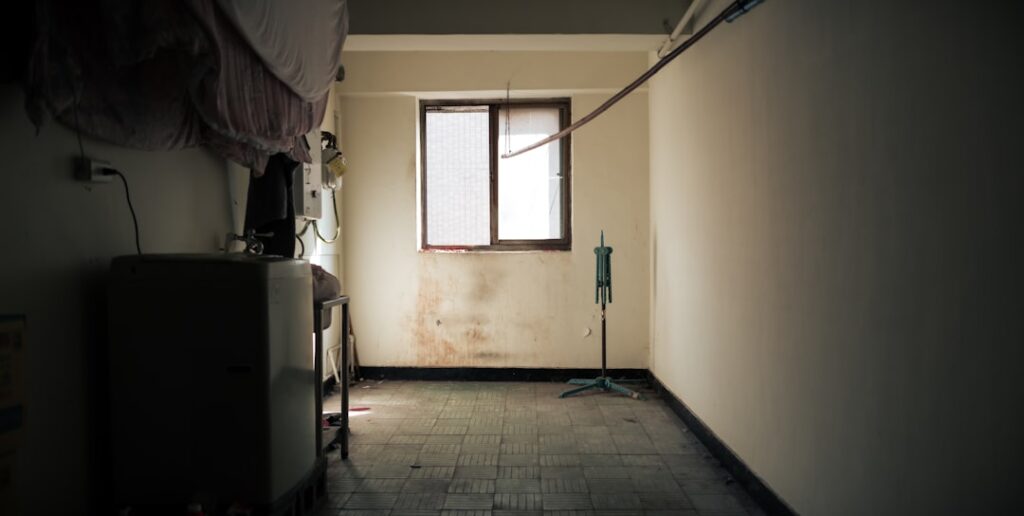
The dark spotting you just found on a wall, ceiling, or windowsill is telling you something specific, and the room it lives in is the biggest clue to the cause. Mold needs a moisture source to grow, and every room supplies moisture differently. A patch in a bathroom almost always points to ventilation. The same-sized patch on a bedroom ceiling usually points to a roof or plumbing leak overhead. Read the location first, and you fix the right problem instead of scrubbing the same spot every few months.
One fact holds across every room: the color of the growth does not tell you whether it is toxic, and no home lab test changes the cleanup. The CDC advises against routine sampling because you handle visible mold the same way regardless of species. So skip the species anxiety and focus on where the water is coming from.
Is this mold, asbestos, or water damage? Get a free instant screen
Upload a clear photo of the suspect area. You'll get an instant AI screening opinion and what to do next. This is screening guidance, not a professional determination.
Screening guidance only. AI can be wrong. Confirm asbestos, mold type, or lead with lab testing or a licensed professional before acting.
Bedrooms: the room people never suspect
Bedrooms are not wet rooms, so the moisture is almost always hidden.
- Behind furniture on exterior walls. A dresser or headboard pressed against a cold outside wall traps humid air against a cold surface, and it condenses. Colonies show up as speckling you only see when you pull the furniture out. Leaving a two-inch gap for airflow prevents most of it.
- Window frames and sills. Older aluminum-frame and single-pane windows sweat in winter. The water pools on the sill, soaks into painted wood trim, and mold starts along the caulk line and lower jamb.
- Ceilings. A stain that grows mold on a bedroom ceiling is a leak from above, usually a roof penetration, a bathroom on the floor above, or humid attic air condensing on a poorly insulated ceiling. Roof leaks often line up with a storm the homeowner remembers.
Bathrooms: the most predictable room
Showering dumps humid air into a small space, so bathroom mold is rarely a mystery. It concentrates in three places.
- Grout and caulk. Dark spotting on grout and silicone is usually Cladosporium or Aspergillus. Sealed grout wipes clean with detergent and water; grout that has soaked through needs regrouting, and discolored caulk needs to be cut out and replaced, not painted over.
- Ceiling above the shower. Spotting here is a ventilation failure: the exhaust fan is undersized, never runs, or dumps into the attic instead of outside. Building codes call for a bathroom fan rated for roughly 50 cubic feet per minute, or 1 CFM per square foot of floor. Upgrading the fan usually ends it.
- Behind the toilet and under the sink. Wall mold behind a toilet traces to a wax-ring or supply-line leak. Under-sink mold grows on particleboard cabinet bottoms fed by slow drips. A flashlight check twice a year catches both early. For a full walk-through of shower and tile cleanup, see removing black mold in a shower.
Basements: the highest-yield room on the Front Range
Spring snowmelt makes basements the number-one mold-discovery zone in Denver-area homes.
- The lower foot of finished walls. Drywall paper sitting against framing on a foundation wall wicks up intermittent seepage. Look for pinpoint speckling in the bottom 12 to 18 inches, usually hidden behind boxes.
- Carpet edges. Where basement carpet meets an exterior wall, seepage wicks into the padding. Lift a corner at the wall to see damage a surface glance misses.
- Utility areas. Water-heater drain pans, washer hookups, sump pits, and HVAC condensate pans all leak locally. Biofilm or staining around them is your signal.
Because below-grade moisture behaves differently than upstairs leaks, the response has its own considerations, covered in whether basement black mold is dangerous.
Kitchens, laundry, and utility rooms
These rooms pack plumbing and appliances into a small footprint, so mold follows the water lines.
- Under the sink and behind the fridge. Slow supply-line drips and ice-maker line leaks wet cabinet bottoms and flooring you never see until the appliance moves.
- Around the dishwasher. Drain-hose and supply fittings weep onto adjacent cabinets and floor.
- Washer hoses. Rubber supply hoses are a leading cause of major home water losses; even a slow weep supports mold on the wall behind the machine. Braided stainless hoses and a drain pan are cheap insurance.
Attics and crawlspaces you rarely enter
Mold on attic sheathing usually means a bathroom fan is venting into the attic or the attic is under-ventilated, so winter humidity condenses on cold plywood. Crawlspace mold points to a bare-earth floor with no vapor barrier, a leak from above, or seasonal groundwater. Both spaces earn a once-a-year look because the growth is out of sight until it is widespread.
The same five-step response, every room
Once you know the source, the EPA cleanup sequence is identical wherever the mold is:
- Stop the water. Fix the leak, the grading, the missing exhaust fan, or the humidity. Cleaning without this just resets the clock, and new mold can start on a damp surface within 24 to 48 hours.
- Size it up. The EPA guideline: an area under about 10 square feet (roughly a 3-by-3-foot patch) on an accessible surface is a reasonable DIY job. Anything larger, hidden inside walls, or tied into the HVAC belongs with a professional.
- Remove porous materials that grew mold. Drywall, carpet, padding, ceiling tile, and particleboard get cut out and replaced. Hard surfaces such as tile, glass, sealed concrete, and metal clean up with detergent and water, and the EPA notes bleach is not required.
- Dry and verify. Get framing moisture back into the normal range before you close anything up, ideally confirmed with a meter rather than by feel.
- Keep humidity down. Hold indoor relative humidity below 60%, ideally 30 to 50%, so the same conditions do not return.
When mold shows up in several rooms at once
Multiple rooms usually share a single cause: a whole-home humidity problem condensing on every cold surface, an HVAC system spreading spores from one original colony, or a leak traveling through framing bays to surface in unexpected spots. Chase the pattern back to one source rather than treating each patch alone. A source fix typically clears several symptoms together. If you cannot find the water despite a thorough hunt, that is the moment for an inspector with a moisture meter and infrared camera, as described in our mold inspection overview.
Call a professional when
Bring in a credentialed remediator when a patch exceeds 10 square feet, when you suspect growth behind walls or under floors, when HVAC components are involved, when a flood sat wet past 48 hours, when the source cannot be found, or when the household includes infants, older adults, or people with asthma or weakened immune systems. Those groups are the ones the NIEHS flags as most sensitive to indoor mold, and Colorado’s own CDPHE indoor-air guidance mirrors the EPA on prioritizing fast action for them.
Frequently asked questions
This guide summarizes EPA, CDC, NIEHS, and CDPHE guidance for homeowners and is not medical advice; anyone with symptoms they believe are mold-related should see a physician. Front Range homeowners can reach us through our contact page to connect with a vetted local inspector.