Best Roof Sealant (2026): 7 Picks Compared and Their Limits
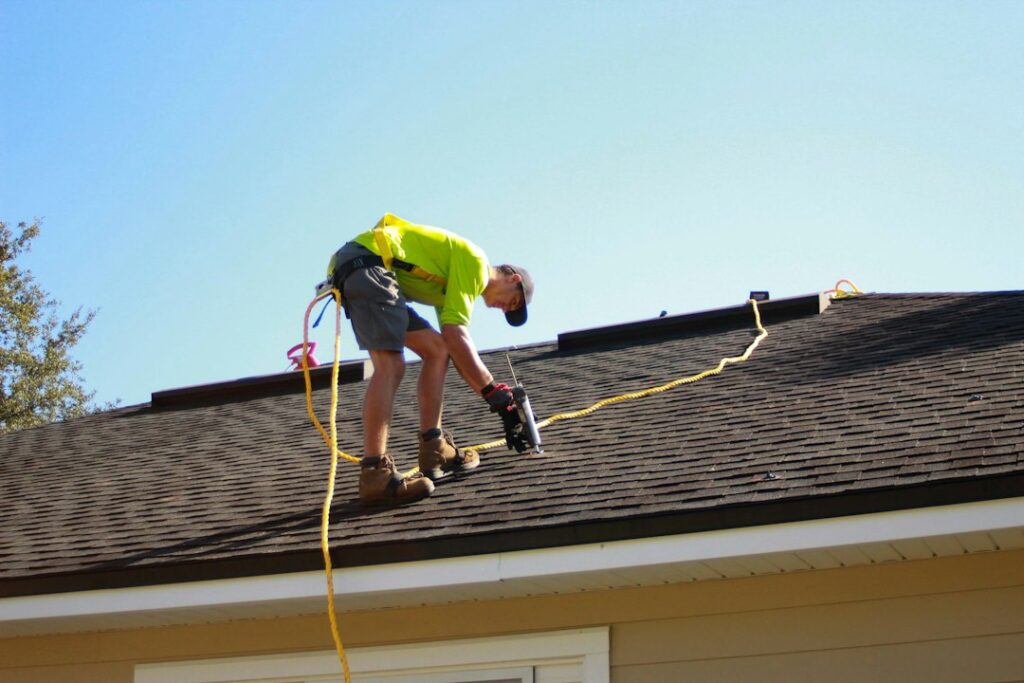
The best roof sealant depends on what is leaking, what the roof is made of, and whether you need a permanent fix or a patch to get through the next storm. A cartridge of asphalt sealant around a vent flange, a clear rubber sealant on wet flashing, and a gallon of elastomeric coating on a flat porch roof are three different products for three different jobs. All of them share one limit: sealant covers symptoms. It does not replace failed flashing, cracked boots or worn-out shingles. Below are seven picks for specific jobs, followed by a buying guide on sealant types, application temperatures on the Front Range, and when a leak needs a roofer or an inspector instead of a tube.
Part of our Structure & Exterior guide — start there for the full picture →
As an Amazon Associate we earn from qualifying purchases.
How we compared: we compared 17 current Amazon listings for roof sealants and roof coatings on what each listing states: chemistry, compatible roofing materials, wet or cold application, temperature range, elongation, reflectivity, cure time and named standards. Four of the 17 are aimed mainly at RV roofs, and several are the same product in two sizes. We did not lab-test any product or apply it hands-on. Prices and availability change, so check the current listing before buying.
Quick picks: the best roof sealants by job
| Product | Best for | Key features | Price | Buy |
|---|---|---|---|---|
| Sashco 14004 Clear Roof Sealant | Wet or cold-weather flashing repair |
| $80.61as of Nov 19, 2026 4:25 am GMT+0000 | Buy now →Check current price |
| Geocel 4500 Roof Bonding Sealant | EPDM and low-slope seams |
| $10.29as of Nov 19, 2026 4:25 am GMT+0000 | Buy now →Check current price |
| DAP Roof Asphalt Sealant | Budget cartridge for penetrations |
| $6.15as of Nov 19, 2026 4:25 am GMT+0000 | Buy now →Check current price |
| Titebond WeatherMaster Metal Roof | Metal roof seams and fasteners |
| $10.34as of Nov 19, 2026 4:25 am GMT+0000 | Buy now →Check current price |
| Liquid Rubber Waterproof Sealant | Flat-roof and gutter coating |
| $69.95as of Nov 19, 2026 4:25 am GMT+0000 | Buy now →Check current price |
| Ames Maximum-Stretch MSS1 | Reflective low-slope coating |
| $43.96as of Nov 19, 2026 4:25 am GMT+0000 | Buy now →Check current price |
| Gorilla Patch and Seal Liquid | Small brush-on patches |
| $28.73as of Nov 19, 2026 4:25 am GMT+0000 | Buy now →Check current price |
Prices are Amazon’s listed prices as of the time shown and change often; check Amazon for today’s price. As an Amazon Associate we earn from qualifying purchases.
The 7 picks, compared listing by listing
1. Sashco 14004 Clear Roof Sealant (1 gal) — Best for Wet or Cold-Weather Flashing Repair

Clear rubber sealant that bonds to wet shingles and flashing, applies down to 0 F, rated -30 to 200 F once cured.
Check price on Amazon$80.61 as of Nov 19, 2026 4:25 am GMT+0000 — prices change; see Amazon for current price.Why we like it
- Bonds to wet surfaces, even in rain
- Applies down to 0 F
- Service range of -30 to 200 F once cured
- Clear and paintable, so repairs blend in
| Specification | Details |
|---|---|
| Chemistry | Co-polymer rubber, brush grade |
| Surfaces | Asphalt shingles, metal flashing, brick, mortar, concrete, glass, vinyl; no primer |
| Application | Wet or dry surfaces; down to 0 F |
| Service temperature | -30 F to 200 F once cured |
| Coverage / cure | About 12.8 sq ft per gallon at 1/8 in; cures in about a week |
| Paint | Latex after 1–2 days; oil-based after a week |
Sashco 14004 — clear co-polymer rubber, 1 gal brush grade, wet application, 0 F apply, -30 to 200 F service
The Lowest Stated Application Temperature on the Shelf
Front Range leaks have a habit of showing up during a snowstorm or a cold rain. Sashco’s listing is the only one of the 17 that states application down to 0 degrees Fahrenheit, and one of three that say they can go on wet surfaces. (Geocel and DAP are the other two wet-application products.) By contrast, the DAP asphalt cartridge says to apply above 40 degrees.
It also states a cured service range of -30 to 200 degrees and says it passes ASTM low-temperature flexibility testing, though it does not name the standard number. Flexibility matters on roofs where flashing expands and contracts with every sunny winter day followed by a hard freeze.
The clear finish and paintability help it blend into the roofline, which asphalt-black products do not. It is a gallon brush-grade product, so it is for spreading over flashing laps and seams, not for gunning into a narrow joint. Coverage is modest at about 12.8 square feet per gallon at 1/8 inch.
Pros
- Wet and cold application
- Wide service temperature range
- Clear and paintable
- Broad surface list, no primer
Cons
- Cures slowly, about a week
- Low coverage per gallon
- Not sold as a cartridge
Check Sashco 14004 price on Amazon
2. Geocel 4500 Roof Bonding Sealant — Best for EPDM and Low-Slope Seams

One-part roofing bonding sealant that applies, adheres and cures underwater; bonds to EPDM, primed TPO and PVC.
Check price on Amazon$10.29 as of Nov 19, 2026 4:25 am GMT+0000 — prices change; see Amazon for current price.Why we like it
- Applies, adheres and cures underwater
- Withstands ponding water quickly
- Names EPDM, primed TPO and PVC membranes
- Non-flammable formula
| Specification | Details |
|---|---|
| Chemistry | One-component proprietary polymer bonding sealant |
| Wet use | Applies, adheres and cures underwater |
| Substrates | Asphalt shingles, steel, concrete, EPDM, primed TPO, primed PVC, Hypalon (black), metal, wood |
| Roofing uses | EPDM membranes, tapes and patches; night seals; core and test cuts |
| Size | 10 fl oz cartridge, black |
| Cure / temperature | Quick drying; temperature range not stated |
Geocel 4500 GC55103 — 10 oz, cures underwater, EPDM/TPO/PVC compatible, non-flammable
The Only Home-Roof Cartridge That Names Single-Ply Membranes
Low-slope roofs over porches, additions and garages often use EPDM rubber, TPO or PVC membranes, and many general-purpose sealants do not bond well to them. Geocel 4500 is the only cartridge listing on the shelf, outside the RV-specific Dicor lap sealant, that names EPDM, primed TPO and primed PVC, plus Hypalon. It also says it works with EPDM tapes and patches, which is useful when sealing the edge of a membrane repair.
It is the strongest wet-condition claim on the shelf: it applies, adheres and cures underwater, and quickly withstands ponding water. Low-slope roofs hold water longer than pitched roofs, so that matters.
The listing does not state a temperature range or cure time beyond “quick drying.” For membrane repairs, check the membrane maker’s guidance, since some require their own primers and sealants to keep a warranty.
Pros
- Bonds to single-ply membranes
- Works on wet roofs and in ponding water
- Cartridge for precise beads
Cons
- No temperature range stated
- TPO and PVC need priming
- Black color only shown
Check Geocel 4500 price on Amazon
3. DAP Roof Waterproof Asphalt Sealant — Best Budget Cartridge for Penetrations

Asphalt-based roof sealant meeting ASTM D4586 Type 1 Class 1; wet or dry use, tack free in 1 hour, apply above 40 F.
Check price on Amazon$6.15 as of Nov 19, 2026 4:25 am GMT+0000 — prices change; see Amazon for current price.Why we like it
- Names a specific ASTM standard and type
- Wet or dry application for emergencies
- Tack free in 1 hour
- Made for minor leaks and penetrations
| Specification | Details |
|---|---|
| Chemistry | Asphalt based, ready to use |
| Standard | ASTM D4586, Type 1, Class 1 |
| Application | Wet or dry; apply above 40 F |
| Cure | Tack free 1 hour; water ready 24 hours; paintable in 2–4 weeks |
| Uses | Minor roof leaks, roof penetrations, emergency repairs |
| Size | 10.1 oz cartridge, black |
DAP 7079818268 — 10.1 oz asphalt sealant, ASTM D4586 Type 1 Class 1, wet/dry, apply above 40 F
The Only Listing That Names a Specific Roofing Cement Standard
Most roof sealant listings use phrases like “professional grade” without naming any standard. DAP’s asphalt sealant is the only one of the 17 that names a specific standard with type and class: ASTM D4586, Type 1, Class 1, the specification for asphalt roof cement. That gives buyers a concrete benchmark rather than a slogan.
The listing is also honest about its scope. It says the product is for minor roof leaks, sealing penetrations and emergency repairs, and it lists a full cure timeline: tack free in an hour, water ready in 24 hours and paintable after 2 to 4 weeks.
The limit for Colorado use is temperature. It must go on above 40 degrees, which rules out many winter repairs. Asphalt products are also black and can look messy on a visible roof plane.
Pros
- Named ASTM standard
- Works wet or dry
- Clear cure timeline
Cons
- Needs temperatures above 40 F
- Long wait before painting
- Black asphalt look
Check DAP Roof Asphalt Sealant price on Amazon
4. Titebond WeatherMaster Metal Roof Sealant — Best for Metal Roof Seams and Fasteners

Elastomeric metal roof sealant that bonds to aluminum, copper, galvanized steel and Kynar-coated metal; UV resistant.
Check price on Amazon$10.34 as of Nov 19, 2026 4:25 am GMT+0000 — prices change; see Amazon for current price.Why we like it
- Only listing that names Kynar-coated metal
- Bonds to aluminum, copper and galvanized steel
- Applies in extreme weather, per listing
- UV resistant and VOC compliant
| Specification | Details |
|---|---|
| Chemistry | Elastomeric metal roof sealant |
| Metals named | Aluminum, copper, galvanized steel, Kynar-coated metal |
| Weather | Applies in extreme weather; UV resistant |
| VOC | VOC compliant |
| Size | 9.5 oz cartridge, black |
| Temperature range / cure | Not stated in listing |
Titebond WeatherMaster 61121 — 9.5 oz elastomeric metal roof sealant, Kynar-coated metal, UV resistant
The Only Sealant That Names Kynar-Coated Metal
Most residential metal roofing in Colorado ships with a factory paint finish, often a PVDF coating sold under names like Kynar. Those finishes are slick by design, and many general sealants do not stick to them well. Titebond’s WeatherMaster is the only listing among the 17 that says it adheres to Kynar-coated metal, alongside aluminum, copper and galvanized steel.
That makes it the pick for resealing fastener heads, end laps and trim on exposed-fastener metal roofs and for sealing metal flashing at chimneys and walls. It comes in a cartridge for controlled beads.
The listing does not give a temperature range, cure time or elongation figure, and only black is shown here. Metal roof makers often specify their own sealants, so check panel warranty terms first.
Pros
- Bonds to painted Kynar metal
- Several metals named
- UV resistant
Cons
- No temperature or cure data
- Black color may not match panels
- May not satisfy panel warranty
Check Titebond WeatherMaster Metal price on Amazon
5. Liquid Rubber Waterproof Sealant (1 gal, Black) — Best Flat-Roof and Gutter Coating

Water-based bitumen coating, over 950% elongation, for flat and low-slope roofs and gutters; 60–80 mil in coats.
Check price on Amazon$69.95 as of Nov 19, 2026 4:25 am GMT+0000 — prices change; see Amazon for current price.Why we like it
- Highest stated elongation on the shelf
- Water based with no VOCs claimed
- Clear coverage and thickness guidance
- Seam tape or fabric recommended at joints
| Specification | Details |
|---|---|
| Chemistry | Water-based bitumen elastomeric membrane |
| Elongation | Over 950% |
| Coverage | About 15 sq ft per gallon on flat roofs for a 60–80 mil membrane in 3–4 coats |
| Application | Brush, roll or spray |
| VOC | No VOCs claimed |
| Limits | Can stay tacky after cure; not for walking surfaces |
Liquid Rubber 12602 — 1 gal water-based bitumen coating, 950%+ elongation, 15 sq ft/gal at 60–80 mil
The Highest Elongation Claim Among the 17 Listings
Elongation measures how far a cured coating can stretch before it tears, and flexibility is what keeps a coating sealed as a low-slope roof moves. Liquid Rubber’s black bitumen formula claims over 950% elongation, the highest figure on the shelf. Ames Maximum-Stretch is next at 650%.
The listing gives unusually realistic coverage numbers. On flat or ponding surfaces, one gallon covers about 15 square feet when built up to a 60-to-80-mil membrane in three or four heavy coats. That is a small area per gallon, and it is honest. Thin coats are a common reason DIY coatings fail. It also recommends seam tape or geotextile fabric at joints, vents and other movement points, which is good practice.
Two cautions from the listing itself: the cured coating can remain tacky, so it is not for walking surfaces, and its black color absorbs heat. The 5-gallon pail of the same product is also on the shelf for larger areas.
Pros
- Very high stated elongation
- Honest coverage and thickness figures
- Water based, low odor
Cons
- Low coverage per gallon at full thickness
- Can stay tacky; not walkable
- Black absorbs heat
Check Liquid Rubber Waterproof Sealant price on Amazon
6. Ames Maximum-Stretch MSS1 Roof Coating (1 gal) — Best Reflective Low-Slope Coating
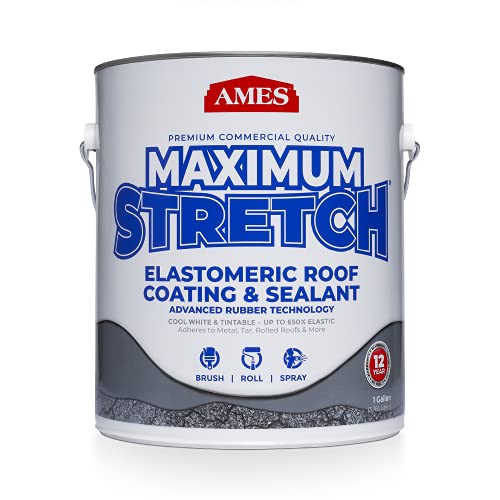
White elastomeric acrylic coating, 650% elongation and 88% reflectivity, for low-slope metal, tar and rolled roofs.
Check price on Amazon$43.96 as of Nov 19, 2026 4:25 am GMT+0000 — prices change; see Amazon for current price.Why we like it
- 88% light reflectivity stated
- 650% elongation resists cracking
- Names metal, tar and rolled roofing
- Low VOC and made in the USA
| Specification | Details |
|---|---|
| Chemistry | White elastomeric acrylic, rubberized |
| Elongation | 650% |
| Reflectivity | 88% light reflectivity |
| Roofs named | Metal, tar, built-up and rolled roofing; low-slope maintenance |
| Application | Brush, roll or spray |
| Size | 1 gallon; also sold as 4.6 gallon |
Ames MSS1 — 1 gal white elastomeric acrylic, 650% elongation, 88% reflectivity, low VOC
The Highest Stated Reflectivity on the Shelf
Three listings state a reflectivity figure: Ames Maximum-Stretch at 88%, and Rust-Oleum 710 at 84% initial and 74% weathered. Ames has the highest figure. ENERGY STAR explains that cool roofs stay cooler by reflecting sunlight and releasing heat, which reduces how much heat moves into the building. On a low-slope roof over a sunroom or a garage apartment, a white reflective coating can make a noticeable comfort difference in summer.
It pairs a high reflectivity claim with 650% elongation, the second-highest on the shelf, and names the low-slope roofs it suits: metal, tar, built-up and rolled roofing. It is designed for maintenance of an existing sound roof, not for stopping an active leak at a failed seam.
The listing does not state coverage per gallon, recoat time or minimum application temperature. Acrylic coatings generally need dry weather and above-freezing temperatures to cure, which limits the season here.
Pros
- High stated reflectivity
- Flexible elastomeric film
- Low VOC
Cons
- Coverage and cure not stated
- Maintenance coat, not a leak fix
- Weather-limited application season
Check Ames Maximum-Stretch MSS1 price on Amazon
7. Gorilla Patch and Seal Liquid (32 oz) — Best for Small Brush-On Patches

32 oz self-leveling liquid rubber that seals small gaps on roofs, gutters, flashing and skylights; paintable.
Check price on Amazon$28.73 as of Nov 19, 2026 4:25 am GMT+0000 — prices change; see Amazon for current price.Why we like it
- Brush, roll, trowel, dip or pour
- Self-leveling into small gaps and cracks
- Temperature and UV resistant once dry
- Paintable with latex or oil-based paint
| Specification | Details |
|---|---|
| Chemistry | Liquid rubberized coating |
| Application | Brush, roll, trowel, dip or pour; self-leveling |
| Uses named | Roofs, gutters, skylights, flashing, chimneys, PVC joints, windows, RV roofs |
| Paint | Latex or oil-based; prime before oil-based |
| Size | 32 oz, black |
| Temperature range / cure | Not stated in listing |
Gorilla Patch and Seal 105338 — 32 oz liquid rubber, self-leveling, paintable, roofs and gutters
The Most Application Methods of Any Listing
Gorilla’s Patch and Seal lists five ways to apply it: brush, roll, trowel, dip or pour. No other listing names that many. It is self-leveling, which suits small horizontal patches like a seam in a gutter, a crack in a skylight curb or a pinhole in metal flashing. The 32-ounce size is right for those jobs without leaving a gallon to skin over in the garage.
It is paintable with latex or oil-based paint, with a primer before oil-based. The listing describes it as temperature and UV resistant when dry, but gives no numbers.
The chimney mention carries an asterisk in the listing that is not explained in the copy shown. Treat chimney use with caution, and never use a general rubber coating where a hot flue or wood-stove pipe passes through.
Pros
- Many application methods
- Good size for small fixes
- Paintable
Cons
- No temperature, cure or coverage data
- Self-leveling can run on slopes
- Chimney use is footnoted, not explained
Check Gorilla Patch and Seal price on Amazon
Roof sealant types, explained
The 17 listings fall into four groups. Match the group to the job.
- Asphalt roof cement and sealant. Black, sticky and inexpensive. Traditional for sealing shingle tabs, flashing laps and nail heads. DAP’s cartridge names the D4586 standard for this type. Usually needs warm, dry conditions.
- Polymer and rubber sealants (cartridge or brush grade). More flexible than asphalt, often paintable and sometimes clear. Sashco, Geocel and Titebond fall here, each tuned to a substrate: shingles and flashing, single-ply membranes, or painted metal.
- Elastomeric roof coatings. Applied in thick coats over large areas of low-slope roofing. White acrylic coatings, like Ames, Rust-Oleum and Sta-Kool, reflect sunlight. Bitumen coatings, like Liquid Rubber’s black formula, stretch further but absorb heat.
- Spray and pour-on rubber coatings. Products like Flex Seal and Gorilla’s spray and liquid. Convenient for small patches, but they are thin and their listings give few performance numbers.
RV roof products (Dicor lap sealant and the RV versions of Liquid Rubber and SENVEN) are formulated for camper roofs and are best kept to that use unless the maker says otherwise.
What sealant can and cannot fix
Sealant is a legitimate part of roofing. Roofers use it at flashing laps, under shingle tabs at ridges and around certain metal-roof details. As a leak repair, though, it is usually temporary.
Reasonable sealant repairs:
- Resealing exposed nail heads on flashing or ridge caps
- Sealing a small gap at a counterflashing reglet or a metal flashing lap
- Resealing fastener heads on an exposed-fastener metal roof
- Edge-sealing a small EPDM patch on a low-slope roof
- Getting a leak to stop until a roofer can make a proper repair
Problems sealant does not fix:
- A cracked or split pipe boot. Replace the boot or add a rain collar. See our roof boots guide.
- Missing, rusted or improperly lapped step flashing at walls and chimneys
- Hail-bruised or granule-stripped shingles
- Leaks from ice dams pushing water under shingles at the eaves
- Rotted or soft roof decking
- A worn-out roof near the end of its life
Smearing sealant over a problem can also hide it from the next inspector and make a proper repair harder, because the roofer has to clean it off first.
Application temperature and the Front Range
Colorado roofs swing from below zero to sun-baked in the same week, and that affects sealant choice. Products differ widely on this point. DAP’s asphalt sealant must go on above 40 degrees, while Sashco states application down to 0 degrees and a service range of -30 to 200 degrees. Most listings here do not state any application temperature at all.
Two practical points follow. For winter emergency repairs, choose a product rated for cold and wet application. For large coatings, wait for warm, dry weather, since acrylic and water-based coatings generally need above-freezing temperatures and time to cure before rain or frost. Intense high-altitude UV also degrades exposed sealant faster, so check repairs each spring.
Ventilate when working with solvent-based products near vents and attic openings. The EPA notes that many products containing organic solvents release volatile organic compounds during use, and indoor levels can rise if fumes are drawn inside.
Safety before you climb
Most roof leaks are best handled from the attic first: find the wet spot, follow the stain uphill, and note where it is relative to vents, chimneys and valleys. Then decide whether the fix is safe to do yourself. OSHA’s fall prevention campaign notes that falls are the leading cause of death in construction and calls out falls from ladders, scaffolds and roofs. Wet, frosty or snow-covered roofs are especially dangerous, and so is any roof steeper than a walkable pitch. If in doubt, call a roofer.
Once the leak is stopped, deal with the water inside. The EPA’s guidance is to fix leaks promptly and dry wet materials within 24 to 48 hours to prevent mold growth. Wet attic insulation often needs to be pulled back or replaced.
When a roofer or inspector is needed
Call a roofer when a leak returns after a sealant repair, when the leak is at a chimney, wall or skylight flashing, after hail, or whenever shingles are curling, cracked or missing. Low-slope roofs over porches and additions often need membrane repairs rather than coatings; our guides on porch roofs and EPDM rubber roofs explain the options. For budgeting, see our roof repair cost guide.
Call an inspector when you are buying or selling a home and the roof has visible sealant patches, which often mark past leaks, or when you want an independent read on whether a roof needs repair or replacement. Our roof inspection cost guide covers what is involved, our roof sealant guide covers the basics, and our structure and exterior hub covers related topics. Front Range buyers and homeowners who want a vetted inspector to evaluate a roof can reach out through our contact page.
Frequently asked questions
What is the best sealant for a leaking roof?
It depends on where the leak is. A flexible polymer sealant suits flashing and shingle repairs, a sealant that names EPDM or TPO suits single-ply membranes, and a metal-specific sealant suits painted metal panels. For emergencies in cold or wet weather, pick a product rated for those conditions. Most sealant repairs are temporary.
Is roof sealant a permanent fix?
Usually not. Sealant can stop a leak at a nail head or flashing lap for a while, but it does not replace failed flashing, cracked pipe boots or worn shingles. Exposed sealant also degrades in UV. Have a roofer make a permanent repair.
Can you apply roof sealant in the rain or cold?
Some products allow it. Among the listings we compared, three say they can go on wet surfaces, and one states application down to 0 degrees Fahrenheit. Others, such as an asphalt sealant we compared, must be applied above 40 degrees. Check the label before buying for a winter repair.
What is the difference between roof sealant and roof coating?
Sealant is applied in beads or small patches at joints, laps and penetrations. Roof coating is spread over a large area of low-slope roofing in thick coats to protect and sometimes reflect sunlight. Coatings are maintenance products for sound roofs, not fixes for active leaks at failed seams.
Should I use roof sealant around a pipe boot?
A cracked pipe boot should be replaced or fitted with a rain collar rather than covered with sealant. Some rubber collars can be damaged by petroleum-based products. Sealant may be specified around some metal-roof boots, so follow the boot maker's instructions.
How long does roof sealant last?
Roof sealant typically lasts a few years to around 10 years or more, depending on the product, sun exposure, temperature swings and surface preparation. Polyurethane and silicone sealants usually outlast basic asphalt cement. Inspect sealed areas yearly and reseal when cracking, shrinking or peeling appears.
How long does roof sealant take to cure?
Roof sealant cure times vary from a few hours to several days, depending on the product, thickness, temperature and humidity. Many sealants are rain-ready quickly but take longer to cure fully. Check the label for rain-ready time, full cure time and temperature limits.
Can roof sealant fill gaps in a metal roof?
Roof sealant can fill small gaps at metal roof seams, fasteners and flashing, using products labeled for metal roofs. Larger gaps or loose panels need mechanical fixes, such as new fasteners or closures. Sealant alone may fail if panels move or rust is not addressed.
More Questions About Roof Sealants
What sealant works best on asphalt shingle roofs?
Asphalt-based roof cement or a sealant labeled for asphalt shingles works best on shingle roofs, because it bonds to the shingle surface and flexes with temperature changes. Polyurethane and some hybrid sealants are also used for shingle repairs.
Sealant is meant for small jobs such as sealing exposed nail heads, lifted tabs and flashing edges, not for patching large failed areas. Apply to clean, dry surfaces when possible, and follow temperature limits on the label. Avoid smearing sealant over large areas, which can trap water. Missing or badly damaged shingles should be replaced.
What is the best sealant for roof flashing?
The best sealant for roof flashing is usually a flexible, roofing-grade polyurethane, butyl or hybrid sealant compatible with both the flashing and roof materials. Asphalt roof cement works on many shingle roofs.
Flashing leaks often come from failed caulk joints, lifted counterflashing or corroded metal, and sealant only fixes some of these. Clean the surface, remove old failed caulk and apply a continuous bead. Severely damaged or missing flashing should be replaced. Chimney and wall flashing problems often benefit from a roofer’s inspection.
Can silicone caulk be used on a roof?
Silicone caulk can be used for some roofing jobs, such as metal roof seams and certain flashing, but it does not bond well to asphalt and can prevent future repairs because little sticks to cured silicone. Roofing-specific sealants are often a better choice.
Check the product label for roofing use and compatibility with the surface. Silicone handles UV and temperature swings well. Once applied, it is hard to remove fully, and new sealants may not stick over it. For shingle roofs, asphalt-based or polyurethane sealants are more common choices.
What sealant works on PVC or TPO roofs?
PVC and TPO roofs usually need sealants or repair products approved by the membrane manufacturer, because many general-purpose sealants do not bond well to these single-ply membranes. Heat welding is often the standard repair method.
Using the wrong sealant can lead to peeling or leaks and may void the roof warranty. Small repairs may use manufacturer-approved patches, primers and sealants, while larger repairs need a roofer with heat-welding equipment. Clean the membrane according to instructions before applying any product. Check warranty requirements before attempting DIY repairs.
What is the difference between roof cement and roof sealant?
Roof cement is a thick, trowel-applied asphalt product for patching and embedding flashing, while roof sealant is usually a cartridge-applied caulk for sealing joints, seams and fasteners. Both are meant for small repairs.
Roof cement fills gaps and holes and sticks to wet surfaces in some formulas. Sealants offer more precise application and often more flexibility. Neither replaces proper roofing materials or flashing. Choosing the product labeled for the specific roof surface and conditions gives better results.
References
- Fall Prevention Campaign — Occupational Safety and Health Administration
- Cool Roofs — ENERGY STAR
- Volatile Organic Compounds’ Impact on Indoor Air Quality — U.S. Environmental Protection Agency
- A Brief Guide to Mold, Moisture and Your Home — U.S. Environmental Protection Agency