Drone Roof Inspection: How It Works, Limits and FAA Rules
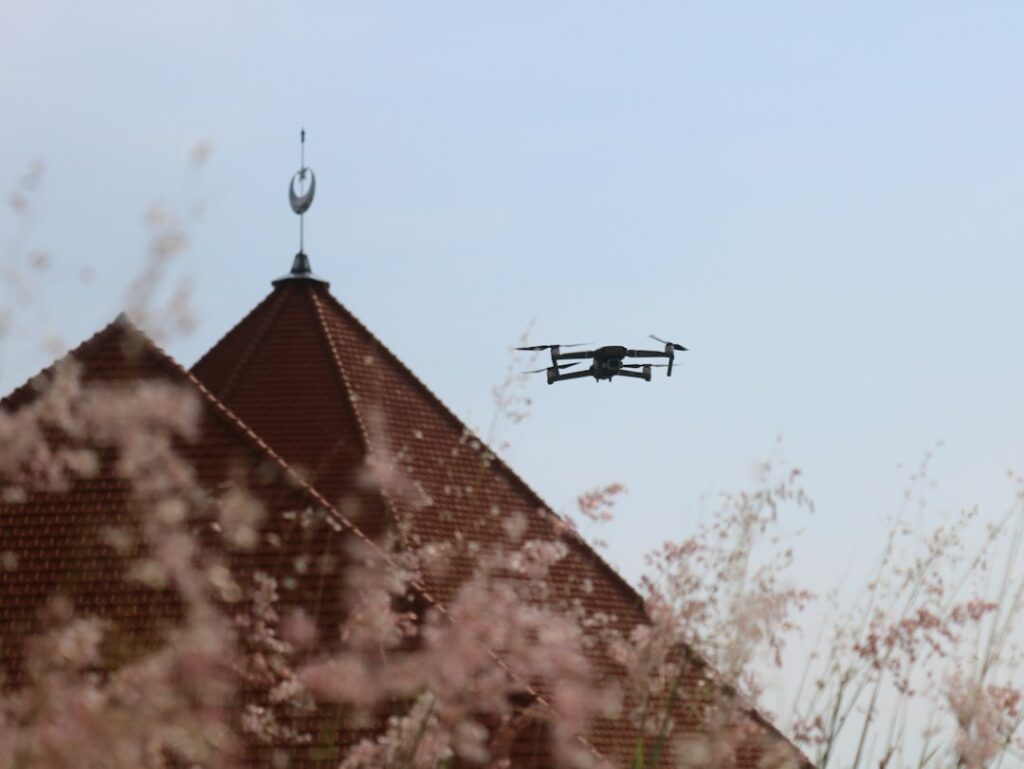
A drone roof inspection uses a small unmanned aircraft with a high-resolution camera to photograph and video a roof from above, so an inspector or roofer can evaluate shingles, flashing, chimneys and drainage without climbing onto the surface. Drones are especially useful on steep, tall, fragile or snow-covered roofs that cannot be walked safely, and they produce a photo record buyers and insurers can review later. They also have real limits: a camera cannot feel soft decking, lift a shingle to check fastening or see inside the attic, so a drone works best as one tool within a broader inspection rather than a full substitute for hands-on evaluation. This guide explains how drone roof inspections are done, what they reveal and miss, the federal rules commercial operators fly under, Front Range airspace and weather issues, typical costs and how to choose a provider.
Part of our Specialty Home Inspections guide — start there for the full picture →
Roof damage or a roof replacement? Get a local roofer on the phone.
📞 Call (833) 850-2469How a Drone Roof Inspection Works
The process is usually straightforward:
- Pre-flight check. The operator reviews the airspace, weather, wind, nearby obstacles such as power lines and trees, and any permission needed to fly in the area.
- Launch from the ground. The drone takes off from the yard, driveway or street, typically with the operator keeping it in sight throughout.
- Overview images. The drone captures wide shots of every roof slope, the overall layout and the surroundings, such as overhanging trees.
- Close-up passes. It then flies lower and closer to photograph details: valleys, ridges, flashing, vents, pipe boots, skylights, chimneys, gutters and areas of visible damage.
- Video and specialty capture. Some operators record video, and some use mapping software that stitches photos into a single image or a measurable model.
- Review and reporting. The inspector reviews the images on a large screen, often zooming in on details, and includes selected photos in the report.
A typical residential flight takes minutes, not hours. The time-consuming part is often the review, especially when a roof has many slopes or storm damage.
What a Drone Can Show Well
- Overall roof condition. Missing shingles, obvious wear, granule loss patterns and aging on each slope.
- Storm damage patterns. Displaced or missing shingles, debris, large hail impacts on some materials and damaged vents or gutters.
- Flashing and penetrations. Chimney flashing, step flashing at walls, plumbing vent boots, exhaust caps and skylight frames.
- Chimney tops. Crowns, caps and spark arrestors that are hard to see from the ground.
- Drainage. Clogged gutters, missing downspouts, ponding on low-slope roofs and debris in valleys.
- Tree and vegetation issues. Branches touching or overhanging the roof, and moss or debris buildup in shaded areas.
- Hard-to-reach structures. Upper roofs above a lower roof, steep turrets, detached garages and outbuildings.
- Documentation. A dated photo record that can be shared with buyers, sellers, roofers and insurance adjusters.
What a Drone Cannot Do
Understanding the limits matters as much as understanding the capabilities:
- Feel the roof. Soft or spongy decking and delaminated sheathing are found by walking, not by photographing.
- Lift shingles. Nail placement, sealing strips and the condition of underlayment are hidden from above.
- Reliably confirm subtle hail bruising. Hail can fracture an asphalt shingle’s mat without obvious surface marks. Experienced roofers and adjusters often confirm such damage by touch.
- See the attic. Leaks, condensation, ventilation problems and rot on the underside of the decking only show from inside.
- Inspect under snow, heavy debris or deep shade. If the surface is covered, the camera cannot see it.
- Fly in every condition. High wind, rain, snow, low light and airspace restrictions can ground the flight.
For those reasons, many inspectors pair drone imagery with a ground-level and ladder-edge review and a look in the attic. A drone report that does not mention the attic is describing only part of the roof system.
Drones in Home Inspections
The ASHI Standard of Practice directs home inspectors to inspect roofing materials, roof drainage systems, flashing, skylights, chimneys and roof penetrations, and to describe the methods used to inspect the roofing. It does not require the inspector to walk on the roof, and it states that inspectors are not required to perform procedures that would, in their professional judgment, likely be dangerous to the inspector or others or damage the property.
That framework is why drones have become common in home inspections. A home inspector may walk a low-slope, dry, sturdy roof; view a steep or high roof from a ladder at the eaves; and use a drone for slopes that cannot be reached safely. The report should say which method was used for each part of the roof. When it says “viewed by drone,” buyers know the inspector did not walk that area.
Drones also help protect the roof itself. Some roofing materials, such as clay or concrete tile, slate and certain older shingles, can be cracked by foot traffic. Wet, frosty or snow-dusted roofs are slippery for anyone.
Safety: Why Drones Reduce Fall Risk
Roof work is dangerous. OSHA notes that falls are among the most common causes of serious work-related injuries and deaths, and it requires fall protection in the construction industry at elevations of six feet or more. Its construction standard specifies that each employee on a steep roof with unprotected sides and edges six feet or more above a lower level be protected by guardrail systems with toeboards, safety net systems or personal fall arrest systems.
Home inspectors and roofers working alone on a quick evaluation often cannot set up full fall protection on every roof. A drone lets them gather detailed images of steep or high slopes without stepping onto them. For homeowners, the lesson is simpler: there is rarely a good reason to climb onto your own roof to look for damage after a storm. Ground-level binoculars, photos from an upstairs window or a professional with a drone are safer options.
FAA Rules for Commercial Drone Operators
When a drone is flown for business, such as an inspection a client pays for, the operator falls under the Federal Aviation Administration’s small unmanned aircraft rules, commonly known as Part 107. In general terms, those rules mean:
- Certified pilot. The operator must hold a Remote Pilot Certificate, earned by passing an FAA knowledge test and keeping it current.
- Registered aircraft. The drone must be registered with the FAA and marked with its registration number.
- Remote ID. Most drones must broadcast identification and location information while flying.
- Altitude limits. Flights are generally limited to 400 feet above ground level, with some exceptions near structures.
- Visual line of sight. The pilot or a visual observer must be able to see the drone during the flight.
- Airspace authorization. Flying in controlled airspace near airports requires FAA authorization, which is often granted quickly through automated systems for low-altitude flights.
- Operating limits over people and at night that depend on the aircraft and the operator’s training.
These are general descriptions; the FAA’s current rules govern. A homeowner hiring a drone inspection does not need to know the details, but it is reasonable to ask whether the operator holds a Remote Pilot Certificate and carries insurance that covers drone operations.
Privacy and neighbors
Drone flights over a single house can capture neighboring yards. Professional operators typically focus their cameras on the subject property and avoid lingering over neighbors. Colorado and some local governments have their own laws touching on privacy and drone use, so operators should know local rules.
Front Range Considerations
Airspace
The Denver metro area and Colorado Springs have extensive controlled airspace around Denver International Airport, Centennial Airport, Rocky Mountain Metropolitan Airport, Buckley Space Force Base, Colorado Springs Airport and military installations, along with smaller airfields throughout the region. Many residential neighborhoods sit inside airspace where commercial drone flights require authorization. Experienced local operators handle this routinely, but it can occasionally delay a flight or limit altitude.
Wind
Strong, gusty winds are common along the Front Range, especially near the foothills during downslope wind events. Small drones have wind limits, and gusts can make close-in flying near roofs and trees risky. Flights may need to be rescheduled to calmer mornings.
Hail season
After major hailstorms, demand for roof inspections spikes. Drones help inspectors and roofers document damage across many homes quickly. Because subtle hail bruising on asphalt shingles is hard to confirm from photos alone, many hail claims still involve someone walking the roof, testing shingles by touch and photographing marked impacts.
Snow and sun angle
Snow cover in winter hides roof surfaces, and low winter sun can cast long shadows on north-facing slopes. Midday flights on clear days often produce the best images.
Altitude and thin air
Thinner air at higher elevation reduces drone rotor efficiency somewhat, which can shorten flight time. That is rarely a problem for a single house but can matter for large properties or mountain homes.
Thermal Imaging From Drones
Some drone inspections add an infrared (thermal) camera. Thermal imaging can show temperature differences that may indicate trapped moisture in low-slope roof assemblies, missing insulation or heat loss. It is most useful under specific conditions, often in the evening after a sunny day when wet areas retain heat differently than dry ones. Thermal images require interpretation; a temperature pattern is a clue to investigate, not proof of a leak. For pitched residential roofs, thermal imaging from above tends to be less conclusive than thermal scans of ceilings from inside the home.
Common Problems Drone Images Reveal
On Front Range homes, drone imagery frequently brings these issues to light, many of which are invisible from the street:
Flashing failures
Step flashing missing where a roof meets a second-story wall, chimney counter-flashing pulled loose, and sealant-only “flashing” at skylights all show clearly in close-up aerial photos. These are among the most common leak sources.
Damaged pipe boots and vents
Rubber pipe boots crack in strong sun, and metal vents dent in hail. A drone can photograph every penetration in a single pass, which is hard to do from a ladder.
Wind-lifted and missing shingles
Creased or lifted tabs along ridges and rakes, and missing shingles on upper slopes, are easy to spot from above after high-wind events.
Valley and gutter debris
Leaves, pine needles and shingle granules collect in valleys and gutters, slowing drainage and contributing to ice dams in winter.
Past repairs
Patched areas with mismatched shingles, roofing cement smeared over flashing and tarps left from earlier storms often indicate past leaks worth asking the seller about.
Satellite and solar mounts
Old satellite dish mounts left bolted through the roof, and the flashing around solar panel attachments, are common leak points that are hard to see from the ground.
What to Expect in a Drone Roof Report
A useful report turns raw images into findings. Look for:
- An overview image of the entire roof with slopes labeled, so later photos can be located
- Close-up photos of each defect with a brief description and location
- A clear statement of which areas were viewed by drone, walked or viewed from the ground
- Notes on conditions that limited the inspection, such as wind, snow, shade or airspace restrictions
- Recommendations, such as repair by a roofer, further evaluation of possible hail damage or monitoring
- The date and time of the flight, which matters for insurance documentation
Some providers also deliver the full photo set or video. Keep it; it becomes a baseline for comparing the roof after future storms.
Typical Drone Roof Inspection Costs
Pricing depends on the provider, the property size, the number of structures, whether mapping or thermal imaging is included and whether the drone work is part of a larger inspection. As a typical national picture:
- Included in a home inspection: many home inspectors use drones at no extra charge when a roof cannot be walked, as part of the standard fee.
- Stand-alone drone roof inspections: often range from roughly one hundred to a few hundred dollars for a typical house.
- Mapping, measurements or thermal imaging: usually cost more and may be priced separately.
- Roofers’ storm inspections: some roofing companies offer free drone inspections as part of estimating repairs or replacements.
Our guide to roof inspection cost compares drone, walked and ground-level inspections in more detail.
Preparing for a Drone Inspection
A little preparation helps the flight go quickly and produce better images:
- Tell the operator about pets, children or neighbors who may be outside, and keep the launch area clear.
- Move vehicles from the driveway if it will be used as the takeoff spot.
- Mention any known leaks, past repairs or storm dates so the operator can photograph those areas closely.
- Share the age of the roof and the shingle product if known.
- Provide attic access if the inspection includes an interior review.
- Be flexible on timing; wind, rain and airspace restrictions can push a flight to another day.
For buyers, coordinating the drone flight with the home inspection appointment avoids a second visit and lets the inspector connect exterior images to what they see in the attic and ceilings.
How to Choose a Drone Roof Inspection Provider
- Ask about certification. Confirm the operator holds an FAA Remote Pilot Certificate.
- Ask about insurance. General liability policies do not always cover drones; ask whether drone operations are covered.
- Ask what the report includes. Labeled photos of each slope, close-ups of defects, the inspection method for each area and whether the attic was examined.
- Ask about roofing knowledge. A great pilot is not automatically a good roof evaluator. The person reviewing the images should understand roofing materials and failure modes.
- Ask about follow-up. If the images show possible hail damage, will someone walk the roof to confirm it?
- Watch for pressure sales. After storms, door-to-door offers of free drone inspections are common. Get a second opinion before signing a contract, especially one that assigns insurance claim rights to a contractor.
Drone Inspections for Buyers, Sellers and Owners
Buyers benefit from drone images when the roof is steep, tall or covered in fragile material, and when the home inspector’s report would otherwise say “viewed from ground only.” Ask the inspector in advance whether a drone will be used.
Sellers can use a pre-listing drone inspection to document a roof’s condition and address issues before buyers find them, while keeping disclosure obligations in mind.
Owners often order drone inspections after storms, before winter or when planning to sell. A dated set of photos is also a useful baseline if a later storm leads to an insurance claim.
Drone roof images often pair with other specialty evaluations. A chimney inspection covers the flue and interior structure that a drone cannot see, and our specialty inspections guides describe other add-ons buyers commonly order. The hiring process hub explains what a standard home inspection covers.
References
- ASHI Standard of Practice for Home Inspection — American Society of Home Inspectors
- Fall Protection — Occupational Safety and Health Administration
- 1926.501 Duty to Have Fall Protection — Occupational Safety and Health Administration
Frequently asked questions
Is a drone roof inspection as good as walking the roof?
It is excellent for overall condition, flashing, chimneys and drainage, and safer on steep or fragile roofs. It cannot feel soft decking, lift shingles or reliably confirm subtle hail bruising, so many inspectors combine drone images with other methods and an attic review.
Do drone roof inspectors need a license?
Commercial drone operators fly under FAA small unmanned aircraft rules, commonly called Part 107, which generally require a Remote Pilot Certificate and a registered drone. Ask any provider to confirm certification and insurance.
How much does a drone roof inspection cost?
Many home inspectors include drone use in the standard fee when a roof cannot be walked. Stand-alone drone roof inspections typically range from roughly one hundred to a few hundred dollars, with mapping or thermal imaging costing more.
Can a drone detect hail damage?
Drones can show missing shingles, damaged vents and gutters and some hail impacts. Subtle bruising on asphalt shingles often needs to be confirmed by someone on the roof, so drone images are a starting point for hail claims.
Can drones fly anywhere on the Front Range?
No. Much of the Denver and Colorado Springs metro areas sit in controlled airspace near airports and military bases, where commercial flights need FAA authorization. Wind and weather also limit flights.
Want a roof evaluated on a home you are buying, whether by drone, ladder or both? Contact our team to connect with a Front Range home inspector.