Attic Mold Removal Services: Ventilation and Scope Guide
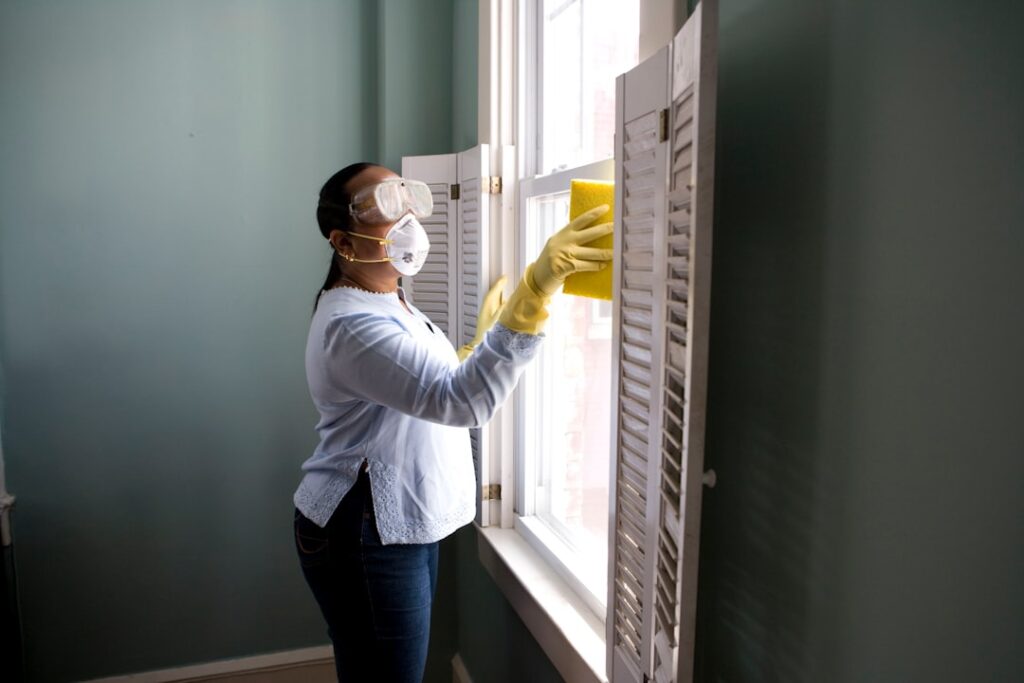
Attic mold removal services address a specific set of conditions — ventilation deficits, kraft-faced batt insulation moisture, ridge-versus-soffit airflow imbalance, and the roof-leak signs that often accompany active growth. Attics are the second most common location for residential mold after basements, and the diagnostic profile differs sharply from below-grade work. This guide walks through the service-side scope: what attic remediation includes, how source correction integrates, and what homeowners should expect. The framework draws on EPA mold guidance, ASHRAE ventilation standards, and InterNACHI inspection guidance current as of 2026.
Is this mold, asbestos, or water damage? Get a free instant screen
Upload a clear photo of the suspect area. You'll get an instant AI screening opinion and what to do next. This is screening guidance, not a professional determination.
Screening guidance only. AI can be wrong. Confirm asbestos, mold type, or lead with lab testing or a licensed professional before acting.
What Attic Mold Removal Services Cover
Attic remediation services typically include containment construction within the attic space, demolition of affected materials (often roof sheathing, insulation, framing components), HEPA-filtered cleaning of structural elements, antimicrobial treatment where appropriate per IICRC S520, drying with industrial equipment, and clearance verification. The work is performed in restrictive overhead spaces and requires PPE rated for both microbial contamination and high-temperature working conditions.
Source correction is integral to attic services. Unlike a one-time water event, attic mold typically results from ongoing ventilation or moisture-control failures that must be corrected for remediation to hold. A service that cleans without addressing source produces predictable regrowth within one to two seasons.
Ventilation Deficits as Primary Cause
Most attic mold traces to inadequate ventilation that allows moisture-laden interior air to condense on cold roof sheathing. ASHRAE and building-code standards specify minimum ventilation as 1 square foot of free vent area per 150 square feet of attic floor (or 1:300 with balanced ridge-and-soffit configuration and vapor retarder). Older homes, especially Front Range homes built before 1990, frequently fall below these minimums.
Service scopes that correct ventilation as part of remediation typically add ridge vents, increase soffit-vent free area, or install gable vents to achieve required ratios. Without ventilation correction, the remediation addresses symptoms rather than cause. Ask any service provider how they measure and correct ventilation deficits.
Ridge-vs-Soffit Airflow Balance
Effective attic ventilation requires balanced intake and exhaust. Soffit vents (intake) pull cool outdoor air in along the eaves; ridge vents (exhaust) release warm humid air along the peak. Imbalance — typically too much exhaust without adequate intake — produces dead spots where moisture accumulates and condensation forms on cold sheathing.
A competent service inspects intake and exhaust separately, measures free vent area at each, and identifies imbalances. Common Front Range issues include soffit vents blocked by insulation pushed against the eaves, ridge vents installed without adequate soffit upgrade, and gable vents that short-circuit ridge-soffit flow when present together.
Kraft-Faced Batt Insulation Issues
Kraft-faced fiberglass batt insulation includes a paper vapor retarder that should face the conditioned space (typically down, toward the living area in an attic floor application). Installation reversed — paper facing up — creates a vapor trap that accumulates moisture on the wrong side and feeds attic mold. This is a common installation error in older homes.
Remediation services should inspect insulation orientation as part of scope assessment. Reversed-paper installation requires removal and replacement, often beyond the contaminated area to ensure consistent vapor control. Loose-fill insulation does not have this orientation issue but presents its own challenges around uniformity and depth.
Roof Leak Signs During Inspection
Active or historical roof leaks produce specific signs in attic mold patterns: localized staining on roof decking near flashing, valleys, or penetrations; rusted nails or fasteners in the affected area; water-tracking patterns on rafters or trusses. These patterns indicate intermittent water intrusion that must be repaired before remediation.
A service that begins remediation without addressing active roof leaks is wasting the homeowner’s money. Roof repair typically precedes remediation, with the timing coordinated to allow the roof to be watertight before interior cleanup. Some services subcontract roof work; others refer to specialty roofers.
Pricing for Attic Services
Front Range attic mold remediation in 2026 typically runs $2,000-$8,000 for room-scale contamination in a single-story attic, $5,000-$15,000 for whole-attic contamination requiring full insulation replacement, and $10,000-$25,000+ when roof sheathing replacement is included. Source-correction work (ventilation upgrades, soffit re-routing) typically adds $500-$3,000.
Pricing variance reflects scope differences as much as contractor differences. A bid that includes ventilation correction and sheathing repair will price higher than a clean-only bid, but the higher bid often produces durable results while the lower bid produces seasonal regrowth.
Containment in Attic Spaces
Attic containment differs from below-grade containment. The space is overhead, often hot, and bounded by sheathing rather than walls. Effective containment isolates the attic access from the home below — sealing the attic hatch or pull-down stairs and establishing negative pressure pulling air toward HEPA filtration. HVAC isolation matters acutely; many homes have HVAC equipment or ductwork in the attic that must be sealed during work.
Services that lack proper containment risk cross-contaminating the living space through the attic access. Confirm containment scope in writing before signing.
The Inspection-Remediation Conflict
The structural conflict that affects general mold work intensifies in attics because the affected materials are often hidden from initial visual inspection. Pulling back insulation reveals more contamination, which creates incentive to expand scope during demolition. The cleanest arrangement uses an independent industrial hygienist for assessment and post-remediation clearance.
Independent assessment of attic projects typically costs $400-$800 and routinely catches scope inflation. The cluster on attic mold vetting covers the contractor-selection side; this article focuses on what the services themselves include.
Insulation Replacement in Attic Work
Attic mold typically affects insulation extensively. Fiberglass batts cannot be effectively cleaned and are removed and replaced. Loose-fill cellulose or fiberglass is vacuumed out and replaced with new material. Spray foam, when present, often requires partial demolition because contamination extends into the foam-air interface.
Replacement insulation should meet current code R-values for the climate zone. Most Front Range counties require R-49 minimum for ceiling insulation in new construction; remediation projects are an opportunity to upgrade to current standards even when the original installation predated them. The cost differential is usually small relative to total project scope.
HVAC Considerations in Attic Work
Many Front Range homes house air handlers, ductwork, or both in attic spaces. When mold contamination affects HVAC components, NADCA-certified duct cleaning becomes part of the project scope. Equipment replacement is sometimes warranted when contamination has affected coils, blowers, or air-handler interiors.
Coordinate HVAC work with the remediation timeline. Cleaning ducts before attic contamination is removed re-contaminates the ducts. Equipment replacement before clearance creates risk of recontaminating new equipment.
Clearance Testing for Attics
Post-remediation clearance in attics should include air sampling from the attic, an outdoor control sample, and surface sampling on retained materials. Because the attic is connected to the conditioned space through ducts and air-leakage paths, clearance criteria should consider the entire pathway, not just the isolated attic.
Third-party testing by an entity independent of the remediation contractor is the recommended structure. Lab accreditation should be AIHA EMLAP or equivalent. The report should specify the methodology, pass/fail criteria, and any limitations.
Front Range Climate Patterns
Colorado attics see significant seasonal swing. Winter conditions concentrate condensation risk; summer monsoon humidity raises moisture loads. Most active growth occurs in shoulder seasons when warm humid air migrates into cold attic spaces. A service experienced in Front Range work recognizes these patterns and times remediation to avoid working during high-risk humidity windows when possible.
Warranty Specifics
Attic remediation warranties should distinguish regrowth from incomplete removal versus regrowth from new moisture events (new roof leaks, ventilation failures). Strong warranties cover the first. Warranties that exclude any regrowth where source cannot be proven are weak — sources are often diffuse and hard to attribute to a single failure mode.
When Services Should Refer Out
Legitimate attic services refer when scope exceeds core competency. Roof repair typically goes to specialty roofers. Major structural repair from rot or pest damage goes to general contractors. Electrical issues uncovered during demolition go to licensed electricians. A service claiming to handle every adjacent scope without specialty credentials is operating outside competency. The broader inspection framework lives on the mold inspection hub.
Red Flags Specific to Attic Work
Disqualifying signals include refusal to assess ventilation as part of scope, scopes that omit source correction, refusal to identify roof-leak signs before remediation begins, and bids that bundle remediation and reconstruction without offering separation. Each of these alone justifies moving to another bidder.
Bath Fan and Dryer Vent Terminations
A common attic moisture source is bath fan or dryer vent termination into the attic space rather than to the building exterior. The ducts dump warm humid air directly into the cold attic, producing condensation that drives mold growth in concentrated areas around the vent terminations. This is a code violation and a remediable condition that contributes to chronic moisture issues.
A competent service inspects all attic-routed ducts and confirms they terminate at exterior caps. When terminations are improper, the service either re-routes the ducts or documents the deficiency for separate correction. Remediating mold without correcting the vent termination produces predictable regrowth.
Ice Dam History and Attic Mold
Front Range ice damming during heavy-snow winters is a recurring contributor to attic moisture. When heat loss from the conditioned space melts roof snow that refreezes at the eaves, water backs up under shingles and saturates roof sheathing from above. Repeated cycles produce the moisture patterns that drive attic mold growth, especially in older homes with limited insulation and ventilation.
Ice dam correction involves several elements: improving attic insulation to reduce heat loss, improving ventilation to dissipate any heat that does escape, and sometimes installing heated cables along the eaves for the worst-affected sections. Remediation services should identify ice damming as a contributing source when the pattern matches and refer to roofing or insulation contractors for correction.
Working Conditions in Front Range Attics
Attic remediation involves working in restrictive spaces with high heat in summer and very cold conditions in winter. Front Range attics can exceed 130°F in summer afternoons and drop below 20°F in winter mornings. Worker safety requires hydration protocols in summer, hand and respiratory protection in winter, and scheduling that avoids the most extreme conditions when possible.
Service quality often correlates with how seriously the firm takes attic working conditions. Firms that schedule attic work for cool morning hours, provide appropriate PPE, and budget for additional labor time produce better outcomes than firms that push crews through extreme conditions.
Coordinating With Roofing Trades
Active roof leaks require repair before attic remediation begins. The remediation service coordinates with roofing trades for the timing, either subcontracting through their own relationships or referring the homeowner to a licensed roofer. Coordination prevents the common problem of remediating an attic only to have the same moisture event recur during the next storm.
Ask candidate services how they handle the roof-coordination element. Services with established roofing relationships handle it smoothly. Services that refer without coordination leave the homeowner to manage the sequence, which often produces scheduling problems.
References
- Mold Cleanup in Your Home — U.S. Environmental Protection Agency
- Dampness and Mold in Buildings — Centers for Disease Control and Prevention
- Attic Inspection Standards — InterNACHI
- Ventilation Standards and Guidelines — ASHRAE
Front Range homeowners dealing with attic mold can reach out through our contact page for a connection to a vetted independent inspector before hiring remediation services.
Mold removal & cleanup picks
For a small, contained patch (under ~10 sq ft) these EPA-friendly removers handle surface mold. Larger or recurring growth warrants a professional assessment first.
| Product | Why | Buy |
|---|---|---|
 RMR-86 Instant Mold Stain Remover RMR-86 Instant Mold Stain Remover | Fast-acting on stains; ventilate and wear PPE. | Amazon — $18.38 |
 Concrobium Mold Control Concrobium Mold Control | No-bleach formula that also helps prevent regrowth. | Amazon — $13.47 |
 Mold Armor Mold & Mildew Remover Mold Armor Mold & Mildew Remover | Widely stocked bathroom/surface remover. | Amazon — $22.98 |