Attic Mold Removal Services Near Me: A Buyer Guide
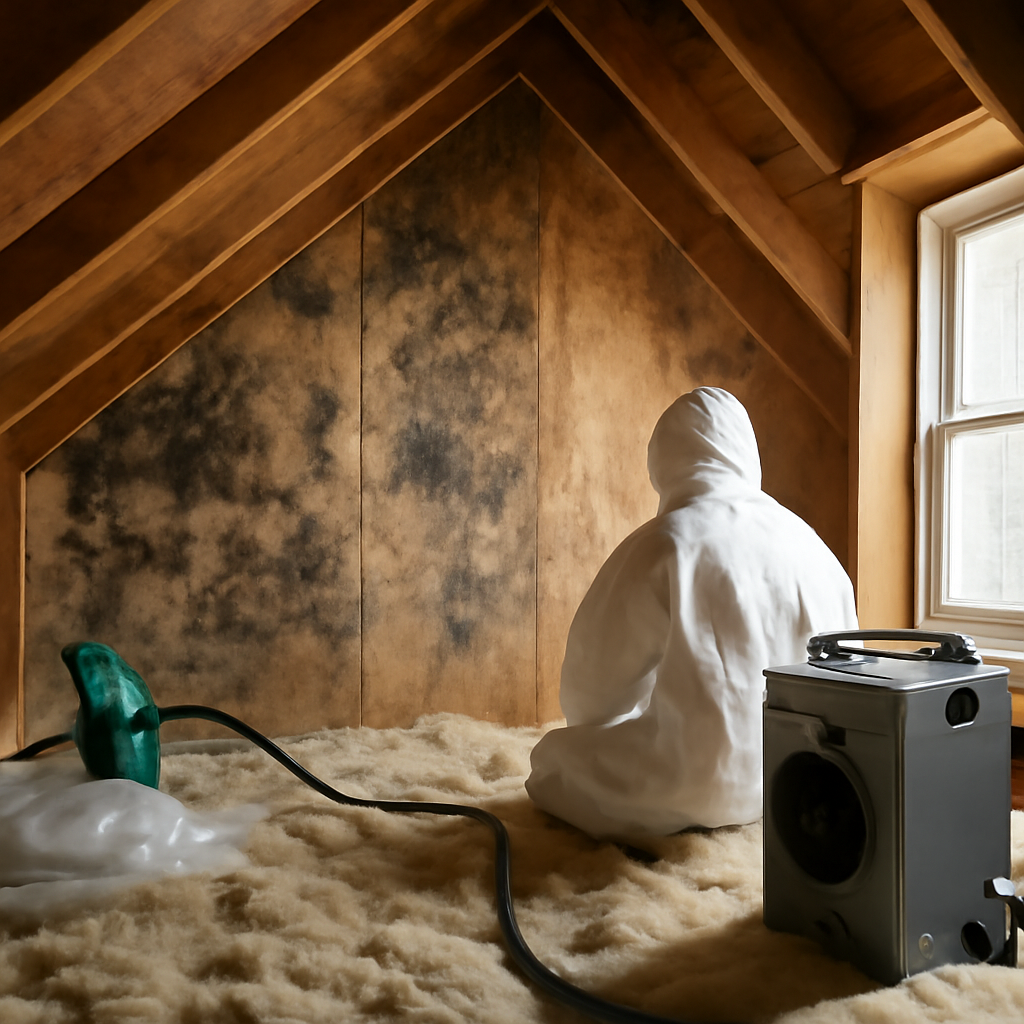
Spotting dark staining on attic roof sheathing usually triggers a quick search for attic mold removal services near me, often followed by a flood of ads that all look the same. Choosing well matters, because attic mold is closely tied to ventilation and roof problems, and a company that cleans the mold without fixing those causes leaves you to do it again. This guide explains how to find local providers, vet them properly, and compare quotes on equal footing. It summarizes EPA and CDC guidance current as of 2026; consult a certified professional for testing and your physician for any health symptoms.
Part of our Crawl Space & Attic Guide guide — start there for the full picture →
Is this mold, asbestos, or water damage? Get a free instant screen
Upload a clear photo of the suspect area. You'll get an instant AI screening opinion and what to do next. This is screening guidance, not a professional determination.
Screening guidance only. AI can be wrong. Confirm asbestos, mold type, or lead with lab testing or a licensed professional before acting.
How to find attic mold removal services near you
Start broader than a single ad. Search results, contractor directories, and trade-association member lookups all surface local remediation firms, and each gives you a different slice of the market. The companies paying the most for top ad placement are not automatically the best; they are simply the best at marketing.
Look for providers who explicitly handle attic and roof-related moisture, not just general mold cleaning. Attic work demands knowledge of ventilation, insulation, and roof leaks that a generalist may lack. Reading reviews for mentions of ventilation fixes, not just mold cleaning, tells you who treats the cause. Our guide to choosing a mold inspector near you covers how to find an assessor whose findings are independent of the cleanup sale.
Why attic mold is different
Attic mold rarely starts with a single leak. The usual culprit is moisture-laden air rising from the living space, often from bathroom exhaust fans vented into the attic instead of outside, combined with poor attic ventilation that lets that moisture condense on cold roof sheathing. The result is widespread staining across the underside of the roof.
Because the cause is systemic, the fix has to be too. A service that scrubs the sheathing but ignores the bath fan dumping humid air into the attic has treated a symptom. This is why vetting for ventilation competence matters more in the attic than almost anywhere else. The companion read on what professional attic mold removal involves details the source-correction work a thorough job includes.
What to ask before hiring
The questions you ask separate competent firms from order-takers. Ask how they will identify and address the moisture source, since that answer reveals whether they understand attic dynamics. A vague reply about spraying a sealant is a warning sign; a specific answer about ventilation, bath-fan routing, and roof inspection signals competence.
Confirm certification and insurance. Ask whether technicians hold credentials from a recognized remediation body and whether the firm carries liability coverage for this work. Request a written scope that names the moisture correction, the cleaning method, and how completion will be verified.
Key questions checklist
Run through a short list with every candidate. How will you find the moisture source? Is ventilation or bath-fan correction included or separate? What containment will you use to keep spores out of the living space? Do you offer clearance testing, and is it independent? Can you share recent local references? Will the quote separate remediation from any roof or insulation repair? Clear answers to all of these mark a provider worth shortlisting.
How to compare quotes fairly
Attic quotes are hard to compare because companies bundle differently. One firm’s low price may cover only cleaning, while another’s higher number includes ventilation fixes and a new bath-fan run. Comparing the totals without reading the scope is how homeowners pick the wrong bid.
Normalize the quotes before judging them. Line up each scope and confirm all of them address the moisture source, use containment, and verify the result. A bid that omits the ventilation fix is not cheaper; it is incomplete and will cost more once the mold returns. For a structured way to frame the numbers, the mold remediation cost calculator helps you see which variables each quote covers.
Spotting upselling and scare tactics
Mold inspires fear, and some companies use that. Be wary of a firm that both tests and remediates, then declares an emergency requiring immediate, expensive work. The conflict is obvious when the party finding the mold profits from removing it. Independent testing, separate from the cleanup crew, guards against inflated scopes.
Watch for pressure tactics, refusal to put the scope in writing, and claims that all attic mold is toxic and life-threatening. The CDC notes that mold should be removed regardless of type, but blanket toxicity claims are often a sales lever. A reputable provider educates rather than alarms.
Red flags in a quote
Several signals warrant caution. No written scope, a quote that ignores the moisture source, demands for full payment up front, and no mention of containment all suggest a firm cutting corners. Pricing far below every other bid often means the cheap quote skips the ventilation fix entirely.
Local versus national franchises
Both have a place. National franchises offer brand consistency and easy scheduling, but their overhead and marketing costs can show up in higher quotes. A well-reviewed local crew may know regional roofing and ventilation patterns better and price more keenly for the same scope.
The deciding factor is competence and transparency, not size. A local firm with strong references and a clear, source-focused scope often beats a national brand quoting higher for the same work. Vet each on the same criteria rather than assuming the bigger name is safer. The mold inspection and testing hub outlines how to keep assessment and remediation roles separate regardless of which type you choose.
What a fair attic job should cost
Pricing depends on attic size, accessibility, the extent of staining, and how much ventilation correction is required. Industry estimates place modest attic remediation in the four-figure range, with larger jobs that include re-routing bath fans, adding ventilation, and replacing insulation climbing higher. A roof leak repair, if needed, is usually a separate trade and a separate cost.
Resist anchoring on the lowest number. The cheapest quote that cleans without correcting ventilation will fail, making it the most expensive option once you pay a second crew. Value comes from a complete scope at a fair price, which the related guide on attic mold removal cost breaks down in detail.
Verifying the work is done right
Completion is more than a clean-looking attic. A thorough job ends with the moisture source corrected, the sheathing cleaned or treated, and ideally independent clearance verification. Ask the provider to document the moisture fix with photos, not just the cleaned surfaces.
Independent post-remediation testing, performed by someone other than the cleanup crew, gives you an unbiased confirmation. It costs extra but protects against paying for incomplete work. Keep all documentation in case a future sale or insurance question arises.
Preparing for the visit
You can make the assessment more accurate. Note when you first saw the staining, whether bathroom fans vent outside or into the attic, and any history of roof leaks or ice dams. Clear a path to the attic access and share any prior inspection reports.
Photograph the staining and the attic generally before anyone arrives. This record helps you compare what each company says and gives you a baseline if the work is later questioned. Informed homeowners get better scopes because providers know they are being evaluated carefully.
Making the final choice
Shortlist providers who answer the moisture-source question convincingly, carry proper credentials and insurance, and put a complete scope in writing. Favor the bid that addresses ventilation and the roof over the one that merely cleans, even if it costs more, because only the complete fix lasts.
An independent assessment before you hire ties it together. Knowing the true cause and extent of your attic mold lets you read every quote critically and decline the ones that gloss over the real problem. The goal is one durable job, not a series of cleanings.
How to read online reviews for attic mold work
Reviews are useful only if you read them critically. Look past the star rating to the substance: reviews that mention the company diagnosing and fixing a ventilation or roof problem signal a firm that treats causes, while reviews praising only speed and friendliness tell you little about technical competence. The specifics matter more than the score.
Patterns reveal more than individual reviews. A scattering of complaints about mold returning after service is a serious warning, since recurrence usually means the moisture source was ignored. Consistent mentions of clear communication, written scopes, and follow-up suggest a provider that operates professionally. Weigh recent reviews more heavily, since crews and ownership change over time.
Timing and seasonal considerations
Attic mold often becomes visible in seasons of high condensation, and timing your project sensibly helps. In colder climates, attic condensation peaks in winter when warm indoor air meets cold sheathing, so problems are frequently discovered then. Scheduling remediation when the underlying ventilation fix can also be properly installed leads to a more durable result.
Coordinating trades matters when a roof leak is involved. If the attic mold traces to a roofing problem, the roof repair and the remediation should be sequenced so the leak is fixed before or alongside the cleaning. A reputable provider helps coordinate this timing rather than cleaning an attic that is still actively taking on water.
What to expect during the service visit
Knowing the rhythm of a service visit helps you evaluate it as it happens. A competent crew arrives, sets up containment around the attic access to protect the living space, and works in protective gear. They diagnose and document the moisture source, clean the sheathing, address ventilation, and verify the result before packing up.
You should expect transparency throughout. A provider willing to show you the moisture source, explain the ventilation correction, and document the work with photos is operating in good faith. One that keeps you out of the loop, rushes the diagnosis, or cannot explain why the attic was wet is a candidate to reconsider, regardless of price.
Getting the most from your shortlist
Once you have two or three credible providers, a few final steps sharpen the decision. Ask each for a written scope and a clear breakdown of what is and is not included, then compare those scopes side by side rather than comparing headline prices. Confirm credentials and insurance for each, and check that references are recent and local.
An independent assessment remains your strongest tool. Having someone who is not bidding on the removal evaluate the attic gives you an unbiased benchmark for every quote and helps you spot the bid that quietly omits the ventilation fix. The combination of a clear independent baseline and carefully compared scopes leads reliably to a provider whose work lasts.
Warranties and guarantees on attic work
A meaningful warranty can distinguish a confident provider from a fly-by-night one. Ask what the company stands behind: a guarantee against mold recurrence carries weight only when the firm has corrected the ventilation source, since no warranty can overcome a problem left unfixed. Read what the guarantee actually covers and for how long.
Be wary of warranties on cleaning-only scopes that ignore the moisture cause, since those promises are nearly impossible to honor when the attic keeps getting wet. A guarantee paired with a complete source-correcting scope is reassuring; a guarantee slapped onto a surface clean is marketing. Weigh the warranty alongside the scope, credentials, and references rather than on its own.
References
- Mold Cleanup in Your Home — U.S. Environmental Protection Agency
- A Brief Guide to Mold, Moisture and Your Home — U.S. Environmental Protection Agency
- About Mold and Health — Centers for Disease Control and Prevention
- Attic Ventilation Standards — International Association of Certified Home Inspectors
Frequently asked questions
How do I find good attic mold removal services near me?
Look beyond top ads to contractor directories and trade-association member lists, and favor firms that explicitly handle attic ventilation and roof moisture, not just general mold cleaning. Reviews mentioning ventilation fixes signal a company that treats the cause rather than the symptom.
What should attic mold removal cost?
Industry estimates place modest attic jobs in the four-figure range, with larger projects that re-route bath fans, add ventilation, and replace insulation costing more. Roof leak repair is usually a separate trade and cost. Compare scopes, not just totals.
How do I avoid being upsold on attic mold?
Be cautious when one company both tests and remediates and then declares an emergency. Get independent testing, insist on a written scope, and be skeptical of blanket claims that all attic mold is toxic, which is often a sales lever.
Why does attic mold keep coming back?
Attic mold is usually driven by humid air from bath fans vented into the attic plus poor ventilation that lets moisture condense on the roof sheathing. Cleaning without correcting that airflow guarantees a return, so any quote must address the moisture source.
If you are in the Denver metro or Front Range and want an independent read on your attic before hiring a removal service, reach out through our contact page for a connection to a qualified local inspector.
Mold removal & cleanup picks
For a small, contained patch (under ~10 sq ft) these EPA-friendly removers handle surface mold. Larger or recurring growth warrants a professional assessment first.
| Product | Why | Buy |
|---|---|---|
 RMR-86 Instant Mold Stain Remover RMR-86 Instant Mold Stain Remover | Fast-acting on stains; ventilate and wear PPE. | Amazon — $29.99 |
 Concrobium Mold Control Concrobium Mold Control | No-bleach formula that also helps prevent regrowth. | Amazon — $11.26 |
 Mold Armor Mold & Mildew Remover Mold Armor Mold & Mildew Remover | Widely stocked bathroom/surface remover. | Amazon — $22.98 |