Attic Mold Inspection: Tracing Stains to the Moisture Source
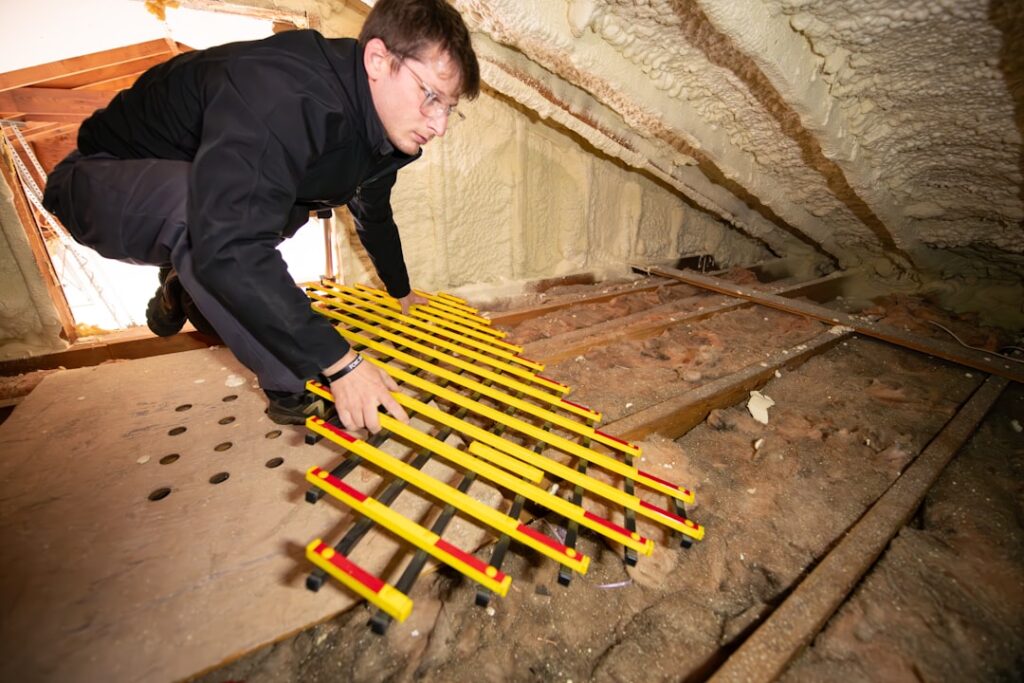
An attic mold inspection is less about naming the mold and more about finding the water that let it grow. Dark staining on roof sheathing almost always traces back to one of a handful of moisture sources: warm, humid house air leaking into the attic, a bathroom or kitchen fan dumping its exhaust under the roof, unbalanced ventilation, or a roof leak. Each leaves a recognizable pattern, and an inspector who reads that pattern can usually point to the cause before anyone talks about cleanup. This guide explains what a thorough inspection covers, how moisture readings and occasional sampling fit in, what Colorado Front Range attics tend to show, and how findings translate into next steps. It summarizes EPA, ENERGY STAR and ASHI guidance current as of 2026; anyone with health symptoms should talk to a physician, and remediation decisions belong with a qualified professional.
Part of our Crawl Space & Attic Guide guide — start there for the full picture →
Is this mold, asbestos, or water damage? Get a free instant screen
Upload a clear photo of the suspect area. You'll get an instant AI screening opinion and what to do next. This is screening guidance, not a professional determination.
Screening guidance only. AI can be wrong. Confirm asbestos, mold type, or lead with lab testing or a licensed professional before acting.
What an Attic Mold Inspection Covers
A home inspection under the ASHI Standard of Practice already includes the attic. The standard directs the inspector to inspect the roof structure, insulation and vapor retarders in unfinished spaces, ventilation of attics and foundation areas, and kitchen, bathroom, laundry and clothes dryer exhaust systems, and to describe the method used to inspect attics. That makes the attic a routine stop during any general inspection. The standard also limits the scope: the inspector is not required to walk across framing hidden by insulation.
A dedicated attic mold inspection goes deeper. The inspector, or a mold assessor brought in for the purpose, spends more time on the sheathing, looks at every exhaust termination, measures moisture in suspect wood, and connects the visible growth to a cause. The deliverable is not just “mold present” but a short list of moisture sources ranked by likelihood, with photos and readings that a roofer, HVAC contractor or remediation company can act on.
EPA’s guidance sets the framing for everything that follows: the key to mold control is moisture control. Cleaning attic sheathing without fixing the source simply resets the clock. Our overview of mold in the attic covers the basics for homeowners who have just spotted staining.
Reading Sheathing Stains and Growth Patterns
Where mold grows in an attic is the single most useful clue to why it grows there. Inspectors look at the distribution before they look at the color.
North-facing roof planes
Sheathing on the north side receives the least sun, stays coldest in winter and dries slowest. When warm, moist air reaches it, moisture condenses on the underside of the boards and growth follows. A uniform gray or black haze across most of the north slope, with the south slope comparatively clean, points to a whole-attic humidity problem: air leakage from the house, weak ventilation, or both.
Concentrations near vents and penetrations
Growth clustered around a bath fan, a kitchen exhaust, a dryer line or a plumbing vent stack usually means a localized moisture plume. Look for a duct that ends short of the roof or wall cap, a disconnected joint, or an uninsulated duct that drips condensate onto the insulation and framing below.
Staining along the eaves and lower roof
Growth concentrated at the lower few feet of sheathing can indicate blocked soffit intake, insulation pushed against the roof deck, or ice-dam meltwater backing up under shingles. The pattern is different from a roof leak, which usually produces a defined trail or ring that follows the slope.
Discrete stains with tide lines
A distinct ring or streak, often with a lighter center and darker edges, suggests liquid water from a roof leak, a flashing failure, or a nail that lets water drip through. The inspector traces the stain uphill to the source, often a penetration, valley or skylight.
Color varies widely. Black, gray, green, and white growth can all appear in attics, and color by itself is not a reliable guide to type or risk. Our pages on black mold on plywood and white mold on wood show common appearances and look-alikes such as efflorescence, sap and charring from old fires.
The Moisture Sources an Inspector Checks
Bath fans venting into the attic
Exhaust fans that terminate in the attic, at a soffit with no proper cap, or into a duct that has separated are one of the most common causes of attic mold. Each shower pushes warm, humid air directly under the roof. EPA’s moisture-control guidance recommends venting moisture-producing appliances to the outside where possible, and ENERGY STAR lists kitchen, bathroom or clothes dryer vents that exhaust moist air directly into the attic as a condition worth correcting by a professional before air sealing. Our guide to the bathroom fan duct covers duct material, insulation and terminations.
Air leaks from the living space
Warm indoor air carries moisture. It escapes into the attic around recessed lights, attic hatches, plumbing and wiring penetrations, chimney chases, and the top plates of interior walls. Inspectors look for dirty, discolored insulation that acts as a filter for leaking air, and for frost or growth directly above those spots. ENERGY STAR describes attic air sealing as a way to stop many major air leaks and notes that, combined with insulation, it can help prevent ice dams. Ice dams in winter, dust in rooms directly below the attic, and uneven room temperatures are among the symptoms it lists for homes that may need attic air sealing.
Ventilation balance
Most vented attics rely on intake at the soffits and exhaust near the ridge. Problems show up when intake is blocked by insulation or paint, when the exhaust is undersized, or when two different exhaust types (a ridge vent plus a powered fan, for example) short-circuit each other and pull conditioned air out of the house. The inspector checks for clear baffles at each rafter bay, open soffit vents and an exhaust path that matches the intake. Our article on attic ventilation explains how to evaluate the balance.
Insulation coverage
Thin or missing insulation leaves ceiling areas warm, which melts snow and feeds ice dams, and lets more house heat drive moisture upward. Insulation stuffed into eaves can block intake ventilation. Wet or matted insulation often marks the spot directly below a leak or a dripping duct; ENERGY STAR flags wet or damp insulation as a sign of a leaky roof.
Winter frost
On cold mornings, an attic with too much moisture can show frost on nail tips and the underside of the sheathing. When the sun warms the roof, the frost melts and drips onto insulation, sometimes producing ceiling stains that look like a roof leak. An inspection on a cold day can catch frost directly; in warmer months, rusted nail tips and drip marks on insulation are the indirect evidence.
Roof leaks
Flashing at chimneys, walls and skylights, damaged shingles, and exposed nails are all checked from the attic side for staining, and from outside where safely accessible. Hail and wind damage are common Front Range sources.
Moisture Readings, Sampling and Lab Tests
Instruments make the inspection objective. A pin or pinless moisture meter shows whether stained sheathing is wet now or only stained from a past event. Dry, stained wood points to a problem that may already be fixed; elevated readings mean the source is still active. Thermal imaging can help locate missing insulation and air leaks from the living space side, but it shows temperature differences, not moisture, and readings need confirmation with a meter. Our guide to the infrared moisture meter explains the difference between the two tools.
Sampling is a separate question. EPA’s guidance on mold testing states that in most cases, if visible mold growth is present, sampling is unnecessary, and that because no EPA or other federal limits have been set for mold or mold spores, sampling cannot be used to check compliance with federal mold standards. EPA notes surface sampling may be useful to determine whether an area has been adequately cleaned or remediated, and that sampling should be conducted by professionals with specific experience designing sampling protocols and interpreting results.
In practice, that means an attic with obvious growth on the sheathing rarely needs a lab test to decide what to do. Sampling may make sense for clearance after remediation, for legal or insurance documentation, or when a health concern requires more information. Our guide to air sampling for mold covers how those tests are set up and what the results can and cannot tell you.
Attic Mold Inspection Findings and Next Steps
The table below links common findings to their usual causes and the logical next step. It is a planning tool; the actual report should guide decisions.
| Finding | Likely cause | Next step |
|---|---|---|
| Even growth across the north roof plane | Attic humidity from air leaks and weak ventilation | Air seal ceiling penetrations; correct intake and exhaust balance |
| Growth clustered around a fan or duct | Bath, kitchen or dryer exhaust venting into the attic or leaking | Extend and seal duct to an exterior cap; insulate duct |
| Staining along eaves | Blocked soffit vents, missing baffles, ice-dam backup | Install baffles, clear intake, review insulation and air sealing |
| Defined stain trail or ring | Roof or flashing leak | Roofer repairs leak; confirm sheathing is dry with a meter |
| Frost or rusted nail tips | Moist house air condensing on cold sheathing | Reduce indoor humidity, air seal, verify ventilation |
| Wet or matted insulation | Active leak or condensate drip | Find source, replace wet insulation after repair |
| Dirty insulation at penetrations | Air leakage from living space | Seal around lights, wiring, plumbing and hatch |
| Soft or delaminated sheathing | Long-term moisture damage | Roofer or carpenter evaluates replacement during repair |
| Old stains, dry wood | Past problem possibly already corrected | Document, monitor, confirm cause was fixed |
How the Inspection Runs, Step by Step
Most attic mold inspections follow a similar sequence, whether they are part of a purchase inspection or a standalone visit.
- Interview and history. The inspector asks about ceiling stains, ice dams, past roof repairs, bath fan use, humidifier settings and any remodeling that added recessed lights or new rooms. Timing matters: staining noticed after a cold snap points one way, staining after a summer storm another.
- Living-space check. Before going up, the inspector looks at ceilings below the attic, the hatch or pull-down stair, bath fan grilles and recessed fixtures. Gaps and discoloration around these openings hint at air leakage.
- Exhaust tracing. Each bath, kitchen and dryer duct is followed from the fan housing to its termination. Disconnected joints, crushed flex duct, missing insulation and terminations that stop at the soffit or in open attic space are recorded with photos.
- Sheathing survey. Using a bright light, the inspector scans every accessible roof plane, noting where growth is concentrated, whether it is uniform or patchy, and whether tide lines suggest liquid water.
- Moisture readings. Readings are taken on stained and unstained sheathing and on framing for comparison. Elevated readings in specific areas narrow down the source.
- Ventilation and insulation check. The inspector confirms baffles, intake openings, exhaust vents and insulation depth, and looks for compression or gaps.
- Exterior view. From the ground or with appropriate equipment, the roof, flashing, gutters and soffits are checked for damage that matches what was seen inside.
- Report. A useful report lists each finding with a photo, the likely cause, and a recommended trade for the fix.
Attic Mold Found During a Home Purchase
Buyers often discover attic mold through the general inspection rather than a dedicated visit. The findings carry real weight in negotiations, but the size of the problem varies widely. Old, dry staining on a few boards from a fan that was later re-ducted is very different from active growth across an entire roof plane with wet insulation. Ask the inspector to state whether readings showed current moisture and whether the source appears corrected.
When growth is extensive or active, a separate assessment and a remediation estimate before the objection deadline give buyers solid numbers to negotiate with. Sellers may offer to treat the attic; the buyer’s priority should be confirming that the moisture source is fixed, with receipts and photos, rather than only that the wood was sprayed. Roof replacement planned for the near future can be a good moment to replace badly damaged sheathing at lower incremental cost.
Why Front Range Attics Behave Differently
Colorado’s dry climate leads many homeowners to assume attic mold is a coastal problem. It does happen here, usually for winter-specific reasons. Outdoor air along the Front Range is cold and dry for months, and indoor air in a heated, occupied house carries far more moisture by comparison. Showers, cooking, humidifiers, houseplants and people all add to it. When that warmer air leaks upward through an unsealed ceiling, it meets roof sheathing that can sit well below freezing overnight. The result is frost on the underside of the deck and, on sunny days, melting that wets the wood repeatedly.
Snow load and ice dams add another path. Heat loss through thin insulation melts snow, the water refreezes at the cold eave, and later melt can back up under shingles. Hail and high winds damage shingles and flashing. Homes with whole-house humidifiers on the furnace sometimes push indoor humidity higher than the attic can tolerate; EPA recommends keeping indoor relative humidity below 60 percent and ideally between 30 and 50 percent, and in a cold Colorado winter, staying toward the lower end of that range limits condensation in attics and on windows.
Older Front Range homes, especially those with additions or converted attics, often have complicated roof lines where ventilation was never continuous. Newer homes can have the opposite problem: tight construction with bath fans that were never connected to the roof cap. Either way, the inspection approach is the same: follow the moisture.
Remediation, Costs and Who to Hire
Once the source is identified, cleanup is the second step, not the first. EPA advises that if the moldy area is less than about 10 square feet, homeowners can in most cases handle the cleanup themselves following its guidelines, while larger areas or significant water damage call for its more detailed remediation guidance and often a professional. Attic sheathing growth often covers far more than 10 square feet, and working in a hot, cramped attic over ceiling joists adds safety concerns, so most attic cleanups are handled by contractors.
Typical remediation includes correcting the moisture source, cleaning or treating affected sheathing, sometimes encapsulating it with a sealer, replacing contaminated insulation, and verifying dryness. Our guides to attic mold remediation and attic mold remediation cost explain the methods and what drives price: attic size, extent of growth, access, insulation replacement and the repairs needed to fix the cause.
Choosing who inspects matters too. A general home inspector will note visible growth and likely causes as part of a purchase inspection. A dedicated mold assessor can provide a more detailed scope, moisture mapping and, when justified, sampling. Some remediation companies offer free inspections, which can be useful but create an obvious conflict of interest, since the same company sells the cleanup. Separating assessment from remediation keeps recommendations independent. Our article on certified mold inspector cost covers typical fees and credentials to ask about.
Questions to ask before hiring
- Will the report identify the moisture source, not just the presence of mold?
- What instruments will be used, and will readings be recorded with photos?
- Is sampling proposed, and if so, what question will the results answer?
- Does the inspector also sell remediation services?
- Will a post-remediation check confirm the source was fixed and the wood is dry?
Preventing Attic Mold After Repairs
Most attic mold returns when one of the original causes comes back. A few habits and checks help keep the space dry:
- Run bath fans during and for a while after showers, and confirm they exhaust outdoors.
- Keep indoor humidity in check during winter, especially with a furnace humidifier.
- Look in the attic once or twice a year, ideally after a cold snap, for frost, drip marks or new staining.
- Keep soffit vents clear of paint, insulation and debris.
- Have the roof checked after major hail or wind events.
- Re-seal around any new ceiling penetrations added during remodeling.
More background on mold basics is collected in our mold inspection section, and crawl space and insulation topics, which share many of the same moisture principles, are grouped in the crawl space hub.
References
- A Brief Guide to Mold, Moisture and Your Home — U.S. Environmental Protection Agency
- Mold Testing or Sampling — U.S. Environmental Protection Agency
- ASHI Standard of Practice for Home Inspections — American Society of Home Inspectors
- Attic Air Sealing Project — ENERGY STAR
Frequently asked questions
What does an attic mold inspection include?
The inspector examines sheathing for growth patterns, checks bath, kitchen and dryer exhaust terminations, looks for air leaks, evaluates ventilation and insulation, and takes moisture readings. The goal is to identify the moisture source, not just confirm mold is present.
Is mold testing needed if mold is visible in the attic?
Usually not. EPA states that in most cases sampling is unnecessary when visible growth is present, and there are no federal limits to compare results against. Sampling can help confirm cleanup or support documentation.
Why is mold only on the north side of the attic?
North-facing sheathing gets the least sun and stays coldest, so moist air leaking into the attic condenses there first. Even growth on that plane usually points to air leakage and weak ventilation.
Can a bathroom fan cause attic mold?
Yes. A fan that vents into the attic or through a disconnected duct releases warm, humid air under the roof. Extending and sealing the duct to an exterior cap is the usual fix.
How much attic mold can a homeowner clean up alone?
EPA suggests homeowners can usually handle areas under about 10 square feet. Attic growth often exceeds that and involves hard access, so a professional is typical once the moisture source is fixed.
Seeing dark stains on your attic sheathing somewhere in the Denver metro or along the Front Range? Send us a note with a few photos and we can connect you with an independent inspector who will trace the moisture source.