Attic Mold Remediation Near Me: A Hiring Guide
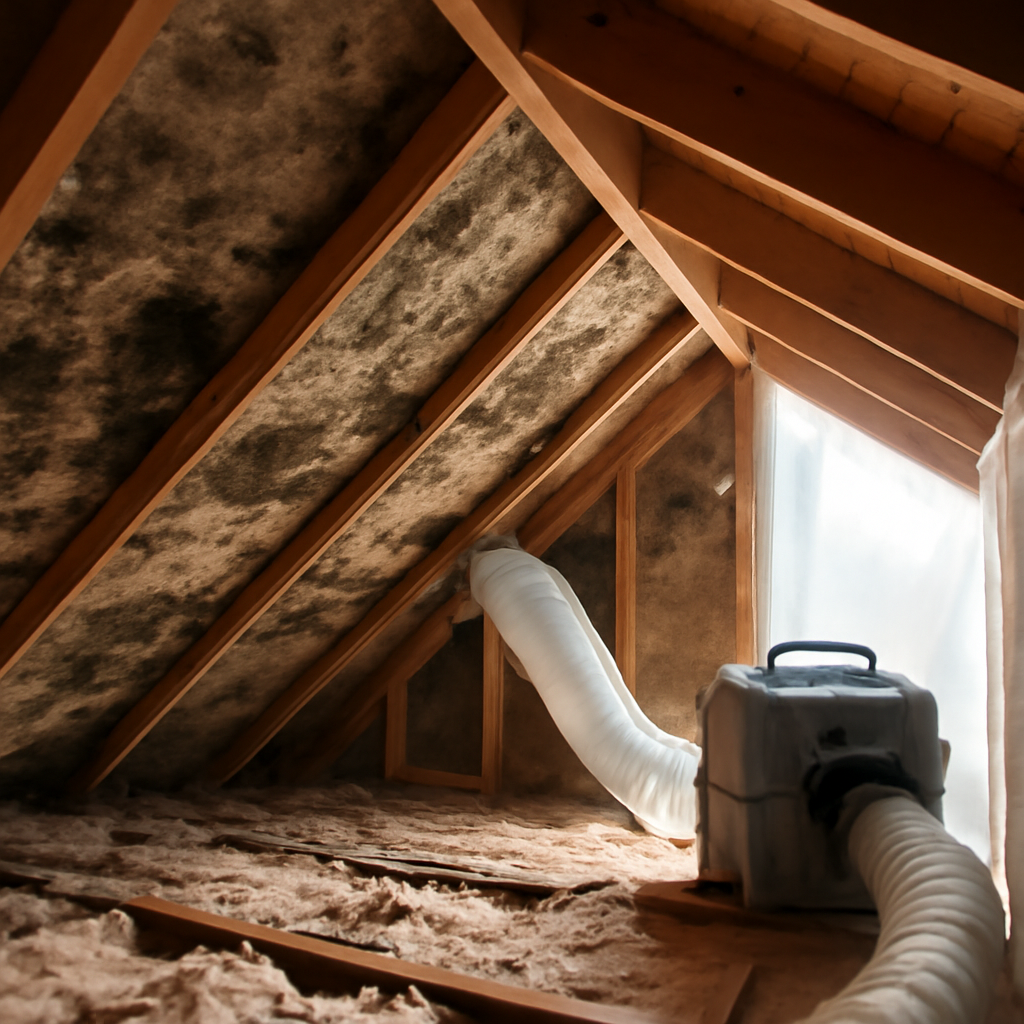
Attic mold is one of the most common findings in a home inspection, and one of the most misunderstood. Homeowners searching “attic mold remediation near me” are usually reacting to dark staining on the roof sheathing spotted during a sale, a refinance, or an attic visit. The fix is rarely as urgent or as expensive as the first quote suggests, but it does require the right approach. This guide summarizes EPA, CDC, and trade-association guidance current as of 2026 to explain what attic mold means, how remediation works, what it should cost, and how to choose a local contractor — consult your physician for health symptoms and a certified professional for testing decisions.
Part of our Crawl Space & Attic Guide guide — start there for the full picture →
Is this mold, asbestos, or water damage? Get a free instant screen
Upload a clear photo of the suspect area. You'll get an instant AI screening opinion and what to do next. This is screening guidance, not a professional determination.
Screening guidance only. AI can be wrong. Confirm asbestos, mold type, or lead with lab testing or a licensed professional before acting.
Is it actually mold, or something else?
Before paying for remediation, it is worth confirming that the dark staining on the sheathing is mold at all. Several attic conditions mimic it. Water staining from a past roof leak leaves dark, flat discoloration that does not grow or feel fuzzy. Soot or dust accumulation around vents can darken wood. And some sheathing simply weathered before it was installed. Genuine mold is typically fuzzy, spotty, or filmy, often clustered where moisture collects near the roof’s cold spots, and it may carry a musty odor in a closed attic.
A moisture meter settles much of the uncertainty: actively wet sheathing under dark growth points to a live mold-and-condensation problem, while dry wood under flat staining may be an old, resolved leak that needs no remediation, just monitoring. This is exactly where an independent assessment pays off, because a contractor who profits from removal has little incentive to tell you the staining is benign. Our parent hub on mold inspection and testing explains how that unbiased assessment is structured and why it should come before any removal quote.
What attic mold remediation involves
Attic mold remediation is the process of removing mold growth from attic surfaces — usually the underside of the roof sheathing and the rafters — and correcting the moisture and ventilation problems that caused it. Unlike living-space mold, attic mold is almost always a ventilation and condensation issue rather than a plumbing leak, which shapes the entire repair.
Per EPA guidance, remediation centers on physical removal of the growth and elimination of the moisture source. In an attic that means cleaning the affected wood, then fixing whatever is letting humid air collect against cold sheathing: blocked soffit vents, missing ridge venting, bathroom or dryer exhaust fans dumping moist air into the attic, or inadequate insulation. Skip the ventilation fix and the mold returns within a season or two, no matter how thoroughly the wood was cleaned. The cleaning is the visible part of the job; the ventilation correction is the part that actually lasts.
What causes attic mold in Front Range homes
Attic mold forms when warm, moist air from the living space rises into the attic, hits the cold underside of the roof deck, and condenses. Over a Colorado winter, that cycle of condensation and freezing keeps the sheathing damp enough to grow mold. The usual culprits:
- Bathroom and kitchen exhaust fans vented into the attic instead of outdoors — a frequent and avoidable cause.
- Blocked or insufficient soffit and ridge ventilation, often from insulation stuffed into the eaves.
- Air leaks from the living space through can lights, attic hatches, and gaps around plumbing stacks.
- Roof leaks around flashing, vents, or valleys that wet a localized area of sheathing.
- Over-insulation without matching ventilation, which traps moisture even as it improves efficiency.
Because the cause is structural, diagnosing it correctly is the most valuable part of the job. Our guide on mold from water damage explains how trapped moisture turns into growth, and the same principle drives attic problems even when there is no obvious leak. A contractor who cannot explain why the moisture is collecting has not finished diagnosing the problem.
How the remediation process works
A proper attic remediation follows a predictable sequence, and knowing it helps you judge a contractor’s quote.
Assessment
The contractor inspects the full attic, identifies the extent of staining, and — most importantly — finds the moisture source. A moisture meter confirms whether the sheathing is currently wet. This step should produce a written scope naming the cause, not just the cosmetic problem, so you know what you are paying to fix.
Containment and protection
For larger jobs, the attic access is sealed and the work area isolated so spores do not drift into living space. Workers use N-95 or better respirators, gloves, and eye protection per EPA and OSHA recommendations for mold work, since attic conditions concentrate spores in a tight space.
Removal and cleaning
The growth is physically removed from the wood. Common methods include HEPA vacuuming, hand-scrubbing, soda or dry-ice blasting for heavy staining, and applying an EPA-registered cleaner. The EPA stresses that the goal is removal, not just killing the mold — dead spores still cause allergic reactions. Insulation that is contaminated or wet is bagged and replaced rather than left in place.
Fixing ventilation and moisture
This is the step that determines whether the problem stays solved: rerouting exhaust fans to the exterior, clearing or adding soffit and ridge vents, air-sealing penetrations from the living space, and correcting insulation. Without it, the cleaning is temporary. A quote that omits this work is incomplete, however attractive the price.
Verification
After the work, the wood should be clean and dry, and the attic should be properly ventilated. Independent clearance — visual plus optional sampling — confirms the job before you pay the final invoice, and gives you documentation if the home is being sold.
What attic mold remediation costs
Attic mold remediation costs vary with attic size, severity, accessibility, and how much ventilation or insulation work the fix requires. Industry estimates commonly place straightforward attic jobs in the range of roughly $1,500 to $4,000, with larger or harder-to-access attics, or those needing significant ventilation and insulation work, running higher. A localized stain from a single roof leak can sit at the low end; whole-deck staining with a full ventilation overhaul lands near or above the top. These are general ranges, not quotes.
Two cautions on cost. First, be skeptical of bids that include “fogging” or “encapsulation” as the primary fix without addressing ventilation — encapsulant paint over mold on poorly vented sheathing buys time, not a cure, and the staining will bleed back through. Second, the cleaning is often the smaller line item; the ventilation and insulation corrections are what make the price worthwhile. For a fuller breakdown, see our guide to attic mold removal cost and its cost drivers, which explains why two attics of the same size can quote very differently.
How to find and vet a local contractor
“Near me” matters because attic mold is a local-climate problem, and a contractor who understands Front Range winters will diagnose it faster. When evaluating candidates:
- Confirm certification and insurance. Look for IICRC or InterNACHI mold credentials and pollution liability coverage. Colorado does not license mold contractors statewide, so this carries weight.
- Insist on a moisture diagnosis. A contractor who quotes cleaning without explaining the ventilation cause is treating the symptom.
- Separate testing from removal. Ideally an independent inspector assesses and provides clearance, while a separate firm does the removal — this avoids the incentive to overstate the problem. Our parent hub on mold inspection and testing explains that conflict-of-interest principle.
- Read the scope. It should list the moisture source, the removal method, the ventilation and insulation work, and whether clearance testing is included.
- Check recent local references and verify reviews rather than trusting a single rating.
Homeowners comparing companies more broadly can use our overview of professional attic mold removal to understand the typical workflow before requesting bids, so the quotes you receive are easier to compare apples to apples.
Is attic mold a health risk?
Attic mold is generally less of a direct exposure risk to occupants than mold in living space, because the attic is separated from the air people breathe — provided the ceiling plane is reasonably air-sealed. The CDC notes that mold exposure can cause respiratory and allergic symptoms in sensitive people, and air leaks between the attic and living space can pull attic air down into the home, so sealing those leaks serves both energy efficiency and air quality. Anyone with persistent symptoms should consult a physician; this is general public-health information, not medical advice.
The bigger practical concern for many homeowners is the transaction. Attic mold flagged during a sale can stall financing or spook a buyer, even when the underlying issue is a straightforward ventilation fix. Documenting a proper remediation with clearance verification often matters as much for the paperwork as for the air.
Preventing attic mold from returning
Once remediated, keeping the attic dry comes down to airflow and air-sealing. Make sure every bathroom, kitchen, and dryer exhaust vents to the outdoors, not the attic. Keep soffit vents clear of insulation, confirm ridge or gable venting is adequate, and seal attic-floor penetrations so warm, moist household air cannot rise into the cold attic. In Colorado’s freeze-thaw winters, those steps prevent the condensation cycle that starts the whole problem.
It is worth a periodic look in the attic after the fix — a quick check on a cold morning will show whether frost is forming on the sheathing, the early warning that moisture is still collecting. A well-ventilated, air-sealed attic stays dry enough that mold simply cannot establish, which is why the ventilation work, not the cleaning, is the part that earns its place in the bill. Homeowners who keep that priority in view — treating the staining as a symptom of a ventilation problem rather than the problem itself — end up paying once for a fix that holds, instead of repeatedly cleaning a deck that keeps regrowing because the moist air was never given a way out.
If there is one thing to carry away from researching attic mold remediation near you, it is to choose the local contractor on the strength of their moisture diagnosis, not the lowest cleaning price. The Front Range winter is what drives attic condensation, and an experienced local pro who understands that climate will scope the ventilation fix correctly the first time. Pair an independent assessment with a contractor who documents the source, the removal, and the airflow corrections, and the job becomes a one-time investment in a dry attic rather than a recurring line item every couple of years. That documentation also gives you something concrete to hand a buyer or an appraiser later, turning what started as an alarming inspection finding into a resolved, well-recorded repair that adds confidence rather than doubt to the home. In the end, the homeowners who handle attic mold best are the ones who slow down, get an honest diagnosis, and fix the ventilation that caused it, rather than rushing toward whichever bidder promises the quickest and cheapest cleanup.
Cleaning methods compared
Contractors use several methods to remove mold from attic sheathing, and the choice affects both the result and the price. Knowing the options helps you read a quote.
HEPA vacuuming and hand-scrubbing is the baseline for light growth — labor-intensive but effective on accessible surfaces, and the gentlest on the wood. Soda blasting uses baking-soda media to strip staining from a larger area faster than hand work, useful when most of the deck is affected, though it requires careful cleanup of the spent media. Dry-ice blasting is a premium method that removes growth with frozen CO2 pellets, leaves no residue, and reaches awkward framing, but it costs more and not every contractor offers it.
After cleaning, some contractors apply an EPA-registered antimicrobial or a clear encapsulant. Used correctly — on wood that is already clean and in an attic where ventilation has been corrected — an encapsulant can seal residual staining and discourage regrowth. Used as a substitute for cleaning or ventilation work, it is just paint over a problem. The EPA’s standard is physical removal first; any coating is a finishing step, not the fix itself.
Selling a home with attic mold
Many homeowners first learn about attic mold because a buyer’s inspector flagged it, which puts the problem squarely in the middle of a transaction. A few realities help you navigate that. First, attic staining is extremely common and rarely a deal-breaker on its own; a calm, documented response reassures buyers far more than a rushed cleanup. Second, the lasting fix is the ventilation correction, so a remediation that addresses only the cosmetic staining may not survive a re-inspection or a future humid season. Third, documentation matters: keep the written scope, before-and-after photos, and any clearance verification, because those records answer the buyer’s questions and support the home’s value.
When time is tight before closing, it is tempting to hire the fastest bidder. Resist quotes that skip the moisture diagnosis, since a buyer’s inspector may catch the same unaddressed ventilation issue. An independent assessment before you commit — separate from whoever will do the removal, as our parent hub on mold inspection and testing recommends — gives you a credible, unbiased scope to share with the other side. Pairing that with the workflow in our guide to professional attic mold removal lets you respond to a buyer’s concern with a complete, defensible plan rather than a panic fix.
References
- Mold Cleanup in Your Home — U.S. Environmental Protection Agency
- Mold Remediation: Cleanup Methods — U.S. Environmental Protection Agency
- A Brief Guide to Mold, Moisture and Your Home — U.S. Environmental Protection Agency
- About Mold and Your Health — Centers for Disease Control and Prevention
If an inspection turned up attic staining and you want an independent read before hiring a remediator, you can reach a vetted Front Range inspector through our contact page.