Asbestos Test for a Popcorn Ceiling: Steps and Results
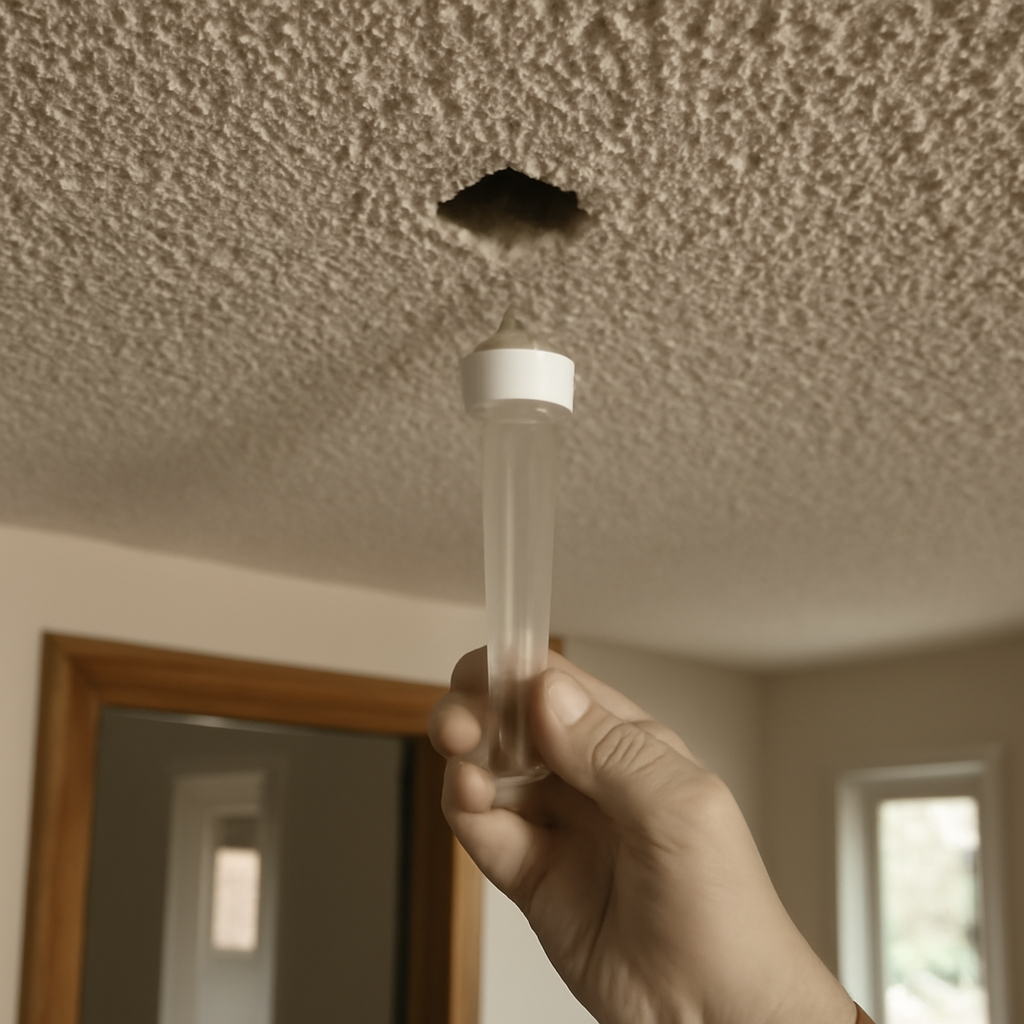
A popcorn ceiling looks harmless, but in an older house that bumpy acoustic texture is one of the most common places asbestos turns up. Nobody can confirm or rule out asbestos by looking at the ceiling, so a lab test of a physical sample is the only way to know. This guide explains why textured ceilings are a suspect material, how sampling is done (and why EPA recommends a trained, accredited professional for it), how a polarized light microscopy result is read, and what the realistic options are once the report arrives: leave it, seal it or remove it. It is written for homeowners and buyers along the Colorado Front Range, where a large share of houses were built during the decades when sprayed ceiling texture was popular. It is general education based on EPA and OSHA material, not legal or medical advice, and local asbestos rules can be stricter than anything summarized here.
Part of our Asbestos in the Home guide — start there for the full picture →
Is this mold, asbestos, or water damage? Get a free instant screen
Upload a clear photo of the suspect area. You'll get an instant AI screening opinion and what to do next. This is screening guidance, not a professional determination.
Screening guidance only. AI can be wrong. Confirm asbestos, mold type, or lead with lab testing or a licensed professional before acting.
Asbestos Test for a Popcorn Ceiling: The Short Answer
An asbestos test for a popcorn ceiling has four parts. First, decide whether testing is needed at all. Second, collect a small sample that represents the full thickness of the texture. Third, send it to an accredited laboratory, which almost always analyzes building materials by polarized light microscopy (PLM). Fourth, act on the result before any scraping, sanding or remodeling begins.
The deciding factor in step one is disturbance. EPA says that if building materials in a home aren’t damaged and won’t be disturbed, there is generally no need to test them, and that the best approach for intact material is usually to leave it alone. The moment a ceiling is going to be scraped, patched, drilled for new light fixtures or opened for wiring, the calculation changes, because cutting into the texture is exactly what can release fibers.
For a wider view of household sampling, including walls, flooring and insulation, the companion guide on how to test for asbestos in your home covers the full process. The rest of this page stays focused on ceilings.
Why Popcorn Ceilings Are a Suspect Material
Sprayed acoustic texture, often called popcorn or cottage cheese ceiling, was used widely in homes for decades because it hid drywall seams, softened echoes and went on fast. Asbestos fibers were added to some of these products for bulk and fire resistance. The exact cutoff varies by product and supplier, so the age of the house is a clue rather than a verdict. As a rough rule, texture applied before the 1980s is the most likely to contain asbestos, and texture from later decades is less likely but not automatically clear, because older stock and imported materials could still end up on a job site.
EPA’s overview of where asbestos may be found in a home lists “textured paint and patching compounds used on walls and ceilings,” alongside vinyl floor tiles, roofing and siding shingles, vermiculite attic insulation and pipe insulation. EPA also lists ceiling tiles among the building materials that have contained asbestos, which is why a dropped or glued-on ceiling tile deserves the same caution as sprayed texture. See the guide on asbestos ceiling tiles for that variation.
OSHA’s construction asbestos standard is also useful for understanding how professionals categorize a ceiling. It defines “surfacing material” as material that is sprayed, troweled on or otherwise applied to surfaces, and gives “acoustical plaster on ceilings” as an example. The same standard treats surfacing material and thermal system insulation in buildings constructed no later than 1980 as “presumed asbestos containing material” unless testing rebuts that presumption. That standard governs workers rather than homeowners, but it explains why contractors in the trade often treat older popcorn texture as asbestos until a lab says otherwise.
For more background on the texture itself, including how it was applied and why it was so common in mid-century tract homes, see the overview of the popcorn ceiling and the deeper look at popcorn ceiling asbestos.
When the risk actually matters
Asbestos in a ceiling that is intact, painted over and left alone is generally considered a lower concern than asbestos that is crumbling or being disturbed. EPA’s homeowner guidance says that if material is in good condition and will not be disturbed, the best thing to do is often to leave it alone. The concern rises sharply with water damage that makes the texture flake, with ceiling fan or light fixture replacement, with skim-coating or scraping projects, and with any demolition that pulls the drywall itself. Before any of those projects, testing is the step that should come first.
Who Should Take the Sample
EPA is direct on this point. Its homeowner page says a trained and accredited asbestos professional should take samples for analysis, because a professional knows what to look for and because there may be an increased health risk if fibers are released. It adds that “if done incorrectly, sampling can be more hazardous than leaving the material alone” and that “taking samples yourself is not recommended.” EPA also notes that federal law does not require people who inspect asbestos in detached single-family homes to be accredited, although some states and localities do, and it recommends homeowners hire trained and accredited workers anyway.
In practice, homeowners still buy mail-in kits from hardware and home-improvement stores, and many labs accept homeowner-collected samples. If someone chooses that route despite EPA’s recommendation, the points below describe the cautious version of the process. The guides on a popcorn ceiling asbestos test kit and an asbestos ceiling test kit compare what those kits include, and the guide on how to take a test sample for asbestos covers general sampling technique across materials.
Why a professional is often the better value
An accredited inspector does more than cut a chip of texture. EPA says an inspector can inspect the home, assess conditions, take samples of suspected materials and advise on what corrections are needed. A ceiling that was patched or re-textured over the years may have more than one layer or more than one product, and a professional is more likely to recognize where separate samples are needed. EPA also recommends avoiding a conflict of interest: the professional who assesses the need for repair or removal should not be connected with the firm that does the removal work.
Step-by-Step: How Ceiling Sampling Is Done
The table below summarizes the usual sequence for collecting a popcorn ceiling sample. It reflects common professional practice and EPA’s general guidance about minimizing disturbance. Kit and lab instructions vary, and local regulations may set additional requirements, so treat this as an outline rather than a protocol.
| Step | What to do | Why |
|---|---|---|
| 1. Plan the spot | Pick an inconspicuous area away from vents, ideally where the ceiling will be repaired anyway. Note any separate patches or re-textured areas. | Each distinct material or layer may need its own sample, and one small spot keeps disturbance low. |
| 2. Shut down air movement | Turn off the furnace or air conditioning and ceiling fans; close doors to the room. | Moving air can carry any loosened fibers to other rooms. |
| 3. Protect the room | Lay disposable plastic sheeting under the work area and keep children and pets out. | Any fallen debris lands on plastic that can be folded up and bagged. |
| 4. Wear protection | Use a properly fitted respirator rated for asbestos work, disposable coveralls, gloves and eye protection. | Ordinary dust masks are not designed for asbestos fibers. |
| 5. Wet the area | Mist the spot lightly with water containing a few drops of dish soap. | EPA notes that wet fibers do not float in the air as easily as dry fibers. |
| 6. Cut through all layers | Remove a small piece, roughly thumbnail sized, that includes the full depth of texture down to the drywall or plaster face. | Asbestos may be concentrated in one layer, so a surface scrape can miss it. |
| 7. Seal and label | Drop the piece straight into a sealable bag or vial, seal it, double bag it and label it with location and date. | Labels let the lab report be matched to the right room and layer. |
| 8. Patch and clean up | Cover the sampled spot with a dab of patching compound or tape; wipe the area with damp paper towels and bag the plastic sheeting. | Patching seals the exposed edge, and damp cleanup avoids stirring dust. |
| 9. Send to an accredited lab | Ship with a completed chain-of-custody form to a laboratory accredited for bulk asbestos analysis. | Accreditation means the lab follows a recognized method and quality program. |
A few cautions apply across every step. Never dry-scrape a large area to “see what is underneath.” Never use a household vacuum on suspect debris; EPA’s do’s and don’ts specifically say not to dust, sweep or vacuum debris that may contain asbestos, and its contractor guidance notes that a regular vacuum cleaner should never be used. If the ceiling is already crumbling or water-damaged across a large area, sampling is a job for a professional, not a kit.
How many samples a ceiling needs
One sample can be enough for a small, uniform ceiling in a single room that was clearly sprayed at one time. Larger homes, additions built in different eras, rooms that were re-textured and areas with visible patches are another matter. Professionals usually take separate samples of each distinct material, sometimes more than one per material for large areas. If there is doubt about whether two ceilings are the same product, a second sample is cheaper than a wrong assumption.
How the Lab Tests the Sample: PLM Explained
Most bulk building materials, including ceiling texture, are analyzed with polarized light microscopy. A trained analyst examines the sample under a microscope with polarized light, which makes asbestos fibers show characteristic optical properties. The report typically names any asbestos type found, such as chrysotile, and gives an estimated percentage. PLM is the standard first-line method because it is relatively fast and affordable.
Some labs offer point counting or transmission electron microscopy (TEM) as follow-up options when a PLM result is low, borderline or inconclusive. TEM can see much finer fibers than PLM but costs more and takes longer. For a typical popcorn ceiling, PLM is usually where the process starts, and a professional can advise on whether any follow-up is worth it.
Turnaround depends on the lab and the service level selected. Standard service is often a few business days after the sample arrives, and many labs offer faster rush options for an added fee. Shipping time is extra for mail-in kits.
Reading the Result
A lab report usually lists each sample, the layers analyzed, whether asbestos was detected, the asbestos type and an estimated percentage. The detailed walkthrough in the guide on asbestos test results explains each field. The short version for ceilings follows.
- None detected. No asbestos was found in that sample by the method used. It applies to the material sampled, so other ceilings, patches or layers in the house may still need their own samples.
- Detected at more than 1 percent. OSHA’s construction standard defines asbestos-containing material as any material containing more than 1 percent asbestos. A ceiling in this range should be treated as asbestos-containing for any planned work.
- Trace or 1 percent or less. A small amount of asbestos is still asbestos. Some labs suggest a more sensitive follow-up method in this range, and local rules may still apply to disturbance. Discuss a low result with a professional before scraping.
Whatever the number, keep the report. It is useful for future remodeling, for contractor bids and for disclosure discussions if the house is sold.
After a Positive Result: Leave, Seal or Remove
A positive result does not automatically mean the ceiling has to come down. EPA describes two families of corrective action for asbestos material that is damaged or will be disturbed: repair and removal. Repair keeps the material in place, either by sealing it (encapsulation) or covering it (enclosure). Removal takes it out entirely. The right choice depends on the condition of the ceiling and the plans for the room.
Leave it alone
If the texture is intact, is not water-damaged and no project will disturb it, leaving it in place is often the lowest-risk option. EPA’s guidance consistently favors leaving undamaged asbestos-containing material alone. The key is discipline: no scraping, no sanding, no hanging hooks or anchors in it, and no new fixtures without a plan for the disturbed area.
Encapsulate it
Sealing applies a coating that binds fibers together or coats the surface so fibers are not released. Encapsulation can make sense for a ceiling in fair condition that the owners want to keep in place. EPA says repair of asbestos material should be done by a professional trained to handle asbestos safely, and spraying or rolling paint onto loose texture can itself dislodge material if done carelessly. The guide on asbestos encapsulation paint covers products, prep and limits. Enclosure, such as installing new drywall below the old ceiling, is another repair option, though fastening through the texture is itself a disturbance that needs care.
Remove it
Removal may be called for when a remodel will disturb the ceiling or the material is too damaged to repair. EPA says removal is complex, must be done only by trained and accredited professionals and that improper removal may increase exposure. A qualified contractor typically seals the work area with plastic sheeting, wets the material before removal, bags waste in sealed, labeled heavy-duty bags and cleans with wet methods or HEPA vacuums. The guide on asbestos ceiling removal cost explains what drives pricing, including room size, ceiling height, access and disposal.
EPA also suggests that after removal, the inspector can check that the area has been properly cleaned, which is one more reason to keep the testing professional separate from the removal firm.
Common Mistakes to Avoid
Most asbestos trouble with popcorn ceilings comes from doing things in the wrong order. These are the patterns that show up again and again.
- Scraping first, testing later. Online tutorials make removing popcorn texture look like a weekend job. Testing must come before any scraping, not after the room is already coated in debris.
- Sampling only the surface. Paint or a top coat may test clean while the texture underneath does not. A sample must go through every layer.
- Assuming one result covers the whole house. Additions, patches and re-textured rooms may be different products.
- Vacuuming or sweeping debris. EPA advises against dusting, sweeping or vacuuming suspect debris; use damp wiping and bag the waste.
- Hiring one firm to test and remove. EPA recommends separating the assessor from the removal contractor to avoid a conflict of interest.
- Painting loose texture. A heavy roller on crumbling texture can pull material loose. Condition matters before any coating.
Front Range Notes: Older Homes and Remodels
Many neighborhoods across Denver, Aurora, Lakewood, Arvada, Colorado Springs and Fort Collins were built during the decades when sprayed ceiling texture was standard, so it is common for buyers to find popcorn ceilings in ranch homes and split-levels. The dry Front Range climate tends to keep texture intact, but roof leaks, ice dams and plumbing leaks from an upstairs bathroom can leave stained, sagging or flaking patches. Those damaged areas are the ones that deserve attention first.
Colorado has its own asbestos regulations, and some projects require state or local involvement even in single-family homes. Requirements can change, so anyone planning removal should confirm current rules with the state and local agencies and with the contractor before work starts. For buyers, a ceiling question is often raised during a home inspection; a general home inspector will usually note suspect material and recommend testing by a qualified asbestos professional rather than test it as part of the standard inspection.
For a broader overview of asbestos in houses, sampling, testing and professional help, start at the asbestos hub, or browse the full asbestos and lead section for related guides on lead paint and other legacy materials.
Quick Planning Checklist
Before touching a popcorn ceiling in an older home, run through this short list:
- Is the ceiling intact, and will any project disturb it? If not, testing may not be needed right now.
- If work is planned, has an accredited asbestos professional been contacted to sample it, as EPA recommends?
- If a kit is being used anyway, are respiratory protection, plastic sheeting, a spray bottle and patching material on hand?
- Will the sample cover every layer, and will each distinct ceiling be sampled separately?
- Is the lab accredited for bulk asbestos analysis by PLM?
- Once results arrive, is the plan to leave, encapsulate or remove decided before work begins?
- Have state and local requirements been checked for any removal?
Following that order keeps the riskiest activity, disturbing the texture, from happening before anyone knows what is in it.
References
- Learn About Asbestos — U.S. Environmental Protection Agency
- Protect Your Family from Exposures to Asbestos — U.S. Environmental Protection Agency
- 29 CFR 1926.1101, Asbestos (Construction) — Occupational Safety and Health Administration
Frequently asked questions
Can a popcorn ceiling be checked for asbestos just by looking at it?
No. EPA says you generally can't tell whether a material contains asbestos by looking at it unless it is labeled. A sample analyzed by an accredited lab, usually by polarized light microscopy, is the only reliable answer.
Does a popcorn ceiling need testing if nothing is being done to it?
Often not. EPA says materials that aren't damaged and won't be disturbed generally don't need testing, and leaving intact material alone is usually best. Testing becomes important before scraping, drilling, fixture work or any remodeling.
Is it safe to take a popcorn ceiling sample with a store-bought kit?
EPA recommends a trained and accredited asbestos professional take samples and says taking samples yourself is not recommended, because incorrect sampling can release fibers. If a kit is used anyway, the area should be wetted, protective gear worn and the spot sealed and patched afterward.
What does a positive asbestos result mean for a popcorn ceiling?
OSHA's construction standard treats material with more than 1 percent asbestos as asbestos-containing. Options then include leaving intact material alone, encapsulating it, or removal by a trained and accredited contractor, depending on condition and planned work.
Which homes are most likely to have asbestos in ceiling texture?
Ceiling texture applied before roughly the 1980s is the most likely to contain asbestos, though later texture is not automatically clear. OSHA presumes surfacing material in buildings constructed no later than 1980 contains asbestos unless testing shows otherwise.
Planning to remove or patch an older textured ceiling? Tell us the age of the house and what work is planned, and we can help line up sampling before anyone picks up a scraper.
Asbestos test kits
Asbestos can only be confirmed by a lab. A mail-in kit gets you a sealed sample container and accredited analysis — never sand or disturb suspect material first.
| Product | Why | Buy |
|---|---|---|
 Asbestos Test Kit (mail-in lab) Asbestos Test Kit (mail-in lab) | Includes PPE + sealed mailer. | Amazon — $34.99 |
| Pro-Lab Asbestos Test Kit | Widely available; lab fee separate. | Amazon — $34.99 |