Asbestos Cigarette Filter: What to Know
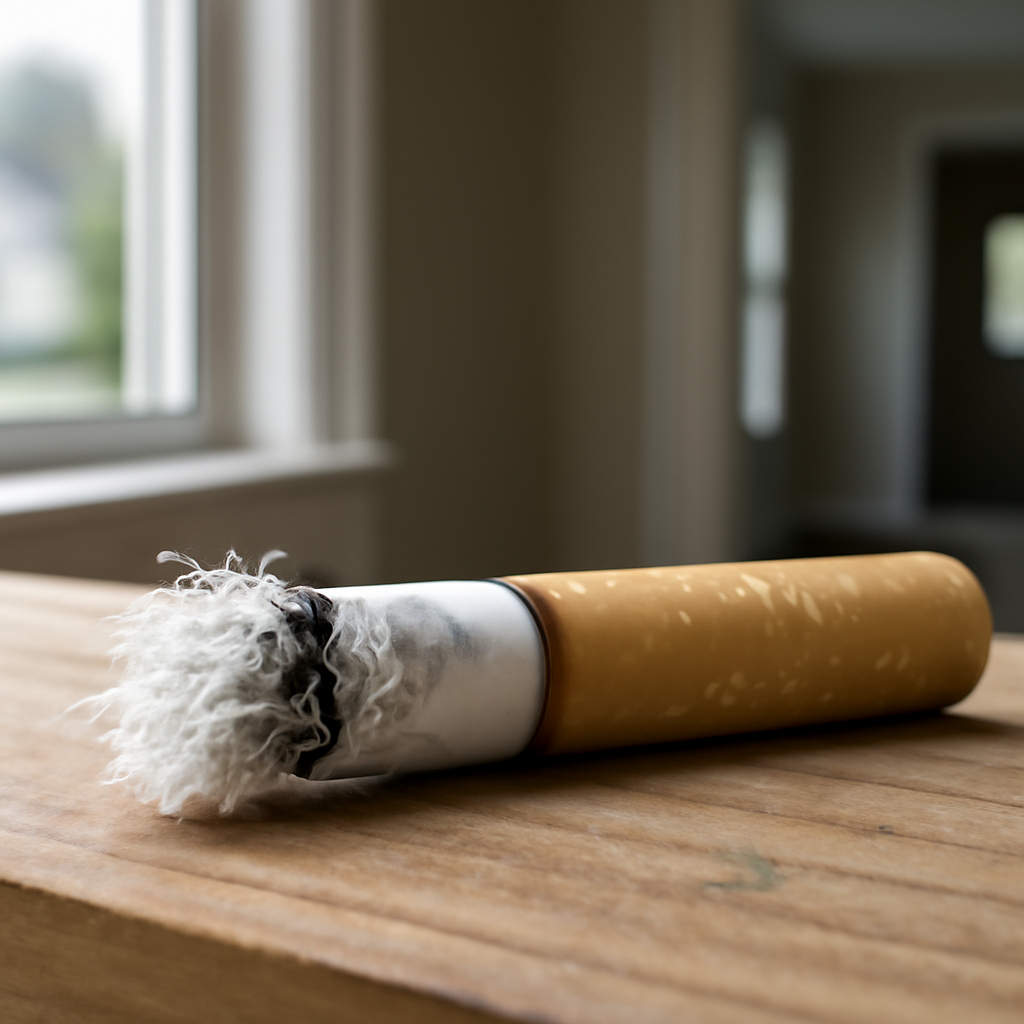
One of the more startling chapters in the history of asbestos involves a product designed to make smoking seem safer: a cigarette filter that contained asbestos. For a few years in the early 1950s, a popular brand marketed a filter built around crocidolite, the blue asbestos regarded as among the most hazardous types, while advertising it as a health-conscious choice. The asbestos cigarette filter is now a cautionary historical example rather than a present household hazard, but it remains a frequently searched topic and a useful illustration of how asbestos was once treated. This guide summarizes EPA, OSHA, and CDC guidance current as of 2026 and is for general education only; it is not a diagnosis, and a certified professional should make decisions about any suspected asbestos in your specific situation.
Is this mold, asbestos, or water damage? Get a free instant screen
Upload a clear photo of the suspect area. You'll get an instant AI screening opinion and what to do next. This is screening guidance, not a professional determination.
Screening guidance only. AI can be wrong. Confirm asbestos, mold type, or lead with lab testing or a licensed professional before acting.
What Was the Asbestos Cigarette Filter?
The best-known asbestos cigarette filter was used in the Kent brand’s “Micronite” filter, introduced in the early 1950s and marketed for several years before the formulation changed. The filter material incorporated crocidolite asbestos, the blue amphibole type, which was used because its fine fibers could trap particles effectively. The product was advertised as offering health protection to smokers, an irony given that the filter itself introduced one of the most dangerous known carcinogens directly into the smoke path.
The asbestos was used in the filter for only a limited window in the 1950s before the manufacturer reformulated it with non-asbestos materials. Original asbestos-filtered cigarettes have not been produced for many decades, so this is a historical product rather than something a homeowner is likely to find in use today. Understanding it helps illustrate how widely asbestos was once deployed, including in places that seem unthinkable now. For the broader history of how asbestos was used and eventually restricted, see our guide to when asbestos was used and the asbestos and lead hub.
Why Crocidolite Was the Concern
Crocidolite, or blue asbestos, is an amphibole with extremely fine, straight fibers. Health agencies regard it as among the most hazardous asbestos types precisely because those thin fibers penetrate deep into lung tissue and resist the body’s efforts to clear them. The Centers for Disease Control and Prevention and other authorities classify all asbestos as carcinogenic, linking it to asbestosis, lung cancer, and mesothelioma, and the amphibole types carry elevated relative risk.
Placing crocidolite in a cigarette filter created a path for fibers to be drawn toward the smoker during use, the concern that has drawn so much attention to this product historically. The combination of tobacco smoke and asbestos is also notable because research has shown the two together multiply lung-cancer risk far beyond what either causes alone. While the specific exposure from these filters is a matter of historical study, the underlying point stands: crocidolite is a serious carcinogen, and its presence in a consumer product meant to be used continuously was a significant misjudgment of the era. Our crocidolite asbestos guide details why this type is treated with particular caution.
Is the Asbestos Cigarette Filter a Hazard Today?
For the typical homeowner, the asbestos cigarette filter is not a present-day hazard in the way that pipe insulation or floor tile can be, because the product has not been manufactured in this form for many decades. There is no realistic scenario in which a modern household is exposed to asbestos through cigarettes sold today, as filters have long used non-asbestos materials.
The topic stays relevant for a few reasons. It comes up in discussions of historical asbestos exposure, in collections of vintage or antique items, and in the broader story of how asbestos found its way into countless products. Anyone who handles vintage tobacco-related collectibles or antique items from the relevant era should treat unknown materials with general caution, but the practical risk to a homeowner today comes overwhelmingly from building materials, not from a discontinued mid-century cigarette. People with a history of smoking or occupational exposure who have health concerns should discuss them with a physician rather than focusing on a single historical product.
How the Filter Came to Be
The story sits at the intersection of mid-century marketing and incomplete science. In the early 1950s, growing public unease about the health effects of smoking pushed tobacco companies to compete on the promise of safety. Filtered cigarettes were marketed as a way to reduce the harshness and the particulates a smoker inhaled, and brands raced to advertise the most effective filter. The Micronite filter was promoted heavily on the strength of a material described in glowing terms but not, in advertising, identified as asbestos.
The crocidolite was chosen because its exceptionally fine fibers formed an effective filtering medium. At the time, the link between asbestos and disease was understood within parts of the medical and industrial communities but had not produced the regulatory framework or public awareness that exists now. The result was a product that combined two serious carcinogens, tobacco smoke and asbestos, while being sold as the responsible choice for the health-conscious smoker. The manufacturer reformulated the filter with non-asbestos materials within a few years, and the asbestos version became a closed chapter.
What makes the episode enduring is less the specific brand than what it reveals about the era’s relationship with asbestos. A material now treated with extreme caution was, within living memory, marketed as a feature. That gap between past and present understanding is precisely why older homes and old products require testing and professional judgment rather than assumptions carried over from a time when asbestos was considered ordinary.
The Synergy Between Asbestos and Smoking
A point that gives the cigarette-filter story extra weight is the documented interaction between asbestos exposure and tobacco smoke. Research summarized by health agencies has long shown that asbestos and smoking do not simply add their risks together; they multiply them. A person exposed to asbestos who also smokes faces a lung-cancer risk far higher than either factor alone would produce, a multiplicative rather than additive effect.
This synergy is part of why occupational asbestos exposure was so devastating among workers who also smoked, and it is the grim irony at the center of the asbestos cigarette filter: a product that delivered both risk factors at once. For homeowners, the practical lesson connects back to building materials. Someone renovating an older home who disturbs asbestos-containing material and who also smokes compounds their personal risk, which is one more reason to avoid abrasive work on suspect materials and to leave disturbance to professionals with proper protection. The health agencies’ consistent message is that reducing asbestos exposure matters for everyone, and especially for current or former smokers, who carry an amplified vulnerability. Anyone in that category with concerns should raise their full exposure and smoking history with a physician, who can recommend appropriate monitoring.
What This History Teaches About Asbestos
The asbestos cigarette filter is a vivid example of a larger pattern: for much of the twentieth century, asbestos was added to products for its useful properties with little regard for its health effects, sometimes even marketed as protective. Asbestos went into thousands of products, from the obvious, like insulation and fireproofing, to the surprising, like certain consumer goods, hair dryers of a later era, and yes, cigarette filters.
That history matters to homeowners because it explains why asbestos turns up in so many unexpected places in older homes. A house built or renovated before the late 1980s can contain asbestos in flooring, siding, ceiling texture, pipe insulation, joint compound, roofing, and more. The lesson of the cigarette filter is not that people should worry about antique cigarettes, but that asbestos was used far more broadly than intuition suggests, which is why a pre-1980s home deserves careful, test-based assessment before renovation rather than confident assumptions about what is and is not present. Our overview of what asbestos is puts the mineral and its uses in context.
If You Encounter Suspect Asbestos in a Home
While the cigarette filter itself is historical, the general approach to any suspected asbestos applies to the building materials homeowners actually deal with. Intact, undisturbed asbestos-containing material generally poses low risk because it releases few fibers; disturbance through cutting, sanding, drilling, or breaking is what creates the hazard. The safe default in an older home is to leave suspect material alone and avoid abrasive work on it.
Visual inspection cannot confirm asbestos, so suspect materials should be tested by an accredited laboratory through a certified inspector before any renovation or demolition. If asbestos is confirmed and removal is needed, a licensed abatement contractor performs the work under containment with proper protection and regulated disposal. The same principle that makes the cigarette filter a historical curiosity, that asbestos is hazardous when its fibers become airborne, governs every decision about building materials today.
The most common places asbestos hides in older Front Range homes are worth keeping in mind when planning any project. Vinyl floor tiles and the black mastic beneath them, sheet flooring and its backing, textured or popcorn ceilings, joint compound and tape on drywall seams, pipe and boiler insulation, cement siding and roofing, and certain vermiculite attic insulation are all candidates in houses from the relevant decades. A homeowner who recognizes these as possibilities, rather than assuming a home is asbestos-free because it looks ordinary, is far less likely to disturb a material accidentally. The cigarette filter, surprising as it is, sits at the unusual end of a very long list, and that list is what actually shapes risk in a home.
Recognizing the breadth of historical asbestos use also helps a homeowner ask better questions of contractors and inspectors. Rather than asking whether a single material is safe, the more useful approach is to commission a pre-renovation survey of all suspect materials, so the whole picture is clear before any demolition begins. That comprehensive view, grounded in testing rather than appearance or assumption, is the modern counterpart to the hard lessons of an era that once put asbestos in a cigarette. The contrast between then and now is the most useful thing to carry away. In the 1950s, a manufacturer could place a dangerous carcinogen in a product used every day and advertise it as a benefit, because neither the science nor the regulation had caught up. Today the science is settled and the protective steps are well established, which means the burden has shifted from trusting a marketer’s claim to taking a few sensible precautions: identify suspect materials, test before disturbing them, and bring in licensed professionals for removal. The cigarette filter is a reminder of how far that understanding has traveled and why those modern precautions are worth following. The episode endures in public memory precisely because it is so striking, but its real value for a homeowner is as a prompt to take the far more common building-material hazards seriously rather than as a worry in itself.
When to Call a Professional
For present-day concerns, call a certified asbestos professional before disturbing any suspect material in a home built before the late 1980s. An accredited inspector can sample and identify materials, and a licensed abatement contractor can remove or manage confirmed asbestos under the required safeguards. Colorado regulates asbestos work through state health authorities, with notification and licensing requirements for projects above set thresholds. A home inspector can flag suspect materials during a purchase and recommend testing. For health questions related to past smoking or any historical asbestos exposure, consult a physician, who can advise on monitoring and screening based on individual history.
References
- About Asbestos and Health Effects — Centers for Disease Control and Prevention
- Learn About Asbestos — U.S. Environmental Protection Agency
- Asbestos Standards and Hazards — Occupational Safety and Health Administration
Worried about asbestos in an older Front Range home rather than a relic of the past? A vetted local inspector can test the building materials that actually matter; reach out through our contact page to connect.