Air Purifier vs Humidifier: Which One Does Your Home Need?
An air purifier and a humidifier solve two different problems: an air purifier pulls particles such as dust, pollen, pet dander and smoke out of the air, while a humidifier adds water vapor to air that is too dry. If the complaint is allergies, smoke or haze, the purifier is the tool; if the complaint is cracked lips, static shocks, nosebleeds or a scratchy throat in winter, the humidifier is the tool. Neither one does the other’s job, and many Front Range homes end up using both during the heating season. This guide compares the two side by side, explains how each works, what they typically cost to buy and run, the maintenance each demands, and the specific situations where one is the right first purchase. It summarizes EPA guidance current as of 2026; anyone with asthma, allergies or other respiratory symptoms should check with a physician before relying on either appliance.
Part of our Humidity Control guide — start there for the full picture →
The Short Answer: Different Jobs, Different Machines
The fastest way to decide is to name the problem first and then match the machine to it. The table below lines up the main differences.
| Question | Air purifier | Humidifier |
|---|---|---|
| What it changes | Removes airborne particles (and gases, if it has a carbon filter) | Adds moisture, raising relative humidity |
| Typical reasons to buy | Allergies, pet dander, wildfire smoke, cooking particles, general dust in the air | Dry skin, dry sinuses, static, cracking wood floors or furniture in winter |
| Key rating | CADR (clean air delivery rate) matched to room size; HEPA filter for fine particles | Output in gallons per day matched to room or house size |
| Main upkeep | Replace filters on schedule | Empty, dry and refill daily; clean every few days; use low-mineral water |
| Biggest risk if misused | Ozone from ionizers or ozone generators; overloaded filters that do little | Mold and dust mites from over-humidifying; microbes and minerals sprayed from a dirty tank |
| Season of heaviest use on the Front Range | Year-round, with peaks in wildfire season and spring pollen | Mainly the heating season, roughly October through April |
If you only remember one thing: an air purifier makes the air cleaner, not wetter, and a humidifier makes the air wetter, not cleaner. A humidifier that is poorly maintained can actually make air quality worse.
How an Air Purifier Works and What It Can (and Cannot) Do
A portable air purifier is essentially a fan that pushes room air through one or more filters. The most common particle filter is a HEPA filter, which is built to capture very fine particles. Many units add an activated carbon stage for odors and gases. The U.S. Environmental Protection Agency’s Guide to Air Cleaners in the Home explains that portable air cleaners are designed to filter the air in a single room or area, and that they “can reduce indoor air pollution; however, they cannot remove all pollutants from the air.”
The EPA is also clear about the order of priorities. Its guidance states that the most effective ways to improve indoor air are to reduce or remove the sources of pollutants and to ventilate with clean outdoor air, and that filtration can be an effective supplement to those steps. In practice, that means a purifier works best after the obvious sources are handled: smoking moved outdoors, a range hood that vents outside, pets groomed, and a furnace filter that is actually changed.
Sizing by CADR
The rating that matters most for particles is CADR. EPA explains that the higher the CADR, the more particles the air cleaner can filter and the larger the area it can serve, and that the rating is typically measured at the unit’s highest speed. EPA’s sizing chart, which assumes an 8-foot ceiling, pairs a 200-square-foot room with a minimum CADR of about 130 cfm and a 400-square-foot room with about 260 cfm. That works out to a rule of thumb of roughly two-thirds of the room’s floor area as the CADR figure. Rooms with vaulted ceilings, which are common in Front Range tract homes built from the 1990s on, call for a larger unit.
Our guide on how to choose an air purifier walks through room measurement, noise ratings and filter costs in more detail, and the explainer on HEPA air purifiers covers what the HEPA label does and does not promise.
What a purifier will not fix
- Mold. EPA states plainly that portable air cleaners and furnace filters do not address the cause of mold and musty odors, because mold is caused by a water or moisture problem. They may capture some mold particles, but the leak or dampness still has to be fixed.
- Radon. Radon is a gas, and a particle filter is not a radon control strategy. Our article on whether air purifiers help with radon explains why testing and mitigation are the answer.
- Dry air. A purifier does nothing to humidity. Running one in a dry bedroom will not ease a dry throat.
- Settled dust. A purifier catches particles while they are airborne. Dust already on shelves and carpets still needs to be cleaned.
Avoid ozone-producing cleaners
EPA advises consumers to avoid air cleaners that intentionally produce ozone, which is a lung irritant. Its page on ozone generators that are sold as air cleaners concludes that, at concentrations that do not exceed public health standards, ozone is generally ineffective in controlling indoor air pollution. EPA also notes that some ionizers, electrostatic precipitators and plasma devices may emit ozone, so a plain mechanical HEPA filter is the safest default.
Best Air Purifiers: our top 3 picks
| Product | Best for | Key features | Price | Buy |
|---|---|---|---|---|
| Coway Airmega Mighty2 | Best overall for living rooms |
| $269.99as of Nov 11, 2026 3:01 pm GMT+0000 | Buy now →Check current price |
| Levoit Core 300-P | Best for bedrooms |
| $84.99as of Nov 11, 2026 2:17 pm GMT+0000 | Buy now →Check current price |
| Levoit Vital 100S-P | Best for wildfire smoke season |
| $113.99as of Nov 11, 2026 10:12 am GMT+0000 | Buy now →Check current price |


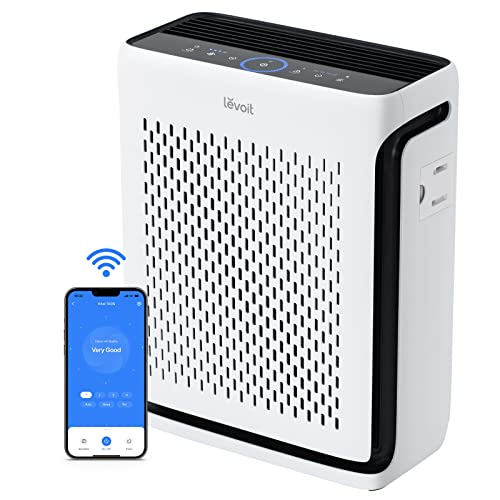
Prices are Amazon’s listed prices as of the time shown and change often; check Amazon for today’s price. As an Amazon Associate we earn from qualifying purchases.
How a Humidifier Works and When It Helps
A humidifier adds water vapor to indoor air. EPA’s fact sheet on the use and care of home humidifiers describes their purpose well: they are used to relieve the discomfort of dry nose, throat, lips and skin, and the moisture also helps with winter nuisances such as static electricity, peeling wallpaper and cracks in paint and furniture.
Along the Front Range, the case for a humidifier is stronger than in many parts of the country. Outdoor air in the Denver area is often dry to begin with, and cold winter air holds very little moisture. When a furnace heats that cold air, the relative humidity indoors can drop sharply, which is why static shocks and gaps between hardwood floorboards are so common here from late fall through early spring.
The four common types
EPA groups home humidifiers into a few main types, and the differences matter for both health and maintenance:
- Ultrasonic units create a cool mist using high-frequency vibration. They are quiet and popular, but EPA notes they generally appear to produce the greatest dispersion of microorganisms and minerals from the tank.
- Impeller (cool mist) units fling water off a spinning disk. EPA groups them with ultrasonic models as the higher-dispersion type.
- Evaporative units blow air through a wet wick or filter. EPA says they generally disperse less, if any, microorganisms and minerals, though standing water in the tank can still grow microbes.
- Steam vaporizers and warm mist units boil water. EPA notes they are not expected to disperse substantial minerals, but steam and hot water can burn, so they belong out of children’s reach.
Our comparison of evaporative vs ultrasonic humidifiers goes deeper on that choice, and the guide on what size humidifier you need covers output ratings for single rooms and whole floors.
Do not overshoot the humidity target
More moisture is not better. EPA advises against humidifying above 50 percent relative humidity, because higher levels may encourage the growth of biological organisms such as dust mites and mold. Its brief guide to mold, moisture and your home recommends keeping indoor humidity below 60 percent, ideally between 30 and 50 percent, and notes that an inexpensive humidity meter (hygrometer) can measure it. If water condenses on windows, EPA suggests lowering the setting or reducing use. In a cold Front Range January, condensation on window glass can appear well below 50 percent, so watching the windows is a practical guide.
Typical Costs to Buy and Run Each One
Prices vary widely by size, brand and features, so treat the ranges below as typical national figures rather than quotes.
| Cost item | Air purifier (portable) | Humidifier (portable) |
|---|---|---|
| Typical purchase price | Roughly $100–$400 for a bedroom or living-room HEPA unit; more for large-room models | Roughly $30–$200 for a tabletop or console unit |
| Recurring supplies | Replacement HEPA and carbon filters, often a few times a year depending on use | Wicks or filters for evaporative units; distilled water or demineralization cartridges for ultrasonic units |
| Electricity | Moderate if run continuously; ENERGY STAR models use less | Low for ultrasonic and evaporative; higher for steam models that boil water |
| Main cost drivers | Room size (CADR needed), filter price, run time, noise features | Output capacity, type, water source, how many rooms need it |
Whole-house versions of both exist. A furnace-mounted humidifier connects to the duct system and the water line, and the cost includes installation by an HVAC contractor. Our overview of whole-house humidifiers explains bypass, fan-powered and steam types. On the filtration side, upgrading the furnace filter is often the cheapest whole-house step; EPA suggests a MERV 13 filter or the highest rating the system fan and filter slot can handle.
Maintenance: Where Each Appliance Goes Wrong
Both appliances fail quietly. A clogged purifier filter keeps humming while it does very little, and a neglected humidifier keeps misting while it sprays whatever is growing in the tank.
Air purifier upkeep
- Replace filters on the manufacturer’s schedule. EPA notes that a dirty, overloaded filter will not work well.
- Keep the unit clear of curtains, furniture and walls so air can move through it.
- Run it on a speed you can tolerate for long periods; EPA notes that higher speeds and longer run times increase the amount of air filtered.
- Vacuum the pre-filter if the model has one.
Humidifier upkeep
EPA’s recommendations are specific, especially for ultrasonic and impeller models:
- Unplug the unit, then empty the tank, wipe all surfaces dry and refill with fresh water daily.
- Clean portable humidifiers every third day, scrubbing away scale, deposits or film.
- Follow the manufacturer’s directions on cleaning products; without specific directions, EPA suggests a 3 percent hydrogen peroxide solution, followed by thorough rinsing.
- Use water with low mineral content, such as distilled water, to reduce scale and “white dust.” Much Front Range municipal water is moderately hard, so white dust from an ultrasonic unit is a common complaint.
- At the end of the season, clean and dry the unit fully before storing it.
EPA also advises stopping use and contacting a physician if respiratory symptoms seem tied to periods of humidifier use, even when the maintenance directions are being followed.
Which One Should You Buy First?
Use the symptom, not the season, to decide. These scenarios cover most households:
- Winter static, dry sinuses, cracked hands, and a hygrometer reading in the 20s or below: start with a humidifier, aim for 30 to 40 percent in cold weather, and watch the windows for condensation.
- Sneezing around pets, spring pollen, or visible haze from cooking: start with a HEPA air purifier sized by CADR for the room.
- Wildfire smoke days: an air purifier, plus a better furnace filter. A humidifier does nothing for smoke particles.
- Musty smell or visible mold: neither appliance is the fix. Find the moisture source. Our guide to air purifiers for mold explains the limited role filtration plays.
- Dry air and allergies at the same time: both, in the bedroom, kept a few feet apart so the purifier is not pulling fresh mist straight into its filter.
A cheap digital hygrometer settles most debates. Place it in the bedroom for a week before buying anything. If readings sit in the 20s during cold snaps, dry air is real. If they already hover near 45 percent and symptoms persist, a humidifier is unlikely to help, and particles or another trigger deserve a closer look.
Can you run both in the same room?
Yes, and many people do. A few practical notes help. An ultrasonic humidifier that sprays minerals from hard tap water can load a purifier’s filter faster and may trigger particle sensors on units with air-quality displays, which is one more reason to use distilled water. Placing the humidifier on the far side of the room from the purifier reduces that effect. Some combination units exist, but separate machines are usually easier to clean and size correctly. A purifier with a built-in display, covered in our article on air purifiers with an air quality monitor, can help show whether the humidifier is adding particles.
Front Range Factors Worth Considering
A few regional conditions shape the choice:
- Dry winters. Cold, dry outdoor air and long furnace run times push indoor humidity low. A humidifier often earns its place from roughly October to April.
- Wildfire smoke. Smoke drifting from fires in Colorado and neighboring states has become a recurring summer and fall concern, which raises the value of a properly sized purifier.
- Hard water. Mineral content in many local water supplies makes white dust and scale more likely with ultrasonic humidifiers. Evaporative units avoid most of that.
- Tight new construction. Newer, well-sealed homes can hold moisture and pollutants longer, so ventilation matters. Our explainer on make-up air covers how outdoor air gets back into a tight house.
- Basements. Many Front Range basements are dry, but some are not. A damp basement needs a dehumidifier, not a humidifier, and adding moisture there can make problems worse.
When to Call an HVAC Pro or Inspector
Portable appliances are an easy first step, but some situations point to a building issue that deserves a professional look:
- Persistent condensation, frost or water staining on windows even with the humidifier turned down
- A musty smell, visible mold, or staining on ceilings and walls
- A furnace-mounted humidifier that leaks, has a crusted water panel, or drains poorly; our article on the humidifier water panel covers the basics
- Dust that returns quickly no matter how often the house is cleaned, which can point to duct leaks or a poorly fitting filter
- Plans to install a whole-house humidifier or add high-efficiency filtration to an older furnace
An HVAC contractor can check the furnace, ducts and filter slot. A home inspector can look for moisture problems, venting issues and equipment condition during a purchase, and the heating, cooling and ventilation hub collects our related guides on furnaces, filters and ventilation.
See Our Picks
Once the problem is clear, the next step is choosing a model. Our roundups compare current options by room size, noise, filter cost and maintenance:
- Best air purifiers for bedrooms, living rooms and open floor plans
- Best HEPA air purifiers for fine particles and smoke
- Best humidifiers for dry winter rooms
- Best whole-house humidifiers for furnace-mounted systems
References
- Guide to Air Cleaners in the Home — U.S. Environmental Protection Agency
- Use and Care of Home Humidifiers — U.S. Environmental Protection Agency
- A Brief Guide to Mold, Moisture and Your Home — U.S. Environmental Protection Agency
- Ozone Generators That Are Sold as Air Cleaners — U.S. Environmental Protection Agency
Frequently asked questions
Is an air purifier or a humidifier better for allergies?
For allergies triggered by pollen, dust or pet dander, an air purifier with a HEPA filter is the more direct tool because it removes those particles from the air. A humidifier does not remove allergens, and humidity above about 50 percent can encourage dust mites and mold.
Can an air purifier help with dry air?
No. An air purifier moves air through filters but does not add moisture, so it will not change relative humidity. Dry-air symptoms such as static, cracked skin and dry sinuses call for a humidifier, used with a hygrometer to avoid overshooting.
Can a humidifier and an air purifier be used in the same room?
Yes. Keep them a few feet apart and use distilled or low-mineral water in an ultrasonic humidifier, because minerals sprayed as white dust can load the purifier filter and trigger its particle sensor.
What humidity level should a Front Range home aim for in winter?
EPA advises staying below 50 percent, and its mold guidance points to 30 to 50 percent as the ideal range. In cold weather, many homes do better near the lower end of that range, because window condensation can appear sooner when it is very cold outside.
Do air purifiers help with mold?
Only marginally. EPA states that air cleaners do not address the cause of mold, which is a moisture problem. They may capture some airborne particles, but the leak or dampness must be fixed and the mold cleaned up.
Seeing condensation, musty odors or dust you cannot get ahead of in a Front Range home? Contact our team to connect with a local inspector who can look for the moisture and ventilation causes.