What Size Humidifier Do You Need? Gallons per Day Guide
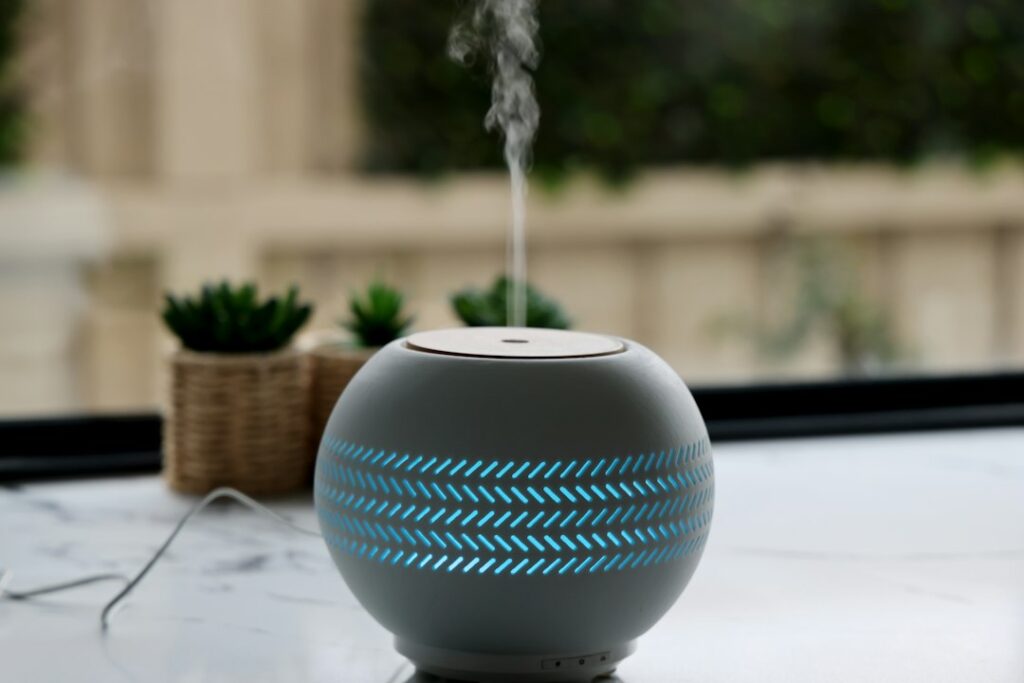
As a rule of thumb, a single bedroom of up to about 300 square feet needs a portable humidifier rated around 1 to 2 gallons per day, a larger living area of 500 to 1,000 square feet needs roughly 3 to 5 gallons per day, and a whole 2,000-square-foot home in a dry Front Range winter often needs somewhere around 4 to 10 gallons per day depending on how tight or leaky it is, which usually points to a console unit or a furnace-mounted whole-house humidifier. The goal is not maximum output but steady indoor humidity between 30 and 50 percent, the range EPA recommends, without condensation running down the windows. This guide explains the sizing method step by step with a worked example, shows how construction and climate change the answer, and covers the control and maintenance points that matter more than raw capacity. Sizing figures here are rules of thumb; follow the humidifier manufacturer’s guidance and EPA’s care instructions for any specific unit.
Part of our Humidity Control guide — start there for the full picture →
The Target: 30 to 50 Percent Relative Humidity
Before sizing anything, it helps to know what the humidifier is aiming for. EPA’s mold guidance recommends keeping indoor relative humidity below 60 percent, ideally between 30 and 50 percent. EPA’s humidifier guidance is more specific about the upper limit: do not humidify to indoor levels exceeding 50 percent, because higher humidity may encourage the growth of biological organisms such as dust mites and mold.
On the Front Range, the problem is usually the low end. Cold outdoor air holds very little moisture, and when the furnace warms it indoors, its relative humidity drops sharply. Heated homes in Denver, Colorado Springs and Fort Collins can sit well below 30 percent for weeks in winter. EPA notes that humidifiers help relieve dry nose, throat, lips and skin and reduce static electricity, peeling wallpaper and cracks in paint and furniture.
A humidifier sized for the space should be able to lift the home into that 30 to 50 percent band on a typical winter day and hold it there without running flat out around the clock. A hygrometer, which EPA notes is available at hardware stores, is the only reliable way to know whether it is working.
Rule-of-Thumb Sizing Table
Humidifiers are rated in gallons of water added to the air per day. The table below gives rule-of-thumb ranges that reflect how much construction tightness affects moisture loss. A tight home holds humidity well; a leaky one constantly swaps humid indoor air for dry outdoor air.
| Area to humidify (sq ft, 8-ft ceilings) | Tight, newer home (gal/day) | Average home (gal/day) | Older, leaky home (gal/day) |
|---|---|---|---|
| Up to 300 (one bedroom) | About 0.5–1 | About 1–1.5 | About 1.5–2 |
| 300–600 (large room or suite) | About 1–1.5 | About 1.5–2.5 | About 2.5–3.5 |
| 600–1,000 (open living area) | About 1.5–2.5 | About 2.5–4 | About 4–5 |
| 1,000–2,000 (small home or one floor) | About 2–4 | About 4–6 | About 6–9 |
| 2,000–3,000 (typical whole home) | About 4–6 | About 6–9 | About 9–12+ |
These are planning ranges, not engineering values. Real needs depend on outdoor temperature, how many people live in the home, cooking and showering habits, exhaust fan use, ceiling height and how much fresh air the HVAC system brings in.
Best Humidifiers: our top 3 picks
| Product | Best for | Key features | Price | Buy |
|---|---|---|---|---|
| Levoit NeoClassic 650S | Best overall for dry bedrooms |
| $67.99as of Oct 19, 2026 11:43 pm GMT+0000 | Buy now →Check current price |
| Levoit Classic 160 | Small bedroom, simple controls |
| $29.78as of Oct 19, 2026 11:43 pm GMT+0000 | Buy now →Check current price |
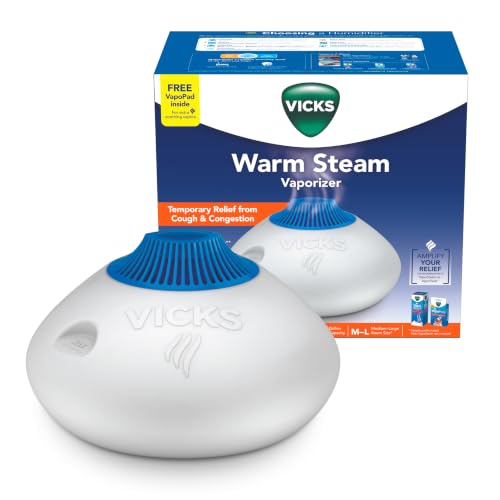
| Vicks V150 Warm Steam | Warm steam vaporizer |
| $19.99as of Oct 19, 2026 9:41 pm GMT+0000 | Buy now →Check current price |


Prices are Amazon’s listed prices as of the time shown and change often; check Amazon for today’s price. As an Amazon Associate we earn from qualifying purchases.
Step-by-Step Sizing Method
Step 1: Decide what space the humidifier serves
A portable humidifier humidifies the room it sits in, and somewhat beyond if doors are open. Decide whether the goal is one bedroom, an open main floor or the whole house. If the goal is the whole house, a furnace-mounted unit is often the more practical tool.
Step 2: Measure the area and check ceiling height
Multiply length by width for each room in the zone and add them up. If ceilings are higher than 8 feet, scale up proportionally: a 12-foot vaulted ceiling holds about 50 percent more air than an 8-foot one.
Step 3: Rate the home’s tightness
- Tight: built in roughly the last 15 years or significantly air-sealed, double- or triple-pane windows, few drafts, often mechanical ventilation.
- Average: 1980s to 2000s construction with ordinary weatherstripping.
- Leaky: older homes with original windows, noticeable drafts, an open fireplace damper, or a lot of exterior wall area.
Step 4: Read the table and pick a model with some headroom
Choose a humidifier whose rated output falls at or slightly above the range. A unit that can run on medium most of the time is quieter and gentler on wicks than one running on high constantly.
Step 5: Check tank size against refill tolerance
Output rating and tank capacity are different numbers. A unit rated at 3 gallons per day with a 1-gallon tank needs refilling three times a day at full output. EPA recommends emptying, wiping dry and refilling portable humidifiers daily anyway, so a tank that roughly matches a day’s use at the expected setting is convenient.
Step 6: Verify with a hygrometer
Run the humidifier for a few days and check readings morning and evening, in the room and at the far side of the zone. Adjust the setting, the location or the unit size based on the results.
Keep notes for the first couple of weeks, including the outdoor temperature each day. That record shows whether the unit keeps up on the coldest days or only on mild ones, and it makes the next decision, whether to add a second unit, move to a whole-house system or simply change a wick, far easier.
A Worked Example for a Front Range Home
Consider a 1990s two-story home in Westminster with 2,000 square feet of living space above the basement, 8-foot ceilings and average construction. In January the hygrometer reads around 18 to 22 percent indoors. The owners want about 35 percent.
Rule-of-thumb answer
From the table, an average 2,000-square-foot home falls in the 1,000-to-2,000 row’s upper end or the 2,000-to-3,000 row’s lower end, about 5 to 7 gallons per day. That is beyond most single portable units, so the realistic choices are a large console evaporative humidifier on the main floor, two smaller portable units (main floor and bedroom), or a whole-house humidifier on the furnace.
Cross-check with a rough moisture-loss estimate
A more physical estimate goes like this, with rounded numbers for illustration:
- Volume: 2,000 square feet times 8 feet equals 16,000 cubic feet.
- Air exchange: an average home might exchange roughly half its air with outdoors each hour, or about 8,000 cubic feet per hour, through leaks and ventilation.
- Moisture deficit: freezing outdoor air carries only a small fraction of the moisture that 70°F air at 35 percent humidity carries, so nearly all the moisture in each replaced cubic foot has to be resupplied.
- Result: working that through standard psychrometric relationships at Front Range air pressure gives a moisture need on the order of 5 to 6 gallons per day on a typical cold day.
The two methods land in the same neighborhood. On a frigid day the need rises, and on a mild sunny day it falls. Cooking, showers, plants and people also add moisture, often a gallon or more per day in a family home, which reduces what the humidifier must supply.
Decision
For this house, a whole-house humidifier rated well above 6 gallons per day on the furnace, controlled by a humidistat, would hold the whole home steady. A budget alternative is a 4-to-5-gallon console unit on the main floor plus a small unit in the main bedroom, accepting more refilling and cleaning.
Portable, Console or Whole-House
Small portable (tabletop)
Typically about 1 to 2 gallons per day, suited to one bedroom or office. Easy to clean and move. Ultrasonic models are quiet but need distilled water to avoid white dust; evaporative models use wicks.
Large portable and console
Typically about 3 to 6 gallons per day or more, for open living areas or part of a home. EPA describes console humidifiers as units encased in cabinets designed for floor use. Larger tanks mean less frequent refills but heavier lifting.
Whole-house (furnace-mounted)
EPA describes central humidifiers as built into heating and air conditioning systems to humidify the whole house. Bypass and fan-powered models use an evaporative water panel; steam models boil water and can supply more output independent of furnace run time. Whole-house units need a water line, often a drain, a humidistat and professional installation. Because they run only when the furnace blower runs (except steam units with their own controls), output varies with heating demand.
When the size is clear, our roundups of the best humidifiers and the best whole-house humidifiers compare current models by output and type.
Reading Output Ratings on the Box
Manufacturers rate output under standardized laboratory conditions, and many also print a recommended room or home size. Both numbers are useful for comparing models with each other, but neither accounts for a specific house. A few points help translate them:
- Output is measured at maximum setting. Real use is usually on a lower setting, so actual daily output is less than the rating.
- Evaporative output declines as the wick ages. A wick loaded with minerals can deliver noticeably less than a new one, which is one reason a unit that worked in December may fall short in February.
- Coverage claims assume average conditions. In a dry, cold Front Range winter, treat the printed square footage as optimistic and size toward the upper end of the table above.
- “Gallons per day” and “tank size” are different. The output rating tells how fast water leaves; the tank size tells how often someone must refill it.
Front Range Factors That Change the Answer
Very dry outdoor air
Colorado’s semi-arid climate means outdoor air brings in very little moisture even on mild winter days. Homes along the Front Range therefore need more humidifier output to reach the same indoor level than similar homes in humid climates.
Chinook winds and air leakage
Strong downslope winds push outdoor air through every crack in a leaky house, raising the air exchange rate and the humidity loss with it. Homes in windy areas near the foothills can see humidity drop quickly on windy days, which argues for sizing toward the leaky column of the table and for air sealing.
Furnace run time
Bypass and fan-powered whole-house humidifiers only add moisture when the furnace blower runs. In a well-insulated home with short furnace cycles, or on sunny winter afternoons when the furnace barely runs, a bypass unit may deliver less than its rating. Steam humidifiers, or setting the furnace fan to run more often, can help.
Finished basements
Basements tend to feel less dry than upper floors because they are cooler and partly below grade. A whole-house humidifier serves all levels, but a portable unit on the main floor will not reach a basement bedroom. Check humidity on each level separately before adding units.
One Large Unit or Several Small Ones
For whole-home coverage without a furnace-mounted unit, two or three portable humidifiers placed where people spend time can work better than a single large one, because moisture does not spread evenly through closed doors and multiple floors. The trade-off is more tanks to empty, clean and refill daily, as EPA recommends. A single console unit in an open main floor plus a small bedroom unit is a common compromise.
Window Condensation: The Limit on Colorado Winters
A humidifier that is the right size for the room can still cause trouble if the setting is too high for the weather. When it is very cold outside, the inside surface of windows, especially older single-pane, aluminum-frame or poorly sealed windows, can drop below the indoor dew point. Moisture then condenses on the glass and frame.
EPA’s guidance is direct: if water condenses on windows, walls or pictures, relocate the humidifier, lower its humidistat setting or reduce its use. A widely used cold-climate rule of thumb is to lower the indoor humidity target as outdoor temperatures fall, so on the coldest Front Range nights a setting near 30 percent may be the practical maximum, while milder days allow closer to 40 percent. Many whole-house humidistats include an outdoor sensor or a chart for this reason.
Chronic condensation feeds mold on window frames, sills and nearby drywall. Our guide on what mold needs to grow explains why moisture, not the presence of spores, is the factor homeowners can control.
Oversizing, Undersizing and Control
Signs the humidifier is too small
- The hygrometer never reaches 30 percent even with the unit on high.
- The tank empties well before the next scheduled refill.
- Static shocks and dry skin persist in the target room.
Signs it is too large or set too high
- Readings above 50 percent, which EPA advises against.
- Fogged windows, damp sills or water droplets near the unit.
- Damp carpet, drapes or tablecloths, which EPA says should not be allowed to get damp.
- A musty smell developing over the season.
Oversizing is easier to manage than undersizing as long as the unit has a reliable humidistat. A built-in humidistat should be checked against a separate hygrometer; built-in sensors sitting next to the mist outlet often read high or low.
Care Matters More Than Capacity
EPA’s care recommendations apply to every portable humidifier, whatever its size:
- Empty the tank, wipe surfaces dry and refill with fresh water daily, unplugging the unit first.
- Clean portable humidifiers every third day, removing scale, deposits and film.
- Use water with low mineral content, such as distilled water, particularly in ultrasonic and impeller units, which EPA says tend to disperse the most minerals and microorganisms.
- Follow manufacturer instructions for cleaning agents, and rinse thoroughly.
- For central humidifiers, follow the manufacturer’s maintenance directions and do not let water stand in any reservoir for long periods.
EPA’s biological contaminants guidance adds that cool mist and ultrasonic humidifiers should be cleaned according to the manufacturer and refilled as directed, using distilled water to reduce mineral dispersal. A larger humidifier means more water to manage, so choosing an output that fits the space, not the largest available, also keeps maintenance reasonable.
When to Call an HVAC Pro
An HVAC contractor can install a whole-house humidifier, confirm the furnace and ductwork can support it, add an outdoor-reset humidistat and set up a drain. Call one as well if humidity stays low even with a properly sized unit, which can indicate a leaky house or an oversized ventilation rate, or if condensation and musty odors appear despite moderate settings. Our guide to hiring heating and cooling professionals covers what to ask. For buyers, an inspector may note water-stained window sills, a neglected furnace humidifier or signs of condensation damage, all clues to how moisture has been managed in a home.
References
- Use and Care of Home Humidifiers — U.S. Environmental Protection Agency
- A Brief Guide to Mold, Moisture and Your Home — U.S. Environmental Protection Agency
- Biological Contaminants and Indoor Air Quality — U.S. Environmental Protection Agency
Frequently asked questions
What size humidifier is needed for a bedroom?
As a rule of thumb, a bedroom of up to about 300 square feet needs roughly 1 to 2 gallons per day, toward the higher end in an older, drafty home. Check results with a hygrometer and aim for 30 to 50 percent relative humidity, as EPA recommends.
How many gallons per day does a whole house humidifier need?
A typical 2,000 to 3,000 square foot home often needs around 4 to 12 gallons per day depending on how tight the construction is and how cold it gets. Leaky older homes sit at the high end, and newer, well-sealed homes at the low end.
Is a bigger humidifier better?
Not necessarily. A unit with modest headroom that runs on a medium setting is quieter and easier to maintain. Oversized units set too high can push humidity above 50 percent and cause window condensation, which EPA advises correcting by lowering the setting or moving the unit.
What humidity level should be set in a Colorado winter?
EPA recommends 30 to 50 percent and not above 50. In cold Front Range weather, staying near 30 to 35 percent on the coldest nights helps avoid condensation on windows, with higher settings possible on milder days.
Why does the humidifier not raise humidity enough?
The unit may be undersized for the space, the home may be leaky, a wick may be clogged with minerals, or doors may be closed between the humidifier and the hygrometer. Check output against the rule-of-thumb ranges and replace worn wicks or filters.
Noticing condensation damage on windows in a Front Range home you plan to buy? Contact our team to connect with a local inspector.