How to Clean a Humidifier: Daily, Weekly and Seasonal Steps

To clean a humidifier, unplug it, empty the tank, and scrub away scale with white vinegar, then disinfect the parts that touch water using the product the manufacturer recommends, rinse thoroughly with several changes of water, and let everything dry before refilling. On top of that deeper clean, the tank should be emptied, wiped dry and refilled with fresh water every day it is in use. A humidifier that sits with stale water for days can grow bacteria and mold and then spray them into the room as fine mist, which is the opposite of what anyone wants from a device meant to ease dry sinuses. This guide covers how to clean a humidifier by type, the daily, every-few-days and end-of-season routines, which water to use, the cleaning-product mistakes to avoid, and when a furnace-mounted unit needs a professional. It summarizes U.S. EPA guidance current as of 2026; anyone with respiratory symptoms that seem linked to humidifier use should stop using it and talk with a physician.
Part of our Humidity Control guide — start there for the full picture →
The Quick Routine
Most portable humidifiers stay clean with three levels of care. The schedule below follows EPA’s recommendations for portable units, with the descaling step that most manufacturers also call for. Always check the owner’s manual, because some models have parts that should not be soaked or should only be cleaned with specific products.
| How often | What to do | Why |
|---|---|---|
| Daily during use | Unplug, empty the tank, wipe all surfaces dry, refill with fresh low-mineral water | Reduces microbial growth in standing water |
| Every third day (EPA guidance for portables) | Empty and scrub the tank and base with a brush; remove scale, deposits and film; wipe dry | Scale and film shelter bacteria and mold |
| About weekly, or when scale builds | Soak scaled parts in undiluted white vinegar, scrub, rinse; then disinfect per the manual and rinse again | Dissolves mineral crust that brushing alone leaves behind |
| End of season | Deep clean, discard used wicks, filters or cartridges, dry every part, store dry | Prevents growth during months of storage |
| Start of season | Clean again, dust the outside, install new wick or filter | Removes anything that settled in storage |
Why Cleaning Matters More Than Most People Think
EPA’s fact sheet on the use and care of home humidifiers explains that microorganisms often grow in humidifiers with tanks of standing water, and that several studies have shown ultrasonic and impeller (cool mist) humidifiers can disperse microorganisms and minerals from the tank into indoor air. EPA notes that breathing mist containing these pollutants has been implicated in a type of lung inflammation, and that young children, older adults and people with lung disease or respiratory allergies may be especially susceptible.
Too much humidity is the other half of the risk. The CDC’s overview of mold and health advises keeping household humidity as low as you can, no higher than 50 percent, to prevent mold growth. A clean humidifier set too high can still create damp spots on window frames and cold exterior walls.
EPA also points out that the possible health effects are not fully understood, and that following its care recommendations should reduce the potential for dispersing microorganisms and minerals. In plain terms, the risk is manageable, and it comes almost entirely from neglect.
Which types need the most attention
- Ultrasonic and impeller humidifiers create mist directly from the tank water, so whatever is in the water goes into the air. EPA identifies these two types as generally producing the greatest dispersion of both microorganisms and minerals.
- Evaporative humidifiers blow air across a wet wick or filter. EPA says they generally disperse less, if any, of these pollutants, but standing water and a wick can still grow microbes and smell musty.
- Steam vaporizers and warm mist units boil water, and EPA notes they are not expected to disperse substantial minerals. They still collect scale on the heating element and need regular cleaning, and their hot water and steam can burn.
Our comparison of evaporative vs ultrasonic humidifiers covers how these differences play out day to day.
Best Humidifiers: our top 3 picks
| Product | Best for | Key features | Price | Buy |
|---|---|---|---|---|
| Levoit NeoClassic 650S | Best overall for dry bedrooms |
| $67.99as of Oct 20, 2026 7:51 pm GMT+0000 | Buy now →Check current price |
| Levoit Classic 160 | Small bedroom, simple controls |
| $29.78as of Oct 20, 2026 7:51 pm GMT+0000 | Buy now →Check current price |
| Vicks V150 Warm Steam | Warm steam vaporizer |
| $19.99as of Oct 20, 2026 6:25 pm GMT+0000 | Buy now →Check current price |


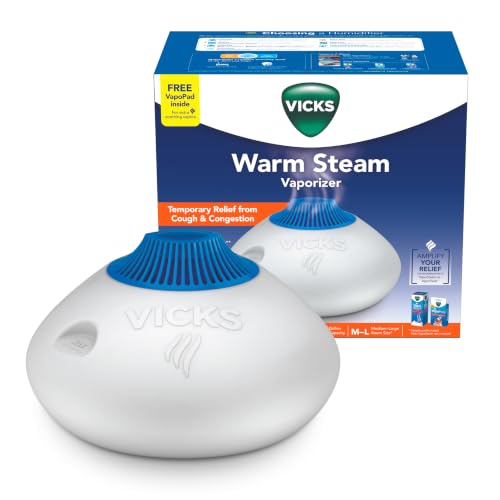
Prices are Amazon’s listed prices as of the time shown and change often; check Amazon for today’s price. As an Amazon Associate we earn from qualifying purchases.
Step by Step: Deep Cleaning a Portable Humidifier
This routine works for most tabletop and console units. Set aside 30 to 60 minutes, most of it soaking time.
What you need
- Undiluted white distilled vinegar
- A soft bottle brush and an old toothbrush for crevices
- The disinfecting product named in the manual, or 3 percent hydrogen peroxide if the manual gives no direction
- Clean towels and a dry place for parts to air out
- Distilled water for refilling
The steps
- Unplug the unit. EPA stresses unplugging before emptying or cleaning. Let steam and warm mist units cool fully.
- Take it apart. Remove the tank, cap, float, mist nozzle and any wick, filter or cartridge. Set aside parts the manual says not to soak, especially electronics in the base.
- Empty and rinse. Pour out old water and rinse loose debris from the tank and base reservoir.
- Descale with vinegar. Pour undiluted white vinegar into the base reservoir and tank, swirling to coat the walls. Let it sit about 20 to 30 minutes, longer for heavy crust. On ultrasonic units, fill only the reservoir area around the transducer, not over the electronics, and gently wipe the small transducer disc with a soft brush as the manual directs.
- Scrub. Use the bottle brush on the tank walls and the toothbrush on corners, the float and the nozzle. EPA calls for removing any scale, deposits or film from interior surfaces.
- Rinse the vinegar out completely. Rinse until the vinegar smell is gone.
- Disinfect. Follow the manufacturer’s directions. EPA states that in the absence of specific recommendations, all surfaces that contact water can be cleaned with a 3 percent hydrogen peroxide solution. Apply it, let it sit as the label or manual directs, then drain.
- Rinse thoroughly again. EPA advises rinsing the tank with several changes of tap water after any cleaning or disinfecting agent so chemicals are not dispersed into the air when the unit runs.
- Dry everything. Wipe surfaces and let parts air-dry fully before reassembly.
- Replace or clean the wick or filter. Many wicks are disposable and should be replaced on the maker’s schedule rather than washed. A wick that is stiff with minerals, discolored or musty is done.
- Refill and run. Use distilled or low-mineral water, reassemble and plug in.
Type-by-Type Cleaning Notes
The general routine applies to most units, but each design has a weak spot that deserves extra attention.
Ultrasonic humidifiers
The transducer, a small metal or ceramic disc in the base, is what turns water into mist. Scale on its surface weakens output and is a common reason an ultrasonic unit seems to stop working. Clean it gently with a soft brush and vinegar as the manual directs, and never scrape it with metal. The base usually contains electronics, so it should be wiped and filled only to the marked level, not submerged under a faucet.
Evaporative humidifiers
The wick does the work and collects most of the minerals. It tends to stiffen, discolor and eventually smell. Most manufacturers treat wicks as consumables, typically replaced every one to two months in heavy use or sooner in hard-water areas. The tray under the wick collects slime and benefits from the every-third-day scrub.
Warm mist and steam units
Scale builds quickly on the heating element or boiling chamber. A vinegar soak after the unit has fully cooled usually loosens it. Hot water and steam can scald, so these units should be emptied only after cooling and kept where children and pets cannot tip them.
Units with app controls or sensors
Smart humidifiers often have humidity sensors near the air intake. Dust and white mineral residue on the sensor can throw off readings, so wiping the sensor area with a dry cloth during each deep clean helps the unit hold the target humidity.
Cleaning Products: What to Use and What to Avoid
The safest approach is the simplest: vinegar for scale, the disinfectant the manufacturer names, and lots of rinsing. A few cautions matter.
- Never mix cleaning products. EPA’s guidance on biological contaminants and indoor air quality says to never mix cleaning products together or add bleach to other chemicals. In a humidifier, that means fully rinsing out vinegar before any other product goes in, and never combining bleach with vinegar, ammonia or other cleaners.
- Use bleach only if the manual allows it. Some manufacturers specify a diluted bleach rinse and some prohibit it. Where it is not specified, EPA’s suggestion of 3 percent hydrogen peroxide is the safer default.
- Do not run the unit with cleaner in it. Some online tips suggest “running” vinegar or other solutions through a humidifier. That puts chemicals into the air, which EPA’s rinsing advice is designed to prevent.
- Avoid adding oils and fragrances unless the model has a separate aroma tray designed for them. They can damage plastics and coat parts.
- Ventilate. Clean near an open window or a bathroom with the exhaust fan running.
Water Choice: Distilled Water and White Dust
Water is the other half of a clean humidifier. EPA explains that ultrasonic and impeller humidifiers are very efficient at dispersing the minerals in tap water into the air, which shows up as a fine “white dust” on furniture and electronics. More importantly, EPA notes that minerals increase the buildup of scale, and scale can be a breeding ground for microorganisms. Slowing scale growth is, in EPA’s words, the most compelling reason to find alternatives to tap water.
EPA’s recommendations:
- Use water labeled “distilled.” Distillation is the most effective method for removing minerals.
- Know that “purified” varies. Water treated by deionization or reverse osmosis has most minerals removed but usually more than distilled water. Spring, artesian and mineral waters have not been demineralized.
- Treat demineralization cartridges as partial help. EPA notes their effectiveness varies widely and recommends watching for white dust as a sign they are not working.
Much of the municipal water along the Front Range is moderately hard, so homeowners running ultrasonic units on tap water commonly see white dust and fast scale. In those homes, distilled water often costs less over a winter than replacement cartridges, a point EPA also makes for high-mineral areas. Evaporative units handle tap water better because minerals stay behind in the wick, which is why wicks need replacing.
Setting and Using a Humidifier So It Stays Cleaner
How a humidifier is run affects how dirty it gets and whether it creates moisture problems in the room.
- Stay below 50 percent relative humidity. EPA advises against humidifying above 50 percent, because higher humidity may encourage dust mites and mold. Its brief guide to mold, moisture and your home suggests keeping indoor humidity between 30 and 50 percent ideally.
- Use a hygrometer. Built-in humidistats are often imprecise. A separate inexpensive meter gives a second opinion.
- Watch windows and walls. If water condenses on windows, walls or pictures, EPA suggests moving the humidifier, lowering the setting or using it less. On cold Front Range nights, window condensation often appears before the room feels damp.
- Keep the area dry. EPA advises against letting carpet, drapes or tablecloths near the unit get damp.
- Put it on a stable, water-safe surface a few feet from walls and furniture, and keep steam units out of children’s reach.
If the unit seems undersized or oversized for the room, our guide to what size humidifier you need explains how output ratings line up with room area.
Cleaning a Whole-House (Furnace) Humidifier
Furnace-mounted humidifiers need care too, but the routine is different and usually yearly rather than daily. EPA advises following the manufacturer’s directions for cleaning and maintaining console and central furnace-mounted humidifiers, and avoiding standing water in any tank.
Typical annual maintenance on a bypass or fan-powered unit includes:
- Turning off power to the furnace and the humidifier, and closing the water supply valve.
- Removing the cover and pulling out the water panel (the evaporator pad). Most panels are replaced, not cleaned, at least once per heating season.
- Cleaning scale from the frame, distribution tray and drain outlet.
- Checking that the drain line flows freely to a floor drain or condensate pump.
- Inspecting the solenoid valve and water line for leaks or mineral buildup.
- Setting the bypass damper to the winter position, and closing it again for summer air conditioning if the manual calls for it.
Our guides to the humidifier water panel and whole-house humidifiers cover the parts and types in more detail. A slow or clogged drain is a common cause of water damage around furnaces. The same habit of keeping drain lines clear applies to air conditioning, as our article on how to clean an AC drain line explains.
Signs a Humidifier Needs Replacing
- Pink, black or green film returns within a day or two of cleaning
- A musty or sour smell persists after a full clean
- Cracks in the tank or base that let water reach electronics
- Scale that will not come off the transducer or heating element
- Output drops sharply even with a clean unit and new wick
Before giving up on a unit, rule out the easy causes. A musty smell often comes from an old wick rather than the tank. Weak output on an ultrasonic model is frequently scale on the transducer. A unit that leaks may simply have a cracked or poorly seated tank cap gasket, which is usually a cheap replacement part from the manufacturer.
Portable units are inexpensive enough that replacement is often more sensible than fighting a unit that keeps growing film. Typical prices for portable humidifiers run from roughly $30 to $200 depending on capacity and features, and models with wide tank openings and fewer crevices are easier to clean. Our roundups of the best humidifiers, the best humidifiers for a baby’s room and the best whole-house humidifiers note which designs are easiest to keep clean.
When to Call a Pro or Inspector
Most humidifier cleaning is a DIY job. Bring in help when:
- A furnace humidifier leaks, overflows, or has a drain line that keeps clogging
- There is staining, rust or water damage around the furnace or ductwork
- Mold appears on walls, window frames or ceilings in rooms where a humidifier runs
- Windows show persistent condensation or frost even with the humidifier turned down
- Anyone in the home develops respiratory symptoms that seem to coincide with humidifier use
An HVAC technician handles furnace-mounted units. For mold that has spread beyond a small area, our article on mold cleanup cost explains when professional remediation makes sense. The heating, cooling and ventilation hub collects related guides on humidity and indoor air.
References
- Use and Care of Home Humidifiers — U.S. Environmental Protection Agency
- Biological Contaminants and Indoor Air Quality — U.S. Environmental Protection Agency
- A Brief Guide to Mold, Moisture and Your Home — U.S. Environmental Protection Agency
- About Mold and Your Health — Centers for Disease Control and Prevention
Frequently asked questions
How often should you clean a humidifier?
EPA recommends emptying, wiping dry and refilling a portable humidifier daily, and cleaning it every third day to remove scale and film. Many owners also descale with vinegar about weekly and do a full clean before storing it at the end of the season.
Can you clean a humidifier with vinegar?
Yes. Undiluted white vinegar dissolves mineral scale well. Soak the tank and base reservoir for 20 to 30 minutes, scrub, and rinse until the smell is gone. Follow the manual for disinfecting, and never mix vinegar with bleach or other cleaners.
Is it safe to use tap water in a humidifier?
Tap water works, but EPA recommends low-mineral water such as distilled water, especially in ultrasonic and impeller units. Minerals in tap water cause scale, which can harbor microorganisms, and are sprayed into the air as white dust.
What is the pink or black film in my humidifier?
Colored film in a humidifier tank is usually microbial growth such as bacteria or mold. Unplug the unit, empty it, scrub and disinfect it per the manufacturer's directions, and rinse well. If film keeps returning quickly, replacing the unit may be the better option.
Should a humidifier be cleaned before storing it?
Yes. EPA advises cleaning the humidifier at the end of the season, discarding used cartridges, wicks or filters, drying every part, and storing it in a dry place. Clean it again before using it the next season.
Condensation, staining or musty smells around a humidifier can point to a bigger moisture issue. Front Range homeowners can get in touch with our team to connect with a local inspector.