AC Capacitor Replacement Cost: Typical 2026 Prices and Red Flags
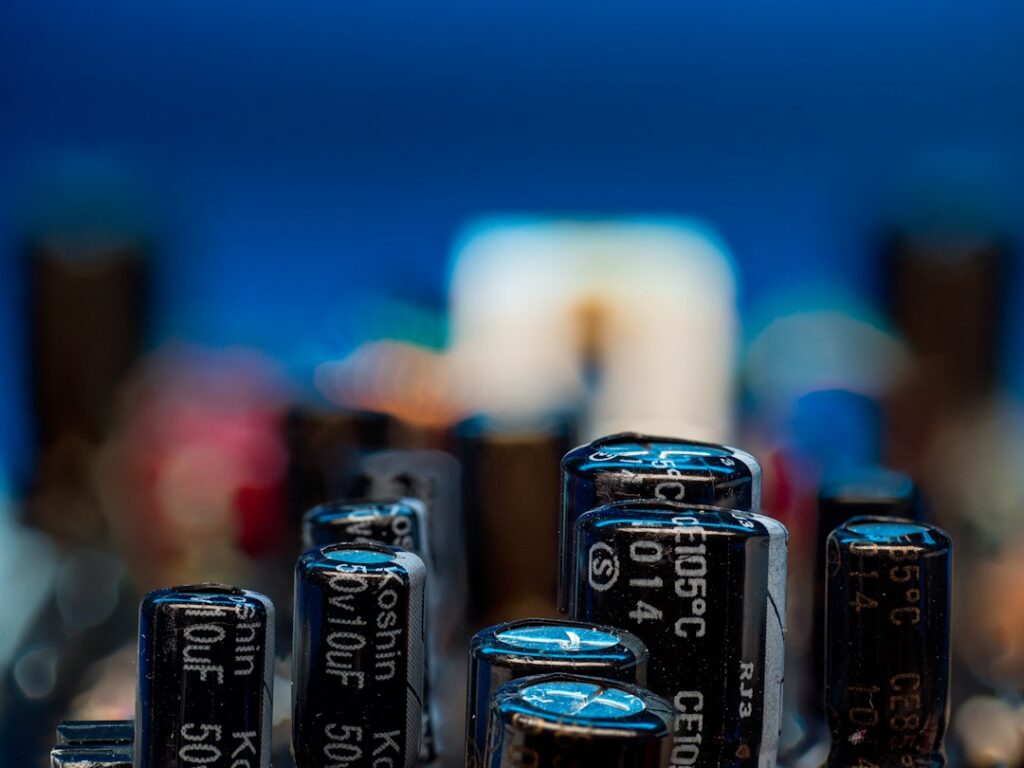
A typical AC capacitor replacement cost is roughly $150 to $400 nationally in 2026 when a technician diagnoses and replaces a run or dual-run capacitor during a regular service call, and often $250 to $600 or more for nights, weekends and peak heat-wave demand. The capacitor itself is an inexpensive part, frequently well under $75 at wholesale, so most of the bill is the trip, the diagnosis and the labor. That gap between part price and invoice is why capacitor quotes cause so much confusion. This guide explains typical ranges, what drives the price, how to tell a fair quote from an inflated one, when a capacitor failure points to a bigger problem and how the issue shows up in a home inspection. It summarizes general guidance as of 2026; all prices are typical national ranges, and local quotes take priority.
Part of our Heating, Cooling & Ventilation guide — start there for the full picture →
Heating or cooling trouble? Talk to a local HVAC technician.
📞 Call (833) 491-1876Typical AC Capacitor Replacement Cost Ranges
Most residential central air conditioners and heat pumps use a run capacitor to help the compressor and the outdoor fan motor start and run efficiently. Many outdoor units use a single dual-run capacitor that serves both. Some systems also have a separate start capacitor or a hard-start kit.
| Job (typical national range, 2026 — get local quotes) | Typical cost | Notes |
|---|---|---|
| Capacitor part only, single-run or dual-run | $15–$75 | Price varies with microfarad rating, voltage and quality |
| Professional replacement during a standard service call | $150–$400 | Includes trip, diagnosis, part and labor |
| After-hours, weekend or peak-season emergency call | $250–$600+ | Premium is mostly labor and dispatch |
| Capacitor replaced during a scheduled tune-up | $75–$250 added to the tune-up | No separate trip charge |
| Capacitor plus contactor | $250–$550 | Common pairing; both wear with cycling |
| Hard-start kit added | $150–$450 | Helps an older compressor start; not always necessary |
| Capacitor replacement that reveals a failed fan motor or compressor | $400–$4,500+ | The capacitor was a symptom, not the cause |
Our main guide to the AC capacitor explains how the part works, the difference between start and run capacitors and why dual-run units are common. If cooling has stopped and the cause is not yet clear, our troubleshooting guide for an AC not blowing cold air covers the other likely culprits.
Why the Bill Is So Much Higher Than the Part
Homeowners who look up a capacitor online and then see a $300 invoice often assume they were overcharged. Sometimes they were. Often, the price reflects what goes into the call:
- Trip and dispatch. A truck, fuel and a technician’s time to reach the house, which is a fixed cost whether the repair takes ten minutes or two hours.
- Diagnosis. Testing the capacitor under load or with a meter, checking the contactor, measuring voltage and amperage on the motors and confirming the compressor and fan start normally afterward.
- Labor and safety. Shutting off power, discharging the old capacitor safely, wiring the replacement correctly and restoring the panel.
- Parts markup and warranty. Contractors mark up parts and typically warranty both the part and the labor.
- Timing. Peak-season calls and after-hours service command premiums.
ENERGY STAR’s maintenance checklist describes the kind of electrical work a technician should do during a service visit: “Tighten all electrical connections and measure voltage and current on motors.” It warns that “Faulty electrical connections can cause unsafe operation of your system and reduce the life of major components.” A capacitor call that includes those checks has more value than one that simply swaps the can.
What Drives the Price Up or Down
Capacitor type and rating
Capacitors are rated in microfarads (µF or MFD) and voltage, and the replacement should match the original rating within the manufacturer’s tolerance. A dual-run capacitor with two ratings, such as one value for the compressor and a smaller one for the fan, costs a little more than a single-run part. Higher-quality capacitors with better heat tolerance cost more but may last longer.
Time of year and time of day
Capacitors tend to fail on the hottest days, when the system is working hardest and contractors are busiest. That timing is why the same repair can cost noticeably more in July than at a spring tune-up.
Access
Most capacitors sit behind a service panel on the outdoor unit and are easy to reach. Units boxed in by fences, decks, landscaping or rooftop locations take longer.
Related parts
Contactors wear with every on-off cycle, and pitted contacts are commonly found on the same visit. Many technicians recommend replacing both. A hard-start kit may be suggested for an older compressor that struggles to start; it can help, but it should be presented as an option with a reason, not an automatic add-on.
Service agreements
Some contractors discount repair parts or waive trip fees for customers on a maintenance plan. That can be worthwhile for homeowners who would book annual service anyway.
Signs the Capacitor Has Failed
A failing capacitor produces a recognizable set of symptoms, though none of them is proof on its own.
- The outdoor unit hums but the fan does not spin, or the compressor does not start
- The fan spins only if nudged, which should never be done by hand on an energized unit
- Indoor blower runs but the air stays warm
- The system starts slowly, clicks repeatedly or trips the breaker
- The top of the capacitor is bulged or domed, or the case is leaking oil
- Short cycling on hot afternoons
A technician confirms the failure by measuring capacitance with a meter and comparing it with the rating printed on the part. Homeowners curious about how that test works can read our guide on how to use a multimeter, and our roundup of the best multimeters lists meters with a capacitance function. Understanding the test is useful for following the technician’s explanation; it is not a recommendation to open an energized outdoor unit.
DIY Replacement and Safety
Capacitor replacement is one of the most commonly attempted DIY air conditioner repairs, and it is also one of the riskier ones. Outdoor units run on 240-volt circuits, and capacitors store an electrical charge after the power is shut off. Discharging and handling them incorrectly can cause a serious shock or damage the equipment. OSHA’s electrical safety overview describes electricity as “a serious workplace hazard” and lists “electric shock, electrocution, fires, and explosions” among the dangers its standards address. Those hazards are the same in a backyard.
Homeowners who are not trained in electrical work are better served by a licensed technician. The cost difference between DIY and professional replacement is real but modest compared with the risk of injury, wiring a dual capacitor incorrectly or damaging the compressor. Power should always be shut off at the breaker and at the outdoor AC disconnect before any panel is opened, and only qualified people should handle the capacitor itself.
A second issue is warranty and liability. A wrong part, loose terminal or misapplied hard-start kit can create problems that a manufacturer or contractor may later decline to cover.
Repair or Replace: When a Capacitor Is a Warning Sign
A capacitor failure on its own is almost always a repair, not a reason to replace the air conditioner. The part is designed to wear out and is inexpensive compared with any other component. Still, a few patterns suggest a larger conversation. These are rules of thumb, not firm rules.
- Repeat failures. A capacitor that fails every season or two may point to high operating temperatures, voltage problems, a struggling compressor or a poor-quality replacement part.
- Collateral damage. A compressor or fan motor that ran for days with a dead capacitor may have overheated. If the compressor still will not start with a new capacitor, the problem is bigger.
- System age. On a unit past roughly 12 to 15 years old, a capacitor call is a good moment to ask the technician for an honest assessment of the coil, compressor amperage and refrigerant charge. ENERGY STAR’s guidance on replacement suggests considering a new unit when “Your heat pump or air conditioner is more than 10 years old,” particularly when it “needs frequent repairs.”
- The 50 percent rule of thumb. Replacement becomes worth discussing when cumulative repair costs on an old system approach half the price of a new one. A single capacitor rarely gets close.
If a technician diagnoses a failed capacitor and then immediately recommends replacing the whole system, ask for the specific readings that support that recommendation. A failed capacitor is a common, cheap fix, and a compressor that starts and runs normally on the new part has not failed.
How to Read a Capacitor Repair Quote
For a small repair, a written quote may be a simple invoice, but it should still be itemized. ENERGY STAR’s contractor-hiring tips recommend “written, itemized estimates” and advise checking contractor “license and insurance requirements” in the state before work begins.
What a clear invoice includes
- Trip or diagnostic fee
- The capacitor’s rating (microfarads and voltage) and whether it is single or dual
- The measured capacitance of the failed part compared with its rating
- Any additional parts, such as a contactor, each priced separately
- Post-repair readings or a statement that the compressor and fan started and ran normally
- Warranty on the part and the labor
Red flags
- No measured value. “It’s bad” with no reading. Ask what it measured.
- Flat-rate price that seems out of line. Flat-rate pricing is common and not a red flag by itself, but a capacitor priced like a major repair warrants a second quote.
- Automatic add-ons. Hard-start kits, surge protectors, refrigerant top-offs and service plans added without a specific reason.
- Refrigerant added on a capacitor call without leak discussion. Refrigerant does not get used up; low charge means a leak.
- Pressure to replace the system. Especially on a unit that is running normally after the new capacitor.
Questions to ask
- What did the old capacitor measure, and what is its rating?
- Did the compressor and fan amperage look normal after the repair?
- Is the contactor worn, and is replacing it necessary now?
- What is the warranty on the part and on the labor?
Because this is a small job, two or three written quotes are not always practical in an emergency. A compromise is to ask for the price over the phone before the visit, then compare it with one or two other local contractors’ stated capacitor pricing.
A worked comparison of three quotes
Picture a hypothetical July afternoon: the outdoor unit hums, the fan does not turn and the house is warming up. Three contractors give these illustrative answers by phone. The numbers are invented for the example, not market prices.
- Contractor A: $129 diagnostic fee, credited toward the repair, plus $195 for a dual-run capacitor installed. Total about $195 if the capacitor is the fault.
- Contractor B: flat $425 for “capacitor service,” including a hard-start kit and a surge protector, no itemization.
- Contractor C: $89 trip fee, $160 capacitor, $140 contactor “if needed,” with a promise to show the readings first.
Contractors A and C are close once the diagnostic credit and the optional contactor are accounted for, and both itemize. Contractor B may be perfectly competent, but the bundle makes it impossible to tell what the capacitor itself costs or whether the extras are needed. The practical move is to ask B for an itemized price on the capacitor alone. Whichever contractor is chosen, asking to see the measured microfarad value against the rating on the can keeps the diagnosis honest.
Front Range Factors
Heat inside the cabinet
Front Range summers bring strong sun at altitude and hot afternoons. Outdoor units sitting in full afternoon sun, against a hot wall or crowded by shrubs run hotter, and heat is a major enemy of capacitors. Keeping clearance around the unit and the coil clean helps.
Summer storms and voltage spikes
Afternoon thunderstorms are routine along the Front Range in summer. Lightning-related surges and brief power interruptions can stress capacitors, contactors and control boards. A surge protector at the disconnect is a reasonable add-on to discuss, priced separately.
Hail and debris
Hail can damage the outdoor coil and fan guard. Damaged fins reduce airflow, raise operating temperature and pressure and make the compressor and capacitor work harder.
Short cooling season
Many Front Range systems sit idle for much of the year, and a weak capacitor may not reveal itself until the first hot week of June. A spring tune-up that tests the capacitor before the heat arrives avoids the most expensive version of this repair. ENERGY STAR’s maintenance checklist recommends checking “the cooling system in the spring and the heating system in the fall.”
Heat pumps
Heat pumps use the same type of capacitor and run year-round, so a failure can happen in January as easily as in July. A heat pump that stops heating on a cold night will often fall back to emergency heat, which keeps the house warm but costs more to run until the repair is made.
How a Home Inspection Flags Capacitor Problems
Under the ASHI Standard of Practice, the inspector shall “Open readily openable access panels” and inspect “Central and permanently installed cooling equipment.” The inspector operates the system with normal controls when conditions allow but does not disassemble the unit or test individual components such as capacitors. A home inspection therefore reports symptoms, not a component diagnosis.
Findings that often trace back to a capacitor include an outdoor fan that does not run, a compressor that hums without starting, short cycling, weak cooling and a breaker that trips during operation. A visibly bulged capacitor can sometimes be seen when the service panel is readily openable. Inspectors may also note a missing or damaged disconnect, inadequate clearance around the unit, damaged coil fins and an older unit nearing the end of its service life. Front Range inspections in cold weather often cannot operate the air conditioner at all, since running it at low outdoor temperatures can damage the compressor; in that case the report usually recommends evaluation once conditions allow.
When an inspection recommends further evaluation, a licensed HVAC contractor can test the capacitor, contactor and motors and quote the repair, often for less than the cost of negotiating around an unknown. Our heating and cooling hub collects related HVAC guides. For an inspection or follow-up on a Front Range home, contact our team.
Keeping Capacitor Failures Rare
- Schedule a spring tune-up that includes capacitor and contactor testing.
- Keep at least two feet of clearance around the outdoor unit and trim vegetation.
- Rinse the condenser coil gently each season with power off.
- Replace the indoor filter on schedule so the system is not straining.
- Consider surge protection if the area sees frequent summer storms.
- Ask for a quality replacement part with the exact rating rather than the cheapest match.
References
- Maintenance Checklist — ENERGY STAR
- When Is It Time to Replace? — ENERGY STAR
- 10 Tips for Hiring a Heating and Cooling Contractor — ENERGY STAR
- Electrical Safety Overview — Occupational Safety and Health Administration
- ASHI Standard of Practice for Home Inspection — American Society of Home Inspectors
Frequently asked questions
How much does it cost to replace an AC capacitor?
A professional AC capacitor replacement typically costs around $150 to $400 nationally in 2026 during a standard service call, and more for after-hours or peak-season emergencies. The part itself is usually inexpensive; most of the bill covers the trip, diagnosis and labor.
Why does a $30 capacitor cost $300 to replace?
The invoice covers the technician's trip, diagnostic testing, safe discharge and wiring, a warranty and parts markup. Peak-season and after-hours calls add a premium. A clear invoice should show the measured value of the old capacitor and itemize any extra parts.
Can a homeowner replace an AC capacitor?
It is a commonly attempted DIY repair, but outdoor units run on 240 volts and capacitors hold a charge after the power is off. Without electrical training, a licensed technician is the safer choice.
How long do AC capacitors last?
Lifespan varies widely with heat, voltage quality and part quality, and many last for years while others fail within a few seasons. Repeated failures can point to a hot cabinet, voltage problems or a struggling compressor.
Does a bad capacitor mean the AC needs replacing?
Usually not. A capacitor is a wear part and a routine repair. Replacement is worth discussing only when the system is old, repairs are frequent or a compressor or motor was damaged while the capacitor was failing.
Buying a Front Range home and unsure about the air conditioner? Reach out to our team to schedule an inspection.