When Was Lead Paint Stopped Being Used: 2026 Guide
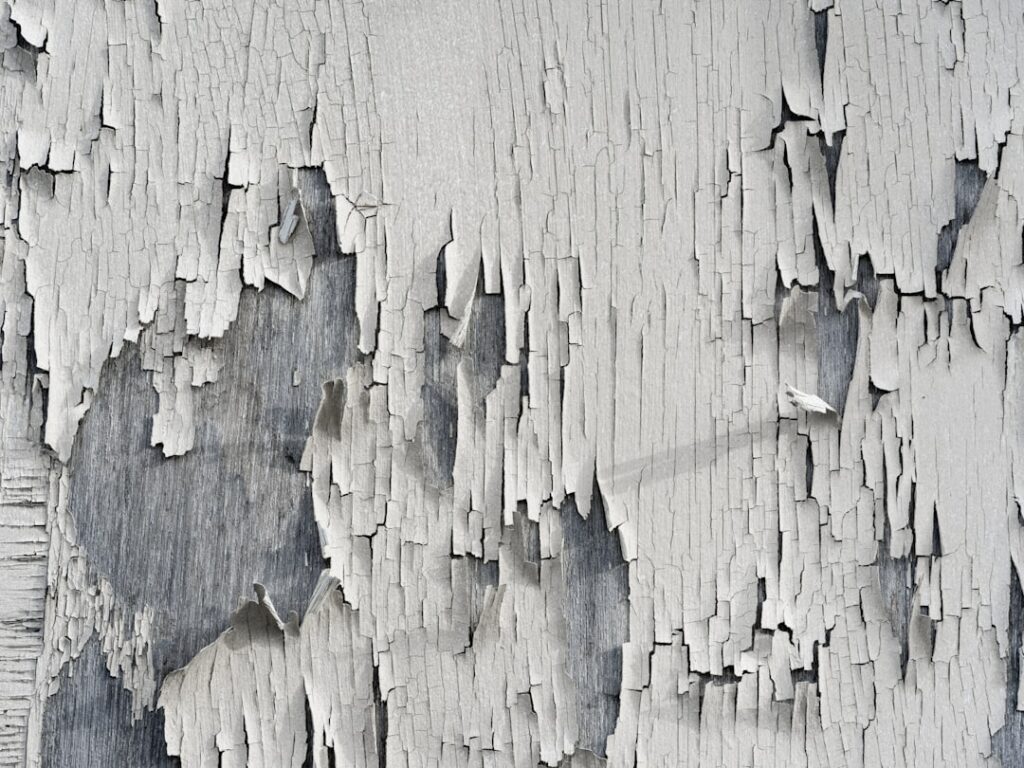
The short answer to when lead paint was stopped being used in U.S. residential applications is 1978 — specifically February 27, 1978, when the Consumer Product Safety Commission’s final rule under 16 CFR 1303 took effect. The longer answer involves a decade-long voluntary phase-out beginning in the mid-1970s, the 1971 Lead-Based Paint Poisoning Prevention Act that set the regulatory stage, and the staggered international timeline that left many countries lagging the U.S. by 10 to 40 years. This guide summarizes EPA, CDC, and HUD guidance current as of 2026 — consult a certified lead inspector for actual testing decisions and your physician for health symptoms.
Part of our Lead Paint & Lead Testing guide — start there for the full picture →
Is this mold, asbestos, or water damage? Get a free instant screen
Upload a clear photo of the suspect area. You'll get an instant AI screening opinion and what to do next. This is screening guidance, not a professional determination.
Screening guidance only. AI can be wrong. Confirm asbestos, mold type, or lead with lab testing or a licensed professional before acting.
The 1978 federal rule that stopped residential lead paint
The Consumer Product Safety Commission issued the final rule banning residential lead-based paint manufacture in August 1977, with full effect on February 27, 1978. The rule, codified at 16 CFR 1303, capped lead content in residential paint at 0.06 percent by weight of dry paint solids — a threshold that effectively eliminated lead as a paint additive for indoor and outdoor home use. The 0.06 percent cap was later tightened to 0.009 percent under the 2008 Consumer Product Safety Improvement Act (CPSIA). The 1978 date is the inflection point: paint manufactured for residential sale after February 27, 1978 cannot contain meaningful lead, while paint sold before that date frequently did.
Voluntary phase-out began years before the federal rule
Several major paint manufacturers had already begun reducing or eliminating lead from residential lines by the early 1970s, ahead of regulation. Sherwin-Williams, Benjamin Moore, and Dutch Boy were among the brands that began voluntary reformulation between 1970 and 1975 as consumer awareness of childhood lead poisoning grew. The Lead-Based Paint Poisoning Prevention Act of 1971 (Public Law 91-695) provided federal funding for screening and abatement and signaled regulatory direction without directly banning the product. By the time the 1977 CPSC proposed rule was published, much of the industry had already transitioned — the 1978 effective date was as much regulatory codification of market reality as it was new restriction.
What remained legal after 1978
The 1978 rule applied specifically to residential consumer paint. Lead-based coatings remained legal for several industrial and specialty applications that continue to the present day. Military equipment coatings (corrosion protection on naval vessels, aircraft, vehicles) often still contain regulated lead. Aerospace primers (notably zinc chromate and lead-chromate yellow) continued in industrial use. Highway striping paint and bridge primers used lead-based formulations through the 1990s and 2000s in some jurisdictions; phase-outs are state-by-state. Artist pigments (lead white, Naples yellow, chrome yellow) remained legal for sale to professional artists. Certain ceramic glazes, automotive coatings, and industrial machinery primers retained lead. The 1978 rule was about the residential and consumer paint shelf — not about lead in coatings generally.
International phase-out timeline
The U.S. was a global leader in residential lead-paint regulation, but several countries acted earlier — and many acted decades later. Japan implemented a voluntary phase-out in 1934, decades before any other nation, after public-health research linked lead to neurological injury. France, Belgium, and Austria signed the 1925 ILO Convention restricting interior lead paint, though enforcement varied. The United Kingdom did not ban lead paint for general domestic use until 1992. India banned residential lead paint in 2016. China implemented a ban in 2018. Several developing countries still permit some level of residential lead paint manufacture in 2026, though pressure from the WHO Global Alliance to Eliminate Lead Paint has driven adoption of national bans in most major economies. The U.S. 1978 date is roughly the middle of the global timeline — earlier than most European countries except the early adopters, but later than Japan.
Pre-1978 housing inventory still contains lead paint
The 1978 production rule did not remove existing paint — it stopped new lead-based paint from being sold. As a result, lead-based paint remains in roughly 35 to 38 million U.S. homes built before 1978. EPA estimates that 24 percent of all U.S. housing units (across construction era) contain some lead-based paint, with concentrations heaviest in pre-1960 housing where lead content sometimes reached 50 percent by dry weight. The Front Range housing stock skews younger than national averages — most Denver metro construction post-dates 1980 — but pre-1978 inventory is concentrated in central Denver neighborhoods (Park Hill, Capitol Hill, City Park), older Boulder (downtown and University Hill), Englewood, and Pueblo. For more on the practical implications for pre-1978 buyers, see our pre-1978 housing hazard guide.
The relationship between 1978 and the Title X disclosure rule
The 1978 production rule and the 1992 Title X disclosure rule are separate. The 1978 rule stopped new manufacture; the 1992 rule (Residential Lead-Based Paint Hazard Reduction Act, Title X) required disclosure of known lead paint on sales and rentals of pre-1978 homes. EPA and HUD jointly issued the disclosure regulation in 1996, requiring sellers and landlords to deliver the EPA pamphlet “Protect Your Family from Lead in Your Home”, attach a lead-based paint disclosure form, and allow a 10-day federal inspection contingency for buyers. The 1996 disclosure rule is why every pre-1978 real-estate transaction includes an LBP disclosure form even when no lead paint is known to exist. For more on the disclosure mechanics, see our guide on lead paint disclosure under Title X.
The 2008 CPSIA tightening and the 2010 RRP rule
Two follow-on regulations changed the lead-paint landscape after 1978. The Consumer Product Safety Improvement Act of 2008 (CPSIA) lowered the lead-content cap in consumer paint from 0.06 percent to 0.009 percent — an order of magnitude tighter and effectively zero for practical purposes. The EPA Renovation, Repair, and Painting Rule (RRP), effective April 22, 2010, requires that any renovation in a pre-1978 home affecting more than six square feet of interior or 20 square feet of exterior painted surface be performed by an EPA-certified RRP contractor following lead-safe work practices. The RRP rule is the day-to-day regulation that affects current homeowners doing renovations on older housing stock — far more than the 1978 production rule itself.
How to know if a specific home has lead paint
Three methods confirm or rule out lead paint in a specific home. XRF (X-ray fluorescence) on-site testing — an EPA RRP-certified inspector or risk assessor uses a handheld XRF gun to read lead content directly through paint layers without disturbing the surface. Results are immediate; cost is $300 to $600 for a typical scope. Paint chip lab testing — small chip samples (typically pea-sized) collected from each suspected paint layer and sent to an accredited lab for atomic-absorption analysis. Cost is $25 to $75 per sample plus $100 to $200 collection fee. EPA-approved home test kits — 3M LeadCheck and D-Lead swabs provide presumptive results in 1 to 2 minutes; useful for screening but not legally definitive. EPA recommends professional testing for any final-disclosure decision.
What “stopped being used” really means for a homeowner
The 1978 cutoff is a manufacturing date, not a paint-on-wall date. A homeowner cannot infer that their pre-1978 home has lead paint based solely on construction year — many older homes have been completely repainted multiple times, with the most recent coats being lead-free post-1978 paint. Lead-paint risk attaches to chipping, peeling, and disturbed paint — particularly on friction surfaces (window sashes, door frames, stair treads, baseboards) where deteriorated paint produces lead dust. Intact lead paint covered by post-1978 coatings poses minimal risk if the encapsulating layer stays intact. Testing identifies whether lead paint exists; visual inspection identifies whether it is currently disturbed.
Why lead was added to paint in the first place
Lead has been used in paint since Roman times because it improves several technical properties at once. White lead (basic lead carbonate) provided exceptional hiding power, allowing thinner coats to cover dark surfaces. Lead chromate yellows and reds delivered intense, durable colors that resisted fading. Lead-based driers accelerated curing of oil-based paints, allowing faster recoat times. Lead also improved washability and durability on exterior surfaces, extending the useful life of a paint job by several years. The combination made lead-based paint the premium choice for high-traffic interior surfaces (trim, doors, kitchens, bathrooms) and exterior cladding throughout the late 19th and most of the 20th century. The toxicity of the lead component was understood by chemists from the early 1900s, but consumer-level public-health pressure did not gather force until the 1950s and 1960s when childhood lead-poisoning research accumulated.
The 1971 LBPPPA and the regulatory ramp-up
The Lead-Based Paint Poisoning Prevention Act of 1971 was the legislative foundation for the 1978 ban. The act authorized federal screening programs in low-income housing, funded lead-abatement demonstration projects, and directed the Department of Housing and Urban Development to study the lead-paint problem in federally assisted housing. The 1971 act did not ban lead paint, but it established the federal infrastructure that supported the 1977 CPSC proposed rule and 1978 final rule. The legislative history of LBPPPA shows that lead-paint regulation was driven by pediatric-medical findings published throughout the late 1960s, particularly Dr. Herbert Needleman’s research linking blood-lead levels to neurodevelopmental delay in children.
Pre-1960 housing has the highest lead concentrations
Paint manufactured between roughly 1900 and 1955 frequently contained 10 to 50 percent lead by dry weight. Paint manufactured 1955 to 1978 typically had lower but still hazardous concentrations, often 1 to 10 percent. The pre-1960 cohort is the highest-risk subset: thick layers of high-lead paint on plaster walls, window sashes, and door frames. EPA risk-assessment guidance treats pre-1960 housing as a higher-priority testing target than 1960-1977 housing for this reason. Homeowners and buyers evaluating a specific home should ask about original construction date, major renovation dates, and any prior lead testing or abatement history when making testing decisions.
Where to find authoritative information
The EPA Lead in Paint program page is the federal hub for current regulation, RRP-contractor lookup, and homeowner guidance. The CDC Childhood Lead Poisoning Prevention Program publishes the latest blood-lead reference values (currently 3.5 micrograms per deciliter as of the 2021 update) and pediatric screening guidance. HUD’s Office of Lead Hazard Control oversees federally assisted-housing lead remediation. State health departments — including the Colorado Department of Public Health and Environment — maintain certified-firm directories and complaint processes. Homeowners with specific questions about a property should start with one or more of these sources rather than relying on contractor sales materials, which sometimes overstate the urgency or scope of remediation needed.
How the 1978 date affects current real-estate transactions
Every U.S. real-estate transaction involving a residence built before 1978 triggers the Title X disclosure rule. Sellers must complete and sign EPA Form 5630-08 (or HUD Form 1-08 for federally assisted properties), provide the EPA pamphlet “Protect Your Family from Lead in Your Home”, and offer the buyer a 10-day federal inspection contingency. Landlords have the same disclosure obligation on rental of pre-1978 units. The 1978 cutoff is therefore not a historical artifact — it is a present-day legal threshold that affects roughly one in three U.S. residential transactions because of the age of the housing stock. Buyers and renters should ask for the disclosure form proactively if it is not offered, because non-delivery is a frequent enforcement action under EPA and HUD audits.
More Questions About When Lead Paint Use Ended
If an old house was repainted with modern paint, is it lead-safe?
Not necessarily. Repainting an old house with modern paint can cover lead layers and reduce exposure while the new coat holds, but the lead underneath remains. If the new paint chips, peels or wears through on friction surfaces, the lead layers are exposed again.
Surface prep for the repaint may also have created lead dust if it involved dry sanding or scraping. A dust-wipe test can confirm whether hazards exist now. Keeping the top coat in good repair and avoiding friction points, such as sticking windows, is what keeps a repainted home lead-safe.
Did glazing putty and caulk contain lead?
Yes, older window glazing putty and some caulks contained lead, often as lead carbonate or other lead compounds mixed into linseed-oil putty. Putty on original windows in pre-1978 homes is commonly coated with lead paint as well.
Hardened glazing putty cracks and falls out of window sashes over time, contributing to lead dust and chips in window wells. Reglazing old windows should be done with lead-safe methods: misting, hand-scraping and collecting debris on plastic. Some old glazing compounds also contained asbestos, so testing before restoration is wise.
Do homes built in the 1980s or 1990s need lead paint testing?
Homes built in the 1980s or 1990s generally do not need lead paint testing, since residential lead paint was banned in 1978. The federal disclosure and renovation rules also do not apply to them.
Exceptions are rare but real: an older structure that was incorporated into a newer home, salvaged doors or trim reused in construction, or painted items such as old furniture brought in later. Lead in water, from older plumbing components, and lead in soil near busy roads are separate questions that can apply to homes of any age.
Did lead paint use end on exterior trim and porches at the same time?
Yes, the 1978 federal ban applied to residential paint used inside and outside, so lead paint for exterior trim and porches ended at the same time as interior paint. In practice, exterior paints had historically carried more lead than interior paints.
That history explains why exterior surfaces, such as window trim, porch floors, railings and siding, often test highest in older homes. Weathering makes the paint chalk and peel, sending lead into soil near the foundation. Exterior scraping in summer is a common source of lead exposure for nearby children.
References
- EPA Learn About Lead Overview — U.S. Environmental Protection Agency
- CDC Childhood Lead Poisoning Prevention Program — Centers for Disease Control and Prevention
- HUD Office of Lead Hazard Control — U.S. Department of Housing and Urban Development
- FTC Lead Paint Consumer Resources — Federal Trade Commission
Frequently asked questions
What year did lead paint stop being used in homes?
Residential lead paint manufacture was federally banned effective February 27, 1978 under the CPSC final rule 16 CFR 1303. Voluntary industry phase-out began several years earlier as consumer awareness of childhood lead poisoning grew.
Is lead paint still legal anywhere in the U.S.?
For residential consumer products, no. For specific industrial coatings (military equipment, aerospace primers, artist pigments, certain ceramic glazes), some lead-based products remain legal under separate industrial regulations.
Do pre-1978 homes always have lead paint?
Not always. Pre-1978 homes may have lead paint somewhere on the property, but multiple subsequent paint coats often encapsulate it. XRF testing or paint-chip lab analysis is the only way to confirm.
What is the difference between 1978 production ban and 1992 disclosure rule?
The 1978 rule stopped manufacture of new residential lead paint. The 1992 Title X law (with 1996 regulation) requires sellers and landlords of pre-1978 homes to disclose any known lead paint to buyers and tenants.
Is lead paint common in old barns?
Yes, lead paint and lead-based red primers were common on old barns, fences and farm buildings. Peeling barn paint can contaminate surrounding soil and pose risks to livestock and children. Testing before sanding, power washing or salvaging barn wood is recommended.
Does chalky old paint mean it contains lead?
Chalky paint does not prove it contains lead, since many paints chalk as they weather. On pre-1978 homes, though, chalky exterior paint often contains lead and the powder can rub off on hands and fall onto soil. A test confirms whether it does.
Are old apartment buildings likely to have lead paint?
Yes, apartment buildings built before 1978 are likely to have lead paint somewhere, particularly those built before 1950. Federal disclosure rules require landlords to share known information. Tenants can ask whether units, windows and common areas were tested or abated.
If you own or are buying a pre-1978 Front Range home and want a qualified lead-paint inspection or risk assessment from a vetted local professional, connect with our team through the contact page.
Lead paint test kits
Instant swab kits flag lead on painted surfaces in minutes — useful before a renovation in any pre-1978 home.
| Product | Why | Buy |
|---|---|---|
 3M LeadCheck Swabs | EPA-recognized instant swabs. | Amazon — $15.00 |
 Lead Test Kit (lab-based) | Mail-in for a documented result. | Amazon — $75.00 |