Water Moisture Meter: What Homeowners Need to Know
The phrase water moisture meter usually points to one of two adjacent product categories: meters that measure water content in materials like wood and drywall, or meters that detect free liquid water on a surface. Homeowners shopping for one or the other often end up confused by overlapping marketing language, since manufacturers from Protimeter to Klein Tools to Lignomat use slightly different terminology. This guide untangles the categories, explains what specifications actually matter, and walks through the typical use cases that justify each tool.
Part of our Moisture Meters & Water Damage Detection guide — start there for the full picture →
Two Different Tools Sold Under Similar Names
Material moisture meters measure the percentage of moisture content inside building materials. Wood moisture content above twenty percent is at meaningful fungal risk per ASHI inspection standards. Drywall moisture readings work on a relative scale rather than an absolute percentage, since gypsum behaves differently from wood. Inspectors use these meters to find leaks, assess water damage, and determine whether materials are dry enough to finish or paint.
Surface water detectors are simpler. They register the presence of liquid water on or near a surface, often with audible alarms designed for early leak detection under sinks, near washing machines, or in basements. They do not produce quantitative moisture content readings. Their value is detection speed, not measurement precision.
Most homeowners buying a “water moisture meter” actually want a material moisture meter for occasional use during DIY projects or to investigate a suspected leak. The home inspection tools pillar walks through how the broader tool category fits into homeowner and professional inspection workflows.
Pin Versus Pinless Designs
The first major decision is between pin-style and pinless meters. Pin meters embed two metal probes into the material and measure electrical resistance between them. Wet materials conduct electricity better than dry materials, so the meter converts the resistance reading into a percent moisture content. Pin meters are inexpensive — entry-level models from General Tools and Klein Tools start under thirty dollars — and produce point measurements with good accuracy.
The downside of pin meters is the small holes the probes leave. On finished surfaces like painted drywall or hardwood floors, those holes are often unwelcome. The probes also measure only the spot they penetrate, so finding the wettest area in a wall requires multiple punctures.
Pinless meters use electromagnetic sensors that read moisture content through the surface without penetration. They are non-destructive, faster for scanning large areas, and better suited for finished surfaces homeowners do not want to mark up. Quality pinless meters from Wagner, Tramex, and Lignomat run from two hundred to six hundred dollars. Their depth of read is limited — usually three-quarters of an inch to one and a half inches — and the readings are relative to material density.
Accuracy Specifications That Actually Matter
Manufacturer accuracy claims need translation. Most consumer-grade pin meters claim plus or minus two percent moisture content accuracy on wood. That is acceptable for finding leaks but not precise enough for kiln-dried lumber acceptance testing. Professional pinless meters often claim plus or minus 0.1 percent on calibrated species, which is meaningful for woodworking but largely irrelevant for leak detection.
Species correction matters more than accuracy specs for serious wood work. Different wood species have different electrical resistance characteristics at the same moisture content. A meter calibrated for Douglas fir will read incorrectly on white oak unless the user adjusts the species setting. Better meters have built-in species libraries; cheaper ones default to a Douglas fir scale.
For drywall, masonry, and concrete, absolute moisture percentage is less useful than relative readings. The standard practice is to read a known-dry section of the same material and compare it against the suspect area. A reading twenty percent higher in one area suggests moisture intrusion regardless of the absolute number. The handheld moisture meter guide goes deeper on interpretation patterns.
What to Look for in a Homeowner-Grade Meter
Most homeowners do not need professional-grade equipment. A pin meter in the thirty-to-eighty-dollar range with a clear LCD display, audible alarm, and species selection covers ninety percent of homeowner use cases. General Tools, Klein Tools, and Calculated Industries offer reliable entry-level models. Avoid no-name brands that lack documented calibration procedures, since out-of-spec meters produce confidently wrong readings.
Battery life matters more than people expect. Field investigations often involve hours of intermittent use, and meters with auto-off features that trigger too quickly become annoying. Replaceable AAA or 9V batteries are easier to manage than proprietary lithium packs.
Display backlighting helps in dark spaces like crawlspaces, basements, and behind appliances. Backlit displays add a few dollars to the price but make the tool actually usable in the conditions where it gets used. A pinless mode added to a pin meter is a useful upgrade if budget allows; combination meters from Klein, Lignomat, and Wagner deliver both functions in a single unit.
Common Homeowner Use Cases
The most common homeowner uses for a moisture meter are leak investigation, water damage assessment, and pre-finish material verification. Leak investigation uses the meter to map the boundary of a wet area on drywall, subfloor, or framing — finding where the wetness ends often points back to where the source begins. Water damage assessment after a known event helps decide whether materials need replacement or can dry in place.
Pre-finish verification matters for hardwood flooring installations. Installing solid hardwood over a slab that reads above the manufacturer specification is one of the most common causes of post-installation cupping and crowning. A pin or pinless reading on the slab and the flooring before installation prevents an expensive re-do. Concrete moisture readings require a different scale than wood, so meters with multiple material modes work better here.
Other use cases include firewood drying verification, deck board acceptance testing, and routine humidity monitoring of crawlspaces with exposed earth. Each application has slightly different precision needs. Most homeowners over-buy; a thirty-dollar pin meter often does the job.
Limitations Homeowners Frequently Miss
Moisture meters do not detect mold. They detect the conditions that favor mold growth. Reading a high moisture level in drywall does not mean fungal growth is present, only that conditions favor it. Conversely, a dry reading does not rule out historical growth that occurred during a previous wet period and persists even though the material has since dried.
Surface readings can mislead. A pinless meter reads the first three-quarters to one and a half inches of material. Moisture deeper in a wall cavity or hidden behind a vapor barrier may not register on a surface scan. Pin meters with extension probes reach deeper but require larger holes.
Salt and metal interfere with readings. Drywall with elevated salt content from prior water damage produces inflated readings even after drying. Metal studs, electrical wiring, plumbing, and ferrous fasteners create false high readings on pinless meters scanning over them. Reading patterns rather than single points helps filter out these artifacts. The best moisture meters guide compares specific models and their handling of these limitations.
When a Homeowner Should Hire Out Instead
Several scenarios warrant calling a professional rather than relying on a homeowner meter. Suspected hidden moisture in wall cavities behind finished surfaces benefits from thermal imaging combined with calibrated moisture mapping that consumer-grade tools cannot match. Professional thermal cameras such as the FLIR E8 Pro or E96 detect temperature differentials as small as 0.04 degrees Celsius, flagging cool wet spots invisible to a pin meter sweep. Post-flood assessment for insurance purposes needs documentation that holds up in disputes, and adjusters typically expect calibrated equipment with traceable certification rather than a homeowner reading. Real estate transactions often require professional reports for negotiation leverage, especially in Front Range counties like Douglas and Jefferson where buyer inspection objections frequently hinge on documented moisture findings in basements and crawlspaces.
Mold investigations specifically should not rely on moisture meters alone. The combination of moisture mapping, hygrometer logging over weeks, thermal imaging, and air sampling that a certified indoor environmental professional brings exceeds what any single homeowner tool delivers. InterNACHI guidance and ASHI standards both treat the moisture meter as one input within a broader inspection methodology, not a standalone diagnostic. Professional inspectors typically pair a Tramex or Protimeter Surveymaster with a calibrated thermo-hygrometer logging temperature, relative humidity, and dew point over a 48 to 72 hour window. That dataset distinguishes a transient spill from chronic intrusion, which a single-point reading cannot. The meter is a useful triage instrument; it is not a complete inspection.
More Questions About Water Moisture Meters
What is a normal moisture meter reading for drywall?
A normal moisture meter reading for dry drywall is typically under about 1 percent moisture content on a calibrated drywall scale, or a low reading on a relative scale. Many homeowner meters show readings that only make sense compared with known dry areas.
Measure an unaffected wall in the same room as a baseline. Readings well above the baseline, especially near the floor or around plumbing, suggest moisture. Most meters are calibrated for wood, so drywall readings in wood mode are approximate.
How deep can a moisture meter read?
Pinless moisture meters typically read about 3/4 inch to 1 1/2 inches into a material, depending on the model and setting. Pin meters read only as deep as the pins are inserted, unless using insulated hammer probes for deeper readings.
Neither type reads through a full wall cavity. A pinless meter shows whether drywall or subfloor surfaces are wet, while deeper moisture in framing or insulation often requires pins through a small hole or a removal of a section of drywall.
Are cheap moisture meters accurate enough for homeowners?
Inexpensive moisture meters are usually accurate enough for homeowners to compare wet and dry areas, find leak spread, and check firewood. They are less reliable for precise moisture content values or species-specific wood readings.
Calibration, species correction and temperature compensation separate professional meters from budget ones. For insurance claims, flooring installation or construction disputes, a professional-grade meter or a restoration technician’s readings carry more weight than a budget tool. Whatever the meter, consistent technique matters most.
Can a moisture meter read through tile or concrete?
Pinless moisture meters can sometimes detect moisture through ceramic tile or thin concrete, but readings are relative and easily skewed by grout, adhesives and metal reinforcement. Pin meters cannot penetrate hard tile at all.
For concrete slabs, flooring professionals use calcium chloride tests or in-situ relative humidity probes rather than handheld meters. For tile, readings at grout lines and comparisons with dry areas give the best homeowner-level picture of a shower or floor leak.
References
- Standard of Practice — American Society of Home Inspectors
- Moisture Meters in Inspection — InterNACHI
- A Brief Guide to Mold, Moisture, and Your Home — U.S. Environmental Protection Agency
- International Residential Code — International Code Council
Frequently asked questions
What is the difference between a water moisture meter and a regular moisture meter?
Most products marketed as water moisture meters are actually material moisture meters that measure water content in wood, drywall, or concrete. A separate product category called water leak detectors registers the presence of free liquid water and triggers alarms. Homeowners usually want the material meter.
Pin or pinless: which should I buy?
Pin meters are cheaper and more accurate per measurement but leave small holes. Pinless meters scan finished surfaces without damage but cost more and have shallower depth of read. Combination meters offer both modes for around one hundred to two hundred dollars.
Can a moisture meter detect mold?
No. It detects moisture conditions that favor mold growth, not the mold itself. Reading high moisture suggests mold risk but does not confirm presence. Reading dry does not rule out historical growth from a previous wet period.
What moisture content reading is too high in wood?
Wood at twenty percent moisture content or above is at meaningful fungal risk per ASHI inspection standards. Kiln-dried framing should typically read in the eight to fifteen percent range depending on local climate.
Can a moisture meter find a leak behind a wall?
A moisture meter can help locate a leak behind a wall by showing where drywall readings are highest, often directly below or beside the source. It cannot see inside the cavity, so pairing it with a thermal camera or small inspection openings gives a more complete picture.
Do moisture meters need calibration?
Many moisture meters include a calibration check block or self-test, and professionals verify calibration periodically. Homeowner meters rarely need formal recalibration, but checking against the reference block or known dry wood before each project helps catch drift or low batteries.
Can a moisture meter test soil for plants?
Building moisture meters are not designed for soil and give unreliable readings in dirt. Soil moisture meters use longer probes and different scales for gardening. Buy the type that matches the job, since a single device rarely handles both well.
Moisture meters for home inspection
Pin meters read deep but leave marks; pinless meters scan surfaces non-destructively. Many inspectors carry both.
| Product | Why | Buy |
|---|---|---|
 Klein Tools ET140 Pinless | Non-destructive scanning; affordable. | Amazon — $49.97 |
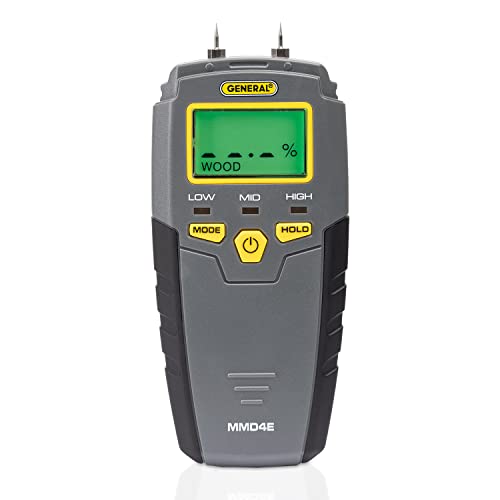 General Tools MMD4E | Best-selling pin meter for drywall/wood. | Amazon — $39.98 |
 Lignomat Mini-Ligno | Trusted by woodworkers; species-calibrated. | Amazon — $83.20 |