Toilet Installation Cost: Typical Labor, Parts and Repair Prices
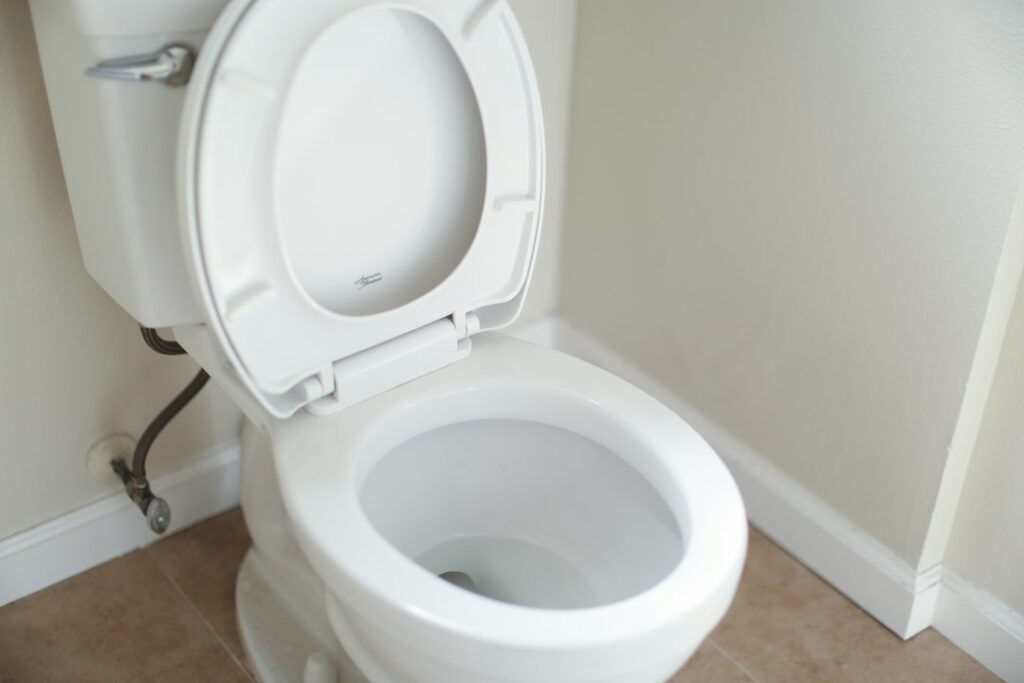
Toilet installation cost for a straight replacement typically runs about $150 to $400 in labor, plus the toilet itself, when a plumber removes the old fixture and sets a new one on an existing drain and flange in good condition. The total climbs when the flange is broken, the subfloor is soft from a long-running leak, the shutoff valve needs replacing, or the toilet is moving to a new location. Wall-hung toilets with in-wall carriers sit in a higher bracket again. This guide lays out the typical ranges by job type, what drives the price, when repairing an old toilet still makes sense, how to read a plumber’s quote and what a home inspector looks for around the base of a toilet. All prices are typical national ranges for 2026, not quotes, so gather written local quotes before hiring.
Part of our Plumbing & Water guide — start there for the full picture →
Plumbing problem? Talk to a local plumber now.
📞 Call (877) 637-1527Typical Toilet Installation Cost at a Glance
Plumbers commonly quote toilet replacement as a flat-rate job, with add-ons for anything found once the old toilet is lifted. The table shows the ranges homeowners typically see.
| Job type | What is usually involved | Typical national range, 2026 (get local quotes) |
|---|---|---|
| Straight swap, labor only | Remove old toilet, new wax ring or seal, set and level new toilet, connect supply | About $150 to $400 |
| Standard toilet (fixture only) | Two-piece or one-piece floor-mounted model | About $150 to $600 |
| Comfort-height, one-piece or smart toilet (fixture only) | Taller bowl, skirted design, bidet seat or electronics | About $400 to $1,500 or more |
| New shutoff valve and supply line | Replace a stuck or leaking angle stop and the braided supply | Often $75 to $250 extra |
| Flange repair or replacement | Repair ring, spacer or new flange on the drain | Often $100 to $400 extra |
| Subfloor repair around the toilet | Cut out and replace rotted or soft subfloor, then reset flooring | Roughly $300 to $1,500 or more |
| Wall-hung toilet with in-wall carrier | Open the wall, install carrier and tank, re-plumb drain, finish wall | Roughly $1,500 to $4,000 or more installed |
| Relocate toilet or add a new one | New drain, vent and supply runs, possibly cutting concrete in a basement | Roughly $1,500 to $5,000 or more |
| Haul-away of old toilet | Removal and disposal | Often included, or about $25 to $100 |
Many plumbers charge less per toilet when replacing two or three on one visit, since the trip and setup are already covered. Homeowners who supply their own toilet sometimes pay a little less in total, though some plumbers will not warranty a customer-supplied fixture.
For a closer look at the drain dimension that determines which toilets fit, see our guide to toilet rough-in measurements.
What Drives the Price
A straight swap in a bathroom with a solid floor, a working shutoff and a standard rough-in is one of the most predictable plumbing jobs. These are the factors that change it.
Rough-in size
The rough-in is the distance from the finished wall to the center of the drain. Most homes have a 12-inch rough-in, but 10-inch and 14-inch rough-ins exist, especially in older homes. Toilets with less common rough-ins have fewer model choices and can cost more. Buying the wrong toilet is a common reason for a second trip charge.
The flange and wax seal
The flange anchors the toilet to the drain. A cracked, corroded or too-low flange can cause the wax seal to fail, which lets water and sewer gas escape under the toilet. Repairing it at installation is far cheaper than repairing the floor later. Our guides to the toilet flange and the toilet wax ring explain the parts and the common failure points, and homeowners comparing seals can see our picks for the best toilet wax rings.
Subfloor condition
A toilet that has rocked or leaked for years can leave the subfloor soft or rotted. Once the old toilet is lifted, the plumber can see and feel the damage. Subfloor repair often means pulling tile or vinyl around the toilet and bringing in a flooring trade to finish, which is why this line item has the widest range.
Shutoff valve and supply line
Older multi-turn shutoffs often seize or drip once they are disturbed. Replacing the valve and supply line during installation is a modest added cost and avoids a leak later. Older solder or threaded connections may take more time than a modern compression or push-fit fitting.
Toilet type and features
One-piece and skirted toilets are heavier and can take longer to set. Toilets with electric bidet seats need a nearby GFCI-protected receptacle, which may require an electrician. Wall-hung toilets require opening the wall to install a carrier, which turns a one-hour job into a small remodel.
Location and permits
Second-floor bathrooms, tight half-baths and basements with concrete floors all affect labor time. A like-for-like toilet replacement often does not require a permit, while relocating a toilet or adding a new bathroom usually involves new drain and vent work that does. Check with your city or county building department before work that changes plumbing lines.
Best Toilets: our top 3 picks
| Product | Best for | Key features | Price | Buy |
|---|---|---|---|---|
| Gerber Maxwell Crest | Best overall two-piece |
| $259.00as of Oct 22, 2026 11:05 am GMT+0000 | Buy now →Check current price |
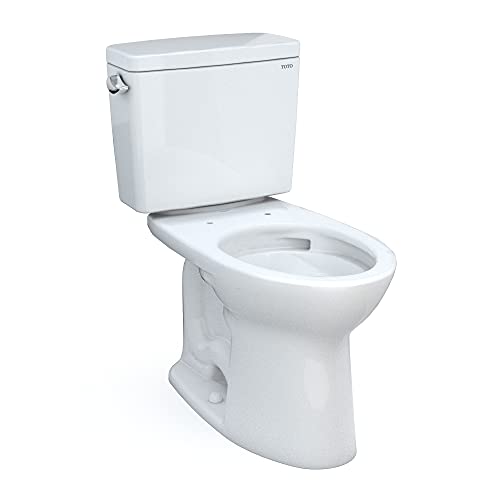
| TOTO Drake CST776CSFG | Low-pressure homes |
| $326.99as of Oct 22, 2026 11:05 am GMT+0000 | Buy now →Check current price |
| Casta Diva CD-W001 | Lowest water use |
| $299.99as of Oct 22, 2026 11:05 am GMT+0000 | Buy now →Check current price |


Prices are Amazon’s listed prices as of the time shown and change often; check Amazon for today’s price. As an Amazon Associate we earn from qualifying purchases.
Repair or Replace the Toilet?
Many toilet problems are cheap to fix. A few rules of thumb help decide whether to repair or replace. They are rules of thumb only, and condition matters more than age.
- Running or leaking into the bowl. Usually a worn flapper or fill valve, both inexpensive parts. EPA WaterSense notes that most toilet leaks are due to old or worn-out flappers and that replacing one is quick and easy. Our guide to the toilet flapper covers that repair.
- Rocking or water at the base. Often a failed wax seal or loose flange bolts. Reseat the toilet rather than replace it, unless the bowl or tank is cracked.
- A cracked tank or bowl. Replace the toilet. Cracks in vitreous china do not repair reliably.
- Frequent clogs or weak flushing in an older low-flow model. Replacement with a modern, well-rated toilet often solves it, once a drain-line problem has been ruled out.
- High water use. Very old toilets use far more water per flush than modern ones, which can make replacement pay back over time.
On water use, EPA WaterSense explains that toilets account for nearly 30 percent of an average home’s indoor water use and that older toilets can use as much as 6 gallons per flush. Design improvements allow toilets to use 1.28 gallons per flush or less while performing as well or better, which WaterSense describes as 20 percent less water than the current federal standard of 1.6 gallons per flush. WaterSense estimates that replacing old, inefficient toilets with labeled models can reduce toilet water use by 20 to 60 percent, nearly 13,000 gallons a year for an average family, and save more than $170 per year in water costs. Actual savings depend on the old toilet and local water rates, and WaterSense adds that many utilities offer rebates or vouchers for labeled toilets.
Choosing a Toilet: What Changes the Fixture Price
The fixture is often the part of the budget homeowners control most directly. A few choices move the price more than brand names do.
- Bowl shape. Elongated bowls are common in primary bathrooms and usually cost a little more than round-front bowls, which save space in small half-baths.
- Bowl height. Comfort-height or chair-height bowls sit a couple of inches taller than standard bowls and are easier for many adults to use. They typically cost somewhat more.
- One-piece vs two-piece. One-piece toilets have no tank-to-bowl joint to leak or clean around but are heavier and usually pricier. Two-piece toilets are lighter to carry and cheaper to replace in parts.
- Skirted trapway. Smooth-sided skirted bases are easier to clean but can be harder to install and to service.
- Flush type. Single-flush, dual-flush and pressure-assisted models differ in price and sound. EPA WaterSense notes that a labeled dual-flush toilet can save even more water when the reduced-flush mode is used for liquid waste.
- Features. Bidet seats, soft-close lids, heated seats and touchless flushing all add cost, and powered features add an electrical requirement.
WaterSense labeled toilets are independently certified to meet EPA criteria for both performance and efficiency, and WaterSense says they are available at a wide range of price points and styles. Choosing a labeled model that fits the existing rough-in usually gives the best combination of price, water use and installation simplicity. Accessibility features such as grab bars or a taller bowl are worth planning at the same time if anyone in the household needs them.
How to Check for a Leaking Toilet Before Calling a Plumber
Some homeowners call for a replacement when the toilet only needs a part. EPA’s Fix a Leak Week guidance describes a simple dye test: put a few drops of food coloring in the toilet tank, wait 10 minutes, and if color shows up in the bowl, the toilet has a leak. EPA advises flushing right after the test to avoid staining the tank. The same page notes that household leaks can add up to more than 9,300 gallons of wasted water a year and that worn toilet flappers are among the most common culprits.
Other quick checks before calling for a full replacement:
- Rock the toilet gently. Movement suggests loose bolts or a failed seal.
- Look for staining, soft spots or lifting flooring around the base.
- Check the shutoff valve and supply line for drips.
- Look at the ceiling below an upstairs toilet for water stains.
- Listen for the tank refilling on its own between flushes.
If any of those turn up, mention them when calling for quotes so the plumber can price likely add-ons upfront.
A dye test that shows color in the bowl usually points to the flapper or flush valve, a cheap repair. Water on the floor that appears only after flushing points more toward the wax seal or flange. Water that appears constantly, even when the toilet sits unused, is more often the supply line, the shutoff valve or condensation on the tank during humid weather. Sorting out which one applies before the plumber arrives keeps the visit short and the quote honest.
How to Read a Toilet Installation Quote
Toilet quotes are usually short, but the add-on items are where prices diverge. Get two or three written quotes for anything beyond a simple swap.
Line items that should be there
- Labor for removal and installation, and whether the price is flat or hourly.
- The toilet model, if the plumber supplies it, with rough-in size and flush volume.
- Wax ring or waxless seal, closet bolts and supply line.
- Shutoff valve replacement, if recommended, with the reason.
- Conditional pricing for flange repair and subfloor repair if found when the old toilet is lifted.
- Caulking or grouting at the base, and whether old caulk will be removed.
- Disposal of the old toilet.
- Labor warranty, in writing.
Red flags
- “You need a whole new bathroom” when the issue is a seal or a flapper.
- Subfloor repair priced before the toilet is lifted, with no explanation of how damage was identified.
- No mention of the flange on a toilet that has been leaking at the base.
- A relocation quote with no permit where new drain and vent lines are involved.
- Pressure to buy a premium model from the plumber when a standard toilet fits the need.
Questions to ask
- What is the rough-in size, and does the toilet we picked fit it?
- What happens to the price if the flange or subfloor is damaged?
- Will you replace the shutoff valve, and is that included?
- Do you warranty a toilet the homeowner buys separately?
- Will you test for leaks at the base and supply before leaving?
Front Range Factors
Toilets work the same in Colorado as anywhere else, but a few local conditions are worth knowing.
- Hard water. Much of the Front Range has moderately hard to hard water, which builds mineral deposits in fill valves, flappers and rim jets. Scaling shortens part life and can make a toilet run.
- Water conservation and rebates. Colorado’s semi-arid climate makes water efficiency a recurring concern, and Front Range water utilities have periodically offered rebates for efficient fixtures. Check with your water provider before buying.
- Basement bathrooms. Adding a toilet in a finished or unfinished basement often means cutting concrete and may require an upflush or sewage ejector system if the drain is above the fixture. That is a far bigger job than a swap.
- Expansive soils. In parts of the metro, slab and basement floor movement can stress drain lines over time. A toilet that keeps losing its seal in a basement may be a sign worth investigating further.
- Older homes. Bungalows and mid-century homes in Denver, Englewood and Lakewood are more likely to have cast-iron drains, older flanges and 10-inch or 14-inch rough-ins.
Water Damage and Mold Around Toilets
A slow leak at the toilet base is easy to miss because it wets the subfloor before it shows on the surface. EPA’s guide to mold and moisture states that the key to mold control is moisture control, that plumbing leaks should be fixed as soon as possible, and that water-damaged areas and items should be dried within 24 to 48 hours to prevent mold growth. When a plumber lifts a toilet and finds wet, stained or soft subfloor, drying and repairing it properly is part of the job rather than an optional extra.
How a Home Inspection Flags Toilet Problems
The ASHI Standard of Practice requires inspectors to inspect interior water supply and distribution systems, including fixtures and faucets, and interior drain, waste and vent systems, including fixtures. In practice, inspectors flush toilets, watch the fill and shutoff, check for rocking, and look for staining or soft flooring at the base and water stains on ceilings below.
Common report notes include a loose toilet, a running toilet, a cracked tank lid or bowl, a missing or seized shutoff valve, inadequate clearance to walls or fixtures, and moisture readings or soft spots at the floor. A loose or leaking toilet is a modest repair on its own, but evidence of long-term leaking can point to subfloor or ceiling damage worth having a plumber evaluate before closing.
Related plumbing cost guides are collected on our plumbing and water hub.
When to Call a Plumber or Inspector
Call a plumber when the toilet leaks at the base, rocks after the bolts are snugged, has a cracked tank or bowl, or keeps clogging after a basic plunge. Call right away if water is reaching the ceiling below. For buyers and sellers, a home inspection is a good time to catch a leaking toilet and any hidden floor damage before closing.
Questions about a plumbing item in an inspection report, or about a Front Range home you are buying, can go to our team through the contact page.
References
- Residential Toilets — U.S. Environmental Protection Agency, WaterSense
- Fix a Leak Week — U.S. Environmental Protection Agency, WaterSense
- A Brief Guide to Mold, Moisture and Your Home — U.S. Environmental Protection Agency
- ASHI Standard of Practice for Home Inspection — American Society of Home Inspectors
Frequently asked questions
How much does it cost to install a toilet?
A straight swap typically costs about $150 to $400 in labor in 2026, plus roughly $150 to $600 for a standard toilet. Flange repair, a new shutoff valve or subfloor repair add to the bill, so get a written local quote.
Why do plumbers charge extra once the old toilet is removed?
Some problems only show up after the toilet is lifted, such as a cracked flange or rotted subfloor from a long-running leak. A good quote lists conditional prices for those items in advance.
Should a running toilet be replaced?
Usually not. EPA WaterSense notes that most toilet leaks come from worn flappers, which are inexpensive and quick to replace. Replacement makes more sense for cracked fixtures or very old, high-flow toilets.
How much water does a new toilet save?
EPA WaterSense estimates that replacing old, inefficient toilets with labeled models can cut toilet water use by 20 to 60 percent, nearly 13,000 gallons a year for an average family. Savings depend on the old toilet and local rates.
Does a home inspector check toilets?
Yes. The ASHI Standard of Practice includes plumbing fixtures. Inspectors flush toilets, check for rocking and running, and look for staining or soft flooring at the base and water stains below.
Buying a home on the Front Range and want the plumbing looked at before closing? Connect with our team for a referral to a qualified local inspector.