The “Thermal Imaging Gun” Is Usually an IR Thermometer
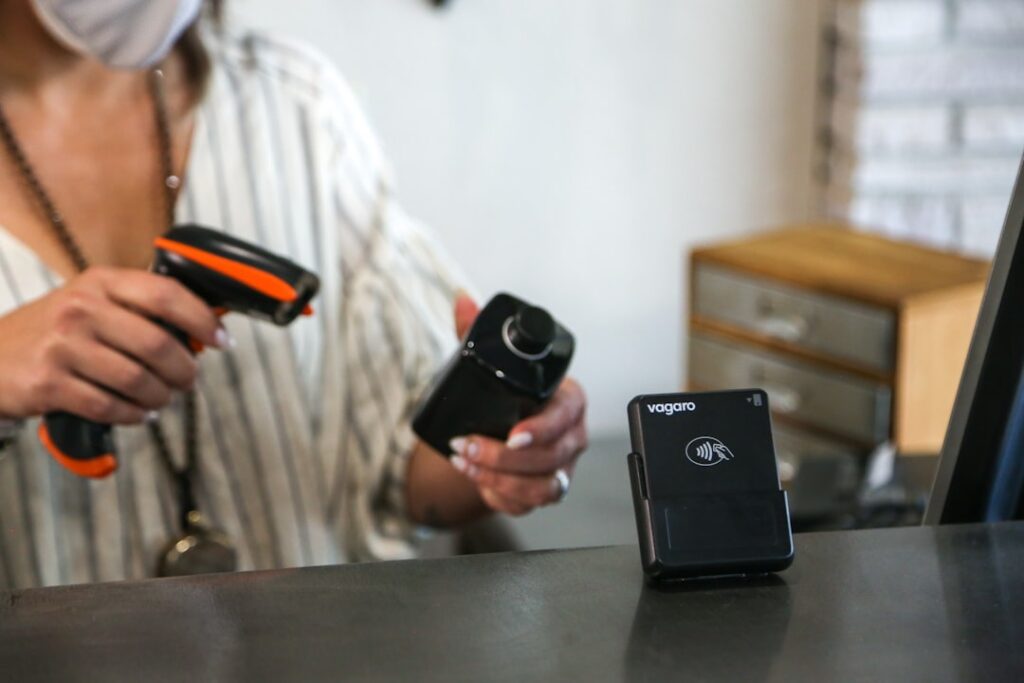
“Thermal imaging gun” is a search term more than a product. Type it into a store site and the results are dominated by pistol-grip spot infrared thermometers — a laser pointer, a trigger, and a display that shows one number. A few results are actual thermal imaging cameras that render heat as a picture. The two tools cost an order of magnitude apart and answer different questions, and buyers who confuse them end up with a $40 device when they wanted a $400 one, or vice versa. This page sorts out which is which and when each earns its place in a tool bag.
Part of our Thermal Imaging for Homes guide — start there for the full picture →
What you almost certainly bought (or are about to)
In nearly every retail listing, “thermal imaging gun” means a single-point infrared thermometer. It has a pistol grip, a trigger, a laser that marks roughly where the sensor is aimed, and a display that reads the surface temperature of one narrow spot. Common hardware-tier models are the Etekcity Lasergrip, the Klein Tools IR1, and the Fluke 62 MAX+. Prices run from about $25 for a grocery-aisle unit to roughly $200 for an IP-rated tool with a calibration certificate.
The critical fact: it is a single-pixel device. It does not produce an image. The laser is a sighting aid, not the measurement. Pull the trigger ten times across an electrical panel and you get ten separate numbers, never a heat map. If you expected a picture of your attic, this is the wrong tool.
How it differs from a real thermal camera
A thermal imaging camera uses a sensor array — a microbolometer matrix, typically 160×120 pixels or higher — that measures thousands of points at once and renders them as a false-color image. A spot thermometer measures one point; a camera maps a scene. The price reflects the gap: spot thermometers run $25 to $200, while imaging cameras start near $250 for phone-attachment modules (Flir One, Seek) and pass $4,000 for inspector-grade handhelds. If you want the full picture-versus-number breakdown, the thermal imaging camera explainer and the camera cost guide cover the imaging side. This page stays with the spot tool.
Where a spot IR thermometer actually earns its keep
Single-point thermometers are excellent at a handful of clearly bounded jobs — every one of them a “give me a number” job:
- HVAC diagnostics. Reading supply and return temperatures at a register, or the split across an evaporator coil, only needs a number. A $50 unit reads register temps within a degree or two of a clamp-on thermocouple.
- Electrical hot-spot triage. Trigger-pulling each breaker in a panel is a legitimate quick screen. A breaker running 30 °F above its neighbors merits a closer look — though the thermometer cannot show the heat pattern a camera would.
- Food safety. Restaurants use them to confirm hot-holding and cooler surfaces. The CDC’s safe-temperature guidance sets the thresholds; the gun is just the meter. Note that a surface read is not a substitute for a probe thermometer in the food itself.
- Plumbing checks. Confirming water-heater output at a fixture, finding which pipe in a wall is the hot run, or verifying a recirculation loop is moving water.
Where it falls short
The single-point design has hard limits. It cannot show the shape of a cold patch, so mapping missing insulation with one becomes random poking. It cannot trace a leak behind drywall, because a leak is a pattern, not a point. And it cannot tell you which of three adjacent breakers is hot if all three fall inside the sensor’s field of view at arm’s length.
The quieter limitation is the distance-to-spot (D:S) ratio, which most buyers never check. A tool rated 12:1 reads a one-inch spot only when held one foot away. Step back to three feet and the same tool averages a three-inch circle — which may span hot and cold areas at once and hand you a confidently wrong number. Hold the tool close and perpendicular; an angled shot stretches the measured spot into a larger ellipse than the rating implies.
Emissivity: the variable that ruins metal readings
Every infrared reading depends on the emissivity of the surface. Painted drywall sits near 0.95; weathered wood around 0.90; polished metal as low as 0.1. A thermometer set to 0.95 and aimed at bare aluminum can read dozens of degrees off, because the shiny metal reflects ambient infrared instead of emitting its own. Better units let you adjust emissivity in a menu; cheaper ones lock it at 0.95, which is fine for most building surfaces. When you must read shiny metal, cover it with a piece of matte electrical tape and read the tape. ASHRAE and similar bodies publish emissivity tables for building materials if you need reference values.
Buy a thermometer or a camera? Three questions
Picture or number? Air temperature at a register is a number — buy the thermometer. A missing-insulation pattern or a leak footprint is a picture — buy the camera.
How often? Recurring work (seasonal HVAC checks, weekly panel screens, kitchen line checks) justifies a $100 spot tool that lives in the bag. Once-a-year imaging work is usually cheaper to rent.
Working distance? Spot thermometers are accurate from inches to a couple of feet. A roof inspector standing in a driveway, or someone scanning an entire wall, needs a camera. For the broader instrument picture, see the home inspection tools overview.
Sensible picks by tier
| User | Budget | Examples | What you get |
|---|---|---|---|
| Homeowner, occasional | $30–60 | Etekcity, AstroAI | ~2 °F accuracy indoors, fixed emissivity |
| Tradesperson, daily | $100–200 | Klein IR1, Fluke 62 MAX+ | IP-rated drop survivability, adjustable emissivity, calibration cert |
| Industrial / high-heat | $500–2,000 | High-temp pyrometers | Molten metal and kiln ranges, traceable calibration |
For defensible, documented measurements — OSHA-adjacent workplace monitoring, for instance — buy at the certified tier and budget $50 to $150 for annual recalibration. The OSHA heat resources outline where traceable monitoring matters. For typical homeowner and HVAC use, a $50 to $150 unit with no calibration program holds the two-to-three-degree accuracy you need throughout its life.
When the question really needs a camera
If what brought you here was finding a leak behind drywall, mapping attic insulation, screening a whole panel at once, or producing a photo report a client can read, the answer is a thermal imaging camera, not a spot gun. Most working inspectors carry both: the camera shows where the anomaly is, and the thermometer confirms the exact temperature at that spot. They complement each other rather than compete.
Frequently asked questions
Frequently asked questions
Is a thermal imaging gun the same as a thermal camera?
Almost never in retail usage. The phrase usually refers to a pistol-shaped spot infrared thermometer that reads one temperature at one point. A true thermal imaging camera captures thousands of pixels at once and produces a heat-map image.
What is a spot IR thermometer good for?
Reading HVAC register temperatures, spot-checking individual electrical breakers, verifying food-holding temperatures, and confirming water-heater output. Any job that needs a single number rather than a picture.
How accurate is a $40 infrared thermometer?
Within about two degrees Fahrenheit on painted or matte surfaces at close range with the factory emissivity setting. Accuracy drops sharply on shiny metal and at long distances, where the sensor averages a wider area than the laser dot suggests.
Do I need to adjust emissivity?
For painted, wood, drywall, and skin, the factory 0.95 setting is close enough. To read polished or bare metal, lower the emissivity in the menu or cover the surface with matte tape and read the tape instead.
Why does the same tool read differently at three feet than at one?
The distance-to-spot ratio. A 12:1 tool measures a one-inch spot at 12 inches but a three-inch circle at 36 inches, averaging whatever hot and cold areas fall inside it. Stay close and hold the tool perpendicular to the surface.
This guide summarizes publicly available CDC, OSHA, and manufacturer specifications for measurement tools; it is general information, not a substitute for a professional inspection.
Thermal imaging cameras
Infrared cameras reveal hidden moisture, missing insulation, and air leaks. Phone-attachment models are the budget entry point; standalone units have higher resolution.
| Product | Why | Buy |
|---|---|---|
 FLIR ONE Pro (phone) FLIR ONE Pro (phone) | Plugs into iPhone/Android; inspector favorite. | Amazon — $349.00 |
 Topdon TC001 Topdon TC001 | High-res phone module at a low price. | Amazon — $249.00 |
 FLIR C5 Compact FLIR C5 Compact | Standalone pocket camera with Wi-Fi. | Amazon — $611.50 |