Teledyne FLIR Commercial Systems: 2026 Tier Guide
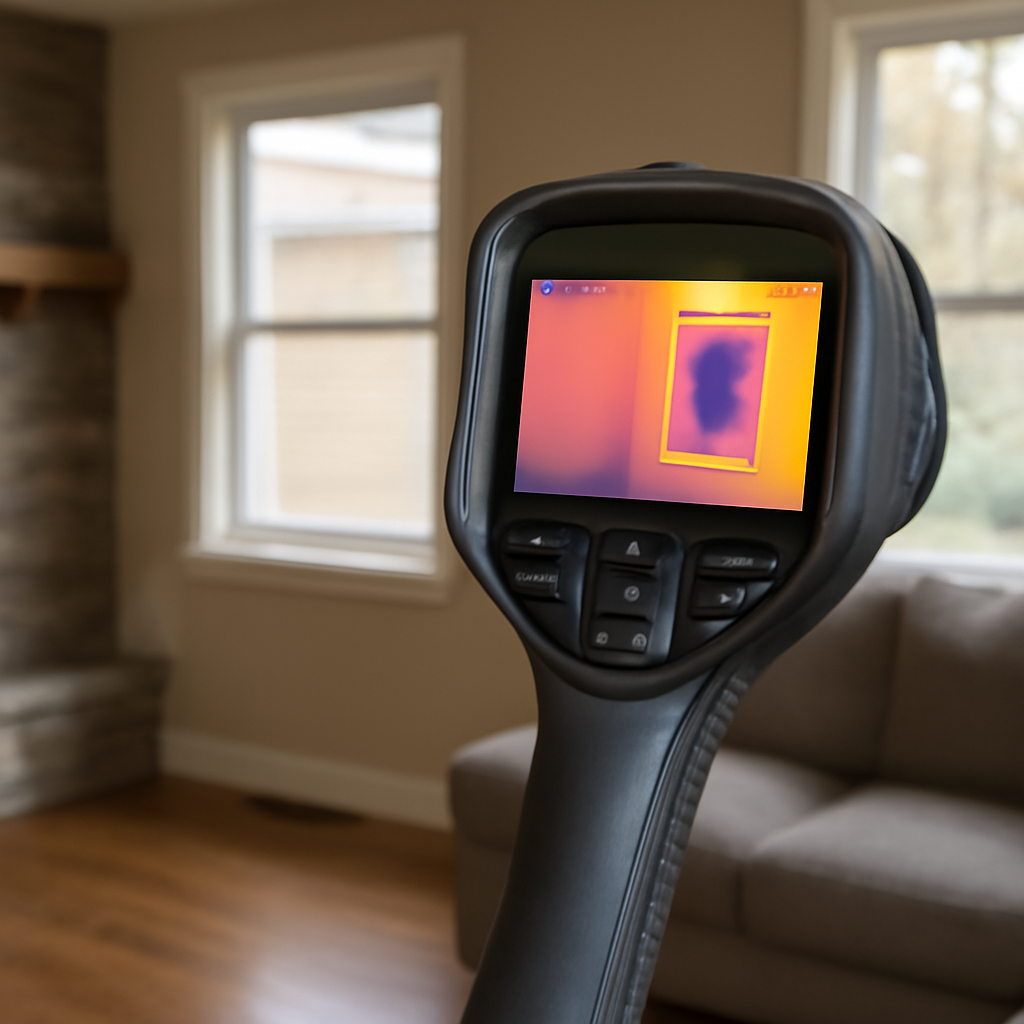
Teledyne FLIR commercial systems sit in a different market than the homeowner-facing FLIR One and C-series products. These are the cameras carried by certified Level II and Level III thermographers, used in insurance-grade building envelope surveys, electrical preventive maintenance contracts, and forensic moisture investigations. Homeowners almost never buy them, but understanding the commercial line clarifies what a hired thermographer is actually showing up with, why their fee is higher, and when commissioning a commercial-grade scan is worth the cost over a quick consumer-tier sweep.
What counts as a Teledyne FLIR commercial system
The commercial designation inside the Teledyne FLIR catalog generally refers to the T-series, T1K, GF-series gas-detection cameras, and the A-series fixed-mount imagers. These cameras feature 320×240 to 640×480 detectors, 30 to 40 mK thermal sensitivity, interchangeable lenses, on-camera radiometric storage, and report-grade software integration with FLIR Thermal Studio. Pricing typically runs from about $4,000 for a base T-series to $40,000 for a fully kitted T1K with macro and telephoto optics. Department of Energy thermography guidance specifies this resolution and sensitivity tier when documenting building-envelope deficiencies that will drive utility-funded retrofits or insurance settlements.
T-series handhelds
The T-series is the workhorse of certified thermography. T530, T560, and T865 models package a pistol-grip ergonomic with a rotating optics block, allowing the inspector to scan ceilings without bending the wrist. Detector options range from 320×240 to 640×480, and interchangeable lenses let the operator switch between a wide 24-degree lens for whole-rooms and a 6-degree telephoto for distant rooflines or substations. The T-series is where insurance carriers expect to see thermography-supported moisture and envelope reports originating.
T1K and research-grade systems
The T1K series steps into research and forensic territory with 1024×768 native resolution, 20 mK NETD, and 60 Hz frame rates. These cameras are used in litigation support, building-science research, and high-stakes commercial roof scans where every square foot of a 200,000-square-foot warehouse roof has to be documented. The price tier reflects that scope.
A-series fixed-mount cameras
The A-series is permanently installed and used for continuous monitoring: substation hot-spot detection, conveyor-belt overheating in industrial plants, server-room thermal management, and rooftop perimeter security. They are not what a residential inspector uses, but they appear in commercial property due diligence when buyers acquire industrial facilities with embedded monitoring infrastructure.
How commercial-grade specs differ from consumer FLIR cameras
The four practical differences a homeowner should understand are detector resolution, NETD, lens flexibility, and software integration. A FLIR One Gen 3 has a 160×120 detector and roughly 70 mK NETD; a T865 has a 640×480 detector and 30 mK NETD. The result is that a commercial system can find a 0.5 degree Celsius temperature anomaly across an entire wall at 15 feet of standoff, while a consumer camera needs to be at five feet to resolve the same defect. Lens choice matters because rooflines, transformer yards, and tall industrial walls cannot be scanned at five feet, so wide and telephoto interchangeable optics become mandatory. For a comparison of the broader market, see our thermographic camera manufacturers overview.
When commercial-grade thermography is justified
The decision to hire a Level II thermographer with commercial equipment rather than relying on a general inspector with a consumer camera comes down to four scenarios. First, insurance claims after hail, wind, or hidden water events often demand reports from certified thermographers using radiometric workflows that consumer cameras cannot produce. Second, commercial roofing surveys on flat low-slope roofs cover acreage and require both elevation access and high-resolution detectors. Third, electrical preventive maintenance contracts on commercial panels and switchgear require NFPA 70B-aligned documentation. Fourth, forensic litigation over construction defects or moisture intrusion needs evidentiary-grade thermography that can withstand cross-examination. For a homeowner deciding whether a consumer camera meets their needs, the home thermal imaging camera buyer guide covers the consumer side of the same question.
Cost of a Teledyne FLIR commercial system survey
Hiring a certified thermographer to come on-site with a T-series camera typically runs $400 to $1,200 for a residential whole-house scan, depending on square footage and region. Commercial building envelope surveys run $0.05 to $0.15 per square foot. Aerial roof scans using a drone-mounted FLIR payload run $0.25 to $0.75 per square foot. Insurance-grade post-loss reports run $750 to $2,500 depending on documentation depth. The commercial-grade camera itself is rarely the right purchase for a homeowner unless they are starting a service business; renting from a thermography firm or hiring the report is the usual answer.
Software and report deliverables
Teledyne FLIR commercial systems pair with Thermal Studio Pro and Thermal Studio Suite for report generation. Reports include radiometric image embeds with full per-pixel temperature data, customizable measurement areas, span and level normalization across image sets, building-elevation overlays, and signed PDF deliverables suitable for insurance and legal use. This software ecosystem is the actual differentiator that separates a commercial workflow from a consumer one. A homeowner who borrows a friend’s T-series cannot, in practice, produce a defensible report without the licensed software and the certification to interpret what the camera is showing.
Certification and operator training
InterNACHI offers infrared thermography certification at three levels, and ITC (Infrared Training Center, owned by Teledyne FLIR) runs the Level I, II, and III training pipeline that most commercial thermographers follow. Certification matters because the camera is only as good as the operator’s understanding of emissivity, reflected apparent temperature, thermal patterns associated with specific defect types, and the limits of qualitative thermography. A Level II thermographer with a $4,000 T530 will deliver a better report than an untrained operator with a $40,000 T1K. The home inspection tools 2026 buyer’s guide covers how thermography certification fits alongside other inspector qualifications.
Should a homeowner ever buy commercial-grade FLIR equipment
For nearly all homeowners, the answer is no. The price-to-benefit ratio falls apart outside professional use. The cases where a homeowner-scale buyer might justify a commercial system are limited: a multi-property landlord running their own maintenance program, a retired engineer or building scientist with hobby-grade interest, or a homeowner starting a side business in energy audits. For the vast majority of one-time or seasonal residential applications, a $300 phone attach or a $700 prosumer handheld delivers more than enough resolution. Reserve commercial-grade Teledyne FLIR systems for the documented commercial use cases above.
Insurance and Legal Documentation Workflows
The reason commercial-grade thermal cameras command their price premium is rarely the optics alone. It is the documentation workflow they support — a chain of evidence that holds up under insurance adjuster review and, when necessary, in court. A homeowner-grade FLIR One produces a JPEG with a false-color thermal overlay and basic spot-temperature readings. A commercial T865 produces a radiometric file containing per-pixel temperature data, calibrated against a known reference, with metadata embedding camera serial, lens, emissivity setting, reflected apparent temperature, distance, atmospheric conditions, and operator identification. The two outputs sit in different evidentiary worlds.
Radiometric file integrity matters because an adjuster or opposing counsel can re-open the image months after the survey and verify that the original temperature data has not been altered. The file format is read by Thermal Studio Pro and by independent radiometric viewers, allowing third-party verification of the analysis. ASHRAE building-diagnostics guidance and the documentation standards referenced by InterNACHI thermography certification both treat radiometric file capture as the baseline for evidentiary-grade work, with JPEG-only output relegated to qualitative screening.
NIST-traceable calibration provides the metrological backbone. Commercial Teledyne FLIR cameras carry calibration certificates traceable to National Institute of Standards and Technology references, with annual or biennial recertification cycles. The certificate states the temperature ranges, uncertainty bands, and reference equipment used. Insurance carriers and certified thermographers expect to see the calibration certificate referenced in the report, and a camera with lapsed calibration is a defensible reason for an adjuster to discount findings.
ASTM E1934 — the Standard Guide for Examining Electrical and Mechanical Equipment with Infrared Thermography — provides the procedural framework that radiometric workflows follow. The standard covers operator qualification, equipment calibration, image collection methodology, environmental documentation, and report format. Commercial Teledyne FLIR systems are designed to support compliance with E1934 procedures, and the software ecosystem generates reports that map onto the standard’s requirements. Homeowner-tier cameras lack the radiometric depth and calibration documentation that E1934 compliance requires, which is the underlying reason they are not accepted in insurance or legal proceedings.
Predictive-Maintenance Integration
Beyond one-off survey work, commercial Teledyne FLIR systems are integrated into ongoing predictive-maintenance programs that combine route-based scanning, trend tracking, and software-driven anomaly detection. A facility manager running a quarterly thermography route on an industrial site might scan three hundred electrical panels, fifty motor housings, and a hundred bearing pillows per quarter. Without route-based workflow software, that data becomes an unmanageable pile of images. With it, each asset has a thermal-history record showing temperature trends over time, anomaly thresholds, and automated alerts when a reading deviates from baseline.
Thermal Studio Pro and the broader FLIR software ecosystem support route definition, image-to-asset matching via barcode or RFID, trend chart generation, and integration with computerized maintenance management systems. The Department of Energy’s industrial energy and reliability programs document predictive-maintenance approaches that depend on this kind of workflow. The camera is, in this context, the front end of a data-collection system rather than a stand-alone tool.
For residential inspectors moving toward higher-end work — multi-unit landlord portfolios, certified energy audits under utility rebate programs, or commercial property due-diligence — the predictive-maintenance integration is what separates a one-off survey practice from a recurring-revenue service contract. ASHRAE technical resources and InterNACHI continuing-education materials describe how route-based thermography fits into broader building-performance and energy-audit programs.
References
- DOE professional home energy audits — U.S. Department of Energy
- InterNACHI infrared thermography — International Association of Certified Home Inspectors
- ASHRAE standards and guidelines — American Society of Heating, Refrigerating and Air-Conditioning Engineers
- ASHI standards of practice — American Society of Home Inspectors
Thermal imaging cameras
Infrared cameras reveal hidden moisture, missing insulation, and air leaks. Phone-attachment models are the budget entry point; standalone units have higher resolution.
| Product | Why | Buy |
|---|---|---|
 FLIR ONE Pro (phone) FLIR ONE Pro (phone) | Plugs into iPhone/Android; inspector favorite. | Amazon — $349.00 |
 Topdon TC001 Topdon TC001 | High-res phone module at a low price. | Amazon — $199.99 |
 FLIR C5 Compact FLIR C5 Compact | Standalone pocket camera with Wi-Fi. | Amazon — $449.00 |