Commercial Radon Testing Company: A Clear Guide
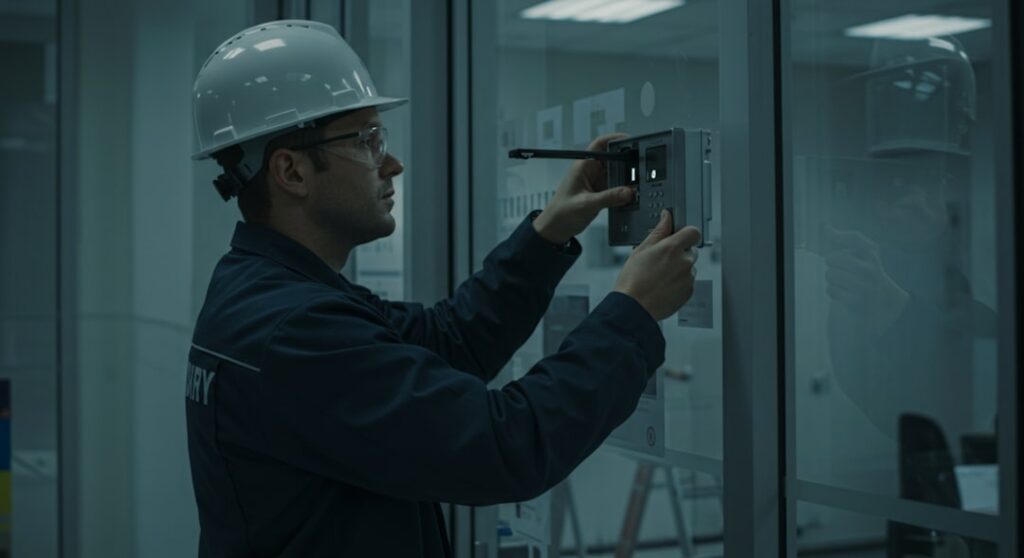
Radon does not stop at the residential property line. Offices, schools, daycares, apartment buildings, and retail spaces all sit on the same uranium-bearing soil that pushes radon into homes, and people spend long hours inside them. A commercial radon testing company specializes in measuring these larger, more complex buildings, where the protocols, device counts, and reporting requirements differ sharply from a single-family home test. For Front Range property owners, understanding how commercial testing works is the first step toward protecting tenants and limiting liability. This guide summarizes EPA and CDPHE guidance current as of 2026; it is educational and not a substitute for a certified radon professional or medical advice from your physician.
Part of our Radon Levels guide — start there for the full picture →
What a Commercial Radon Testing Company Does
A commercial radon testing company measures radon in non-residential and multifamily buildings using protocols scaled to the structure’s size and use. Instead of placing one detector in a basement, a commercial tester deploys multiple devices across many ground-contact rooms, follows recognized large-building standards, and produces documentation suited to building owners, lenders, and regulators.
The underlying gas is identical to what affects houses, but the stakes scale with occupancy. A school or apartment complex exposes far more people than a single home, so testing is broader and reporting is more formal. Our hub on radon testing in Colorado covers the shared science, while this guide focuses on the commercial dimension. For an overview of the property-owner perspective, see our piece on commercial radon and what owners should know.
How Commercial Testing Differs From Residential
The differences go well beyond building size, and they explain why commercial work is a specialized service rather than a scaled-up home test.
Device Density and Placement
Residential testing often uses a single detector. Commercial protocols, such as those derived from ANSI/AARST large-building standards, require detectors in a percentage of ground-contact rooms, frequently many devices spread across the lowest occupied floor. A large school might need dozens of monitors placed to a documented plan.
Building Operating Conditions
Commercial buildings run mechanical HVAC systems that affect pressure and air exchange. Proper testing requires the building to operate under normal conditions, with HVAC functioning as it would during occupancy, rather than the closed-house conditions used in homes. Testing a building with its ventilation shut off would misrepresent what occupants actually breathe.
Continuous Monitors and Documentation
Commercial work leans heavily on calibrated continuous radon monitors that log hourly data and detect tampering, paired with detailed reports. This is the same class of equipment described in our guide to professional radon testing equipment, deployed at greater scale and with a more rigorous chain of documentation.
Which Buildings Need Commercial Radon Testing
Several property types warrant testing, and some face regulatory or transactional pressure to do so.
- Schools and daycares: children are especially vulnerable, and many jurisdictions encourage or require testing.
- Multifamily housing: apartments and condos with ground-contact units.
- Offices and retail: ground-floor and basement-level workspaces.
- Commercial real-estate transactions: buyers and lenders increasingly request radon documentation.
- Healthcare and senior facilities: long occupancy by sensitive populations.
Ground-floor and below-grade spaces carry the highest priority, because radon enters from the soil and concentrates at the lowest levels. Upper floors are generally lower risk, though they are not always exempt from a thorough testing plan.
The Commercial Testing Process
A commercial test follows a structured sequence. The company first conducts a building assessment, mapping ground-contact rooms, HVAC zones, and occupancy patterns. It then develops a measurement plan specifying device count and placement per the applicable standard. Detectors, usually continuous monitors, are deployed and left for the required period while the building operates normally.
After collection, the data is analyzed and compiled into a report identifying any rooms above the 4.0 pCi/L action level and recommending next steps. If mitigation is warranted, the report becomes the basis for a remediation plan and post-mitigation verification. The action level for commercial and residential spaces is the same, even though the testing approach differs in scale and rigor.
What Commercial Radon Testing Costs
Commercial pricing scales with building size and device count rather than following a flat residential fee. A small office might cost a few hundred dollars, while a large school or apartment complex requiring dozens of monitors and a formal report can run into the thousands. Continuous-monitor deployment, the labor to place and retrieve devices, and detailed reporting all factor in.
Owners should request a scope-based quote that specifies the number of devices, the standard followed, and whether a written report and consultation are included. A bid far below the others may be skipping device-density requirements, which undermines the result’s validity and could leave the owner exposed if a tenant later raises a concern.
Owner Liability and Why Documentation Matters
For commercial and multifamily owners, radon is partly a liability question. A documented, standards-based test demonstrates due diligence, which matters if a tenant or buyer ever challenges the building’s safety. Skipping testing or relying on an informal home-style kit leaves a gap that a formal report would fill. In a transaction, a lender or buyer’s attorney may specifically require an ANSI/AARST-compliant test, so the documentation is often a deal requirement, not just a precaution.
Choosing a Commercial Radon Testing Company
Selection criteria matter more in commercial work, where documentation must withstand scrutiny.
- Certification: verify NRPP or NRSB credentials and any Colorado listing.
- Large-building experience: ask about prior schools, multifamily, or commercial projects.
- Standards adherence: confirm they follow ANSI/AARST commercial measurement protocols.
- Equipment: calibrated continuous monitors with documented calibration records.
- Reporting: a clear, defensible report suited to lenders and regulators.
For a building near a transaction, that documentation is as valuable as the measurement itself, because it is what the other party will actually review.
Continuous Monitors and Tamper Resistance
Commercial testing relies heavily on continuous radon monitors for reasons beyond convenience. These devices log radon hourly, building a detailed record of how levels move through a day and across the test period. That time series lets the tester confirm the building operated normally, flag any unusual event, and demonstrate that the result reflects genuine conditions rather than a manipulated snapshot.
Tamper resistance matters especially in transactions and disputes. Continuous monitors can detect movement, power interruption, or sudden changes in conditions that might indicate someone tried to influence the result. A passive charcoal kit offers none of this; it simply averages whatever happened. For a building where the outcome carries financial or legal weight, the documented, tamper-aware data from a continuous monitor is what makes the result defensible, which is why standards-based commercial work uses them as the default rather than the exception.
How Long Commercial Testing Takes
Owners often want to know the timeline. The measurement period itself typically runs at least 48 hours for a short-term continuous-monitor test, though some plans extend longer to capture more representative data. Before that, the company needs time to assess the building, map ground-contact rooms, and develop the measurement plan. Afterward, analyzing the data and preparing a formal report takes additional days.
From first contact to final report, a straightforward commercial test might span a week or two, while a large school or multi-building campus can take longer to plan and execute. Owners working toward a transaction deadline should engage a firm early, since rushing the planning or the measurement window undermines the very reliability that makes commercial testing worth doing. Building the timeline into the project schedule avoids last-minute pressure on a result that needs to be done right. A firm that quotes an unrealistically fast turnaround may be cutting corners on planning or device density, so a sensible, clearly explained schedule is itself a sign of a competent commercial testing company.
Multifamily Buildings and Tenant Exposure
Apartment and condominium buildings present a distinct radon challenge because exposure varies by unit. Ground-floor and below-grade units sit closest to the soil source and typically carry the highest risk, while upper-floor units are generally lower. A thorough commercial test therefore concentrates on ground-contact units rather than sampling uniformly across all floors.
For owners and property managers, this matters both for tenant safety and for fairness in disclosure. Testing the most exposed units identifies where mitigation is actually needed, which can keep remediation focused and cost-effective. It also gives management defensible documentation if a tenant raises a concern. Because radon is invisible and tenants cannot detect it themselves, the building owner carries the practical responsibility to measure it, and a standards-based commercial test is how that responsibility is met across a multi-unit property.
Why HVAC Makes Commercial Testing Complex
The single biggest technical difference between commercial and residential radon testing is the role of mechanical ventilation. Large buildings run HVAC systems that pressurize, depressurize, and exchange air on schedules tied to occupancy. These systems can dramatically change radon levels depending on whether they are running, and how, which is why commercial protocols require testing under normal operating conditions.
A building tested over a weekend with the HVAC in setback mode might show very different radon than the same building during a busy workday. A competent commercial tester accounts for this by coordinating with facility staff, documenting HVAC operation during the test, and sometimes testing under more than one operating scenario. This attention to building mechanics is a core reason commercial measurement is a specialized discipline rather than a scaled-up home test.
Radon in Schools and Daycares
Schools and childcare facilities deserve special mention because children are more vulnerable to radon and spend long, consistent hours in the same building. Many states and the EPA specifically encourage testing in schools, and some jurisdictions mandate it. The large number of ground-contact classrooms means a thorough test can involve dozens of detectors placed to a documented plan.
For administrators, a standards-based test does double duty: it protects students and staff, and it demonstrates due diligence to parents and oversight bodies. Where elevated levels are found, mitigation in a large building may involve multiple systems or integration with the existing HVAC, which a qualified commercial firm is equipped to design. Documentation of testing and any remediation becomes part of the facility’s safety record.
From Test Results to a Remediation Plan
A commercial test does not end at a number; it feeds a plan. The report identifies which specific rooms or zones exceed the 4.0 pCi/L action level, which lets the owner target mitigation rather than treating the entire building uniformly. In a large structure, that targeting can significantly reduce remediation cost.
The mitigation approach in commercial buildings often parallels residential sub-slab depressurization but at larger scale, sometimes with multiple suction points or coordination with mechanical systems. After remediation, post-mitigation testing confirms the affected areas now fall below the action level. The same firm that performed the measurement can frequently oversee this verification, closing the loop from diagnosis to documented resolution.
When to Call a Professional
Commercial radon testing is inherently a professional service; the device counts, HVAC considerations, and reporting standards are beyond a DIY kit. Engage a certified commercial radon testing company when you own or manage a school, multifamily property, office, or any ground-contact commercial space, and especially before a sale or refinance. A qualified firm delivers a standards-based measurement and a report that protects occupants and supports the transaction.
References
- Radon in Schools and Large Buildings — U.S. Environmental Protection Agency
- Radon Testing for Colorado Properties — Colorado Department of Public Health and Environment
- Radon in Buildings and Workplaces — American Lung Association
Frequently asked questions
How is commercial radon testing different from a home test?
Commercial testing uses multiple calibrated continuous monitors placed across many ground-contact rooms per large-building standards, with the building operating under normal HVAC conditions. A home test often uses a single detector under closed-house conditions, with simpler reporting.
Do office buildings and schools need radon testing?
Yes. Schools, daycares, multifamily housing, offices, and healthcare facilities all sit on the same radon-producing soil as homes, and they expose many people. Ground-floor and below-grade spaces carry the highest priority, and many jurisdictions encourage school testing.
What does commercial radon testing cost?
It scales with building size and device count. A small office may cost a few hundred dollars, while a large school or apartment complex requiring dozens of monitors and a formal report can reach the thousands. Request a scope-based quote specifying device count and standards.
What is the radon action level for commercial buildings?
It is the same 4.0 pCi/L the EPA sets for homes. The action level does not change with building type; what changes is the testing protocol, device density, and the documentation required for owners and lenders.
Front Range property owners who manage a commercial or multifamily building and need standards-based radon testing can reach a vetted local professional through our contact page.
Test your home for radon
Radon is invisible and odorless, so a test is the only way to know your level. A short-term kit gives a first reading in days; a digital monitor tracks it over time.
| Product | Why | Buy |
|---|---|---|
 AirChek Charcoal Radon Test Kit AirChek Charcoal Radon Test Kit | Lab fee usually included; EPA short-term protocol. | Amazon — $21.95 |
 First Alert RD1 Radon Test Kit First Alert RD1 Radon Test Kit | Widely stocked; 48-hour charcoal test. | Amazon — $16.98 |
 Airthings Corentium Home Airthings Corentium Home | Digital monitor with a long-term average. | Amazon — $147.31 |