FLIR Commercial Systems: Consumer vs. Commercial Lines
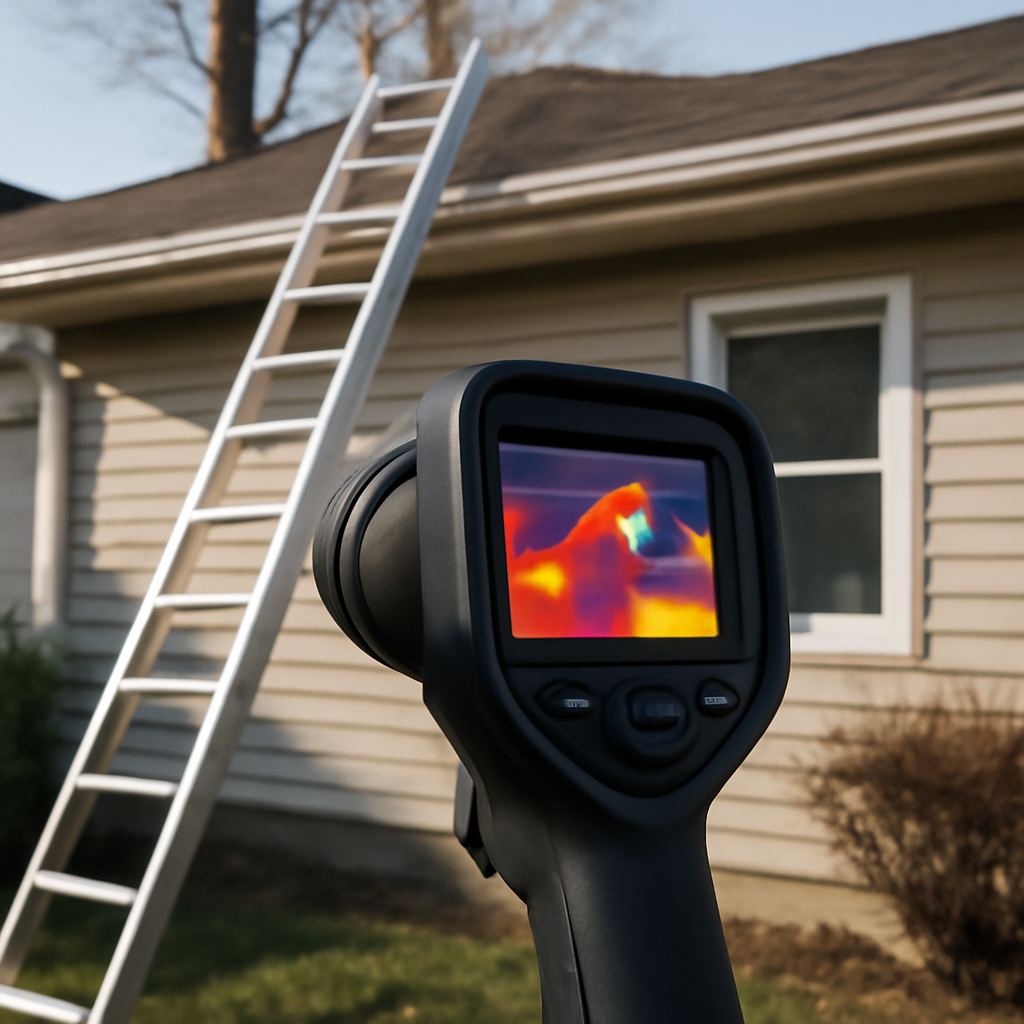
FLIR commercial systems are a separate product family from the consumer cameras most homeowners encounter. The branding can be confusing because both lines carry the same FLIR logo, but the commercial side is designed for certified thermographers, industrial maintenance teams, gas-leak inspectors, and forensic moisture work. Homeowners researching whether to hire a commercial-grade scan or settle for a consumer-tier camera should understand the line distinction, what the spec gap actually buys, and when the higher price is justified inside the residential and small-commercial inspection world.
Part of our Thermal Imaging for Homes guide — start there for the full picture →
What FLIR considers a commercial system
The FLIR commercial lineup includes T-series handhelds (T530, T560, T865, T1K), the A-series fixed-mount cameras for continuous monitoring, the GF-series optical gas imaging cameras for refrigerant and hydrocarbon leak detection, and the K-series fire-service thermal cameras. The consumer line includes the FLIR One phone attaches, the C-series pocket cameras, and the entry-level E-series E4 through E8 handhelds. The Department of Energy and ASHRAE both reference the commercial spec band, 320×240 detector minimum with 30 to 40 mK NETD, when describing the equipment required for building-envelope thermography that will support utility rebates or insurance claims.
T-series handheld commercial cameras
The T-series is the most common commercial system encountered in residential and small-commercial inspections. These cameras use a 180-degree rotating optical block, swap between wide, standard, and telephoto lenses, and store full radiometric files with embedded GPS, voice annotation, and direct WiFi transfer to FLIR Thermal Studio. Prices run from roughly $4,000 to $15,000.
A-series fixed-mount cameras
A-series cameras are mounted permanently for continuous thermal monitoring. Industrial use cases include substation hot-spot watch, kiln-shell monitoring, and conveyor-belt overtemperature alarms. The residential overlap is minimal, but homeowners encountering an A-series camera mounted at a commercial property they are purchasing should treat it as part of the conveyed equipment and request commissioning records.
GF-series gas-detection cameras
GF-series cameras tune the detector to specific infrared bands where target gases absorb. Methane, sulfur hexafluoride, and various refrigerants become visible as plumes. These cameras are used by EPA-regulated industries and HVAC service techs working on commercial chillers. They do not show heat the way a standard thermal camera does and are not interchangeable with a building-envelope inspection camera.
Consumer vs commercial FLIR lines side by side
The spec gap between consumer and commercial FLIR lines is wide enough to drive practical differences in what a camera can document. A consumer FLIR One Gen 3 carries a 160×120 detector and roughly 70 mK NETD; a commercial T-series carries 320×240 to 640×480 at 30 to 40 mK. The visible-light MSX overlay is present on both lines, but only the commercial side outputs the radiometric file format that lets a thermographer re-analyze emissivity, span, and level after the fact. Battery life, weather sealing, drop rating, and lens interchangeability are also commercial-only features. Cross-reference the consumer side in our FLIR cameras lineup overview.
When commercial-grade is worth the cost on a residential job
Four residential and small-commercial scenarios typically justify commercial-grade FLIR equipment over consumer-tier. Insurance claims after a covered loss (hail, wind, hidden water) often require reports from certified thermographers using radiometric workflows. Forensic moisture investigations where the goal is to document a construction defect for litigation need evidentiary-grade thermography. Commercial roof scans on warehouses, schools, or apartment complexes require the resolution and lens flexibility of a T-series. Electrical preventive maintenance on three-phase panels and switchgear at commercial properties follows NFPA 70B documentation expectations. For a homeowner deciding whether to spend on commercial-grade equipment or hire a one-off scan, the how much does a thermal imaging camera cost breakdown maps the price ladder.
Software ecosystem and report deliverables
FLIR commercial systems are bundled with Thermal Studio software that handles radiometric image analysis, report templating, batch processing of large image sets, and customizable measurement areas. The professional version supports thermography certification workflows and produces signed PDFs suitable for insurance and legal submission. Consumer FLIR cameras either pair with the FLIR Ignite cloud or output flat JPEGs with limited downstream analysis. A homeowner who borrows a commercial T-series without the software license cannot, in practical terms, produce the report that justifies the camera’s existence.
Buying vs hiring a commercial-grade scan
For nearly all residential homeowners, hiring a commercial-grade thermography scan is the right answer over buying the equipment. A whole-house thermal scan from a Level II thermographer typically runs $400 to $1,200 and includes a radiometric report. The breakeven against buying a $5,000 T-series camera is roughly eight to ten scans, and the operator-skill curve to extract usable findings is steep. Multi-property landlords, certified inspectors building a paid thermography service, and energy auditors with commercial accounts have a stronger case for ownership. The home inspection tools 2026 buyer’s guide walks through how thermography fits alongside other inspection equipment.
Operator certification for commercial FLIR equipment
FLIR’s own Infrared Training Center runs Level I, II, and III thermography certification programs that follow ASNT SNT-TC-1A guidelines. InterNACHI also offers an infrared certification for home inspectors. Insurance carriers, commercial property managers, and courts typically expect at least Level I certification before accepting a thermography report. Operating a commercial-grade FLIR camera without certification is legal but practically limits the operator to qualitative findings that cannot be defended downstream.
Common mistakes when scoping a commercial FLIR job
Homeowners commissioning a commercial-grade thermal scan should verify three things before booking. First, confirm the thermographer carries Level I or Level II certification and ask which certifying body. Second, ask which specific FLIR commercial system they use and confirm it is at least a 320×240 detector with under 50 mK NETD. Third, request a sample radiometric report from a comparable property so the deliverable format is clear before the work starts. Skipping these steps leads to underspecified scans where a consumer-tier camera is used at a commercial-tier rate.
Software Ecosystem for Commercial Workflow
The software side of a commercial FLIR system is the part of the value proposition that homeowners shopping for thermography services most often underestimate. The camera is a sensor; the software is what turns sensor output into a defensible report. For a homeowner deciding whether a thermographer’s quoted fee is reasonable, understanding the software ecosystem clarifies what is actually being delivered.
Thermal Studio Pro and Suite. The flagship desktop analysis software handles radiometric image opening, emissivity adjustment after the fact, reflected apparent temperature correction, measurement-tool placement (spot, line, area, polygon), automated anomaly detection across image batches, and report-template generation. The professional license tier costs several hundred dollars per year per seat and represents real overhead that any thermography service factors into pricing. Department of Energy thermography guidance and InterNACHI continuing-education materials reference this class of software as the baseline for evidentiary thermography work.
Thermal Studio standard and FLIR Tools+. The standard versions of Thermal Studio and the older FLIR Tools+ software handle basic radiometric analysis and report generation without the route-based scanning and batch automation of the Pro tier. Some smaller thermography practices run on these lower-cost options for residential and light-commercial work, with the trade-off being slower per-image analysis and less efficient report turnaround on larger jobs.
Ignite cloud platform. FLIR Ignite is the cloud-based image storage and collaboration platform. Field operators upload radiometric images directly from a connected camera, office analysts open and annotate the same files remotely, and clients can be granted read-only access to a project library. This is increasingly the workflow homeowners experience when a thermographer shares a digital report rather than a printed PDF. ASHRAE building-diagnostic resources and recent InterNACHI publications describe cloud-platform workflows as standard practice in commercial thermography.
Mobile companion apps. The FLIR Ignite mobile app and similar tools let a field operator preview, annotate, and share images directly from a phone or tablet without returning to the office for desktop analysis. For inspectors handing off a quick preview to a homeowner on-site, this dramatically shortens the feedback loop. The on-site preview is qualitative; the final report still goes through desktop analysis with full radiometric correction.
Selecting a Camera Class for Your Use Case
The commercial FLIR lineup is broad enough that even a thermographer building their first paid service can be paralyzed by spec sheets. A practical decision framework starts with the type of work the camera will primarily do and works backward to the appropriate camera class.
E-series (E54, E76, E96). The E-series sits at the entry of the commercial line, with 320×240 detector on the E54 and 640×480 on the E96. NETD is 40 mK on the entry and 30 mK on the top of the line. Prices run $4,000 to $12,000. The form factor is a traditional pistol-grip handheld without the rotating optics block. ASHI-aligned inspectors moving into thermography service work commonly start on an E54 or E76 because the price-to-capability ratio matches typical residential and small-commercial work.
T-series (T530, T540, T560, T865). The T-series adds the 180-degree rotating optical block, swappable lenses, and longer battery runtime to the E-series capability set. Detectors range from 320×240 to 640×480. The rotating optics matter on jobs with extensive ceiling, roof, or elevated-surface work because they reduce operator fatigue. Prices run $6,000 to $15,000. Certified Level II thermographers with mature service practices commonly settle on a T540 or T560 as their workhorse camera.
A-series fixed-mount. For continuous monitoring applications — substation hot-spot watch, conveyor-belt overtemperature alarms, server-room thermal management — the A-series is permanently installed and integrates with industrial control systems. The class is not appropriate for portable inspection work but appears in commercial property due-diligence reviews and integrated facility-monitoring designs. Prices run $2,500 to $10,000 depending on resolution and detector type. Most residential inspectors will never specify an A-series unless they pivot into industrial monitoring system integration.
References
- ENERGY STAR: Seal and Insulate — U.S. Environmental Protection Agency (ENERGY STAR)
- InterNACHI infrared thermography — International Association of Certified Home Inspectors
- ASHRAE standards and guidelines — American Society of Heating, Refrigerating and Air-Conditioning Engineers
- ICC building codes and inspection guidance — International Code Council
Frequently asked questions
What is the difference between FLIR consumer and FLIR commercial systems?
Detector resolution, thermal sensitivity, lens flexibility, software integration, and price. Consumer FLIR cameras run 80x60 to 160x120 detectors at 50 to 70 mK NETD with fixed optics and JPEG output. Commercial FLIR systems run 320x240 to 640x480 detectors at 30 to 40 mK with interchangeable lenses and full radiometric workflows.
Do I need a commercial FLIR system for a home inspection?
Not for a routine pre-purchase home inspection. Insurance claims, forensic moisture investigations, and commercial roof scans are the cases where commercial-grade equipment is actually required. Most residential scans are fine with a prosumer or consumer-tier camera.
How much does a FLIR commercial system cost?
T-series handhelds run $4,000 to $15,000. T1K research-grade systems run $20,000 to $40,000 with lens packages. A-series fixed-mount cameras run $2,500 to $10,000 depending on resolution and detector type.
Can I rent a FLIR commercial system instead of buying?
Yes. Commercial thermography rental houses, United Rentals, and some Sunbelt Rentals locations carry T-series handhelds at $150 to $400 per day. Renting makes sense for a one-off forensic job; hiring a certified thermographer with their own equipment is usually faster and includes the report.
Thermal imaging cameras
Infrared cameras reveal hidden moisture, missing insulation, and air leaks. Phone-attachment models are the budget entry point; standalone units have higher resolution.
| Product | Why | Buy |
|---|---|---|
 FLIR ONE Pro (phone) FLIR ONE Pro (phone) | Plugs into iPhone/Android; inspector favorite. | Amazon — $349.00 |
 Topdon TC001 Topdon TC001 | High-res phone module at a low price. | Amazon — $249.00 |
 FLIR C5 Compact FLIR C5 Compact | Standalone pocket camera with Wi-Fi. | Amazon — $611.50 |