Spray Foam vs Fiberglass Insulation: Cost, R-Value, Best Uses
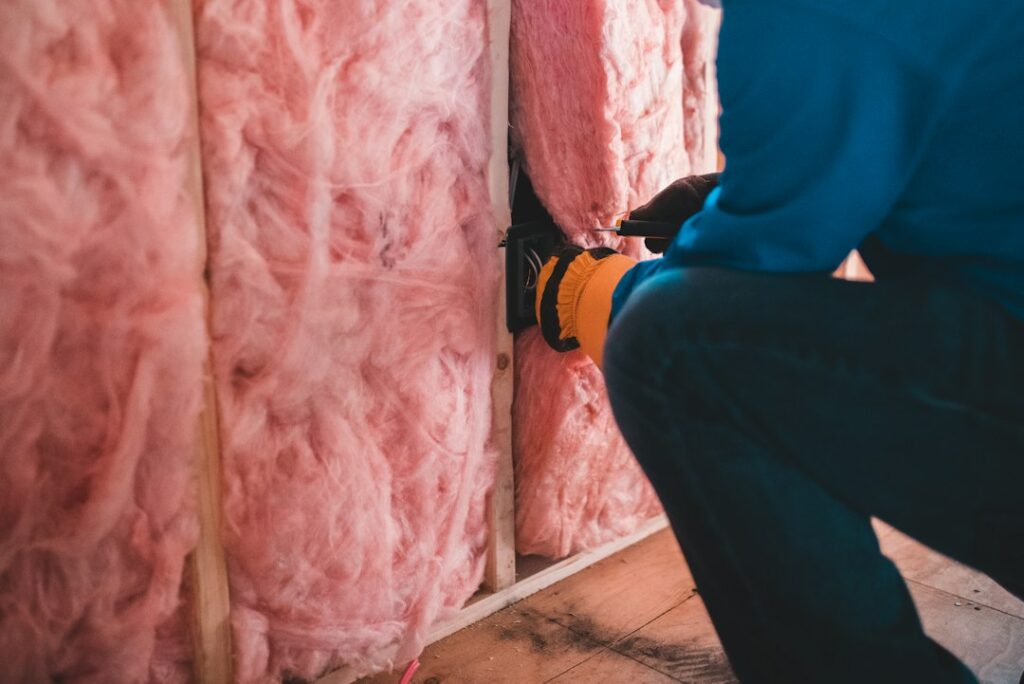
The short answer to spray foam vs fiberglass insulation: fiberglass is the low-cost, do-it-yourself-friendly choice that works well in open attics and standard wall cavities when it is paired with separate air sealing, while spray foam costs several times more but insulates and air seals in one step, which makes it the stronger choice for rim joists, cathedral ceilings, crawl space walls and other tight or leaky spots. Many Front Range homes end up with both: foam where air leaks and limited depth are the problem, fiberglass where there is plenty of room and budget matters. This guide compares the two on upfront cost, R-value per inch, air sealing, moisture behavior, installation needs, safety and lifespan, then explains how a home inspector evaluates each one in an existing house. It reflects general guidance current as of 2026; product labels, manufacturer instructions and local code take priority on any specific project.
Part of our Crawl Space & Attic Guide guide — start there for the full picture →
The Quick Verdict and Side-by-Side Comparison
Choose fiberglass if the space is an open attic floor or a standard 2×4 or 2×6 wall that is easy to reach, the budget is tight, and someone will take the time to seal air leaks before the batts or loose fill go in. Choose spray foam if the area is hard to air seal any other way, if depth is limited (a cathedral ceiling or a shallow roof assembly), if the plan is to bring a crawl space or attic inside the conditioned envelope, or if the work is a rim joist that leaks cold air every winter. If the choice is mostly about an attic floor with good access, fiberglass plus careful air sealing usually delivers most of the benefit at a fraction of the cost.
| Factor | Fiberglass (batts or loose fill) | Spray foam (open- or closed-cell) |
|---|---|---|
| Typical installed cost | Low; often roughly $1–$2.50 per sq ft installed depending on depth and form (typical national range, 2026 — get local quotes) | High; often roughly $1.50–$4.50 per sq ft for open-cell and higher for closed-cell, driven by thickness (typical national range, 2026) |
| R-value per inch (approximate, product-dependent) | Roughly R-2.2 to R-4.3 | Roughly R-3.5 to R-3.8 open-cell; roughly R-6 to R-7 closed-cell |
| Air sealing | Does not stop air movement; needs separate sealing | Seals the surface it is sprayed on when applied correctly |
| Moisture behavior | Fibers do not absorb water, but wet batts lose performance and hold water against framing | Open-cell lets vapor pass more easily; closed-cell resists vapor and bulk water much better |
| DIY potential | High for batts; loose fill needs a blowing machine | Professional work (small canned foam only for gaps) |
| Typical service life | Decades if kept dry, uncompressed and undisturbed | Decades if properly mixed, applied and protected |
| Best for | Open attic floors, accessible wall cavities, budget projects | Rim joists, cathedral ceilings, crawl space walls, unvented attics, leaky odd-shaped spaces |
The cost and R-value figures above are typical ranges, not quotes. Specific products publish their own R-value per inch on the label or technical data sheet, and local labor rates, access and job size move the price more than the material choice in many cases.
How Each Material Works
Fiberglass
Fiberglass insulation is made from fine glass fibers that trap still air. It comes in two main forms: blankets (batts and rolls) cut to fit standard stud and joist spacing, and loose fill that is blown across an attic floor with a machine. The Department of Energy insulation fact sheet hosted by ENERGY STAR describes blankets as flexible products made from mineral fibers, including fiberglass or rock wool, available in widths suited to standard stud and joist spacing, that “must be hand-cut and trimmed to fit wherever the joist spacing is non-standard” or around wires, outlet boxes and pipes. That trimming step is where most fiberglass performance is lost: gaps, compression and voids around obstructions all reduce the real-world R-value. Our full guide to fiberglass insulation covers faced versus unfaced batts and loose-fill products in more depth.
The important limitation is that fiberglass slows heat moving by conduction, but air can pass through it. Warm indoor air leaking through ceiling penetrations or top plates carries heat and moisture right through a fiberglass layer. That is why fiberglass installations depend on separate air sealing.
Spray foam
Spray polyurethane foam is a two-part chemical product mixed at the spray gun. It expands on contact, fills the cavity and bonds to framing and sheathing. The same fact sheet explains that foam insulation “can be applied by a professional using special equipment to meter, mix, and spray the foam into place,” and distinguishes the two main families: open-celled foams allow water vapor to move through more easily, while closed-cell foams usually provide a higher R-value for a given thickness, so “some of the closed-cell foams are able to provide a greater R-value where space is limited.”
Because foam adheres and expands, it seals the cracks and gaps on the surface it covers. That combined insulating and air-sealing behavior is the main reason homeowners pay more for it. Our guide to spray foam attic insulation explains how foam is used at the roof deck to create an unvented, conditioned attic.
Best Spray Foam: our top 3 picks
| Product | Best for | Key features | Price | Buy |
|---|---|---|---|---|
| Great Stuff Gaps and Cracks | Best everyday gap sealer |
| $52.49as of Oct 22, 2026 8:40 am GMT+0000 | Buy now →Check current price |
| Loctite Tite Foam Big Gaps | Best for gaps up to 3 inches |
| $8.28as of Oct 22, 2026 8:40 am GMT+0000 | Buy now →Check current price |
| Great Stuff Smart Dispenser | Best reusable can |
| $10.49as of Oct 22, 2026 8:40 am GMT+0000 | Buy now →Check current price |


Prices are Amazon’s listed prices as of the time shown and change often; check Amazon for today’s price. As an Amazon Associate we earn from qualifying purchases.
Cost: Upfront Price and Payback
Upfront cost is where the two materials differ most. For the same square footage, spray foam commonly costs two to four times as much as fiberglass, sometimes more for closed-cell foam at full cavity depth. The main cost drivers for each are different.
Fiberglass cost drivers:
- Target R-value and therefore depth (an R-60 attic needs far more material than an R-30 attic)
- Batts versus blown loose fill (loose fill is often cheaper per R-value in open attics)
- The amount of air sealing included, which is labor-intensive and often priced separately
- Removal of old, wet, rodent-contaminated or suspect insulation before new material goes in
- Access: tight attics, low-slope roofs and crawl spaces take longer
Spray foam cost drivers:
- Open-cell versus closed-cell (closed-cell costs more per board foot)
- Thickness, which is how foam is priced: contractors usually quote by the board foot (one square foot, one inch thick)
- Prep and masking, especially in finished or occupied homes
- Any required thermal or ignition barrier over the foam, which local code and the product listing may require
- Trip charges and minimums for small jobs such as a single rim joist run
Operating cost is where foam claws some of that back. Air leakage is often a bigger heat loss in older homes than missing R-value, and foam addresses both at once. ENERGY STAR’s attic air sealing guidance lists “several cans of expanding spray foam insulation for filling larger gaps (1/4 inch to 3 inches)” as a standard material, which shows that air sealing with foam and insulating with fiberglass is a well-established combination. Whether full spray foam pays back over a fiberglass-plus-air-sealing approach depends on how leaky the house is, energy prices and how long the owner plans to stay. For more detail on what drives foam pricing, see our spray foam insulation cost guide.
R-Value, Air Sealing and Real-World Performance
R-value measures resistance to conductive heat flow, and it is the number on the label. ENERGY STAR’s recommended R-values page puts it simply: “The higher the R-Value the better the thermal performance of the insulation.” Its retrofit table for zones 6, 5 and 4C, which covers most of the Front Range metro, lists R60 for an uninsulated attic floor and R49 where an attic already has 3–4 inches of insulation. Our guide to insulation R-value explains how those targets translate into depth for different materials.
Per inch, closed-cell foam is the highest performer of the two, and open-cell foam lands in roughly the same range as dense fiberglass. That matters most where space is limited. A 2×6 cathedral rafter bay holds only about five and a half inches of material; closed-cell foam can reach a far higher R-value in that depth than fiberglass can. On an open attic floor with unlimited height, the advantage disappears, because fiberglass can simply be installed deeper.
Why installed performance differs from the label
- Compression. The fact sheet notes that “Insulation which is compressed will not give you its full rated R-value,” using the example of an R-19 batt stuffed into a cavity thinner than it was designed for.
- Thermal bridging. Insulation between studs and joists does not stop heat moving through the wood itself. This affects both materials in a cavity, which is why continuous exterior sheathing is sometimes recommended.
- Air movement. Air passing through or around fiberglass reduces its effective performance. The fact sheet also points out that when attic temperatures drop below 0°F, some low-density loose-fill fiberglass installations may allow air to circulate between the ceiling and the attic, and it suggests covering them with a blanket product or denser loose fill. Front Range cold snaps can push attics below zero, so this is a real consideration here.
- Installation quality. Spray foam that is applied too thick in one pass, mixed off-ratio or sprayed on a damp or cold surface can shrink, pull away from framing or cure poorly. Poor foam is hard to fix.
Moisture, Vapor and Mold Risk
Neither material feeds mold on its own, but both can be part of a moisture problem when installed in the wrong place. Fiberglass does not absorb water into its fibers the way cellulose does, yet wet batts sag, lose loft and hold water against wood framing, and the paper facing on kraft-faced batts can support mold growth when it stays damp. Our guide to rim joist insulation explains why fiberglass stuffed against a cold rim joist is one of the most common spots inspectors find condensation and staining.
Closed-cell foam acts as a vapor retarder at typical thicknesses and does not take on liquid water readily, which is why it is often chosen for rim joists, crawl space walls and below-grade concrete. Open-cell foam is more vapor-open; that can help an assembly dry, but it can also let indoor moisture reach a cold roof deck in an unvented attic if the assembly is not designed for the climate. Front Range winters are cold and dry outdoors, but indoor humidity from cooking, showers and humidifiers still migrates outward, so foam roof assemblies should follow the product’s climate-zone guidance and local code.
The bigger moisture lesson applies to both. Foam can hide roof leaks; water travels under the foam layer and may not show until sheathing has rotted. Anyone planning foam at the roof deck should fix known leaks and flashing issues first.
Installation Needs, Safety and Re-Entry
Fiberglass is one of the most DIY-friendly insulation types. ENERGY STAR’s attic insulation project notes that laying fiberglass rolls “is easiest for a DIY job,” while loose fill requires a blowing machine and “it may be wise to hire a professional.” The main hazards are skin, eye and lung irritation from fibers, so gloves, long sleeves, eye protection and a dust mask or respirator are standard, along with care walking on joists rather than drywall.
Spray foam is a chemical installation, not a material you simply lay down. OSHA’s isocyanates page explains that isocyanates “are the raw materials that make up all polyurethane products,” that jobs involving foam-blowing and insulation materials can involve exposure, and that health effects include “irritation of skin and mucous membranes, chest tightness, and difficult breathing,” with occupational asthma among the main effects of hazardous exposures. Professional installers use supplied-air or appropriate respirators and full protective gear for that reason.
For homeowners, the practical points are:
- Plan to be out of the house during application and for the re-occupancy period the manufacturer specifies; ask the contractor to state that period in writing.
- Ventilation during and after spraying should follow the manufacturer’s instructions.
- Ask whether the foam will be covered by a thermal or ignition barrier where code requires one, particularly in occupied rooms, attics with storage and crawl spaces.
Both materials also need clearance from heat sources. ENERGY STAR advises keeping insulation at least 3 inches away from recessed can lights unless they are rated IC (Insulated Ceiling), and its air sealing checklist calls for aluminum flashing to hold insulation away from flue pipes and special high-temperature caulk to seal around flues and chimneys.
Lifespan and Long-Term Durability
Both materials can last as long as the house when they stay dry, protected and undisturbed. Neither has a meaningful wear-out date in the way a water heater or furnace does. What ends the life of insulation is usually damage: roof leaks, plumbing leaks, rodents, compression from storage or foot traffic, or contamination after a fire or flood.
- Fiberglass is easy to inspect, remove and replace. Old batts can be pulled and bagged; new material can be added on top. That reversibility is a quiet advantage.
- Spray foam is very hard to remove once applied. Removal for remodeling, wiring changes or roof sheathing repair is labor-intensive and messy. Properly applied foam stays in place and does not settle, but defects such as shrinkage or delamination tend to be permanent until the section is cut out.
Front Range Factors Worth Weighing
A few regional conditions shift the comparison in Colorado’s Front Range urban corridor:
- Cold winters and climate zone 5. High recommended attic R-values favor deep, inexpensive loose fill on open attic floors. The low-temperature convection issue noted above is an argument for denser products or a blanket cap over light loose-fill fiberglass.
- Large day-night temperature swings. Expansion and contraction stress caulked and taped air seals. Foam’s adhesion helps at rim joists and band boards that see daily swings.
- Crawl spaces and below-grade walls. Many Front Range homes have crawl spaces or partially finished basements. Fiberglass hung between floor joists over a crawl space often sags and falls. Closed-cell foam or rigid board on the crawl space walls is a common alternative; see our crawl space insulation pillar and our picks for the best insulation for a crawl space if that is the space in question.
- Radon geology. Much of the Front Range has elevated radon potential. Sealing crawl space and rim areas with foam can change air pathways, so testing for radon before and after major envelope work is sensible, and foam is not a substitute for a radon mitigation system.
- Hail and roof replacement cycles. Frequent hail means more roof replacements. Foam applied to the underside of roof sheathing complicates sheathing replacement and may affect how roofers handle decking repairs, so discuss it with a roofer before choosing an unvented foam attic.
Which Should You Choose?
Use this decision list as a starting point, not a substitute for an energy audit or a contractor’s site visit:
- Open attic floor with good access: fiberglass (usually blown) after thorough air sealing. This is typically the best value.
- Rim joists and band boards: closed-cell spray foam, or rigid foam cut and sealed in place.
- Cathedral or vaulted ceiling with shallow rafters: closed-cell foam, or a hybrid of foam plus fiberglass, to reach target R-value in limited depth.
- Unvented, conditioned attic housing ductwork or a furnace: spray foam at the roof deck, designed for the climate zone and inspected for code compliance.
- Open walls during a remodel: either; fiberglass batts are cheaper, foam adds air sealing and higher R-value per inch. A “flash and batt” hybrid (a thin layer of closed-cell foam, then fiberglass) is a common middle ground.
- Tight budget, DIY labor: fiberglass batts plus canned foam and caulk at the leaks.
- Wet or leak-prone area: fix the water first, then choose; neither material solves a leak.
When collecting quotes, compare the same scope: square footage, target R-value or foam thickness in inches, open- versus closed-cell, the air sealing list for fiberglass jobs, any barrier coatings, removal of old material and the re-occupancy time. Get two or three written quotes. Be wary of a contractor who will not state foam thickness, who offers a “whole-house” foam package without looking at the attic, or who suggests foam will fix a moisture problem that has not been diagnosed.
How a Home Inspector Evaluates Each Option
The ASHI Standard of Practice directs inspectors to inspect “insulation and vapor retarders in unfinished spaces” and “ventilation of attics and foundation areas,” and to describe insulation as well as the “absence of insulation in unfinished spaces at conditioned surfaces.” It also states that the inspector is “NOT required to disturb insulation.” Within that visual scope, an inspector typically notes:
For fiberglass:
- Type (batts or loose fill) and approximate depth
- Gaps, compressed areas, batts installed upside down or with facing on the wrong side
- Insulation fallen out of crawl space floor joists
- Blocked soffit vents or missing baffles
- Staining or matting that suggests roof leaks or condensation
- Contact with non-IC light fixtures, flues and chimneys
For spray foam:
- Whether the foam appears open- or closed-cell and roughly how thick
- Shrinkage, cracking or gaps where foam has pulled away from framing
- Exposed foam in attics, crawl spaces or garages that may need a barrier coating per code
- Signs of moisture or rot at sheathing edges, which are harder to see under foam
- Unusual persistent odors, which warrant follow-up with the installer or a specialist
- Whether attic ventilation was closed off correctly if the attic was converted to an unvented design
An inspection is a visual review. Concealed defects behind drywall or under deep insulation are outside its scope, and concerns are usually referred to an insulation contractor, roofer or energy auditor for further evaluation.
References
- Recommended Home Insulation R-Values — ENERGY STAR
- Insulation Fact Sheet — U.S. Department of Energy (hosted by ENERGY STAR)
- Attic Air Sealing Project — ENERGY STAR
- Attic Insulation Project — ENERGY STAR
- Isocyanates Overview — Occupational Safety and Health Administration
- ASHI Standard of Practice for Home Inspection — American Society of Home Inspectors
Frequently asked questions
Is spray foam better than fiberglass insulation?
Spray foam insulates and air seals in one step and gives more R-value per inch, especially closed-cell foam. Fiberglass costs far less and works well in open attics when air leaks are sealed separately. The better choice depends on the space, the budget and how leaky the house is.
How much more does spray foam cost than fiberglass?
As a typical national range, spray foam often costs two to four times as much as fiberglass for the same area, and closed-cell foam at full depth can cost more. Thickness, access, prep and code-required barrier coatings drive the price, so compare written quotes with the same scope.
Can spray foam and fiberglass be used together?
Yes. A common hybrid sprays a thin layer of closed-cell foam to air seal a cavity, then fills the rest with fiberglass. Using canned foam to seal attic gaps before adding fiberglass is another widely recommended combination.
Is spray foam insulation safe for my family?
Cured, properly applied foam is widely used in homes, but the chemicals involved during spraying, including isocyanates, can irritate the lungs, skin and eyes. Occupants should stay out during application and for the re-entry period the manufacturer specifies, and a trained crew should do the work.
Does spray foam hide roof leaks?
It can. Water can travel under foam applied to the roof deck without showing on the surface until sheathing has deteriorated. Fix known leaks and flashing issues before installing foam, and have the roof and foam condition reviewed during any home inspection.
Buying a Front Range home with spray foam or fiberglass you are unsure about? Reach out through our contact page to connect with a local inspector who can look at the attic, rim joists and crawl space before closing.