Spray Foam Insulation Cost: Open vs Closed Cell by Area
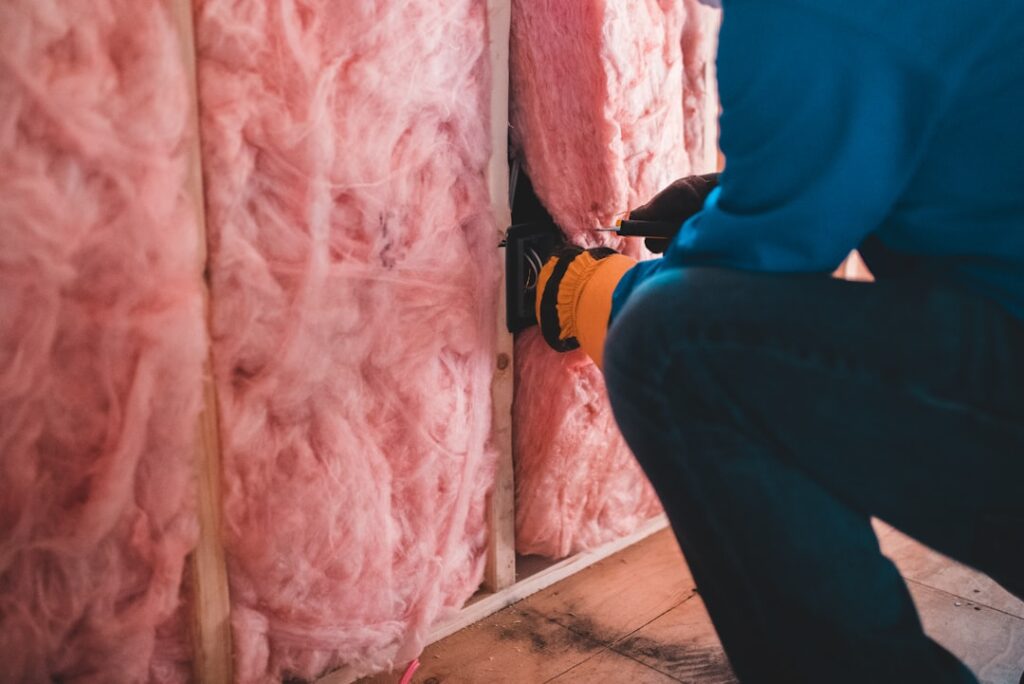
Spray polyurethane foam (SPF) is one of the most effective insulation materials available for sealing and insulating at the same time, and it is also one of the most expensive per unit of R-value. Quotes for the same house can differ by thousands of dollars depending on the type of foam, how thick it goes on, how much prep the area needs and whether a thermal or ignition barrier must be added afterward. Understanding the spray foam insulation cost drivers helps homeowners compare bids on equal terms and decide where foam earns its price and where cheaper materials do the job. This guide covers open-cell versus closed-cell pricing, typical costs by area of the home, code-driven add-ons, safety and re-occupancy during installation, and how foam compares to batts and rigid board. All prices are general 2026 estimates for the Colorado Front Range, not quotes.
Part of our Crawl Space & Attic Guide guide — start there for the full picture →
Spray Foam Insulation Cost at a Glance
Spray foam is typically priced per board foot, which is one square foot of foam one inch thick. That unit makes comparisons easier, because a quote for 3 inches of closed-cell foam over 500 square feet is 1,500 board feet. As broad 2026 ranges:
- Open-cell foam: often about $0.45 to $1.20 per board foot installed.
- Closed-cell foam: often about $1.00 to $2.00 per board foot installed.
- Small jobs: many contractors set a minimum charge, commonly somewhere in the $1,000 to $2,500 range, because mobilizing a spray rig costs the same whether the job is a single rim joist or a whole attic.
Translated to whole projects, a typical attic roofline or crawl space might land anywhere from a few thousand dollars to well over $10,000, depending on size, foam type and depth. The ranges are wide because the cost structure is wide: material is a large share of the price, and closed-cell foam uses much more chemical per inch than open-cell foam.
Open Cell vs Closed Cell: Why the Price Differs
The two main types of spray foam behave very differently, and that drives most of the price difference. Our detailed guide on open vs closed cell spray foam covers the building-science side; the cost-relevant points are below.
Open-Cell Foam
Open-cell foam is a low-density foam, commonly around half a pound per cubic foot. Its cells are not fully closed, so it is soft and spongy. It expands a great deal when sprayed, which lets installers fill deep rafter bays quickly, and it uses less chemical per inch. Typical R-values are often cited around R-3.5 to R-3.8 per inch. Open-cell foam is an air barrier at sufficient thickness but is relatively vapor-permeable, which matters in cold climates. It is commonly used on attic rooflines and in interior walls where sound control is the goal.
Closed-Cell Foam
Closed-cell foam is a higher-density foam, commonly around two pounds per cubic foot, with closed cells filled with blowing agent. Typical R-values are often cited around R-6 to R-7 per inch. It is rigid, adds some racking strength to framing, resists water absorption and acts as a vapor retarder at a couple of inches of thickness. Because it uses roughly four times as much material by volume per inch, and is usually sprayed in passes to control heat during curing, it costs more per board foot and more labor per job.
What That Means for a Quote
Comparing quotes by price per board foot alone can mislead. Reaching R-38 with open-cell foam might take 10 inches or more, while closed-cell might reach a given R-value in roughly half the depth, but at a higher price per inch. In many applications, the decision depends less on cost per R and more on whether the location needs a vapor retarder, water resistance or a thin profile.
Best Spray Foam: our top 3 picks
| Product | Best for | Key features | Price | Buy |
|---|---|---|---|---|
| Great Stuff Gaps and Cracks | Best everyday gap sealer |
| $50.49as of Nov 19, 2026 9:16 am GMT+0000 | Buy now →Check current price |
| Loctite Tite Foam Big Gaps | Best for gaps up to 3 inches |
| $8.28as of Nov 19, 2026 9:16 am GMT+0000 | Buy now →Check current price |
| Great Stuff Smart Dispenser | Best reusable can |
| $9.59as of Nov 19, 2026 9:16 am GMT+0000 | Buy now →Check current price |


Prices are Amazon’s listed prices as of the time shown and change often; check Amazon for today’s price. As an Amazon Associate we earn from qualifying purchases.
Cost by Area of the Home
Where the foam goes changes the amount needed, the type that makes sense and the prep work involved.
Attic Rooflines
Spraying foam to the underside of the roof deck turns a vented attic into an unvented, conditioned space. It is common when ducts or a furnace sit in the attic. Coverage is measured along the slope of the roof, which is larger than the attic floor area. Costs for an average-size home often run from several thousand dollars into the low to mid five figures depending on depth and foam type. Our guide on spray foam attic insulation covers design questions such as vent removal and moisture control. Many attics do not need foam at all; the attic insulation cost guide compares blown-in options that are often far cheaper on the attic floor.
Crawl Spaces
In encapsulated crawl spaces, closed-cell foam is often sprayed on foundation walls and rim joists while a heavy vapor barrier covers the ground. Because crawl spaces are cramped and often require cleanup first, labor and prep can push costs up. A typical project might cost from a few thousand dollars to roughly $8,000 or more for the foam alone, depending on wall height and perimeter. The spray foam insulation crawl space guide explains how foam fits into a full encapsulation, and more crawl space topics are collected in our crawl space hub.
Rim Joists
The rim joist (band joist) where the floor framing meets the foundation is one of the leakiest areas in many basements. Closed-cell foam is well suited here because it air seals irregular gaps around joists and penetrations in one step. A whole-house rim joist job is often in the range of roughly $1,000 to $3,000, though small jobs may hit the contractor’s minimum charge. ENERGY STAR’s basement and crawlspace project page links to Building Science Corporation guidance on spray foam at the rim joist, noting air leakage and condensation control as key concerns.
Walls
Open stud walls during new construction or a gut renovation are straightforward to spray. Existing closed walls are a different job, typically using injection foam or blown cellulose rather than conventional spray foam. Retrofit options are covered in our exterior wall insulation guide.
Other Factors That Drive the Price
- Removal of old insulation. Pulling out batts or loose fill before spraying adds labor and disposal fees. If old vermiculite is present, assume it may contain asbestos and have it handled by trained professionals before any foam work.
- Surface prep. Foam needs clean, dry surfaces. Damp crawl space walls, dusty rim joists and debris add cleanup time.
- Access. Low-slope attics, tight crawl spaces and multi-story walls increase labor time.
- Air sealing and penetrations. Flue pipes, recessed lights and chimneys need proper clearances and fire-rated materials around them, not foam.
- Thermal or ignition barrier. Covering the foam with drywall or an approved coating can add significantly to the job.
- Season and demand. Prices and lead times can shift with demand, and foam application has temperature limits for both substrate and air.
Thermal and Ignition Barrier Requirements
Foam plastic insulation is combustible. Model residential building codes generally require that it be separated from living space by an approved thermal barrier, commonly half-inch gypsum drywall or an equivalent tested assembly. In attics and crawl spaces entered only for service, codes often allow a lighter ignition barrier, or an approved intumescent coating, instead of a full thermal barrier. Some foam products are tested and listed for specific exposed applications with particular coatings.
The exact requirement depends on the code edition the local jurisdiction has adopted, the product’s evaluation report and how the space is used. A finished basement wall and an unfinished crawl space can have different requirements. A quote that leaves the foam exposed in a living area, or does not mention barrier requirements at all, deserves a follow-up question. Local building departments along the Front Range can confirm what is required and whether the work needs a permit.
Safety and Re-Occupancy During Installation
Spray foam is made by mixing two chemical components on site. One side contains isocyanates. OSHA describes isocyanates as the raw materials that make up all polyurethane products, lists foam-blowing and insulation materials among the jobs and products associated with exposure, and identifies health effects including irritation of the skin and mucous membranes, chest tightness and difficult breathing. OSHA identifies occupational asthma and other lung problems as the main effects of hazardous exposures.
For homeowners, the practical points are:
- Leave during spraying. Occupants and pets generally should be out of the home while foam is being applied, with the work area isolated and ventilated.
- Follow the manufacturer’s re-occupancy time. Manufacturers specify how long to wait after spraying before reentry. Waiting periods commonly range from several hours to about a day or more depending on the product, and the installer should provide the time in writing.
- Use a trained installer. Correct mixing ratio, temperature and pass thickness affect how well the foam cures. Improperly mixed foam may smell, shrink or fail to cure properly.
- Ask about ventilation. A reputable contractor will explain how the work area will be ventilated during and after the job.
DIY foam kits exist for small areas such as rim joists, but they carry the same chemical hazards and require respirators, eye protection and careful reading of the instructions. Small gap fillers sold in cans are a different product; see our guide on expanding foam for those.
How Spray Foam Compares to Batts and Rigid Board
Spray foam is not automatically the best choice. ENERGY STAR’s recommended R-values for retrofits, based on the 2021 International Energy Conservation Code, call for R-49 to R-60 on attic floors in most of the country depending on climate zone and existing insulation, and they suggest R-10 to R-15 insulative sheathing or R-13 to R-19 batts on basement or crawlspace walls depending on climate zone. Many of those targets can be met with other materials at lower cost.
- Fiberglass or mineral wool batts are the least expensive per R-value but do not air seal on their own and perform poorly when installed with gaps or compression.
- Blown cellulose or fiberglass is usually the most economical way to reach high R-values on an attic floor, especially after air sealing.
- Rigid foam board works well on basement and crawl space walls and as continuous exterior insulation, at a moderate cost, with seams taped or sealed. Our rigid foam insulation guide compares types.
- Hybrid approaches, such as a thin layer of closed-cell foam for air sealing followed by cheaper batts or blown insulation, can capture some of foam’s benefits at lower cost.
The R-value of each material is explained in our insulation R-value guide. ENERGY STAR’s seal and insulate program notes that sealing air leaks and adding insulation together can save up to 10 percent on annual energy bills, which provides a useful reality check on payback claims.
Front Range Climate Considerations
Most of the Colorado Front Range falls in cold climate zones under the energy code map, with long heating seasons, intense sun, low humidity most of the year and large swings between day and night temperatures. Those conditions affect which foam makes sense.
Vapor control on cold surfaces. In a cold climate, warm, moist indoor air moving toward a cold roof deck or rim joist can condense. Closed-cell foam at sufficient thickness limits both air leakage and vapor diffusion at that cold surface, which is one reason it is popular on rim joists and below-grade walls here. Open-cell foam on a roof deck in a cold climate is a design that building-science sources generally treat with more caution; many designs pair it with a vapor retarder coating or rely on a minimum thickness of closed-cell foam first. Contractors should be able to explain the moisture strategy for the specific roof assembly.
Ice dams. Heat escaping into an attic through gaps around lights, chases and top plates can melt roof snow that refreezes at the eaves. ENERGY STAR notes that air sealing combined with attic insulation can help alleviate ice dams. Foam is one way to air seal, but careful caulk and foam-can work at the attic floor followed by blown insulation often addresses the same leaks for less.
Radon. Radon is common in Colorado soils, and many Front Range homes have elevated levels. Sealing a crawl space or basement with foam does not replace a tested radon mitigation system, and work around an existing radon fan or pipe should not obstruct it.
Ways to Control the Budget
Several approaches keep foam costs in check without giving up its benefits where they matter most:
- Target the leakiest areas. Rim joists, attic kneewalls and crawl space walls often benefit more from foam per dollar than large open areas.
- Use flash-and-batt. A thin layer of closed-cell foam for air sealing, followed by fiberglass or mineral wool, reduces material cost.
- Bundle projects. One mobilization for rim joists, crawl space and a bonus-room kneewall is often cheaper than three separate jobs.
- Check utility rebates. ENERGY STAR notes that many local utilities offer rebates for professional energy assessments and certain air sealing and insulation projects. Rebate programs change, so confirm eligibility before signing.
Getting and Comparing Quotes
Three quotes are a reasonable minimum for a project of any size. Ask each contractor to specify:
- Foam type (open- or closed-cell), brand and product name.
- Thickness and resulting R-value at each location.
- Square footage and board feet, so quotes can be compared on the same unit.
- Removal and prep work included.
- Thermal or ignition barrier, and whether it is included in the price.
- Re-occupancy time and ventilation plan.
- Permit responsibility and warranty terms.
Be cautious of quotes promising very large energy savings. Claims of 40 or 50 percent savings for a single insulation project do not match ENERGY STAR’s more modest estimates for combined air sealing and insulation. For broader insulation topics, the crawl space and insulation guide collects related articles.
Inspection Issues With Spray Foam
Home inspectors see a few recurring issues with foam installations:
- Exposed foam in finished or occupied spaces without a visible thermal barrier.
- Foam pulling away from framing, shrinking or cracking, which can indicate a mixing or application problem.
- Persistent odor long after installation.
- Foam covering wiring junction boxes, gas lines or areas that need access.
- Foam packed against chimneys, flues or recessed lights that require clearances.
- Foam concealing roof deck or sill plate damage, which makes those areas harder to evaluate.
Buyers looking at a home with spray foam should ask for the installer’s paperwork, including product data and any permit records.
More Questions About Spray Foam Insulation Cost
How much does it cost to spray foam a 2,000 sq ft house?
Spray foam for a 2,000 sq ft house typically costs somewhere around $8,000 to $25,000 or more, depending on which areas are foamed and whether open-cell or closed-cell foam is used. A whole-house job that covers the attic roofline, walls and rim joists sits at the high end of that range.
The house’s floor area is only a rough guide. Contractors price by the surface area actually sprayed and the depth, so a steep roof, tall walls or a large crawl space can push the total well past a simple per-square-foot estimate.
Is spray foam cheaper for new construction or existing homes?
Spray foam is usually cheaper per square foot in new construction, because walls and roof decks are open and crews can spray quickly without protecting finished surfaces. Existing homes often add costs for removing old insulation, masking rooms, cutting access holes or working in tight attics.
Closed walls in an existing home are a special case: standard spray foam cannot be sprayed into a finished wall cavity. Injection foams exist for retrofits, but they use different products and are typically priced separately, so compare quotes for the same material.
Are there rebates or tax credits for spray foam insulation in 2026?
The federal energy-efficient home improvement credit (IRS 25C), which covered qualifying insulation, ended for work completed after December 31, 2025, so spray foam installed in 2026 does not qualify for it.
Homeowners can still check for utility rebates, which are commonly offered per square foot of insulation or as part of a home energy assessment program, and for state or local efficiency programs. Many rebates require a pre-approved contractor, a pre-installation assessment or specific R-values, so confirm the rules before signing a contract.
How long does spray foam take to pay for itself?
Spray foam payback typically ranges from roughly 5 to 15 years or longer, depending on energy prices, climate, how leaky the house was before and which areas were foamed. Rim joists and leaky attics tend to pay back fastest because they are major air-leak points.
Industry estimates of savings vary widely, so treat any single percentage with caution. A blower-door test before and after the work gives a real measure of how much air leakage dropped, which is the main reason spray foam outperforms fiberglass in older, drafty homes.
References
- Isocyanates — Occupational Safety and Health Administration
- Recommended Home Insulation R-Values — ENERGY STAR
- Basement and Crawlspace Air Sealing and Insulating Project — ENERGY STAR
- Seal and Insulate — ENERGY STAR
- Attic Air Sealing Project — ENERGY STAR
Frequently asked questions
How much does spray foam insulation cost per board foot?
As a general 2026 range, open-cell foam often runs about $0.45 to $1.20 per board foot installed and closed-cell foam about $1.00 to $2.00. A board foot is one square foot at one inch thick.
Is closed-cell spray foam worth the extra cost?
Closed-cell foam is often worth it where a vapor retarder, water resistance or high R-value in a thin space is needed, such as rim joists and crawl space walls. In deep attic rafters or interior walls, open-cell foam or other materials may give similar results for less.
How long until it is safe to return home after spray foam?
Follow the manufacturer's re-occupancy time, which the installer should provide in writing. Waiting periods commonly range from several hours to about a day or more depending on the product.
Does spray foam need to be covered?
Model building codes generally require foam plastic in living spaces to be covered by a thermal barrier such as half-inch drywall. Attics and crawl spaces used only for service may allow an ignition barrier or approved coating. Check local code.
Is spray foam cheaper than other insulation?
Usually not per unit of R-value. Blown cellulose, fiberglass batts and rigid foam board often reach the same R-value for less, though spray foam also air seals in one step.
Why do spray foam quotes vary so much?
Spray foam quotes vary because contractors differ on foam type, thickness, prep work, thermal or ignition barrier coatings, old insulation removal and minimum charges. Ask each bidder to list square footage, foam type, inches and target R-value, and whether coatings and cleanup are included, so quotes can be compared fairly.
Does spray foam insulation increase home value?
Spray foam insulation may modestly improve a home's appeal through lower energy bills and better comfort, but it rarely returns its full cost at resale. Buyers and inspectors also look for proper ignition barriers and roof-deck moisture issues, so keep invoices, product data sheets and any blower-door results to show the work was done correctly.
Is it cheaper to spray foam yourself?
DIY spray foam kits can cost less up front for small areas such as a rim joist, but per board foot they are usually more expensive than a professional rig for large jobs. Kits also carry real risks from isocyanate exposure and off-ratio mixing, which can lead to odors and costly removal.
Comparing spray foam bids or buying a home with a foamed attic or crawl space? Get in touch and we can connect you with a Front Range inspector who evaluates insulation, moisture and barrier details.