Smoke Detector Chirping: Low Battery, End of Life, or Fault?
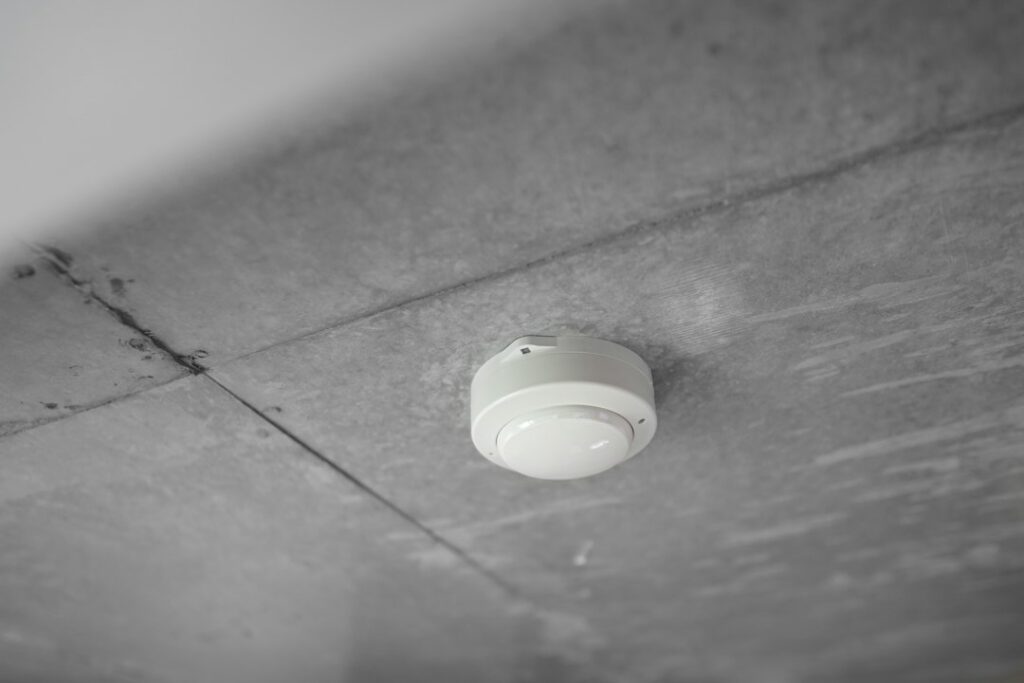
Few household sounds are as maddening as a single high-pitched chirp that repeats every minute or so, usually starting in the middle of the night and usually from an alarm on the highest ceiling in the house. The good news is that a chirp is almost never a fire. It is the alarm asking for attention: a weak battery, a unit that has reached the end of its service life, a dirty sensing chamber, a loose battery door or, in a hardwired system, a backup battery that has quietly died. Along the Colorado Front Range, dry winter air, big daily temperature swings and dusty construction in older homes add a few local twists. This guide explains how to tell a chirp from a real alarm, how to work through the likely causes in order, and when the right fix is a new alarm rather than a new battery.
Part of our Home Inspection Tools guide — start there for the full picture →
Chirping Versus a Full Alarm
The first job is to identify which sound is coming from the ceiling, because the response is completely different.
The National Fire Protection Association explains the difference. A continued set of three loud beeps (beep, beep, beep) means smoke or fire, and the instruction is to get out, call 9-1-1 and stay out. A single chirp every 30 or 60 seconds means the battery is low and must be changed. NFPA also notes that chirping that continues after the battery has been replaced means the alarm is at the end of its life and the unit must be replaced.
That gives a simple rule of thumb:
- Loud, continuous pattern of three beeps: treat it as a fire until proven otherwise. Leave the house and call for help.
- One short chirp at regular intervals: a maintenance or trouble signal. Investigate the alarm, not the house.
- A chirp pattern that repeats in pairs or groups, sometimes with a flashing light: often a manufacturer-specific trouble or end-of-life code. The exact meaning varies by model, so the user guide or the label on the back of the alarm is the reference.
Carbon monoxide alarms chirp too, and their full alarm pattern is different from a smoke alarm’s. If the chirping unit is a CO alarm or a combination device, see our guides on a carbon monoxide detector beeping and why a carbon monoxide detector is beeping, which cover CO-specific alarm patterns and what to do if a CO alarm goes into full alarm.
Finding the Right Alarm
A chirp is short and high-pitched, which makes it hard to locate. Sound bounces off hard ceilings and stairwells, and in an interconnected system only the alarm with the problem usually chirps, even though all of them are linked. A practical approach is to stand under each alarm in turn and wait through two or three cycles. Many alarms flash an indicator light in time with the chirp, which helps. Note the location before doing anything else, because pulling the wrong alarm off the ceiling is a common way to create a second problem.
The Most Common Causes of Smoke Detector Chirping
Most chirps come from a short list of causes. Working through them in roughly this order solves the majority of cases.
1. A Low Battery
This is the classic cause and the one NFPA names first. Alarms that use replaceable batteries are designed to chirp before the battery is completely dead, giving the household time to replace it. The U.S. Fire Administration advises that for an alarm powered by a 9-volt battery, the batteries should be replaced at least once every year, along with testing the alarm monthly.
Low batteries tend to announce themselves at night for a physical reason: the house cools down after the heat is set back, and battery voltage drops slightly as temperature falls. A battery that was marginal during the day can dip below the alarm’s threshold at three in the morning.
When replacing a battery, use the type listed on the alarm or in its instructions. NFPA advises following the manufacturer’s list of batteries on the back of the alarm or the manufacturer’s instructions. Some alarms are particular about battery chemistry, and an off-brand or rechargeable cell may not satisfy the low-battery circuit.
2. End of Life
Smoke alarms do not last forever. The sensing chamber and electronics degrade over time. NFPA states that all smoke alarms must be replaced 10 years after their manufacturing date, and the U.S. Fire Administration’s maintenance guidance says to replace the entire smoke alarm every 10 years for both 9-volt and hardwired models.
Many newer alarms have a built-in end-of-life signal: a distinct chirp pattern that starts around the ten-year mark and cannot be silenced by a fresh battery. The manufacture date is printed on the back of the unit. If the date is roughly a decade old, or the label is missing or unreadable, replacement is the right call even if a new battery seems to quiet it for a while.
Alarms with sealed 10-year lithium batteries are a special case. NFPA explains that smoke alarms with non-replaceable 10-year batteries are designed to remain effective for up to 10 years, and that if one of these alarms chirps to warn of a low battery, the entire smoke alarm should be replaced right away. There is no battery door to open.
3. A Hardwired Alarm With a Dead Backup Battery
Hardwired alarms run on household current but contain a backup battery for power outages. When that backup battery weakens, the alarm chirps just like a battery-only unit. The U.S. Fire Administration notes that hardwired alarms usually have a backup battery that will need to be replaced once a year. People often forget these alarms have batteries at all, which is why a hardwired system can chirp for weeks before anyone opens the battery drawer. The hardwired smoke detector guide covers how these units are wired and replaced.
4. A Loose Battery Drawer or Poor Contact
A battery that is not fully seated, a drawer that has not clicked shut, or a little corrosion on the terminals can all produce a chirp even with a fresh battery. Remove the battery, check the contacts, reinsert it firmly and close the drawer completely. Some alarms will not close at all without a battery installed, which is a deliberate design choice.
5. Dust, Insects and Construction Debris
Dust in the sensing chamber can trigger trouble chirps or nuisance alarms. Remodeling is a frequent culprit: drywall sanding, attic insulation work and wood cutting send fine particles everywhere. Small insects can also get into the chamber. NFPA advises following the manufacturer’s instructions for cleaning to keep smoke alarms working properly. Most manufacturers suggest gentle vacuuming or compressed air around the vents, but the exact method depends on the model.
6. Temperature and Humidity Swings
Alarms are designed for living spaces, not for unconditioned areas. The U.S. Fire Administration points out that smoke alarms in garages can sound because of a change in temperature and humidity, as well as dust, fumes and insects. On the Front Range, an alarm near an exterior door, in a cold upstairs hallway under a poorly insulated attic, or in a bathroom with heavy shower steam may chirp or false-alarm as conditions shift. Moving the alarm, or using a different type of device suited to the location, is often the long-term fix. Our smoke detector placement guide covers where alarms typically belong.
7. Residual Charge After a Battery Swap
Some alarms keep chirping briefly after a new battery goes in, because the circuit holds a small residual charge or still has a stored trouble condition. Many manufacturers recommend pressing and holding the test button for several seconds after a battery change to clear it. The exact procedure varies, so check the instructions printed on the alarm.
Step-by-Step Troubleshooting Table
The table below walks through a sensible order of checks. Stop at the first step that solves the problem, but keep testing afterward to confirm the alarm still sounds when the test button is pressed.
| Step | What to do | What it tells you |
|---|---|---|
| 1. Identify the sound | Listen for three loud beeps in a row versus a single chirp at intervals | Three-beep pattern means evacuate; a single chirp means maintenance |
| 2. Locate the unit | Stand under each alarm through two or three cycles and watch for a flashing light | Which alarm has the problem |
| 3. Check the date | Read the manufacture date on the back of the alarm | A unit around 10 years old should be replaced, not re-batteried |
| 4. Replace the battery | Install a new battery of the type listed on the alarm; reseat it firmly and close the drawer | Clears most low-battery chirps |
| 5. Clear the signal | Press and hold the test button per the instructions | Resets stored trouble conditions on many models |
| 6. Clean the alarm | Clean the vents as the manufacturer directs | Removes dust or insects causing trouble chirps |
| 7. Check the environment | Look for drafts, steam, cold attics or garage proximity | Location-related chirps and false alarms |
| 8. Test it | Press the test button and confirm a loud alarm | Confirms the alarm still works after the fix |
| 9. Replace the unit | If chirping continues after a fresh battery, replace the alarm | NFPA treats persistent chirping after a new battery as end of life |
Never Remove a Battery Without Replacing It
The most dangerous response to a chirp is the most common one: pulling the battery and leaving the alarm on the shelf or dangling from the ceiling. The U.S. Fire Administration is blunt that a smoke alarm with a dead or missing battery is the same as having no smoke alarm at all, and it also warns that disabling a smoke alarm or removing the battery can be a deadly mistake. If a replacement battery is not on hand at 3 a.m., keep the old battery in place until morning, and buy batteries the next day. A chirping alarm with a weak battery may still sound in a fire. An alarm with no battery will not.
Hush Buttons, Reset Buttons and Test Buttons
Most modern alarms have a single button that does several jobs depending on how long it is pressed and what state the alarm is in. On many models:
- A short press during a nuisance alarm activates a hush or silence mode for a limited time, typically several minutes, while the air clears.
- A short press during a low-battery chirp may silence the chirp temporarily on some models. It does not fix the battery, and the chirp will return.
- A longer press when the alarm is quiet runs a self-test and sounds the alarm.
The hush feature is designed for cooking smoke and shower steam, not for chirps. The U.S. Fire Administration advises that if a smoke alarm sounds while cooking or showering, the response is to open a window or door and press the hush button, wave a towel at the alarm to clear the air, and never take the battery out. Its guidance also suggests moving the entire alarm several feet away from the kitchen or bathroom if nuisance alarms keep happening. Choosing the right sensing type helps too; our guide to ionization vs photoelectric smoke detectors explains why one type tends to tolerate cooking better than the other.
Chirping in an Interconnected System
In homes with linked alarms, one failing unit can make troubleshooting confusing. A single chirp usually comes only from the alarm with the problem, but a full alarm from one unit will sound on all of them. If every alarm in the house goes off and there is no smoke, the originating unit is often marked by a different indicator light, depending on the model. The interconnected smoke alarms guide explains how linked systems work and how to test them together.
When a Chirp Means It Is Time to Replace the Alarm
A new battery solves most chirps, but not all. Replacement is the better choice when:
- The manufacture date is about ten years old or older, or the date cannot be found.
- Chirping continues after a fresh battery and a reset, which NFPA identifies as an end-of-life signal.
- The alarm has a sealed 10-year battery and is chirping.
- The housing is cracked, yellowed, painted over or covered with stickers. NFPA warns never to paint smoke alarms, because paint, stickers or other decorations could keep them from working.
- The alarm fails its monthly test.
Many households replace all their alarms at once when one reaches end of life, since alarms installed together tend to age together. That approach also makes it easier to upgrade to sealed-battery models, add combination smoke and CO protection, or move to interconnected units. For hardwired systems, replacement units typically need to be compatible with the existing wiring connector, and a licensed electrician is a sensible choice if wiring needs to change. NFPA advises that only qualified electricians should install hardwired smoke alarms.
The cost of replacing a basic battery-only alarm is usually modest, while hardwired, combination and smart units cost more, and electrician labor adds to the total. Prices vary widely with features and local labor rates, so treat any estimate as a rough guide and get a written quote for electrical work.
Front Range Considerations
Colorado homes present a few recurring patterns. Older ranch homes in Denver, Lakewood and Arvada often have a single hallway alarm of uncertain age. Split-levels in the suburbs may have alarms on some levels but not others. Basements finished years after the house was built sometimes have bedrooms with no alarm at all. The NFPA and USFA both recommend alarms inside each bedroom, outside each sleeping area and on every level of the home, including the basement. When a chirp prompts a trip up the ladder, it is a good moment to count alarms against that standard.
What a Home Inspector Looks For
During a standard inspection, alarms get attention but within limits. The ASHI Standard of Practice requires inspectors to describe the presence or absence of smoke alarms and carbon monoxide alarms. The same standard states that the inspector is not required to test smoke and carbon monoxide alarms, or to determine their age and type. Many inspectors still note obvious issues they see during the walkthrough, such as:
- Alarms that are chirping during the inspection.
- Missing alarms in bedrooms, hallways or on certain levels.
- Empty mounting plates or alarms with batteries removed.
- Units that look visibly aged, discolored or painted.
- Missing CO alarms in homes with fuel-burning appliances or attached garages.
Buyers should plan to test every alarm themselves after moving in, check manufacture dates and replace anything of unknown age. The broader home inspection tool kit, including testers and meters inspectors carry, is covered in our home inspection tools pillar and the inspection tools hub.
References
- Smoke Alarms — National Fire Protection Association
- Installing and Maintaining Smoke Alarms — National Fire Protection Association
- Smoke Alarms — U.S. Fire Administration
- Heat Alarms — U.S. Fire Administration
- ASHI Standard of Practice for Home Inspections — American Society of Home Inspectors
Frequently asked questions
Why is my smoke detector chirping every minute?
A single chirp every 30 or 60 seconds usually means the battery is low. Replace it with the type listed on the alarm, reseat it firmly and close the battery drawer. If the chirp continues after a fresh battery, the alarm may be at the end of its life.
Why does my hardwired smoke alarm chirp if it runs on house power?
Hardwired alarms contain a backup battery for power outages, and that battery weakens over time. The U.S. Fire Administration notes these backup batteries typically need replacing once a year.
How do I stop a smoke detector chirping after changing the battery?
Many alarms store a trouble condition that a long press of the test button clears. Check the manufacturer's instructions. If the chirping persists, check the manufacture date; NFPA says continued chirping after a battery change indicates end of life.
Is it safe to take the battery out of a chirping smoke detector?
Not without replacing it. The U.S. Fire Administration warns that an alarm with a dead or missing battery is the same as having no alarm at all. Leave the old battery in until a new one is available.
How long do smoke detectors last?
NFPA and the U.S. Fire Administration both say smoke alarms should be replaced 10 years after the manufacture date, which is printed on the back of the unit.
Not sure how old the alarms in a home you are buying really are? Reach out to our team and we can point you to a Front Range inspector who notes missing, aged and chirping alarms in the report.