Uncoupling Membranes Like Ditra: Preventing Cracked Tile
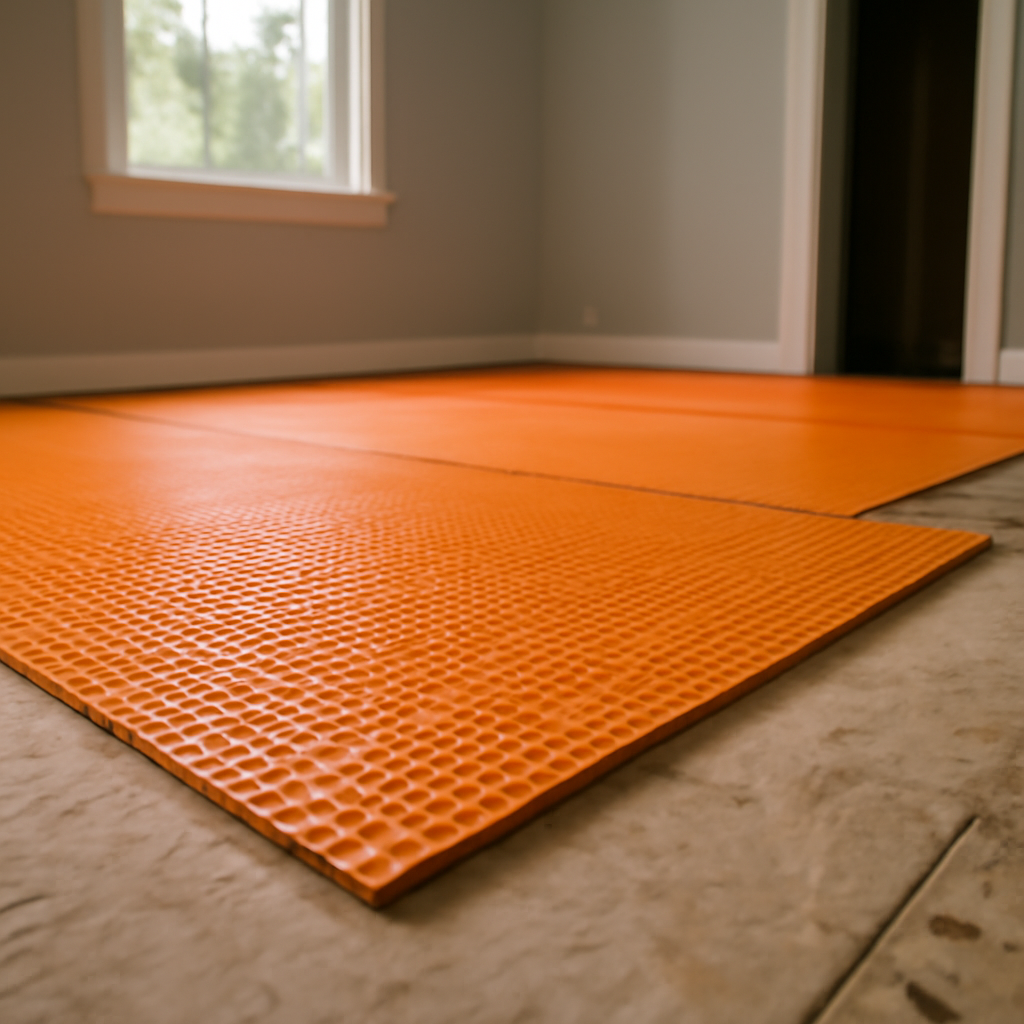
Walk into almost any tile showroom or remodeling forum and you will hear about orange plastic sheets with a waffle pattern that go under tile. The best-known product in that category is Schluter Ditra, and the brand name is often used loosely for the whole family of uncoupling membranes, much the way people say “Sheetrock” for drywall. Several manufacturers make comparable products. This guide describes what uncoupling membranes are meant to do, where they help and where they do not, how they are used over wood subfloors and cracked concrete, how seams are handled when the membrane doubles as waterproofing, how heated versions work and which installation mistakes tend to show up later as loose or cracked tile. It is written for homeowners and buyers trying to understand what sits under a floor, not as an endorsement of any brand.
Part of our Structure & Exterior guide — start there for the full picture →
What an Uncoupling Membrane Does
Tile, grout and mortar are stiff and brittle. The materials under them are not perfectly stable. Wood subfloors swell and shrink with humidity and bend under load. Concrete slabs shrink as they cure and can develop cracks that open and close slightly with temperature and moisture. When tile is bonded directly and rigidly to a surface that moves, the stress has to go somewhere, and it usually goes into the weakest point: the grout lines first, then the tile itself.
An uncoupling membrane is a thin layer placed between the substrate and the tile that is designed to absorb some of that differential movement. Most share a similar construction:
- A plastic core, often with a grid of square or dovetail-shaped cavities, that gives the layer the ability to shear slightly.
- A fleece or fabric backing on the underside that is embedded in thinset mortar on the subfloor.
- Cavities on the top that are filled with mortar when the tile is set, mechanically locking the tile layer to the membrane.
The idea is that the substrate and the tile are connected, but not rigidly fused. Small horizontal movements below are taken up within the membrane instead of being transmitted directly into the tile. Manufacturers also describe secondary functions, depending on the product: load distribution, vapor management and, when seams are sealed, waterproofing.
What it does not do
An uncoupling membrane is not a structural fix. It does not make a bouncy floor stiff. If joists are undersized, notched or rotted, or if a slab is heaving or settling, the membrane cannot compensate. Manufacturers publish minimum subfloor and joist requirements for their systems, and those requirements still apply. A tile floor that cracks because the framing sags will often crack again even with a membrane in place.
Over Wood Subfloors
Wood-framed floors are where uncoupling membranes are most often used in Front Range homes, especially in bathrooms, kitchens and upper-floor laundry rooms. Traditionally, tile setters stiffened wood floors by adding a mortar bed or a layer of cement backer board over the plywood or OSB. A membrane offers a thinner, lighter alternative that can help where floor height matters, such as at a transition to an adjacent hardwood floor or under a dishwasher opening.
What still matters over wood:
- Subfloor thickness and fastening. The panel layer must meet the membrane manufacturer’s minimums and be screwed or nailed on the schedule they specify. A loose subfloor squeaks and moves no matter what is on top of it.
- Joist spacing and span. Wider joist spacing usually requires a thicker subfloor, and natural stone generally requires a stiffer floor than ceramic or porcelain.
- Flatness. A membrane follows the surface under it. Humps and dips at panel seams telegraph through to the tile and make large-format tile rock.
- Movement joints. A gap at the perimeter and at changes of plane, filled with flexible sealant rather than grout, remains necessary. The membrane does not replace it.
Our tile installation guide covers subfloor preparation, layout and mortar choices in more depth.
Over Concrete With Cracks
Basement floors, slab-on-grade homes and garage conversions often have shrinkage cracks in the concrete. Those cracks are normal in most slabs, but tile laid directly over them tends to crack along the same line, sometimes within months. That pattern, a straight crack running across several tiles in line with a slab crack, is one of the most recognizable signs in our guide to cracked tile floors.
Uncoupling membranes are commonly used over slabs with in-plane shrinkage cracks, where the two sides of the crack move apart or together slightly but stay level with each other. They are not intended for cracks with vertical displacement, where one side has dropped or lifted. A crack that has heaved or settled suggests movement in the soil or structure below, and tiling over it treats the symptom. Along the Colorado Front Range, where expansive clay soils are common in many neighborhoods, an offset crack in a basement slab deserves evaluation before any finish goes on top of it.
Control joints and expansion joints that were deliberately cut or formed in the slab are a separate case. Industry practice generally calls for carrying those joints up through the tile assembly as a soft, flexible joint rather than bridging them with rigid tile, membrane or not.
Moisture in slabs
Concrete in contact with the ground can carry moisture upward. Some membranes are marketed as helping manage vapor beneath the tile, but they are not a cure for a basement with active water problems. EPA’s mold and moisture guidance stresses that the key to mold control is moisture control and that water problems should be fixed rather than covered. If a basement floor feels damp, shows efflorescence (white mineral deposits) or collects standing water after storms, the water source needs attention before the floor is tiled.
Waterproofing Seams
Many uncoupling membranes are made of a material that is itself water-resistant, and manufacturers describe them as able to serve as a waterproofing layer when the seams between sheets and the joints at walls are sealed with the manufacturer’s banding or tape, typically set in thinset mortar. Without that seam treatment, the membrane is an uncoupling layer only, and water can pass through the joints between sheets.
This distinction matters most in three places:
- Bathroom floors outside the shower, where splash water and overflow can reach the subfloor. Our guide to bathroom floor tile discusses where water usually gets in.
- Curbless or walk-in showers, where the shower floor and the bathroom floor are continuous and the waterproofing must be too.
- Laundry rooms and mudrooms above finished spaces, where a washer leak can do significant damage below.
A floor membrane is generally not a substitute for a properly built shower pan with a bonded or traditional waterproofing system and a drain designed to integrate with it. Shower assemblies have their own requirements, covered in our shower tile guide. Once tile is set, there is no practical way for a buyer or inspector to confirm whether seams were banded; the original installer’s photos or invoices are the best evidence.
Heated Membrane Systems
Several manufacturers, including Schluter, offer membrane versions with studs or channels designed to hold electric floor-heating cable. The cable is pressed between the studs, and thinset fills the gaps as the tile is set, so the floor does not need a separate layer of self-leveling compound to embed the cable. The result can be a thinner heated assembly than a traditional mat buried in leveler.
The usual cautions for electric floor heat apply:
- The heating circuit needs appropriate ground-fault protection and a properly sized circuit, which is work for a qualified electrician.
- Installers typically measure the cable’s electrical resistance before, during and after tiling to confirm nothing was nicked by a trowel.
- The floor sensor needs to be placed according to the instructions and recorded, because replacing it later can mean removing tile.
- Heated systems generally should not be run at full power to accelerate mortar curing; manufacturers specify waiting periods.
Our guide to radiant floor heating compares electric and hydronic systems and what buyers should ask about an existing heated floor.
Common Installation Errors
Uncoupling membranes are forgiving in some ways and unforgiving in others. Most failures traced to these systems come back to installation rather than the product itself. The errors that come up most often include:
Poor mortar coverage
The fleece must be fully embedded in the mortar on the subfloor, and the cavities on top must be filled when the tile goes down. Manufacturers commonly direct installers to fill the cavities and then key mortar onto the surface before setting tile, and to check coverage by lifting a tile occasionally. Tile set on partially filled cavities can sound hollow and crack under point loads. Installers often find that the mortar type, mixing consistency and trowel notch recommended by the membrane maker make a large difference, and some manufacturers specify particular unmodified or modified mortars for different layers.
Wrong substrate prep
Laying a membrane over a dusty, painted or contaminated surface, or over a subfloor that has not been flattened, undermines the bond from the start. So does laying it over an existing resilient floor without confirming the manufacturer allows that.
Skipped movement joints
Running tile tight to walls, cabinets and tubs, then grouting the perimeter, leaves the floor no room to expand. Tenting, where tiles lift and form a ridge, is often traced to missing movement joints rather than to the membrane.
Walking on fresh work
Kneeling or walking on membrane before the mortar beneath it has set can shift sheets and break the bond. Protecting the work area for the curing period is part of a careful installation.
Assuming waterproofing
Leaving seams unbanded while assuming the floor is waterproof is a mistake that only shows up after the first leak.
Removing Old Flooring Before Installation
Many uncoupling-membrane jobs start with tearing out an older floor. In homes built before the 1980s, existing resilient tiles, sheet vinyl backing or black adhesives may contain asbestos. EPA’s homeowner guidance says asbestos-containing material in good condition that will not be disturbed generally does not release fibers, while sawing, sanding, scraping or drilling it can. EPA specifically advises homeowners not to sand or try to level asbestos flooring or its backing, and notes that installing new floor covering over asbestos flooring may be an option where possible. EPA recommends that sampling and repair be done by a trained and accredited asbestos professional.
Whether a particular membrane may be installed over an existing floor, rather than over bare subfloor, depends on the manufacturer’s instructions for that product, so this is a question to raise with the installer before demolition starts.
Alternatives to an Uncoupling Membrane
Uncoupling membranes are not the only way to build a durable tile floor, and they are not always the best fit. Common alternatives include:
- Cement backer board set in thinset and screwed to the subfloor. It is familiar to most installers and inexpensive, though it adds height and weight and does not provide uncoupling on its own.
- A traditional mortar bed, sometimes called a mud bed, which is thick, heavy and labor-intensive but very forgiving of uneven framing when done by an experienced setter.
- Crack-isolation membranes, often liquid-applied or thin sheet products, that are designed to bridge small slab cracks rather than to uncouple the whole floor.
Each approach has its own manufacturer or industry requirements. The right choice depends on the substrate, the tile, the floor height available and the installer’s experience with the system.
What Inspectors Can and Cannot See
A home inspection is visual. The ASHI Standard of Practice directs inspectors to inspect floors, but it does not require them to inspect floor coverings. An inspector cannot see a membrane through finished tile and cannot confirm mortar coverage or seam banding. What an inspector can report is the evidence: cracked tile and grout, hollow-sounding areas, loose tiles near fixtures, missing perimeter joints and signs of moisture or staining below.
Sellers who installed a membrane system can help buyers by keeping product receipts, installation photos and any manufacturer warranty registration. Some manufacturers offer system warranties that depend on the use of their specified components and mortars, and documentation is usually required to claim them. For guidance on choosing an inspector and understanding inspection scope, see our home inspector hiring guide and the structure and exterior hub.
What It Typically Costs
Membrane pricing varies by brand, product version and retailer. As general 2026 ranges, to be confirmed locally:
- Material for a standard uncoupling membrane commonly adds a few dollars per square foot, with seam banding, inside and outside corners and the recommended mortar on top of that.
- Heated-membrane versions cost more per square foot, and the heating cable, thermostat and electrical work are separate.
- Labor for membrane installation is often bundled into the tile setter’s per-square-foot price, and adds time compared with tiling directly over backer board.
- For a small bathroom, the membrane portion of the job might add a few hundred dollars; for a large kitchen, it can run into the low thousands.
For a sense of whole-room costs and material choices in kitchens, where uncoupling membranes are frequently used over wood subfloors, see our guide to kitchen floor tile. Compared with the cost of removing and replacing a cracked tile floor, the membrane is usually a small share of the budget, but it is only worthwhile when the framing beneath meets the system’s requirements.
Questions to Ask a Tile Contractor
- Will the floor framing and subfloor meet the membrane manufacturer’s minimums, and how was that checked?
- Which membrane, mortar and seam materials will be used, and do they come from the same system?
- Will the seams be banded for waterproofing, or is this an uncoupling-only installation?
- How will existing slab cracks or control joints be handled?
- Where will movement joints go?
- Will installation photos and product documentation be provided?
Clear answers to those questions usually separate an installer who follows the system from one who simply rolls out the sheet.
References
- ASHI Standard of Practice for Home Inspections — American Society of Home Inspectors
- A Brief Guide to Mold, Moisture and Your Home — U.S. Environmental Protection Agency
- Protect Your Family from Exposures to Asbestos — U.S. Environmental Protection Agency
Frequently asked questions
What does Schluter Ditra do under tile?
Ditra is a widely used brand of uncoupling membrane. It sits between the subfloor and tile and is designed to absorb small movements in the substrate so they are not transferred directly into the tile and grout. Several other manufacturers make similar products.
Will an uncoupling membrane fix a bouncy floor?
No. Membranes do not stiffen framing. Manufacturers publish minimum joist and subfloor requirements, and a floor that deflects too much needs structural correction before tile goes down.
Is an uncoupling membrane waterproof?
Many membranes can act as a waterproofing layer only when the seams and wall joints are sealed with the manufacturer's banding or tape. Without seam treatment, water can pass between sheets.
Can tile go over a cracked concrete slab with a membrane?
Uncoupling membranes are commonly used over slabs with in-plane shrinkage cracks. Cracks with vertical offset, where one side has dropped or lifted, suggest soil or structural movement that should be evaluated first.
How much does an uncoupling membrane add to a tile job?
Material often adds a few dollars per square foot plus banding and mortar, with heated versions costing more. For a small bathroom that might be a few hundred dollars. These are general 2026 ranges; local quotes vary.
Not sure what is under the tile in a home you are buying, or why it is cracking? Get in touch and we will connect you with a Front Range inspector who documents floor movement, moisture clues and failed tile.