Roof Cleaning: Soft Washing, Moss and Shingle Damage
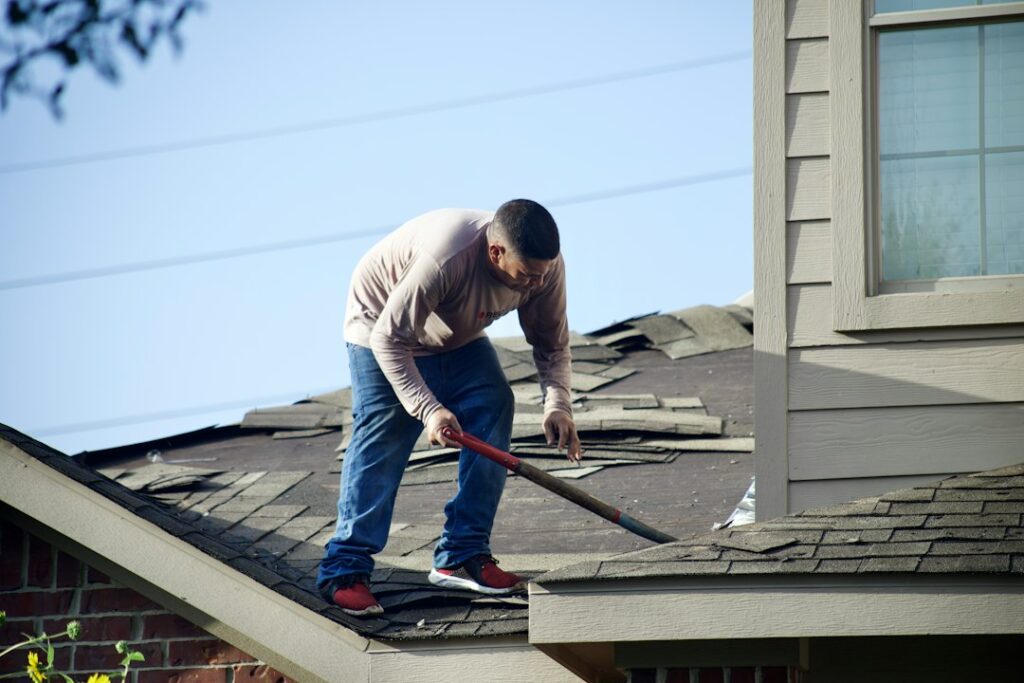
Dark streaks running down a roof, patches of green moss on a north slope, or a layer of pine needles and dust can make an otherwise sound roof look tired. Roof cleaning can restore appearance and remove growth that holds moisture against roofing materials, but it is also one of the easier ways to shorten a roof’s life if done with the wrong method. High-pressure water can strip the protective granules from asphalt shingles, force water under laps and crack brittle tiles, and the work itself puts people on steep, slippery surfaces. This guide explains the difference between soft washing and pressure washing, what those streaks and patches usually are in Colorado’s dry climate, how zinc and copper strips work, what fall safety involves, how to limit runoff damage to plants and drainage, and what homeowners commonly pay.
Part of our Structure & Exterior guide — start there for the full picture →
What Roof Cleaning Is and When It Makes Sense
Roof cleaning is the removal of biological growth (algae, moss, lichen), accumulated debris and staining from the roof surface. For most residential roofs, the accepted approach is a low-pressure “soft wash”: a cleaning solution applied at roughly garden-hose pressure, allowed to dwell, and then rinsed gently or left to break down with weather, depending on the product and the roofing manufacturer’s guidance. Mechanical removal of moss, done gently from the top down with a soft brush, sometimes accompanies the chemical treatment.
Cleaning makes the most sense when growth is thick enough to hold moisture, when debris is damming water at valleys, chimneys or skylights, or when an owner is preparing a home for sale and wants the roof to show well. Purely cosmetic streaking is not usually a structural concern, and some owners choose to live with it. A roof that is near the end of its service life may not justify the cost or the risk of cleaning; replacement may be the better investment.
Soft Washing vs Pressure Washing
The single most important choice in roof cleaning is how much pressure touches the surface.
Why pressure washing damages shingles
Asphalt shingles are covered with ceramic-coated mineral granules that shield the asphalt from ultraviolet light and give the roof its color. A pressure washer stream can blast those granules loose, exposing asphalt that then ages faster under intense high-altitude sun. High pressure can also lift shingle tabs, break the adhesive seal strips that help shingles resist wind, and drive water up under laps and flashing. Many shingle manufacturers caution against pressure washing in their care guidance, and damage from it may not be covered by warranty. Our guide to asphalt shingles explains how granule loss affects roof life.
Wood shakes, clay and concrete tile, slate and metal roofs each have their own vulnerabilities. Wood can be furred and gouged, tile and slate can crack underfoot or under pressure, and some metal coatings can be scratched. The roofing manufacturer’s maintenance instructions are the best guide for any specific material.
How soft washing works
Soft washing relies on chemistry and dwell time rather than force. Contractors commonly use diluted sodium hypochlorite (the active ingredient in bleach) blended with a surfactant to help it cling, sometimes with other additives. The solution kills algae and loosens growth; a light rinse removes residue. Some products are designed to be sprayed on and left, with rain gradually washing away dead growth over weeks.
Soft washing is gentler on roofing, but the chemicals bring their own concerns. Bleach-based solutions can harm landscaping, corrode some metal components and gutters if left concentrated, and discolor surfaces they splash. Reputable contractors pre-wet and protect plants, control overspray and rinse thoroughly.
Algae Streaks, Moss and Lichen in Colorado
Much of the advice published about roof cleaning comes from humid regions such as the Southeast and Pacific Northwest, where algae and moss grow aggressively. Conditions along the Colorado Front Range are different, and the problems tend to be milder and more localized.
- Black or dark streaks. In humid climates these are usually a type of blue-green algae. They appear in Colorado too, but generally less often. On Front Range roofs, dark streaking can also come from tree sap, soot, organic debris or simply weathering and granule loss, which call for different responses. It is worth identifying the cause before paying for treatment.
- Moss. Moss needs persistent moisture and shade. It is most likely on north-facing slopes, under dense tree canopy, and in mountain or foothill settings in Jefferson, Boulder and Douglas counties where snow lingers. Thick moss holds water against shingles, can lift edges and can clog gutters.
- Lichen. Crusty gray, green or orange patches are lichen, which attaches firmly and can be hard to remove without damaging the surface. Lichen often dies with treatment but may take time to weather off.
Because the dry climate limits growth on many roofs, a Front Range homeowner may find that trimming overhanging branches, keeping valleys and gutters clear, and treating a single shaded slope solves the problem without a full-roof wash.
Zinc and Copper Strips
Zinc or copper strips installed near the ridge rely on rain and snowmelt to carry trace amounts of metal down the roof, inhibiting algae and moss growth below the strip. Many shingles are also manufactured with copper-containing granules for algae resistance. Effectiveness depends on rainfall and roof geometry; protection tends to diminish farther from the strip, and in a dry climate there may be less runoff to carry the metal. Strips are usually fastened under the ridge cap or the course below it, and exposed fasteners need proper sealing to avoid creating leak points.
Metals in runoff are not environmentally neutral. EPA’s overview of urban runoff lists heavy metals from roof shingles among the pollutants that stormwater carries to waterways. That does not mean zinc strips are prohibited, but it is a reason to use them where growth is a genuine problem rather than as a default, and to keep gutters discharging onto vegetated areas rather than directly into storm drains where practical.
Fall Safety on Roofs
Roof work is dangerous even on a dry day, and cleaning makes surfaces wet, slick and sometimes coated with chemical solution or slimy growth. Steep pitches, two-story eaves and walkout basements common on Front Range lots increase the fall height.
OSHA describes falls as among the most common causes of serious work-related injuries and deaths, and its rules require employers to provide fall protection at six feet in the construction industry and four feet in general industry workplaces. Those rules apply to employers and their crews, not homeowners on their own roofs, but they illustrate how seriously the risk is treated professionally. Practical implications for homeowners include:
- Hiring a contractor whose crew uses fall protection, such as anchors and harnesses, on steep or high roofs, and asking about it when getting quotes.
- Confirming the contractor carries liability and workers’ compensation coverage, so an injury on the property does not become the owner’s problem.
- Avoiding DIY roof cleaning on steep, high or tile roofs entirely. Much soft washing can be done from the ground or a ladder with extension wands.
- Never working on a roof alone, in wind, or when surfaces are icy or wet.
- Setting ladders on firm, level ground, extending them above the roof edge and securing them.
Walking on a roof can also damage it. Hot shingles scuff easily, cold shingles can crack and tiles can break underfoot. Ground-based application avoids both risks.
Runoff, Landscaping and Gutters
Roof cleaning solution follows the same path rain does: down the slope, into the gutters, out the downspouts and into planting beds, lawns, driveways or the street. EPA explains that paved and built surfaces increase stormwater runoff and that the pollutants it carries, including toxic chemicals, can harm fish and wildlife, kill native vegetation and foul water supplies. On a roof, the volume of solution can be significant, and it concentrates at downspout outlets.
Ways to limit harm include:
- Soaking plants with plain water before and after treatment so they absorb less solution.
- Covering sensitive shrubs and gardens with breathable covers during application.
- Temporarily redirecting downspouts away from beds, vegetable gardens and storm drains, or collecting the first flush where feasible.
- Avoiding treatment right before heavy rain, which can push concentrated solution off-site.
- Using the lowest effective concentration rather than a stronger mix.
Gutters often need attention at the same time. Dead moss and debris wash into them after treatment, and clogs can cause overflow, ice dams in winter and fascia rot. Our guide to gutter cleaning covers safe cleaning and downspout routing.
DIY Roof Cleaning vs Hiring a Professional
A homeowner with a single-story, low-slope roof and a small patch of moss may reasonably handle it from a ladder or the ground, using a garden sprayer with a product labeled for roofs and a soft brush on a long handle. Products sold for this purpose include bleach-based mixes and other formulations, and the label on each one sets the dilution, the protective gear and the plant-protection steps. Working from the top down, never standing on wet treated areas, and stopping when the wind picks up are basic precautions.
For anything larger, steeper or higher, a professional crew is usually the better choice. Contractors who specialize in soft washing bring pumps that deliver solution at low pressure from the ground or eaves, anchors and harnesses for the times they must go up, and experience judging dwell times and rinse requirements for different roofing. They also tend to know how to protect stucco, painted trim and landscaping from overspray. The extra cost buys reduced fall risk and a lower chance of damaging the roof or the yard.
Questions to Ask a Roof Cleaning Contractor
- What method will be used, and at what pressure? The answer for asphalt shingles should be low pressure.
- Which chemicals, at what concentration, and are they approved by the roofing manufacturer?
- How will plants, lawns, gutters and painted surfaces be protected and rinsed?
- Will anyone walk on the roof, and what fall protection is used?
- Is the company insured for liability and workers’ compensation?
- What results should be expected, and how long before dead growth weathers off?
- Is there any warranty against regrowth, and what does it require?
Clear, specific answers are a good sign. Vague promises of a “like new” roof in an hour, or reluctance to name chemicals, are reasons to keep looking.
Timing Roof Cleaning Around Colorado Seasons
Front Range weather narrows the window for roof work. Spring brings wet snow and hail; summer brings hot shingles that scuff easily and afternoon thunderstorms that can wash solution off before it works; winter brings ice and short days. Late spring after the last heavy snow and early fall before freezing nights are often the most practical periods. Scheduling cleaning before a dry stretch lets treatments dwell as intended, and having a roofer check for hail damage after a major storm can be combined with any cleaning plan.
What Roof Cleaning Typically Costs
Pricing reflects roof size, pitch, height, material, access and how heavy the growth is. These are general 2026 ranges, not quotes:
- Soft wash for a typical single-family roof. Many homeowners pay in the range of several hundred dollars, with larger, steeper or multi-story roofs costing more. Some contractors price by square foot of roof area.
- Moss removal. Heavy moss that requires hand removal plus treatment usually adds cost.
- Zinc or copper strip installation. Often quoted per linear foot of ridge, sometimes bundled with cleaning.
- Gutter cleaning. Frequently offered as an add-on at a modest extra charge.
Quotes should name the cleaning method, the chemicals and concentration, how plants will be protected, and whether the crew will walk the roof. Be wary of door-to-door offers to “pressure wash” a shingle roof, particularly after hailstorms when out-of-area crews circulate in Front Range neighborhoods.
Signs the Roof Needs Repair, Not Cleaning
Cleaning sometimes reveals problems the growth was hiding. Bare patches where granules are gone, curled or cracked shingles, lifted tabs, exposed fasteners, damaged flashing at chimneys and walls, and soft decking underfoot all point to repair or replacement rather than more cleaning. Hail damage is a frequent Front Range finding and may be visible as bruised or fractured shingles. Interior stains on ceilings or in the attic mean water is already getting in; our roof leak guide explains how leaks are traced.
The American Society of Home Inspectors Standard of Practice lists roofing materials, roof drainage systems, flashing, skylights, chimneys and roof penetrations among the items an inspector inspects, and it requires the inspector to describe the method used to inspect the roofing. For a buyer, an inspection report that notes heavy growth, granule loss or damaged flashing gives a basis for asking a roofer for a closer evaluation. Our overview of exterior and structural inspection explains what inspectors typically look at, and the main guide to choosing a home inspector covers credentials and scope.
Keeping a Roof Clean Longer
Prevention is usually cheaper than cleaning. Trimming branches that overhang the roof increases sun and airflow and reduces debris. Clearing leaves and needles from valleys and behind chimneys keeps water moving. Keeping gutters flowing prevents water from backing up under the roof edge. In shaded foothill settings, a scheduled light treatment of the most affected slope can keep moss from establishing. When the roof is eventually replaced, algae-resistant shingles are widely available and may reduce staining over the long term.
It also helps to look at the roof from the ground after each major storm and at the start of each season. Binoculars make it easier to spot missing shingles, displaced ridge caps, heavy debris in valleys or new patches of growth. Photographing the roof once a year creates a simple record that shows whether streaking or moss is spreading, which makes it easier to decide when cleaning is actually needed instead of scheduling it by habit.
References
- Fall Protection — Occupational Safety and Health Administration
- Nonpoint Source: Urban Areas — U.S. Environmental Protection Agency
- ASHI Standard of Practice for Home Inspections — American Society of Home Inspectors
Frequently asked questions
Is it safe to pressure wash a shingle roof?
Pressure washing is generally discouraged for asphalt shingles because it can strip protective granules, lift tabs, break seal strips and force water under laps. Many manufacturers recommend low-pressure soft washing instead, and pressure damage may not be covered by warranty.
What are the black streaks on my roof?
In humid regions they are usually algae. In Colorado's drier climate, algae is less common, and dark streaks may also come from sap, soot, debris or granule loss. Identifying the cause before cleaning avoids paying for the wrong treatment.
Do zinc strips prevent moss and algae?
Zinc or copper strips release small amounts of metal in runoff that can inhibit growth below them. They work best with regular rain and close to the strip. Metals in runoff are a water-quality consideration, so they suit roofs with a real growth problem.
Will roof cleaning chemicals kill my plants?
Bleach-based solutions can damage landscaping. Pre-wetting and rinsing plants, covering sensitive beds, redirecting downspouts and using the lowest effective concentration reduce the risk.
How much does roof cleaning cost?
A typical soft wash often costs several hundred dollars, with larger, steeper or heavily overgrown roofs costing more. Moss removal, zinc strips and gutter cleaning are common add-ons. These are general 2026 ranges.
Streaks, moss or something more serious up there? Contact us to connect with a Front Range inspector who can evaluate the roof covering, flashing and drainage before you pay for cleaning.