Radon Ventilation Systems: HRV and ERV Dilution Guide

Radon ventilation systems use mechanical air exchange to dilute indoor radon concentration to acceptable levels. This guide summarizes EPA and ASHRAE guidance current as of 2026; consult a state-certified radon mitigation professional for testing and system design decisions. Ventilation-based mitigation differs from the more common sub-slab depressurization (SSD) approach. SSD pulls radon-laden soil gas out from under the foundation before it enters the home. Ventilation dilutes the radon that has already entered with outside air. The two techniques are complementary rather than competing, and stubborn high-radon homes often need both. This guide explains how HRV and ERV systems reduce radon, the ASHRAE 62.2 ventilation baseline that every home should meet, and when ventilation makes sense as primary mitigation versus as a supplement to SSD.
Part of our Radon Mitigation Systems guide — start there for the full picture →
What radon ventilation systems actually do
Radon ventilation systems work by replacing indoor air with outside air on a continuous, controlled basis. The replacement air dilutes the radon concentration in the home. If outside air contains 0.4 pCi/L of radon (typical outdoor concentration) and the home interior contains 8 pCi/L, exchanging half the indoor air per hour with outside air will reduce the steady-state indoor concentration significantly. The actual reduction depends on the air-exchange rate, the radon entry rate, and the home’s air-leakage characteristics.
Two ventilation technologies dominate residential applications. Heat Recovery Ventilators (HRV) and Energy Recovery Ventilators (ERV). Both exchange indoor and outdoor air while transferring heat (HRV) or heat and moisture (ERV) between the two air streams. The heat exchange dramatically reduces the energy cost of ventilation compared to opening windows. A well-installed HRV in a Front Range home recovers 70 to 90 percent of the heat that would otherwise be lost during winter ventilation.
Ventilation alone can reduce radon by 50 to 70 percent in homes with moderate radon concentrations (4 to 12 pCi/L). For homes with higher concentrations (12+ pCi/L), ventilation typically must be combined with sub-slab depressurization. The parent radon testing guide covers the full mitigation framework.
HRV versus ERV: which one fits your home
The choice between HRV and ERV depends on climate, moisture conditions, and household preferences. HRVs transfer only heat between the incoming and outgoing air streams. They are ideal for cold, dry climates like the Front Range where winter humidity is naturally low and adding moisture is welcome. HRVs cost $800 to $2,500 for the unit plus $1,500 to $3,500 for installation in a typical retrofit.
ERVs transfer both heat and moisture. They reduce the humidity exchange between the two air streams, keeping summer humidity out and winter humidity in. ERVs are better suited to humid climates (the Southeast US, the Gulf Coast) or to extremely dry climates where retaining indoor humidity is the goal. ERVs cost $1,000 to $3,000 for the unit plus similar installation costs.
For Front Range applications, HRVs are typically the better choice because winter humidity is low and bringing in even slightly more outdoor moisture is acceptable. Some installers favor ERVs anyway for the dust and pollen reduction benefits. Both technologies are documented in ASHRAE ventilation standards.
ASHRAE 62.2 and the baseline ventilation requirement
ASHRAE Standard 62.2 defines minimum mechanical ventilation rates for residential buildings. The standard is updated every few years; the 2022 edition is current as of 2026. The basic formula sets the minimum continuous ventilation rate at 7.5 CFM per occupant plus 0.03 CFM per square foot of conditioned floor area. For a 2,000-square-foot home with 4 occupants, the minimum continuous ventilation rate is 90 CFM.
Many existing homes do not meet ASHRAE 62.2 even before accounting for radon mitigation. Newer homes built to code typically have continuous mechanical ventilation through an HRV or ERV. Older homes rely on natural infiltration through air leaks in the building envelope. As homes are weatherized for energy efficiency, the natural infiltration drops and the home falls below ASHRAE 62.2 without supplemental mechanical ventilation.
The intersection with radon mitigation is straightforward. A home that needs both radon mitigation and ventilation upgrade often achieves both goals with a single HRV or ERV installation. The system sized for ASHRAE 62.2 compliance often provides enough dilution to reduce moderate radon concentrations below the 4 pCi/L action level.
When ventilation is the right primary mitigation
Sub-slab depressurization is the EPA-preferred primary mitigation approach for homes with basements or slab-on-grade foundations. Ventilation is the better primary approach in three scenarios. First, homes built over crawlspaces where SSD is impractical (sub-membrane depressurization works but is technically more complex). Second, homes with multiple foundation types (a basement addition added to a slab-on-grade original house) where multiple SSD systems would be required. Third, homes with structural conditions that prevent reliable SSD installation (extensive radiant floor heating in the slab, post-tensioned slabs).
For most Front Range homes with conventional basement or slab foundations, SSD is the primary mitigation and ventilation is supplemental. The radon mitigation techniques catalog covers the full menu of approaches by foundation type.
Combining SSD with HRV/ERV for stubborn high-radon homes
Homes with very high initial radon concentrations (20+ pCi/L) often require combined mitigation. SSD pulls radon-laden soil gas out from under the slab; HRV/ERV dilutes whatever radon enters the home through other pathways. The combined approach typically achieves indoor concentrations below 2 pCi/L even in homes that started at 30 to 50 pCi/L.
The combined system cost is the sum of the two installations: $1,500 to $3,500 for the SSD system plus $2,300 to $6,000 for the HRV/ERV installation. Total project cost typically runs $4,000 to $9,500 in the Front Range. The combined approach also provides ongoing energy and comfort benefits beyond radon reduction, including reduced indoor humidity, better air filtration, and consistent fresh-air supply.
Front Range relevance: high-radon basements and tight new construction
The EPA Map of Radon Zones classifies all Front Range counties as Zone 1 (predicted average indoor radon level greater than 4 pCi/L). The Colorado Department of Public Health and Environment estimates 50 percent of Colorado homes test above the EPA action level. The combination of high soil-uranium content, deep basements, and tight modern construction makes the Front Range one of the highest-prevalence radon regions in the United States.
New construction in Boulder, Douglas, Jefferson, and El Paso counties often includes passive radon-resistant construction features per Appendix F of the International Residential Code: a 4-inch gas-permeable layer under the slab, vapor barrier, sealed pipe penetrations, and a vent stack from the sub-slab area to the roof. Active mitigation (adding a fan to the vent stack) converts the passive system to an active SSD system if post-construction radon testing shows elevated levels. The EPA radon program documents the federal mitigation framework.
How a ventilation-based mitigation system gets installed
The installation sequence for an HRV-based radon mitigation system runs as follows. First, the mitigation professional performs a pre-mitigation radon test (typically 48 to 90 hours with a continuous radon monitor) to establish the baseline concentration. Second, the professional designs the system: HRV size based on home square footage and ASHRAE 62.2 calculations, duct routing for incoming fresh air and outgoing stale air, intake and exhaust locations on the building exterior.
Third, the installation team mounts the HRV unit in a mechanical room or basement, installs the supply and exhaust ductwork (typically 6-inch insulated flex duct), penetrates the exterior wall for intake and exhaust, and wires the unit to a continuous-on or programmable controller. The installation typically takes one to two days for a retrofit.
Fourth, the professional performs a post-mitigation radon test (90+ days for a long-term measurement, or a 48-hour short-term test as an initial check) to confirm the system is achieving the target reduction. If the post-mitigation result is below 2 pCi/L, the project is complete. If between 2 and 4 pCi/L, the professional may adjust airflow or add supplemental SSD.
Maintenance and operating costs
HRV and ERV systems require routine maintenance to maintain efficiency and radon reduction. Filter changes every 3 to 6 months depending on system design. Core cleaning annually (HRV cores) or every 2 to 3 years (ERV cores). Inspection of intake and exhaust hoods for blockage by leaves, snow, or pest activity. The total annual maintenance cost runs $100 to $300 for owner-performed maintenance plus filter cost.
Operating cost is the electrical draw of the continuous fan plus the heating or cooling cost of conditioning the ventilation air. A typical HRV runs 60 to 120 watts continuous, costing $50 to $130 per year in electricity at $0.13/kWh. The heating cost penalty is much smaller than open-window ventilation because the heat exchanger recovers 70 to 90 percent of the conditioning. Total annual operating cost typically runs $150 to $400.
How ventilation interacts with HVAC and combustion appliances
Adding mechanical ventilation to a home changes the pressure dynamics of the building envelope. The new airflow can affect combustion appliances (gas furnaces, gas water heaters, wood stoves, fireplaces) if the system is unbalanced. HRV and ERV systems are designed to provide balanced ventilation: equal supply and exhaust airflow. A balanced system does not depressurize the home and does not cause backdrafting of combustion appliances.
Unbalanced ventilation systems (exhaust-only ventilation through a bathroom fan or kitchen range hood) can depressurize the home and increase radon entry from the soil. This is the opposite of what the homeowner wants. State-certified radon mitigation professionals always specify balanced HRV or ERV systems for ventilation-based radon mitigation.
The interaction with combustion appliances is documented during the system commissioning. The mitigation professional measures the home’s air pressure with the ventilation system on and confirms that combustion appliances continue to draft properly. If the ventilation system causes backdrafting, additional measures (sealed-combustion appliance upgrades, dedicated combustion air supply) are required before the ventilation system can run continuously.
Climate-zone considerations for the Front Range
The Front Range climate poses specific considerations for HRV and ERV selection. Winter temperatures regularly drop below 0°F in Denver, Boulder, and Fort Collins. Standard HRV cores can frost up when incoming air drops below 23°F, requiring defrost cycles that temporarily interrupt ventilation. Cold-climate HRV models include preheaters or improved core designs that handle below-zero outdoor temperatures without frost issues.
Summer cooling load is also a factor. The Front Range has relatively dry summers, which favors HRV over ERV. The cooling penalty from ventilating during 95°F afternoons is modest because the dry incoming air has low latent heat content. Programmable controls can reduce ventilation during peak afternoon hours and increase it during cool nights when free cooling is available.
When to call a professional versus DIY
HRV and ERV installation is not a DIY-suitable project for most homeowners. The system sizing, duct design, building envelope penetrations, and electrical connections all require professional expertise. The radon-specific aspect adds another layer: the system must be sized to achieve the target radon reduction, which depends on accurate pre-mitigation testing and an understanding of how the home’s air-exchange rate interacts with radon entry. The radon mitigation overview covers when to hire a state-certified mitigation professional.
References
- EPA radon program — Environmental Protection Agency
- ASHRAE Standard 62.2 ventilation guidance — American Society of Heating, Refrigerating and Air-Conditioning Engineers
- CDPHE Colorado radon program — Colorado Department of Public Health and Environment
- CDC radon health information — Centers for Disease Control and Prevention
Frequently asked questions
Can ventilation alone reduce radon to safe levels?
Ventilation alone can reduce moderate radon concentrations (4 to 12 pCi/L) by 50 to 70 percent. Homes with higher concentrations typically need ventilation combined with sub-slab depressurization. The combined approach reliably achieves indoor concentrations below 2 pCi/L even in homes starting at 30 to 50 pCi/L.
What is the difference between HRV and ERV for radon mitigation?
Both exchange indoor and outdoor air. HRV transfers only heat between the two air streams (ideal for dry cold climates like the Front Range). ERV transfers heat and moisture (better for humid climates or extremely dry climates where retaining indoor humidity matters). Both achieve similar radon dilution; the choice depends on climate and humidity preferences.
How much does an HRV system cost for radon mitigation?
$2,300 to $6,000 installed in the Front Range market, including the unit, ductwork, electrical, and commissioning. A combined SSD-plus-HRV system runs $4,000 to $9,500. Operating costs add $150 to $400 per year for electricity and conditioning of the ventilation air.
Does ASHRAE 62.2 require ventilation in every home?
ASHRAE 62.2 defines the minimum continuous mechanical ventilation rate for residential buildings. Older homes often meet the rate through natural infiltration but fall below it as they are weatherized. New construction typically uses HRV or ERV to meet the standard. Adding a properly-sized HRV often achieves both ASHRAE 62.2 compliance and meaningful radon reduction in moderate-radon homes.
Front Range homeowners considering ventilation-based or combined radon mitigation can reach out through our contact page for a vetted state-certified referral.
Radon mitigation fans & parts
If a sub-slab depressurization system is the fix, the inline fan is the heart of it. Match the fan to your soil and pipe diameter — or have a certified installer size it.
| Product | Why | Buy |
|---|---|---|
 RadonAway RP145 Inline Fan RadonAway RP145 Inline Fan | Common 4-in. SSD workhorse fan. | Amazon — $152.00 |
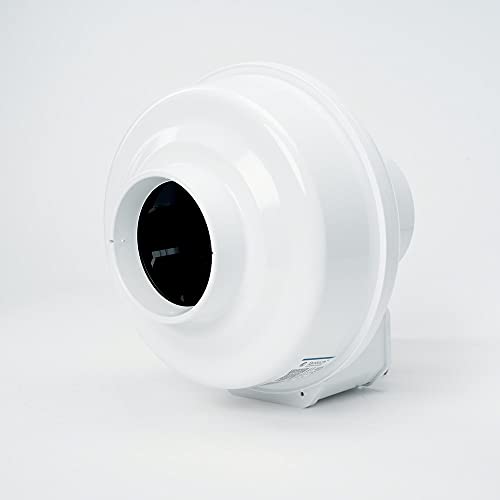 Fantech Rn2 Radon Fan Fantech Rn2 Radon Fan | Quiet operation; energy-efficient. | Amazon — $153.46 |
 Radon U-Tube Manometer Radon U-Tube Manometer | Confirms the system is pulling suction. | Amazon — $14.99 |