Radon.mitigation System: What Homeowners Need to Know
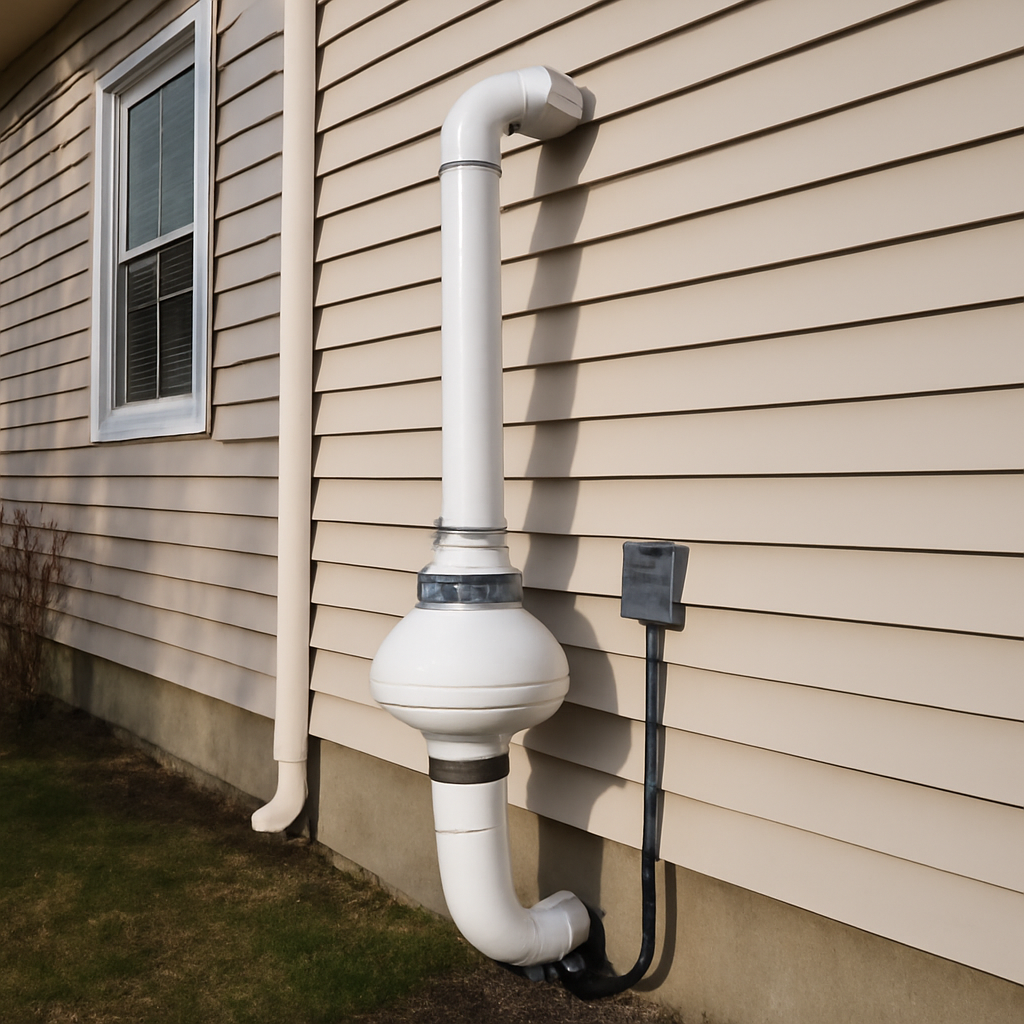
Search queries for radon hardware often arrive with stray punctuation — “radon.mitigation system”, “radon-mitigation system”, or “radon mitigation system” all describe the same equipment: a sub-slab depressurization (SSD) assembly that pulls radon-laden air from beneath a home’s foundation and vents it above the roofline before it can accumulate indoors. The period between “radon” and “mitigation” is almost always a typo or autocorrect artifact from voice search or mobile keyboards, and it does not change the underlying answer. This guide summarizes EPA and CDC guidance current as of 2026 — consult a certified radon professional for testing and your physician for symptom evaluation. Front Range homeowners in Denver, Douglas, and Jefferson counties sit inside EPA Zone 1, where average indoor radon levels exceed the 4.0 pCi/L action threshold and properly engineered mitigation matters most.
Part of our Radon Mitigation Systems guide — start there for the full picture →
What a radon.mitigation system actually is
A residential radon.mitigation system is a sealed depressurization assembly that creates a small zone of negative pressure under the concrete slab, intercepts radon before it migrates upward through cracks and utility penetrations, and pushes the gas outside through a dedicated vent stack. The Environmental Protection Agency codified this approach in its Radon Mitigation Standard ASD-1995, and the National Radon Proficiency Program (NRPP) certifies the contractors who install it. The standard physical footprint is modest: a single suction point through the basement floor, three to four inches of PVC piping running up an interior wall or chase, an inline fan mounted in the attic or outside, and a u-tube manometer near the basement that confirms the system is pulling vacuum.
Homeowners sometimes expect a large piece of equipment. The reality is closer to a discreet vent stack that looks like a plumbing riser. Most of the engineering happens out of sight under the slab and inside the gravel layer the system depressurizes. EPA materials on consumer radon basics describe the same baseline configuration.
The five components that make the system work
Sub-slab depressurization breaks down into five interdependent parts. Missing or undersized any one of them and the assembly underperforms.
Suction point
A 4 to 6 inch hole is cored through the basement slab — usually near an interior wall to keep the pipe routing clean. The installer then excavates roughly five gallons of sub-slab material to create a small pit, which gives the system room to pull air uniformly across the gravel bed below.
Sub-slab gravel
Most Colorado homes built after the 1980s sit on four to six inches of clean, washed gravel beneath the slab. That gravel is the air-distribution medium — it lets the suction point draw radon-laden soil gas from a wide footprint rather than just the area directly under the pipe. Pre-1980 homes without a proper gravel bed sometimes need a second suction point to compensate.
Perforated PVC riser pipe
Schedule 40 PVC, typically 3 inch or 4 inch diameter, rises from the suction point through the conditioned envelope of the house, up through a closet or chase, and exits through the roof. The portion of pipe inside the suction pit is often perforated to maximize intake area. Joints are sealed with PVC primer and cement so the system holds vacuum end to end.
Inline fan
A continuous-duty radon fan — common brands include RadonAway and Festa Radon — sits in the attic or on the exterior of the home, never in the conditioned living space. Fans pull between 50 and 220 cubic feet per minute depending on sub-slab tightness. The fan must be mounted above the highest living level so that any leak in the discharge pipe pushes radon outward, not into the house. RadonAway publishes a typical fan service life of 5 to 10 years.
U-tube manometer and exhaust above the roofline
A small u-tube manometer mounted on the riser pipe shows the differential pressure the fan is generating — usually somewhere between 0.5 and 2.0 inches of water column. When the two columns of fluid sit at equal heights, the fan has failed. The exhaust must terminate at least 12 inches above the roof surface and 10 feet from any window, door, or air intake, per EPA siting guidance.
How much a radon.mitigation system costs in Colorado
Front Range pricing for a standard SSD installation in a single-family basement home runs between $1,000 and $2,500 as of 2026, with most quotes clustering between $1,400 and $1,900. The lower end covers a straightforward basement with an accessible interior chase and one suction point. The higher end reflects crawl-space encapsulation, multiple suction points, finished-basement complications, or long exterior runs that require painted PVC.
Cost drivers that push a quote upward include: a finished basement where the installer must work around drywall and trim, a slab-on-grade ranch home that requires exterior routing, a slab-over-crawl mixed foundation, sub-slab soil that’s too tight to depressurize from a single point, or aesthetic requests like routing the vent stack through a hidden chase rather than down an exterior wall. The Colorado Department of Public Health and Environment radon program publishes a list of certified mitigators by county and a public guidance document on what a fair quote should include.
How an installer designs your specific system
A licensed mitigator walks the house before quoting. The walk-through typically includes a foundation type survey, a check of basement floor cracks and the sump cover, a review of HVAC return locations, and a quick visual on roof and exterior wall routing options. The installer also notes whether the home has a passive radon stack from new-construction code compliance — if it does, retrofitting an active system is significantly cheaper because the riser pipe is already in place and only a fan and manometer need to be added.
For homes without a pre-roughed passive stack, the installer chooses the suction-point location based on where the slab can be cored cleanly and where the riser pipe can travel vertically with minimum horizontal offset. Each horizontal section reduces fan efficiency by introducing static pressure losses, so a clean vertical run matters. A short walkthrough of the radon testing pillar for Front Range homeowners covers what to test for both before and after install.
Why active SSD beats passive and other approaches
Passive sub-slab depressurization — where the stack relies on thermal stack effect alone, without a fan — typically reduces radon by 30 to 50 percent. Active SSD with a properly sized fan reduces radon by 80 to 99 percent and consistently brings homes below the 4.0 pCi/L EPA action level. The EPA Consumer’s Guide to Radon Reduction compares mitigation method effectiveness across slab, crawl, and basement foundations.
Approaches like sealing cracks alone, increasing ventilation, or installing HRV units rarely hit the same reduction targets in Colorado’s tight modern homes. Sealing helps but addresses only a fraction of the pathway. HRV dilution is appropriate for crawl spaces where SSD cannot be used, but it costs more and consumes more energy over the system’s life. A condensed view of mitigation approaches by foundation lives in the cluster on radon mitigation techniques by foundation.
Post-installation testing and ongoing checks
EPA protocol requires a post-mitigation radon test no sooner than 24 hours after the system has been running, and most contractors return at the four-week mark to deploy a continuous radon monitor and confirm the system is holding levels below 4.0 pCi/L. The CDC summarizes the post-mitigation verification step in its general radon overview.
Beyond that first post-test, the manometer becomes the daily indicator. Homeowners glance at it once a month and confirm the fluid columns are still offset. A fan that fails silently is the most common reason a mitigated home creeps back over 4.0 pCi/L, and a $30 manometer is the cheapest insurance against missing that failure. Most mitigators recommend retesting every two years even when the manometer reads correctly, since sub-slab conditions can shift over time. A complete view of the install-to-verification arc is in the full radon testing and mitigation workflow.
When to call a certified mitigator
Call a certified mitigator when any short-term test result lands above 4.0 pCi/L, when a long-term test averages above 2.7 pCi/L (the EPA “consider mitigation” threshold), or when a home is changing hands and the inspection-period radon test triggers a remediation contingency. NRPP and the National Radon Safety Board both maintain certification rosters. In Colorado, CDPHE publishes a separate state-level mitigator list with current credential status.
References
- Consumer’s Guide to Radon Reduction — U.S. Environmental Protection Agency
- CDC Radon Overview — Centers for Disease Control and Prevention
- Colorado Radon Program — Colorado Department of Public Health and Environment
- EPA Radon Topic Page — U.S. Environmental Protection Agency
Frequently asked questions
Is a radon.mitigation system the same as radon mitigation system?
Yes. The period between 'radon' and 'mitigation' is a typo or voice-search artifact. Both phrases describe the same sub-slab depressurization assembly that vents radon from below the foundation to above the roofline.
How long does a radon mitigation fan last?
RadonAway and similar manufacturers cite 5 to 10 years of continuous-duty service life. A failed fan is the most common reason a previously mitigated home creeps back above 4.0 pCi/L, which is why monthly manometer checks matter.
Will the system make my house drafty or cold?
No. A properly designed SSD system pulls air from beneath the slab — outside the conditioned envelope — not from inside the living space. Energy impact is limited to the fan's own electrical draw, typically 40 to 90 watts.
Do I need to retest after installation?
Yes. EPA protocol requires a post-mitigation test no sooner than 24 hours after startup. Most mitigators schedule a four-week continuous-monitor test to verify levels are below 4.0 pCi/L, then retest every two years.
Front Range homeowners weighing a radon mitigation install can connect with a vetted local inspector here for a pre-quote walkthrough and a second opinion on system design.
Radon mitigation fans & parts
If a sub-slab depressurization system is the fix, the inline fan is the heart of it. Match the fan to your soil and pipe diameter — or have a certified installer size it.
| Product | Why | Buy |
|---|---|---|
 RadonAway RP145 Inline Fan RadonAway RP145 Inline Fan | Common 4-in. SSD workhorse fan. | Amazon — $152.00 |
 Fantech Rn2 Radon Fan Fantech Rn2 Radon Fan | Quiet operation; energy-efficient. | Amazon — $154.03 |
 Radon U-Tube Manometer Radon U-Tube Manometer | Confirms the system is pulling suction. | Amazon — $8.95 |