Radon Testing in Littleton, Colorado | InspectandTest
Littleton sits in EPA Radon Zone 1, the agency’s highest-risk category, and the designation holds across all three counties the city spans: Arapahoe, Jefferson, and Douglas. From the brick homes near Historic Downtown to the finished-basement ranches in Ketring and the newer builds toward Ken Caryl, local soil releases radon readily, and a meaningful share of Littleton homes test at or above the 4 pCi/L action level. Radon is a colorless, odorless radioactive gas and the second-leading cause of lung cancer after smoking. This page explains how radon testing littleton homeowners should approach, why the local picture demands it, and what testing costs. This summary reflects EPA and CDPHE guidance current as of 2026; consult a certified professional for testing decisions.
Part of our Radon Levels guide — start there for the full picture →
Radon testing in Littleton: what to know
Radon testing measures the gas accumulated inside a home in picocuries per liter (pCi/L). The EPA recommends action at or above 4 pCi/L, and because Littleton lies in Zone 1, local homes frequently read at or above that line. Two houses on the same block can test very differently depending on foundation cracks, soil contact, and how hard the furnace pulls air, so the only way to know your number is to test your own home.
Short-term tests run 2 to 7 days and fit real-estate timelines; long-term tests run 90 days or more and average seasonal swings for a fuller exposure picture. For the underlying science and device types, our Front Range radon guide for Colorado homeowners walks through both approaches and what the readings mean.
Levels also change over time, so a clean test years ago does not guarantee a clean home now. Foundation settling opens new cracks, a basement remodel changes airflow, and a high-efficiency furnace alters the pressure that draws soil gas indoors. EPA guidance is to retest every couple of years and after any major change. A Littleton household that finished a basement since the last test should measure again rather than trust an outdated number.
Why Littleton homes need radon testing
Geology is the driver. Radon comes from the natural decay of uranium in soil and rock, and Front Range formations across Arapahoe, Jefferson, and Douglas counties release it readily. Littleton’s mix of mid-century ranches and later tract homes commonly includes finished basements, which put living space in direct contact with soil where radon enters through slab cracks, control joints, and sump openings.
Climate concentrates it. Colorado winters keep homes sealed for months, and furnaces create slight negative pressure that pulls soil gas indoors. Finished basements in Ketring, Highland, and Columbine are exactly the lower-level rooms where families spend time and where radon collects. Even the tightly built newer homes toward Ken Caryl, prized for efficiency, trap radon more effectively once it enters because air exchange with the outdoors is limited.
The finished-basement pattern is what makes radon a genuine occupancy concern in Littleton rather than an abstract one. A basement bedroom, office, or playroom is both the lowest, most soil-contacted space and a place where people spend hours daily. That combination of maximum soil contact and maximum time is the worst case for radon exposure, which is why testing the lowest livable level matters so much in a Zone 1 city.
Littleton’s spread across three counties does not soften the picture. Arapahoe, Jefferson, and Douglas counties all carry elevated radon potential, and Douglas County in particular ranks among Colorado’s highest. A home on the Douglas County side of Littleton near Highlands Ranch sits on the same radon-prone geology that produces high readings throughout that county, so the part of town a home occupies offers no reassurance. The only reliable information is a test of that specific home.
It also helps to understand that radon is seasonal. Winter readings tend to run higher than summer readings because homes stay sealed and furnaces run, pulling soil gas indoors. A short-term test in July might understate a Littleton home’s true annual exposure, which is one reason a long-term test, or a winter short-term test, gives a fuller picture for a homeowner deciding whether to mitigate. For a real-estate transaction, the standard short-term test under closed-house conditions remains the accepted approach regardless of season.
What a Littleton radon test covers
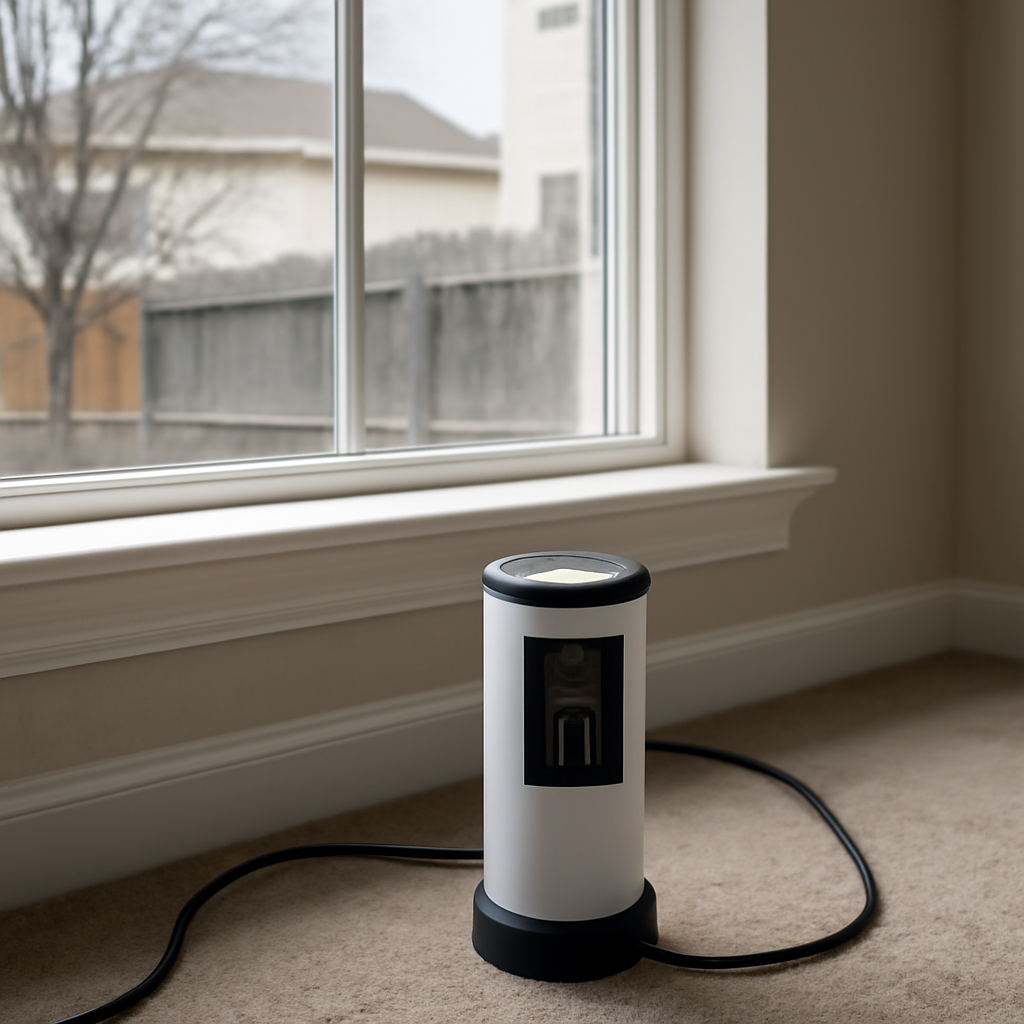
A professional test places a calibrated continuous radon monitor or a passive device in the lowest livable level, usually a finished basement or ground-floor room, under closed-house conditions. The tester documents placement and the closed-house window so the result holds up if it feeds a real-estate negotiation.
Closed-house conditions
For at least 12 hours before and during a short-term test, windows and exterior doors stay closed except for normal entry. This keeps a breezy Colorado day from artificially lowering the reading. If a test comes back at or above 4 pCi/L, the next step is mitigation, covered in our guide to radon mitigation in Littleton.
Continuous monitors versus passive kits
A continuous radon monitor logs hourly readings, so it can show whether someone opened a window mid-test or whether levels spiked overnight, evidence that protects a buyer from a tampered result. Passive devices like charcoal canisters average exposure and mail to a lab at lower cost. For a Littleton home sale, the continuous monitor’s tamper detection and hour-by-hour record make it the preferred tool. For a homeowner’s own long-term picture, a passive kit left in place for months gives a more representative annual average.
Radon testing cost in Littleton
A professional short-term radon test in the Littleton market typically runs about $135 to $250. A do-it-yourself kit costs roughly $15 to $40 plus lab fees, and CDPHE periodically offers discounted kits to Colorado residents. Bundled into a pre-purchase home inspection, radon testing often adds just $100 to $175 instead of a separate trip charge.
Long-term kits sit at the low end on price but tie up months, so for a transaction the documented short-term professional test is standard because it fits inspection deadlines and produces a defensible closed-house result.
Weigh the cost against the protection. The EPA links thousands of lung-cancer deaths a year to radon, and Littleton’s Zone 1 status puts local exposure among the highest in the state. A $200 test that catches a 7 pCi/L finished-basement reading lets a family install a roughly $1,500 mitigation system and cut exposure by 90 percent or more. Skipping the test leaves the risk invisible for as long as the family lives there.
Where to place the device
Placement determines whether the result reflects real exposure. The device belongs in the lowest level that is or could become living space, set about 20 inches or more above the floor, away from exterior walls, drafts, direct sun, and sumps or floor drains. In a typical Littleton ranch that means the finished basement family room rather than an unfinished mechanical corner. Testing a space no one occupies understates the exposure a family actually experiences.
Colorado regulations and disclosure
Colorado requires radon disclosure in residential real-estate transactions, and the Seller’s Property Disclosure asks sellers to report known radon results and any existing mitigation system. CDPHE runs the state radon program, references the 4 pCi/L EPA action level, and offers discounted kits to residents. Colorado does not license home inspectors, so for any test tied to a sale, confirm the tester follows recognized national measurement protocols rather than assuming a license guarantees competence.
Disclosure shapes negotiations both ways. A seller who has tested and mitigated can offer a clean post-mitigation result as reassurance, while a seller who has never tested leaves the buyer to discover the number during the contingency, often resulting in a mitigation credit. Buyers in Zone 1 Littleton should not waive radon testing to sweeten an offer.
Neighborhoods and areas served
Radon turns up across Littleton regardless of neighborhood: finished-basement ranches in Ketring, Highland, and Columbine, the older housing near Historic Downtown, and newer tightly built homes toward Ken Caryl. Service typically extends to adjacent Ken Caryl, Columbine, Highlands Ranch, and Centennial, all within the same Zone 1 footprint where elevated readings are common.
Because Littleton spans Arapahoe, Jefferson, and Douglas counties, the regional geology that drives radon is consistent across the whole city; the Zone 1 designation does not stop at a county line. Wherever a home sits within Littleton, treating radon as a default test rather than an optional add-on reflects the reality that the entire city sits in the highest EPA risk zone.
How to choose a Littleton radon testing provider
Ask whether the provider uses a calibrated continuous radon monitor and follows EPA or AARST protocols. A good tester documents closed-house conditions, device placement, and test duration so the result stands up in a sale. Bundling radon with a full home inspection in Littleton is efficient and gives buyers one coordinated report on both the structure and the soil-gas risk.
Confirm the monitor’s calibration is current and, for a purchase, ask the provider to place and retrieve the device themselves rather than handing you a kit, since a tester-administered continuous monitor carries far more weight in a negotiation. If a result comes back borderline, between 2 and 4 pCi/L, a competent provider explains your options, including a follow-up long-term test, rather than pushing an unnecessary mitigation sale.
For homeowners not in a transaction, a CDPHE discounted long-term kit is a low-cost way to get a representative annual average and a reasonable first step before deciding whether to bring in a professional. Either path beats not testing at all, since every Littleton home sits in Zone 1 and the only way to know your number is to measure it.
Be wary of a few common mistakes that undermine a test. Placing a DIY kit in an unfinished crawl space rather than the lowest livable room, opening windows during a warm spell mid-test, or running a whole-house fan all distort the result, usually downward, which can give false reassurance. A homeowner who follows the kit instructions exactly, or hires a professional who controls these variables, gets a number they can trust. A sloppy test that reads low is arguably worse than no test, because it can talk a family out of mitigation they actually need.
Re-testing matters even for homes that already read low. A Littleton home that tested at 2 pCi/L five years ago could read higher today if the foundation settled, a basement was finished, or the heating system changed. EPA guidance to re-test every couple of years exists precisely because radon is not a one-time measurement. Households that finished a lower level for a growing family, common in Littleton’s family-oriented neighborhoods, have a specific reason to measure again after the remodel.
References
- Radon risk and EPA zone maps — U.S. Environmental Protection Agency
- Colorado radon program and kits — Colorado Department of Public Health and Environment
- Radon and lung cancer — Centers for Disease Control and Prevention
Frequently asked questions
Is Littleton in a high radon zone?
Yes. Littleton sits in EPA Radon Zone 1, the highest-risk category, across all three counties it spans: Arapahoe, Jefferson, and Douglas. Every home, especially those with finished basements, should be tested.
What radon level requires action in Littleton?
The EPA action level is 4 pCi/L. At or above that reading, EPA and CDPHE recommend mitigation. Levels between 2 and 4 pCi/L are still worth considering for reduction.
How much does a radon test cost in Littleton?
A professional short-term test typically runs $135 to $250, while DIY kits cost about $15 to $40 plus lab fees. CDPHE periodically offers discounted kits to Colorado residents.
Why do Littleton's finished basements matter for radon?
Finished basements put living space in direct contact with soil, where radon enters through slab cracks and sump openings, and they are where families spend time, so radon concentrates exactly where occupancy is highest.
Every Littleton home sits in EPA Zone 1, so radon testing is basic due diligence, not optional. To connect with a vetted local tester before your purchase deadline or this heating season, get in touch through our contact page.
Test your home for radon
Radon is invisible and odorless, so a test is the only way to know your level. A short-term kit gives a first reading in days; a digital monitor tracks it over time.
| Product | Why | Buy |
|---|---|---|
 AirChek Charcoal Radon Test Kit | Lab fee usually included; EPA short-term protocol. | Amazon — $21.95 |
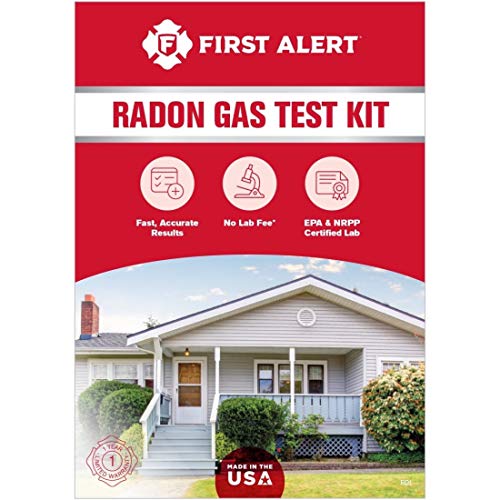 First Alert RD1 Radon Test Kit | Widely stocked; 48-hour charcoal test. | Amazon — $17.95 |
 Airthings Corentium Home | Digital monitor with a long-term average. | Amazon — $99.99 |