Lead Testing in Littleton, Colorado | InspectandTest
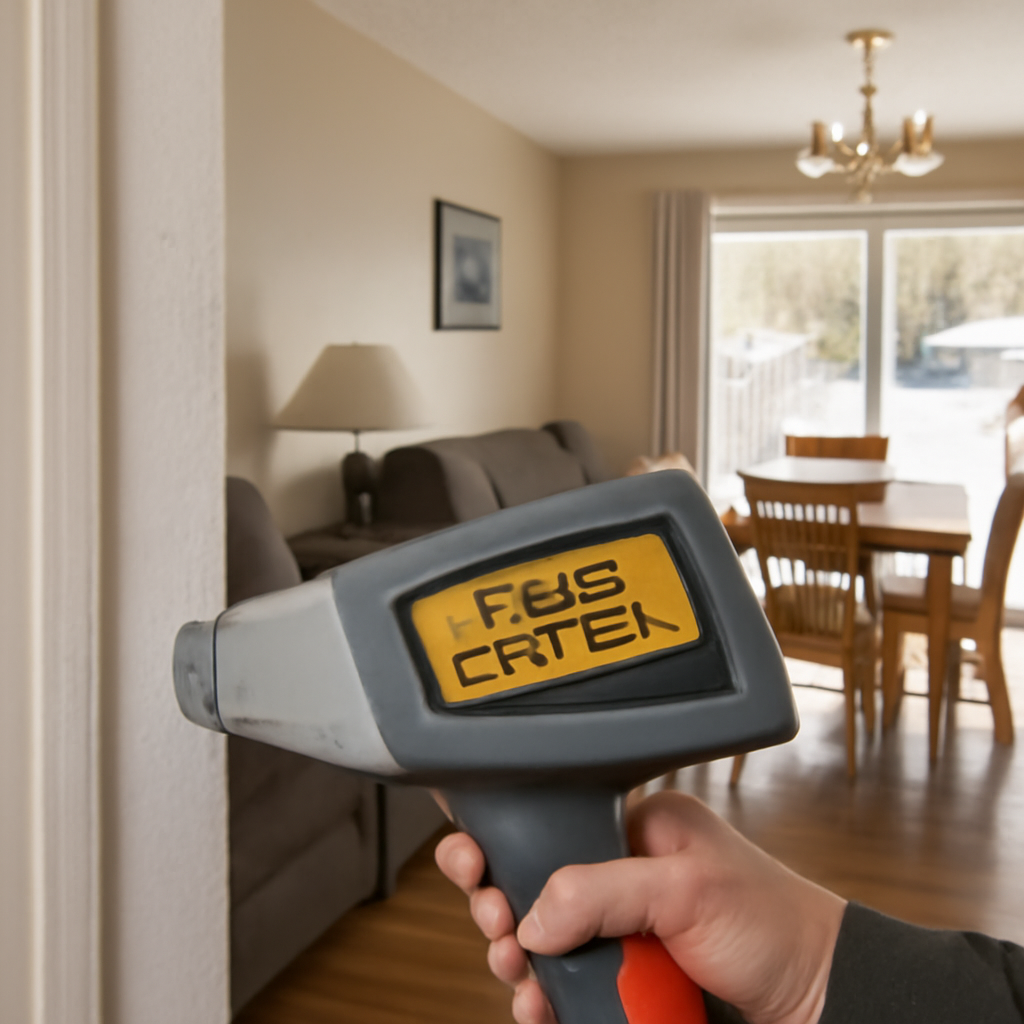
The pre-1978 Victorian and brick homes around Littleton’s Historic Downtown are prime candidates for lead paint, the hazard the federal government banned from residential use in 1978. Homes built before that date often have lead-based paint on original trim, windows, doors, and porches, and lead can also reach a home through older service lines and plumbing solder. Lead testing littleton families arrange protects young children, who are most vulnerable to lead’s effects on development. This page summarizes EPA, CDC, and HUD guidance current as of 2026; consult your physician for blood-lead concerns and an accredited professional for testing decisions.
Asbestos or biohazard concern? Speak with a certified contractor.
📞 Call (877) 742-8496Lead testing in Littleton: what to know
Lead testing covers two common pathways: lead-based paint on surfaces and lead in drinking water. Paint testing identifies lead in the coatings on walls, trim, and exterior surfaces, while water testing measures lead that dissolves from service lines, solder, or fixtures. The two are separate tests with separate methods, and an older Littleton home may warrant both.
The risk is greatest where paint is deteriorating or disturbed. Intact, well-maintained lead paint poses little hazard, but peeling, chipping, or sanding it during a renovation creates lead dust that children can ingest. For the broader context on lead in older housing, our guide to asbestos and lead in pre-1978 homes explains where the hazard concentrates and why.
Testing decisions follow age and occupancy. A Historic Downtown home built before 1978 with young children, a pregnant resident, or a planned renovation has a strong case for paint testing, and any home where tap water taste or old plumbing raises concern is a candidate for a water test.
Why Littleton homes need lead testing
The 1978 ban is the dividing line, and Littleton’s oldest neighborhoods sit on the wrong side of it. The Victorian and brick homes near Historic Downtown and Main Street commonly retain original lead-painted trim, double-hung windows, and porch surfaces. Window sashes are a particular concern because the friction of opening and closing grinds lead paint into dust that settles on sills and floors where small children play.
Renovation is the main trigger that turns stable paint into a hazard. Buyers restoring period homes around Historic Downtown often strip trim, replace windows, and sand surfaces, and doing that without testing and lead-safe work practices spreads dust through the home. Mid-century ranches in Ketring and Highland, built before 1978, carry the same paint risk on original surfaces even if they look more modern.
Water adds a second pathway. Older homes may still have lead solder in copper plumbing or, less commonly, a lead service line, and lead leaches more readily into water that sits in pipes overnight. A Littleton family in a pre-1978 home concerned about a child’s exposure benefits from testing both the paint and the tap water rather than assuming one source is the only risk.
The most exposed members of a household are the youngest. Infants and toddlers crawl on floors where lead dust settles, put hands and objects in their mouths, and absorb lead more readily than adults. In a pre-1978 Littleton home with original windows, the sill is often within a small child’s reach and is exactly where friction-generated lead dust accumulates. That is why families with young children, or those planning to have them, have the strongest reason to test an older home before moving in or before sanding any painted surface.
Soil is an overlooked pathway in older neighborhoods. Decades of weathering and past scraping of exterior lead paint can leave elevated lead in the soil ringing an older Littleton home’s foundation and along drip lines. Children who play in bare-dirt yard areas can ingest that soil, and gardeners can track it indoors. A lead risk assessment of a Historic Downtown property sometimes includes soil sampling near the foundation for exactly this reason, especially where the exterior paint is old and flaking.
Renovation is the single biggest trigger that turns stable lead into a hazard. A homeowner who dry-sands old window trim or demolishes painted plaster without containment can spread fine lead dust through the entire home and into the HVAC system, exposing the family far more than the intact paint ever did. Testing before that work, and using EPA Lead-Safe certified practices if a surface is positive, is the difference between a safe restoration and an unintentional contamination of a Littleton family’s living space.
What a Littleton lead test covers
A lead-paint assessment can take two forms. A certified risk assessor or inspector uses an XRF analyzer to read lead content in paint without damaging surfaces, or collects paint chips and dust-wipe samples for an accredited lab. A water test collects samples following a first-draw and flushed-draw protocol so the lab can identify whether lead is leaching from the plumbing.
Paint, dust, and soil
An inspection of an older Littleton home targets the highest-risk surfaces: window sills and wells, door frames, trim, stair rails, and exterior porches. Dust-wipe samples from floors and sills reveal lead dust that is the main exposure route for children. Soil near the foundation can also carry lead from decades of weathered exterior paint.
Water testing
For drinking water, the protocol matters. A first-draw sample after water has sat in the pipes overnight captures the worst case, and a flushed sample shows the difference after running the tap. Comparing the two helps pinpoint whether the lead source is the home’s plumbing or the service line. Our guidance on testing for lead in water walks through the sampling steps.
Lead testing cost in Littleton
A professional lead-paint inspection or risk assessment in the Littleton market typically runs about $300 to $700 depending on home size and the number of surfaces and dust-wipe samples. A simpler XRF screening of a few surfaces costs less. A lead-in-water lab test generally runs about $20 to $100 per sample, and DIY paint swab kits are inexpensive but only screen, they do not quantify lead the way a lab or XRF reading does.
That cost protects against a serious, irreversible harm. Childhood lead exposure can affect brain development, and the CDC stresses that no level of lead in a child’s blood is considered safe. Spending a few hundred dollars to identify lead hazards in a Historic Downtown home before a child is exposed, or before a renovation spreads dust, is inexpensive insurance against a lifelong consequence.
For a renovation, test before the work and budget for lead-safe practices if paint tests positive. Containing dust, using HEPA cleanup, and hiring an EPA Lead-Safe certified contractor for disturbance work adds modest cost but prevents the far larger cost of contaminating the home and exposing the family.
Colorado regulations and disclosure
Federal law requires sellers and landlords of pre-1978 housing to disclose known lead-based paint and provide the EPA’s lead-hazard pamphlet, and that applies directly to Littleton’s older homes. The federal Renovation, Repair, and Painting (RRP) rule requires contractors disturbing lead paint in pre-1978 homes to be certified and follow lead-safe work practices.
Colorado’s Seller’s Property Disclosure also asks sellers to report known lead hazards. For a Littleton buyer of a pre-1978 home, the federal disclosure and a 10-day inspection opportunity provide a window to test before committing. A documented lead inspection, positive or negative, gives both parties clear information and protects the seller from later disputes.
Neighborhoods and areas served
Lead risk in Littleton tracks the housing age. The pre-1978 Victorian and brick homes around Historic Downtown and Main Street top the list, with original windows and trim as the main concern. Mid-century ranches in Ketring, Highland, and Columbine, also built before 1978, carry lead paint on original surfaces. Newer homes toward Ken Caryl built after the ban are largely clear of lead-paint risk, though water-pathway questions can still apply in any home with older plumbing.
Service typically extends to adjacent Ken Caryl, Columbine, Highlands Ranch, and Centennial. Because lead and asbestos both concentrate in the same pre-1978 stock, Littleton homeowners often test for both before a renovation; our coverage of asbestos testing in Littleton addresses the companion hazard.
Renters and landlords in Littleton’s older neighborhoods have their own stake in lead testing. Federal law requires landlords of pre-1978 housing to disclose known lead-based paint to tenants and provide the EPA pamphlet, and a landlord who renovates a rental must follow lead-safe work practices. For families renting an older Historic Downtown home with young children, requesting any available lead-paint records and watching for deteriorating paint on windows and trim is a sensible precaution. A documented lead assessment protects a landlord from liability and gives renting families the information they need to keep children safe.
How to choose a Littleton lead testing provider
Hire an EPA or state-certified lead inspector or risk assessor for paint, and use an accredited lab for water samples. Certification matters because lead assessment is federally regulated, and a certified professional uses calibrated XRF equipment or proper sampling to produce a defensible result rather than a guess.
Ask whether you need a lead inspection, which identifies where lead is present, or a risk assessment, which evaluates hazards and recommends controls. For a family with young children, the risk assessment is often more useful because it prioritizes actual exposure routes like deteriorating window paint. Confirm the provider explains lead-safe practices for any renovation rather than only handing over a lab number.
For a home purchase, schedule the lead inspection within the disclosure window so results inform the decision. A provider who coordinates with the broader inspection timeline and explains both paint and water pathways gives a Littleton family the full picture before they buy or renovate.
It helps to understand what a positive result does and does not mean. Finding lead paint in a pre-1978 Littleton home is common and not, by itself, a reason to panic or to walk away from a purchase. Intact lead paint that is well maintained can be managed safely, and the practical question is whether the home has deteriorating paint, lead dust on floors and sills, or a planned renovation that will disturb painted surfaces. A risk assessment answers that question and produces a control plan, which might be as simple as specialized cleaning, repainting with encapsulating coatings, and replacing the highest-friction components like old windows.
For families who cannot test immediately, interim steps reduce exposure. Wet-wiping window sills and floors with a household cleaner, keeping children from chewing on painted surfaces, washing hands and toys frequently, and leaving deteriorating paint undisturbed until it can be addressed all lower the immediate risk in a pre-1978 Littleton home. These are stopgaps, not substitutes for testing and proper hazard control, but they matter for a family living in an older home while arranging a professional assessment. The CDC emphasizes that reducing a child’s contact with lead dust is the most direct protective measure.
References
- Lead in paint, dust, and soil — U.S. Environmental Protection Agency
- Childhood lead poisoning prevention — Centers for Disease Control and Prevention
- Lead-based paint disclosure and safety — U.S. Department of Housing and Urban Development
If you have young children in a pre-1978 Littleton home or are planning to restore a Historic Downtown property, test before you sand. Reach out through our contact page to connect with a vetted local lead inspector.