Testing for Lead in Water: A Homeowner’s Guide
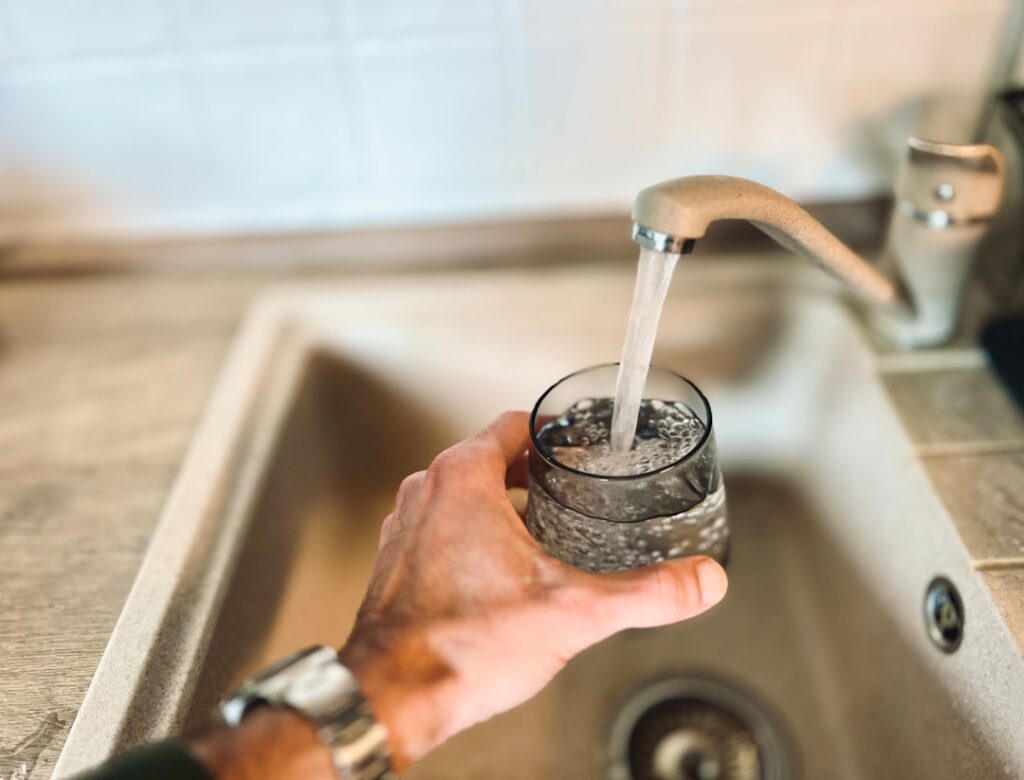
Lead does not change the color, smell, or taste of tap water, so the only reliable way to know whether it is present is to measure it. Homes built before 1986 are the most likely candidates, because lead service lines, lead solder on copper joints, and brass fixtures all leached metal into household plumbing for decades. Testing for lead in water gives families a concrete number instead of a guess, and that number drives every decision that follows. This guide summarizes EPA and CDC guidance current as of 2026; it is educational and not a substitute for a certified laboratory analysis or medical advice from your physician.
Asbestos or biohazard concern? Speak with a certified contractor.
📞 Call (877) 742-8496Why You Cannot See, Smell, or Taste Lead in Water
Lead enters drinking water through corrosion. When water sits in pipes or fixtures that contain lead, small amounts dissolve into it, and the longer the water sits, the higher the concentration can climb. Because lead is colorless and tasteless at the levels found in homes, sensory checks are useless. A household can have a serious problem and never notice anything unusual at the tap.
The risk is driven mostly by plumbing age and materials, not by the city’s source water. Many municipal systems deliver lead-free water that picks up contamination only inside private plumbing. That distinction matters: a utility’s annual report tells you about the distribution system, while a home test tells you what actually comes out of your kitchen faucet.
Children under six and pregnant women face the highest stakes. The CDC notes that no safe blood lead level in children has been identified, so reducing exposure is always worthwhile. Lead exposure in young children is linked to lowered IQ, attention problems, and developmental delays, which is the practical reason families with young kids treat water testing as a priority rather than an afterthought. The effects are cumulative and often silent, building over months before anyone suspects a problem.
Which Homes Are Most Likely to Have a Problem
Three plumbing features raise concern. Lead service lines, the pipe connecting the water main to the house, were common before the mid-1980s. Lead-based solder used to join copper pipe was widely sold until the 1986 federal ban took effect. And older brass faucets and valves could legally contain meaningful lead until plumbing standards tightened in 2014, when the definition of “lead-free” was lowered to a weighted average of 0.25 percent.
Front Range homeowners in older Denver, Boulder, and Pueblo neighborhoods should pay particular attention, since housing stock there often predates the solder ban. Newer subdivisions in Douglas or Elbert County are far less likely to carry lead plumbing, though a home test is the only way to confirm. The age of the house is the single most useful screening clue, but it is not decisive, because a previous owner may have replaced or added plumbing at any point.
If you are also investigating other legacy hazards, our overview of asbestos and lead in pre-1978 housing explains how these risks cluster in the same era of construction. The same decades that produced lead plumbing also produced lead paint and asbestos building materials, so an older home often warrants a broader look than water alone.
Identifying a Lead Service Line
You can often check the service line yourself where it enters the basement or crawl space. Scratch the pipe with a coin: lead is dull gray and turns shiny silver when scratched, and a magnet will not stick to it. Copper looks like a penny, and galvanized steel is silver-gray but holds a magnet. If you are unsure, photograph the pipe and ask your water utility, which may keep service-line records. Many utilities are now mapping lead service lines as part of federal inventory requirements, so your provider may already know what material serves your address.
At-Home Lead Test Kits vs. Certified Lab Analysis
Two main paths exist. Instant swab or strip kits give a quick color result, and mail-in kits send a water sample to a laboratory for precise measurement. They serve different purposes, and confusing them leads to false reassurance.
Swab kits, including products discussed in our guide to lead swabs and how homeowners use them, are designed mainly for paint and surface screening, not for the low concentrations that matter in water. A strip that reacts at parts-per-million levels will miss the parts-per-billion concentrations that trigger health concern in drinking water. For drinking water, the EPA recommends sending a sample to a certified laboratory, because labs can detect lead down to single-digit parts per billion, far below what any consumer strip can register.
Mail-in lab kits cost more, typically in the range a homeowner might pay for a single professional service call, but they return a documented number you can act on. That documentation matters if you later negotiate a repair with a landlord or a home seller, because a self-administered strip carries little weight in a dispute while an accredited lab report does.
Choosing a Certified Laboratory
Not every lab is qualified to analyze drinking water. Look for a laboratory certified by your state for drinking-water analysis; many state health departments publish lists of certified labs. The kit you buy should include a pre-labeled sample bottle, detailed collection instructions, and a chain-of-custody form. If the kit does not specify a certified lab and a measured result in parts per billion, treat it as a screening tool only.
How to Collect a Water Sample Correctly
Lab results are only as good as the sample. The standard method is a “first-draw” sample, collected after water has sat motionless in the pipes for at least six hours, usually first thing in the morning. This captures the worst-case concentration because the water has had maximum contact time with any lead in the plumbing.
- Do not run any tap in the house for six to eight hours before sampling.
- Remove the faucet aerator only if the lab instructs you to; otherwise leave it in place.
- Fill the supplied bottle slowly from the cold tap without flushing first.
- Label the bottle, complete the chain-of-custody form, and mail it the same day.
Some labs also request a “flushed” sample taken after running the tap for a minute or two. Comparing the two readings shows whether the lead is coming from the home’s fixtures and lines or from somewhere upstream. A high first-draw paired with a low flushed sample points to fixtures and interior plumbing, while elevated lead in both can indicate a lead service line or a problem closer to the main.
Reading Your Results: Action Levels and Limits
The EPA’s action level for lead in public water systems is 15 parts per billion (ppb), and the agency’s long-term public-health goal is zero, reflecting the fact that lead has no known safe exposure threshold. A home result below 15 ppb does not mean the water is risk-free; it means it falls below the regulatory trigger for utility action.
Treat any detectable lead as a reason to reduce exposure, especially in a household with infants or a pregnant resident. Results in the single digits warrant simple precautions, while readings well above 15 ppb justify a faster, more aggressive response such as filtration or pipe replacement. Keep your lab report; if you later install a filter or replace plumbing, a follow-up test documents the improvement and confirms the fix worked.
What to Do If Your Water Tests Positive
A positive result is manageable. Start with interim steps and move toward a permanent fix as your budget allows. Panic is not warranted, but neither is ignoring the number.
Immediate Interim Steps
Flush the tap for 30 seconds to two minutes before drinking, since fresh water from the main carries less lead than water that sat overnight. Use only cold water for drinking, cooking, and mixing formula, because hot water dissolves lead more readily. Clean faucet aerators regularly to remove trapped particles, which can accumulate lead-bearing sediment. These steps cost nothing and meaningfully reduce exposure while you plan a permanent solution.
Filtration and Pipe Replacement
Choose a filter certified to NSF/ANSI Standard 53 for lead reduction; both pitcher and under-sink models qualify. Our practical look at choosing a filter for lead in water walks through certification labels and maintenance. Replace cartridges on schedule, because a spent filter loses its lead-reduction capacity and can give a false sense of safety. For a permanent solution, replacing a lead service line and any lead solder removes the source entirely. Many utilities run cost-sharing or full-replacement programs, so contact yours before paying out of pocket. Partial line replacement can temporarily worsen lead release, so full replacement is preferred where feasible.
Where Lead Comes From Besides Plumbing
Plumbing is the dominant source inside a home, but it is not the only one, and a complete picture helps you interpret a water result. Older fixtures with worn chrome plating can expose underlying leaded brass. Galvanized pipe installed downstream of a lead service line can trap and slowly release lead particles for years, even after the lead line is gone. And in rare cases, well water can carry naturally occurring lead, though that is far less common than plumbing-derived contamination.
This is why a single test reading is best understood alongside the home’s plumbing history. A modest result in a 1960s house with original galvanized pipe deserves the same caution as a higher result elsewhere, because the trapped-particle effect can cause readings to spike unpredictably. When in doubt, sequential sampling, taking several bottles in succession, helps a professional trace where the lead originates.
Lead in Water During a Home Purchase
Buyers of older homes increasingly fold a lead water test into their inspection contingency. A documented lab result before closing gives leverage: a seller may agree to replace a lead service line, install filtration, or credit the cost. Waiting until after closing shifts the entire expense and the negotiation disadvantage onto the new owner.
For Front Range buyers eyeing pre-1986 housing, pairing a water test with the broader inspection makes sense, since the same era often brings lead paint and other legacy concerns into the same transaction. A measured, paper-trail result is far more persuasive at the negotiating table than a vague worry about the home’s age.
Testing Frequency and Ongoing Monitoring
One test is a snapshot, not a guarantee. Lead release can change when the utility adjusts water chemistry, when new plumbing work disturbs old pipes, or when a home sits vacant and water stagnates. Retest after any plumbing work, after moving into an older home, and periodically if young children live there. If a filter is your control measure, a confirming test after installation verifies it is performing as labeled.
When to Call a Professional
Bring in a licensed plumber or a certified water-quality professional when results are high, when you cannot identify your service-line material, or when you are buying a pre-1986 home and want documentation before closing. A professional can perform sequential sampling to pinpoint the lead source and recommend whether filtration or replacement is the better value for your situation. During a real-estate transaction, a documented lab report carries far more weight than a self-administered strip test, and it gives buyers leverage to negotiate repairs before closing.
References
- Basic Information About Lead in Drinking Water — U.S. Environmental Protection Agency
- Lead in Drinking Water — Centers for Disease Control and Prevention
- Lead Hazard Control and Healthy Homes — U.S. Department of Housing and Urban Development
Front Range homeowners weighing a lead water test before a purchase, or after a worrying result, can connect with a vetted local inspector through our contact page for guidance on sampling and next steps.