Raccoon Removal: Signs, Safe Exclusion, Cleanup and Costs
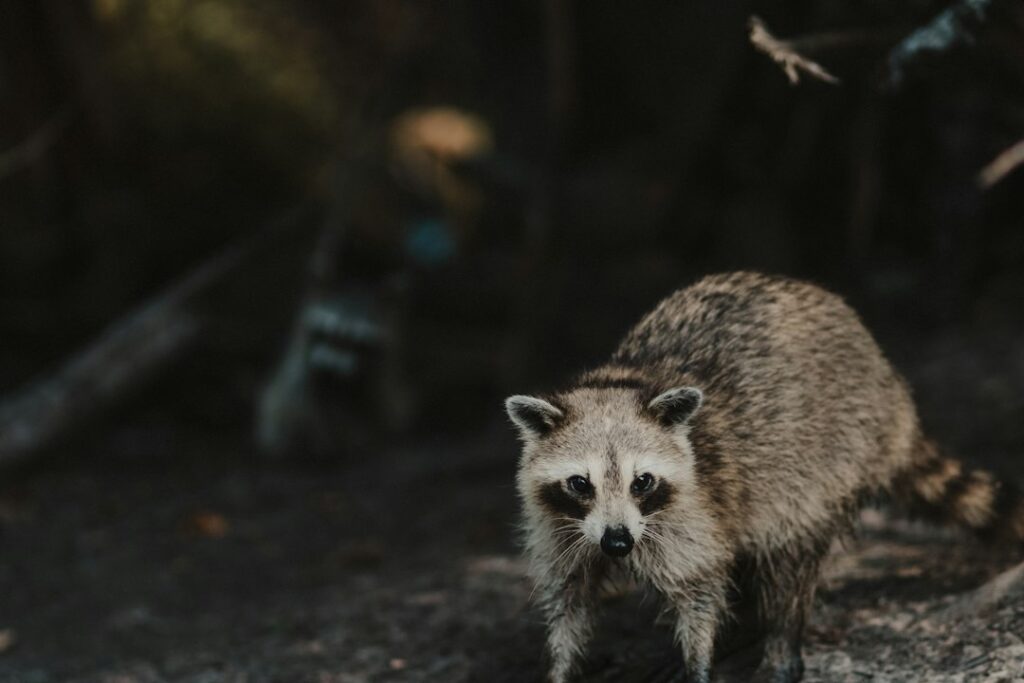
Raccoon removal is almost always a job for a licensed wildlife professional. The safe approach is to confirm the raccoon and any young, let them leave through a one-way exclusion door or have them removed under your state’s wildlife rules, then seal the entry, cap the chimney and clean the latrine with proper protection. Typical national pricing runs from several hundred dollars for a simple exclusion to a few thousand when there is roof damage and contaminated attic insulation.
Part of our Specialty Home Inspections guide — start there for the full picture →
Raccoons are strong, clever and persistent. They tear through soffits, roof vents and shingles rather than squeezing through small gaps, and a female looking for a den in spring will work hard to get back to her kits. They also carry real health risks. This guide covers how to confirm a raccoon problem, the dangers of rabies and raccoon roundworm, what a professional does step by step, what drives the cost and how to keep them out afterward. It summarizes CDC and USDA guidance current as of 2026; it is not medical or legal advice, and trapping rules come from your state wildlife agency.
Quick Reference: Raccoon Signs and What to Do
| Sign | What it usually means | What to do |
|---|---|---|
| Heavy thumping or walking overhead after dark | Adult raccoon using the attic as a den | Stay out of the attic; call a wildlife professional |
| Chirping, whimpering or chattering sounds, especially March through June | Kits in a nest | Do not seal any openings; the mother must be able to reach them |
| Torn soffit, bent roof vent, lifted shingles or ripped fascia | Forced entry point | Photograph it; have it inspected before patching |
| Noise inside a fireplace or chimney flue | Raccoon denning on the smoke shelf or damper | Close the damper and glass doors; do not light a fire |
| Piles of dark, tubular droppings in one spot on a roof, deck or attic floor | Raccoon latrine | Do not sweep; plan protected cleanup |
| Knocked-over trash, rolled-back sod, raided pet food | Raccoons feeding nearby | Secure food sources before they move in |
| Raccoon out in daylight acting confused, aggressive or unsteady | Possible illness, including rabies | Keep people and pets away; call animal control |
How to Confirm You Have a Raccoon
Several animals can make noise in an attic, so it is worth confirming the species before paying for a plan. Raccoons are the heaviest of the common attic animals. Their footsteps sound like a small dog or a person crawling, and activity peaks after dark, when they leave to feed, and again before dawn, when they return. Squirrels, by contrast, are busiest in daylight, and mice and rats make lighter, faster scratching sounds.
Look at the entry point
Raccoons rarely use a neat round hole. They pry and tear. Common entry points include:
- The corner where a lower roof meets a wall, called a roof return, where soffit panels are easy to pull loose
- Plastic or thin metal roof vents and turbine vents
- Gable vents with weak screening
- Open or damaged chimney flues without a cap
- Rotted fascia boards behind gutters
- Crawl-space vents and access doors near ground level
Muddy paw prints on siding, gutters or downspouts, and scratches on a tree trunk next to the roof, are good confirmation. Raccoon tracks look like small human handprints with five long fingers.
Look for a latrine
Raccoons tend to use the same spot repeatedly as a toilet. The CDC notes that raccoon feces can be found “on woodpiles, decks, rooftops, and in attics, garages, and haylofts” and describes them as dark and tubular with a pungent odor that is usually worse than dog or cat feces, often containing undigested seeds. A latrine is strong evidence, and it is also the most dangerous thing in the attic.
Use a simple activity test
Once the likely entry is found, a loose wad of newspaper or a light piece of cardboard stuffed into the hole shows whether something is pushing through at night. A trail camera aimed at the roofline is even better. Do not permanently seal the hole until you know nothing, especially young, is still inside.
Health and Safety Risks
Rabies
The CDC lists raccoons among the animals most frequently found with rabies in the United States, along with bats, skunks and foxes. Its prevention guidance is to keep your distance from wildlife, never approach animals that appear injured, sick or dead, and be especially cautious with animals usually active at night, such as raccoons, that are seen during the day. Call animal control for help rather than handling the animal. Anyone bitten or scratched should wash the wound and seek medical care immediately; post-exposure treatment is highly effective when started promptly. Keeping dogs and cats current on rabies vaccines protects them if they tangle with a raccoon in the yard.
Raccoon roundworm
Raccoons can carry Baylisascaris procyonis, a roundworm whose eggs pass in their feces. The CDC says infections in people are rare but can be severe when larvae invade the eyes, organs or brain, and that most cases involve children or others who accidentally swallow contaminated dirt or animal waste. A few facts from the CDC shape how latrines should be handled:
- Eggs are not visible to the naked eye and take at least two to four weeks to become infective, so prompt removal reduces risk.
- Most chemicals do not kill the eggs. Heat does, which is why the CDC suggests boiling water or a propane torch on soiled decks and patios, with fire safety precautions.
- For a homeowner who chooses to clean a latrine, the CDC recommends disposable gloves, an N95-rated respirator in confined spaces, lightly misting the area to keep dust down and boots that can be scrubbed or disposable booties.
- Contaminated material should be burned, buried or sent to a landfill, and clothes washed in hot water.
An attic latrine is a confined, dusty space with contaminated insulation, so many homeowners hand this part to a professional crew.
Physical danger and damage
A cornered raccoon, and especially a mother defending kits, will bite and scratch. They also chew wiring, tear ductwork, compress and soil insulation, and leave urine stains on ceilings. A raccoon inside a chimney can block the flue with nesting debris, which is a combustion safety issue the next time the fireplace or a vented appliance is used.
Mothers and Kits: Why Spring Timing Matters
Many raccoon calls happen in spring, when females look for a protected place to give birth. Attics and chimneys are ideal from a raccoon’s point of view: dry, warm and safe from predators. The kits are helpless for weeks and stay in the den until they can follow the mother outside.
That timing creates the most common DIY mistake. If a homeowner sees the mother leave at night and seals the hole behind her, the kits are trapped inside. The mother will often tear a new hole through the roof or soffit to reach them, causing more damage than the original entry. If she cannot get in, the kits die in the attic or chimney, leaving an odor problem that can last weeks and a carcass that has to be located and removed.
Professionals handle this in a few ways, depending on state rules and the situation:
- Locating the kits by hand and placing them in a warm box near the exclusion point so the mother can retrieve and move them
- Waiting until the kits are old enough to leave, then using a one-way exclusion door
- For chimneys, using a one-way exclusion device on the flue so the family can climb out but not back in
- Trapping where allowed, then reuniting or handling the animals as the state wildlife agency requires
Rules on trapping, relocating and euthanizing raccoons vary by state, and many states, Colorado included, restrict relocation of trapped animals. Check your state wildlife agency’s rules or confirm that your contractor follows them.
What a Professional Raccoon Removal Job Looks Like
- Inspection. The technician checks the full roofline, chimney, vents and soffits, and enters the attic to locate the den, latrine and any kits. The best reports include photos of every potential entry, because raccoons often test several weak spots.
- Plan and timing. The plan accounts for young, the season and the state’s rules on trapping.
- Exclusion or removal. A heavy-duty one-way door is mounted over the main entry, or traps are set where exclusion is not practical. Secondary weak points are reinforced first so the animal cannot simply tear in somewhere else.
- Confirmation. Return visits verify that no activity remains, often using cameras or a soft block at the entry.
- Permanent sealing. Openings are repaired with heavy-gauge galvanized mesh, metal flashing and solid wood. Torn soffit and fascia are rebuilt. Vents are replaced with heavier models or protected with steel guards.
- Chimney cap. Open flues get a properly sized, securely fastened cap with mesh. Our guide to chimney caps explains types and fit, and the guide to chimney cap replacement cost covers pricing.
- Cleanup. The latrine and soiled nesting are removed wet, using respirators. Surfaces are treated, and contaminated insulation is bagged and removed. Heavily soiled attics often need full attic insulation removal and new insulation.
- Warranty. A written warranty against re-entry at sealed points is standard among established companies.
Typical Raccoon Removal Costs
Every job is different, and regional labor rates vary. The figures below are a typical national range drawn from common contractor pricing; get 2 to 3 written quotes for your property.
| Item | Typical national range | What drives it |
|---|---|---|
| Inspection | Free to about $250 | Often credited toward the job |
| Exclusion or trapping (one animal, one entry) | About $400 to $1,000 | Roof height, return visits, state handling rules |
| Mother with kits | About $500 to $1,500 | Hand removal of kits, extra visits, timing |
| Chimney removal plus cap | About $300 to $1,000 | Flue size, cap type, roof access |
| Roof, soffit or vent repairs | About $200 to $2,000 or more | Extent of tearing, materials, rot found behind the damage |
| Latrine and attic cleanup | About $500 to $2,500 | Size of latrine, amount of soiled insulation |
| Full insulation replacement | About $1,500 to $5,000 or more | Attic size, insulation type and depth |
A single-story home with one clear entry and no kits sits at the low end. A two-story roof, several torn openings, kits in the attic and a latrine in the insulation can push the total well past the higher figures once repairs are included. Many homeowners policies exclude animal damage, although some cover sudden damage to the roof. Check your policy and talk to your agent before work starts, and keep photos and invoices either way.
What Homeowners Can Safely Do Before the Pro Arrives
Waiting a few days for an inspection is normal. A handful of steps reduce damage and risk in the meantime without making the situation worse.
- Close interior access. Keep the attic hatch shut and latched, close fireplace glass doors and the damper, and make sure any crawl-space access door is secured from the house side so the animal cannot wander into living areas.
- Keep pets and children away. Bring pets in at night, keep them out of the yard area under the entry point and do not let children play near a suspected latrine or a sandbox the raccoon may be using.
- Remove food. Bring in pet food, lock trash cans and take down bird feeders. A raccoon with an easy meal nearby has less reason to leave.
- Document the damage. Photograph torn soffits, vents and shingles from the ground and note the dates and times of any noises. That record helps the technician, and it helps with any insurance conversation.
- Watch for leaks. A raccoon that has torn open a roof vent or lifted shingles has also opened a path for rain and snowmelt. If a storm is coming, a roofer can install a temporary cover that does not seal the animal in.
What not to do is just as important. Do not go into the attic to chase the animal out, do not block the entry hole before knowing whether kits are inside and do not light a fire under a raccoon in a chimney. Smoke and heat can kill the young, push the adult down into the firebox and leave a dangerous blockage in the flue.
How to Choose a Raccoon Removal Company
- License and compliance. Ask what state license or permit the company holds and how it handles trapped raccoons under your state’s rules.
- Insurance. Get proof of liability and workers’ compensation coverage. Roof work is involved in most raccoon jobs.
- Written estimate. It should list the entry points, method, number of visits, repairs, cleanup scope and price for each part.
- Warranty. Ask for the length and terms in writing, including what happens if a raccoon tears through a new spot.
- Kit plan. In spring, ask directly how they handle young. A good company has a clear answer.
Red flags include quoting by phone without seeing the home, trapping with no sealing plan, offering to “relocate the raccoon to the woods” without reference to state rules, any mention of poison and pressure to sign immediately. Repellents, ammonia rags, lights and radios sometimes push a raccoon out temporarily, but they do not seal the entry and should not be sold as the solution.
Keeping Raccoons Out for Good
Exclusion work only holds if the reasons raccoons visited are addressed too. The CDC’s raccoon roundworm prevention page and the USDA’s Wildlife Services program give overlapping advice:
- Keep trash containers tightly closed, ideally metal or heavy plastic with locking lids, and store them in a garage until collection day.
- Feed pets indoors and bring bowls in at night.
- Remove bird feeders or keep seed off the ground.
- Cover sandboxes when not in use, since raccoons may use them as latrines.
- Harvest ripe fruit and use a closed compost bin.
- Close off access to attics, basements and crawl spaces.
- Trim tree branches several feet away from the roof.
On the structure itself, cap every chimney flue, upgrade flimsy roof vents to heavy metal models or add guards, and fix rotted soffit and fascia promptly. Our guide to soffit and fascia repair covers the most common raccoon entry area. On the Colorado Front Range, hail can crack plastic roof vents and leave openings, and freeze-thaw cycles loosen trim joints, so a quick look at the roofline after a severe storm is worthwhile. Raccoons are common in Front Range neighborhoods near creeks, greenbelts and open space.
How a Home Inspection Flags Raccoon Problems
A home inspection is visual and limited to accessible areas, and the ASHI Standard of Practice lists the presence of animals among items an inspector is not required to determine. Inspectors still note the evidence they see, including torn soffits, damaged vents, uncapped chimneys, droppings or latrines in the attic, compressed or stained insulation, chewed wiring and urine staining on ceilings. Any of those findings is a cue for a specialized wildlife evaluation before closing. Our overview of specialty inspections explains how these follow-up evaluations fit into a purchase.
Buyers should ask the seller for any prior wildlife removal invoices and exclusion warranties, and confirm whether those warranties transfer. If the attic shows a latrine, budget for insulation removal and sanitizing on top of the exclusion work.
More Questions About Raccoon Removal
When are raccoons most likely to move into an attic?
Raccoons are most likely to move into an attic in late winter and spring, when females look for sheltered den sites to give birth. Kits are commonly born in spring and stay in the den for several weeks before following the mother outside. Raccoons also seek attics and chimneys during cold snaps in fall and winter. Because they are mostly nocturnal, the first signs are often thumping or chattering in the ceiling at dusk and before dawn, rather than sightings during the day.
Does homeowners insurance cover raccoon damage?
Homeowners insurance often excludes damage caused by raccoons and other wildlife that the policy treats as vermin or pests, though wording varies between insurers. Some policies cover sudden damage, such as an animal chewing through a roof during a single event, while denying gradual damage like soiled insulation built up over months. Removal and exclusion are usually treated as maintenance. Read the exclusions section of the policy, document damage with photos and contact the insurer before cleanup starts, in case any of it is covered.
Is it legal to trap and relocate a raccoon?
Whether trapping and relocating a raccoon is legal depends on state and local wildlife law, and many states restrict or prohibit relocation. Some require a license to trap, set rules on where animals may be released, or require euthanasia because raccoons can carry rabies. Relocated raccoons also often fail to survive in unfamiliar territory, and a mother removed from her kits leaves them stranded. Contact the state wildlife agency or a licensed wildlife control operator before setting any trap.
How long does raccoon removal take?
Raccoon removal typically takes from a few days to a couple of weeks, depending on the method and whether kits are present. A one-way exclusion door often clears a single adult within a few nights. When there are young, the professional usually waits until the kits can be removed by hand or follow the mother out, which can extend the timeline. Sealing entry points, repairing damage and cleaning the latrine area follow afterward and may add several more days.
Do repellents keep raccoons out of a house?
Repellents rarely keep raccoons out of a house on their own. Products based on predator urine, ammonia, strong lights or noise may cause a raccoon to move temporarily, especially a mother with kits, but habituated animals often ignore them or return. The reliable fix is exclusion: removing the animals, then sealing gaps in roof vents, soffits, chimney tops and fascia with sturdy materials. Removing attractants such as open trash cans and outdoor pet food reduces the chance of new visitors.
References
- Rabies Prevention — Centers for Disease Control and Prevention
- About Rabies — Centers for Disease Control and Prevention
- About Raccoon Roundworm — Centers for Disease Control and Prevention
- Preventing Raccoon Roundworm — Centers for Disease Control and Prevention
- Don’t Feed the Wildlife — USDA APHIS Wildlife Services
- ASHI Standard of Practice for Home Inspection — American Society of Home Inspectors
Frequently asked questions
How much does raccoon removal cost?
A typical national range is several hundred dollars for a simple exclusion with one entry and no young, rising to a few thousand once kits, roof repairs, a chimney cap and latrine cleanup are added. Get 2 to 3 written quotes that list each part of the job.
Can you seal a raccoon out of the attic yourself?
Sealing the hole while kits are inside is the most common mistake; the mother may tear a new hole or the young may die in the attic. Confirm no young are present and use a one-way door, or hire a licensed professional, especially in spring.
Is raccoon poop dangerous?
Yes. Raccoon feces can contain roundworm eggs that the CDC says are invisible to the naked eye and are not killed by most chemicals. Clean latrines wet, with gloves and an N95 respirator in confined spaces, or have a professional crew do it.
What should you do if a raccoon is in the chimney?
Keep the damper and fireplace doors closed and do not light a fire. A wildlife professional can use a one-way device on the flue or remove the animals, and a properly sized chimney cap should be installed afterward.
Will a raccoon leave on its own?
Sometimes, once young are grown, but a raccoon that has found a good den often returns, and the entry stays open for the next animal. Exclusion followed by permanent sealing is the reliable fix.
Can raccoons damage ductwork in an attic?
Yes, raccoons can tear apart flexible ductwork in an attic, crush insulation and contaminate ducts with droppings. Damaged ducts leak conditioned air and can pull odors into living spaces. After removal, an HVAC contractor should check and repair attic ducts.
What attracts raccoons to a house?
Raccoons are attracted to houses by food and shelter: unsecured trash cans, outdoor pet food, bird feeders, fallen fruit and compost piles. Openings in attics, chimneys, decks and crawl spaces offer den sites. Removing food sources and sealing openings makes a property much less appealing.
Do raccoons come back after they are removed?
Raccoons often come back after removal if the entry points are not sealed properly. The scent of a former den can attract new animals. Sealing every gap with sturdy material, capping the chimney and checking the roofline for weak spots helps prevent repeat visits.
Seeing torn soffits or droppings in an attic you are about to buy? Contact our team to schedule a Front Range inspection.