Mold Cleanup Near Me: Local Vetting Guide
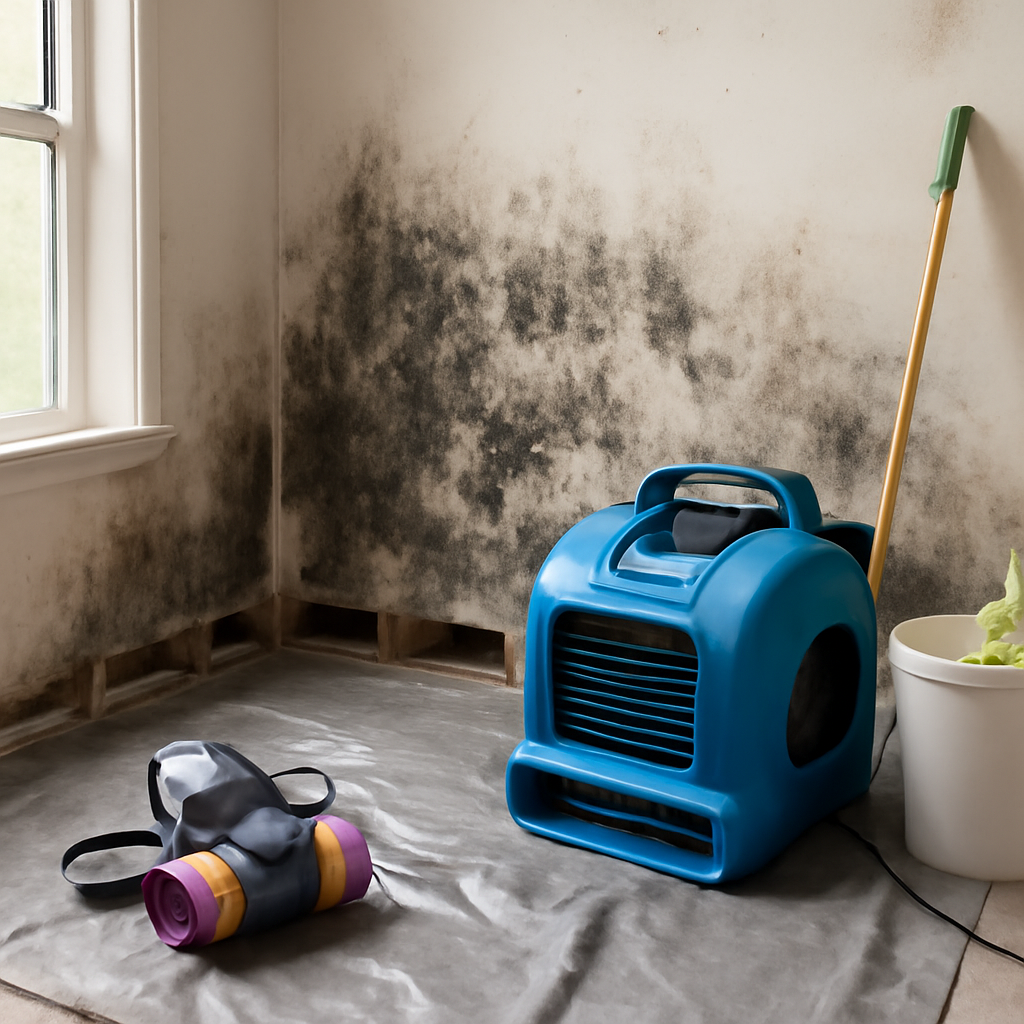
A “mold cleanup near me” search typically returns 10 to 30 local options ranging from small janitorial outfits to multi-state restoration franchises. Filtering that list down to two or three credible bidders is the actual work — and most homeowners do it badly under time pressure. This guide summarizes EPA, CDC, and IICRC guidance current as of 2026 and walks through the screening criteria that separate qualified local cleanup companies from underqualified ones. Consult your physician for symptoms and a certified professional for testing decisions.
Part of our Mold Removal & Remediation guide — start there for the full picture →
Is this mold, asbestos, or water damage? Get a free instant screen
Upload a clear photo of the suspect area. You'll get an instant AI screening opinion and what to do next. This is screening guidance, not a professional determination.
Screening guidance only. AI can be wrong. Confirm asbestos, mold type, or lead with lab testing or a licensed professional before acting.
Why “near me” matters less than credentials
Proximity helps with response time on water emergencies and reduces mobilization costs. It does not by itself signal quality. A nearby contractor without IICRC certification is still uncertified; a contractor 40 miles away with strong credentials is still credentialed. Front Range homeowners should weight credentials more heavily than zip-code distance when first screening — then optimize for proximity within the credentialed shortlist.
The first-pass filter — three minutes per listing
For each search result, the homeowner can quickly check: does the website list IICRC certification with a verifiable certificate number; does the about-page name actual technicians or just generic stock photos; does the contact page show a physical address, not just a phone number; are reviews concentrated within the last 12 months and from named clients with photos. Listings that fail two or more of these tests should be cut on the first pass.
What IICRC certification verification looks like
The IICRC maintains a public certified-firm directory at iicrc.org. A homeowner can search by zip code and confirm whether a company is currently certified. Individual technician certification is harder to verify externally — most homeowners rely on the contractor producing a certificate during the bid visit. Both firm-level and technician-level certification matter; firm-level signals organizational adherence to S520, technician-level signals the actual person doing the work has the training.
Insurance verification is non-negotiable
Each shortlisted contractor should produce a current certificate of insurance with general liability and pollution liability listed. The COI lists the broker or carrier — a homeowner can call to verify the policy is in force. This step takes 10 minutes and rules out the small minority of operators carrying expired or insufficient coverage. Pollution liability is the line that matters most for mold work; general liability typically excludes mold-related claims.
The site-visit and bid stage
Schedule two or three shortlisted contractors for site visits within the same week. Each should bring a moisture meter and ideally a thermal-imaging camera or borescope. Bids should arrive in writing within 48-72 hours and follow a comparable format. A contractor unwilling to put their bid in writing has effectively withdrawn from consideration. Compare scope to scope before comparing price.
How to evaluate bid scope rigorously
Each bid should identify affected areas with square footage, IICRC contamination condition (1, 2, or 3), containment plan with negative-air specifications, removal extent and materials, antimicrobial chemicals with EPA registration numbers, drying timeline, and post-remediation verification method. Bids that lump everything into a single line item are functionally unfalsifiable — the homeowner cannot tell whether anything has been omitted. Push back and request itemization before deciding.
The lowest bid is rarely the cheapest job
A bid 30-40 percent below the others typically reflects scope omission — usually containment, post-verification, or proper antimicrobial application. If the cheap bid succeeds the homeowner saves money; if it fails the homeowner pays a second contractor to redo the work plus repair the damage from the failed first attempt. Industry surveys suggest redo rates on under-scoped jobs run 15-25 percent. Price the redo risk into the bid comparison.
Conflict-of-interest screening
EPA guidance recommends separating testing from remediation. Many local “mold cleanup near me” results bundle inspection and cleanup as a turnkey service, often offering free or low-cost inspection as a lead-generation tactic. For small jobs this is workable; for jobs above a few thousand dollars, hire an independent inspector or hygienist to write the protocol first, then bid that protocol to two or three cleanup contractors. Our mold inspection hub walks through finding an independent inspector.
Local cleanup company structures
Local results typically include: single-truck operators (owner-operated, small jobs, lower overhead, variable quality control), regional restoration companies (multiple crews, water + fire + mold, moderate quality control, IICRC firm certified more often), franchise restoration (national brand, standardized processes, higher pricing, predictable quality), and IAQ specialty firms (hygienist-led, smaller volume, premium pricing, best fit for complex jobs). Each structure has tradeoffs — there is no single “best” structure for every situation.
Reviews — what to read and what to ignore
Useful review signals: detailed accounts naming specific technicians; before/after photos; mention of containment, HEPA, or post-verification (suggests reviewer understands the work); responses from the company that address criticism substantively. Less useful: short five-star reviews with no detail; reviewer profiles with one review only; reviews that read like marketing copy. The ratio of detailed-to-thin reviews is often more telling than the star average.
Response-time expectations
For water-loss-driven mold (a burst pipe, a sewage backup), reputable companies respond within four hours and stabilize within 24-48 hours to prevent mold proliferation. For dry, established mold that has been growing for weeks or months, response time is less urgent — schedule a careful site visit within a week and take time to compare bids. Treating an established case as an emergency is one of the ways contractors upsell less-qualified homeowners.
Front Range geographic considerations
Denver metro homeowners typically have 15-30 IICRC-certified firms within 25 miles. Boulder, Douglas, and Jefferson counties have similar density. El Paso County (Colorado Springs) has fewer firms per capita but several strong operators. Adams, Arapahoe, Broomfield, and Elbert counties are typically served by Denver-metro firms with a 30-45 minute response time. Rural Front Range homeowners may face higher mobilization fees and a thinner local market.
What to ask each bidder during the site visit
Are your technicians IICRC AMRT certified, and can I see proof? Is the firm IICRC certified? Can I see a current COI with pollution liability listed? Who performs the post-remediation verification — your crew or an independent party? What is your workmanship warranty? Can I have three references from comparable jobs in the last 12 months? What standards do you follow — IICRC S520, IAQA, or something else? A contractor who handles all of these well is materially more credible than one who deflects.
The single-contractor vs separate-trades decision
Some cleanup companies handle remediation only; others handle both remediation and repair (drywall, paint, flooring). The integrated model is simpler for the homeowner but harder to benchmark. The separated model — remediation contractor for phase one, general contractor for phase two — typically benchmarks better but requires more coordination from the homeowner. For more on the company-tier differences see our mold removal companies tier guide.
Documentation you should receive at job close
The contractor should provide: final scope-of-work document, photos from each phase, moisture readings logs, post-remediation verification report, antimicrobial product safety data sheets, any third-party clearance test results, and the workmanship warranty in writing. This packet matters for future resale disclosure, insurance documentation, and reference if mold recurs. A contractor who cannot produce this paperwork on small jobs is signaling that organizational discipline is thin.
Pricing benchmarks for the local Denver market
Small contained jobs (under 100 sq ft) typically run $500-$4,000 in the Front Range market. Mid-size jobs (100-500 sq ft) run $4,000-$15,000. Whole-basement or category-3 jobs run $15,000-$40,000 or more. Repair phase pricing varies with finishes — a basic drywall and paint repair adds $2,000-$8,000; finished basement rebuilds add $20,000-$60,000. These are exclusive of any code-required upgrades discovered during the work.
When to call a professional immediately
Visible mold over 10 square feet, any mold linked to sewage or category-3 water, mold in HVAC, mold accompanied by occupant respiratory symptoms, or a property with immunocompromised residents. Pre-1978 homes where demo work may disturb asbestos-bearing materials need a contractor with EPA RRP certification and coordination with CDPHE-licensed abatement crews. Document everything with photos before any cleanup crew arrives on site.
The role of an independent inspector in local vetting
Front Range homeowners can engage an InterNACHI-certified independent mold inspector for $300-$600 to write a written assessment and scope before bidding the work. The inspector documents the contamination condition, moisture mapping, and recommended remediation protocol. That document becomes the basis for getting comparable bids from two or three remediation contractors. This three-party structure — inspector, remediation contractor, optional clearance verifier — produces cleaner documentation than turnkey single-contractor jobs and addresses the conflict-of-interest concern the EPA raises. The added cost over a turnkey job is typically 10-20 percent and pays for itself in scope clarity and bid comparability.
Local response-time differences across Front Range counties
Denver county and Boulder county homeowners typically see 2-4 hour response times for emergency water-loss-driven mold calls, given the density of restoration firms. Douglas, Jefferson, and Adams counties typically see 4-6 hour response times. El Paso County (Colorado Springs) response times depend on whether the firm is local or mobilizing from Denver — Colorado Springs-based firms respond in 2-4 hours, Denver-based firms in 4-6 hours. Rural Larimer, Weld, and other Front Range counties may see 6-12 hour response times. Emergency stabilization to prevent mold proliferation is most effective within the first 24 hours after water loss.
The role of moisture intrusion source in cleanup scope
Cleanup work that addresses the visible mold without correcting the underlying moisture source will fail. Common Front Range sources: ice-dam water intrusion at eaves during winter freeze-thaw cycles; basement moisture from inadequate exterior drainage or slab penetrations; bathroom ventilation deficiencies; HVAC condensate-line blockages; long-running roof leaks (often visible only in attic or top-floor ceiling); plumbing leaks behind walls; flood-event intrusion from heavy spring runoff. A cleanup contractor who does not identify the source explicitly in the assessment has not completed the diagnostic step; insist on a written source identification in the bid.
What the on-site bid visit should produce
Each shortlisted contractor’s site visit should yield: a moisture map of the affected area with readings logged at specific points; photo documentation tied to a property sketch or floor-plan markup; an IICRC contamination condition assessment (1, 2, or 3); identification of the underlying moisture source or a written acknowledgment that additional diagnostic work is needed; a written scope of work delivered within 48-72 hours following the visit. A contractor who walks through without instruments, fails to document conditions, and produces a verbal quote on the spot has not done the diagnostic step — that bid is a guess, not an estimate.
Worker safety considerations during cleanup
OSHA 29 CFR 1910.134 governs respiratory protection during cleanup work. Technicians inside containment wear P100 respirators with documented fit-testing, Tyvek suits, nitrile gloves, and eye protection. The homeowner should not enter the contained area during demolition. HVAC zones serving the contaminated area are isolated or shut down. Pets and immunocompromised residents are relocated for the active phase. A cleanup company unwilling to discuss worker-safety practices in writing is operating below industry baseline. The written respiratory protection program is the document the contractor produces on request.
More Questions About Local Mold Cleanup
Can a local mold cleanup company start the same day?
Some local mold cleanup companies can start the same day, especially when the call involves active water damage that needs immediate drying. Mold cleanup on dry, existing growth is usually scheduled within days rather than hours.
Same-day response matters most for burst pipes, flooding, and sewage backups, where materials can start growing mold within 24 to 48 hours. For an old, stable mold patch, taking a few days to gather bids and an independent assessment usually leads to a better result than hiring whoever arrives first.
Do local mold cleanup companies bill insurance directly?
Many local mold cleanup companies will bill the insurance carrier directly on approved claims, but the homeowner usually remains responsible for the deductible and any costs the policy does not cover. Direct billing is a convenience, not a guarantee of payment.
Before signing, read the assignment of benefits or authorization form carefully, since it can give the contractor control over parts of the claim. Keep your own copies of photos, scope, and invoices. Confirm in writing what happens if the insurer denies or caps mold coverage.
How long does a typical local mold cleanup job take?
A typical local mold cleanup job takes one to three days for a single room or contained area, while multi-room jobs or basements with drywall removal may take a week or longer. Drying and clearance testing can add time.
The schedule usually includes setup of containment, removal of damaged materials, HEPA vacuuming and cleaning, drying, and a final check. Rebuild work such as drywall and paint is often a separate phase. Ask each bidder for a day-by-day plan so timelines can be compared alongside price.
What happens if mold comes back after a local cleanup?
If mold comes back after a local cleanup, contact the company first and check the warranty, since many cover regrowth in the treated area for a limited time when the moisture source was fixed. Regrowth usually means moisture is still present.
Document the regrowth with dated photos and moisture readings. An independent inspector can help determine whether the original work was incomplete or a new leak has appeared. If the cause is a new water problem, the warranty may not apply and a fresh repair and cleanup will be needed.
References
- EPA Brief Guide to Mold — U.S. Environmental Protection Agency
- CDC Mold Cleanup After Disasters — Centers for Disease Control and Prevention
- InterNACHI Mold and IAQ Inspection — International Association of Certified Home Inspectors
- OSHA Mold Topic Page — Occupational Safety and Health Administration
- CDPHE Mold Questions and Answers — Colorado Department of Public Health and Environment
Frequently asked questions
How do I verify a mold cleanup company is IICRC certified?
The IICRC publishes a certified-firm directory at iicrc.org searchable by zip code. Cross-reference any contractor claiming certification against this directory. Firm-level certification signals organizational adherence to S520; individual technician certification is verified by viewing the technician's certificate during the bid visit.
Should I always pick the closest mold cleanup company?
Proximity matters for water-emergency response time but not for credential quality. A nearby uncertified contractor remains uncertified; a 30-mile-away certified firm is still certified. Filter on credentials first, then optimize for proximity within the credentialed shortlist.
How many bids should I get for a mold cleanup job?
Two or three is the sweet spot. One bid is insufficient for benchmarking; four or more wastes time and frustrates contractors. Ensure all bids respond to the same written scope or to an independent inspector's protocol so you are comparing like to like.
Is the lowest mold cleanup bid usually a good deal?
Not typically. A bid 30-40 percent below others usually reflects scope omission — most often containment, post-verification, or proper antimicrobial application. The redo rate on under-scoped jobs runs 15-25 percent, which makes the cheap bid the most expensive bid when redo risk is priced in.
Do you need to leave home during a local mold cleanup?
Most households do not need to leave home during a local mold cleanup when the work area is properly contained and under negative air. Relocation may be wise for large jobs, sewage-related damage, or occupants with breathing problems. Ask a doctor if anyone has health concerns.
Is a mold cleanup company the same as a water damage company?
Not always. Water damage companies focus on extracting water and drying structures, while mold cleanup companies remove existing growth. Many restoration firms do both. After a recent leak, call a water damage company first, since fast drying prevents most mold from forming.
Should you test for mold before calling local cleanup companies?
Testing is not always needed before calling local cleanup companies when mold is clearly visible, since visible growth needs removal regardless of species. An independent inspection is useful when the extent is unknown, growth is hidden, or a written scope is needed to compare bids fairly.
If your “mold cleanup near me” search has surfaced more options than you can vet, reach out through our contact page and we will help you shortlist to two or three Front Range firms worth bidding.