Penicillium Notatum: What Homeowners Need to Know
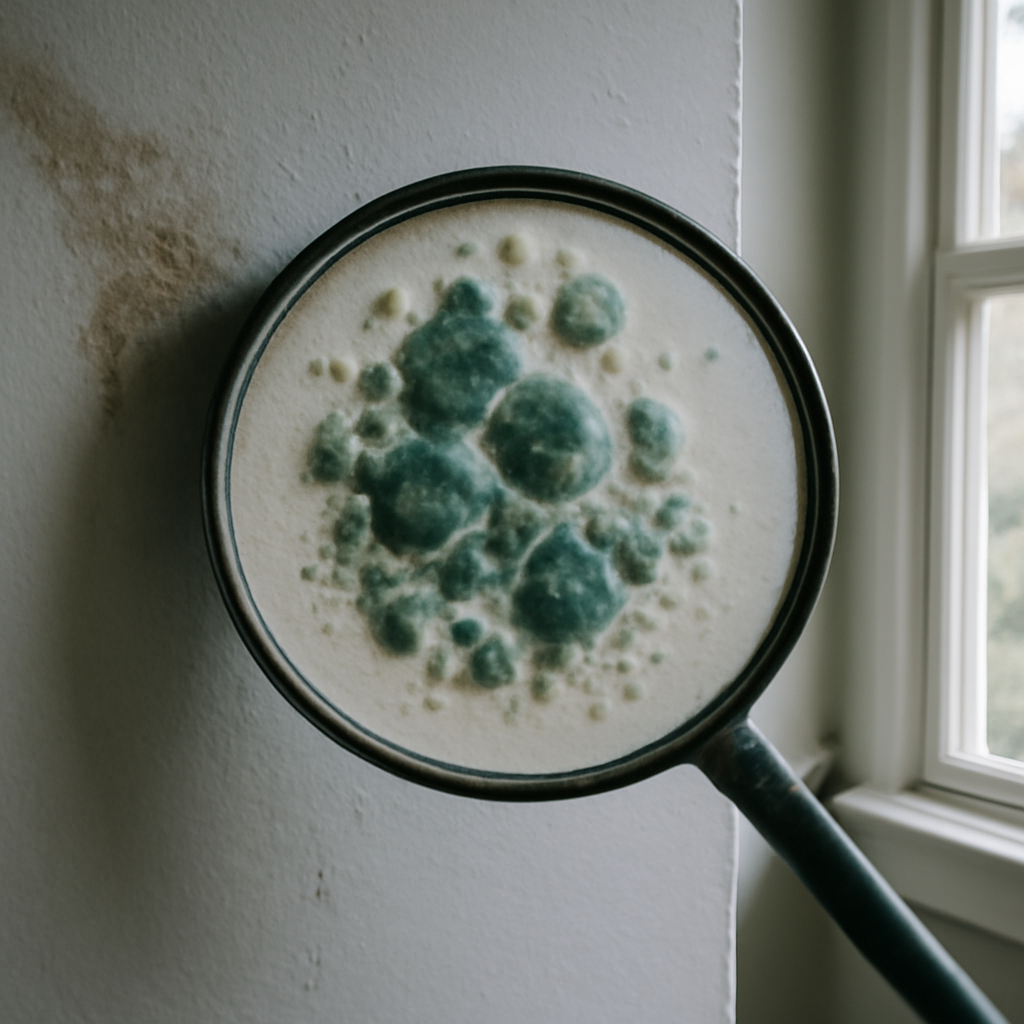
Few molds carry a backstory as famous as Penicillium notatum, the species behind the discovery of penicillin. Yet the same genus that gave the world an antibiotic is also a common indoor mold that grows on damp building materials. Homeowners who spot a blue-green colony or read a lab report naming Penicillium understandably want to know what it means for their home. This guide summarizes EPA and CDC guidance current as of 2026; consult your physician for symptoms and a certified professional for testing and removal decisions.
Dealing with mold or water damage? Talk to a remediation pro now.
📞 Call (833) 723-1134What Is Penicillium Notatum?
Penicillium notatum, now often classified as Penicillium chrysogenum, is a species in the large Penicillium genus of molds. It is best known historically as the source of the first penicillin antibiotic. In nature and indoors it appears as a fuzzy, blue-green to gray-green colony, often with a white border at the growing edge.
The genus name comes from the brush-like (penicillus, Latin for “little brush”) arrangement of its spore-bearing structures. Like all molds, it reproduces by releasing airborne spores that settle and grow wherever moisture and organic material allow. Its medical fame does not make the household form harmless; the mold growing on your wall is a moisture problem, not a pharmacy.
Penicillium Notatum and Penicillin
The connection most people recall is Alexander Fleming’s 1928 observation that a Penicillium mold contaminating a bacterial culture killed the surrounding bacteria. That mold produced the compound later developed into penicillin. The species involved was identified as Penicillium notatum.
This is a useful point of reassurance and caution at once. The discovery shows the genus can produce beneficial compounds, but it does not mean household Penicillium is safe to breathe or that home colonies have medicinal value. The antibiotic was isolated and purified in controlled laboratory conditions, a world apart from spores drifting off damp drywall. For the broader question, our guide on whether penicillin counts as mold untangles the relationship.
Where Penicillium Grows Indoors
Penicillium is one of the most frequently identified indoor molds, in part because it tolerates a wide range of conditions and grows quickly on water-damaged materials. Common locations include:
- Water-damaged drywall, wallpaper, and insulation.
- Carpet and fabrics that stayed damp.
- Decaying food, especially bread, fruit, and cheese.
- HVAC ducts and around cooling coils.
- Damp basements and areas with chronic condensation.
It is often responsible for the strong musty odor associated with water damage, since Penicillium produces noticeable microbial volatile organic compounds. A blue-green colony following a leak is a frequent finding in Front Range basements after spring snowmelt or a plumbing failure. Our explainer on Penicillium mold in homes covers the genus in broader detail.
The History Behind the Name
The story of Penicillium notatum is one of the most consequential accidents in science, and it gives the otherwise unremarkable household mold an outsized reputation. Understanding the history clarifies why the name carries such weight, and why that weight does not transfer to a colony on a wall.
In 1928, the bacteriologist Alexander Fleming returned from a holiday to find that a mold had contaminated one of his bacterial culture plates. Around the mold, the bacteria had died. Fleming identified the mold as a Penicillium species and recognized that it produced a substance lethal to bacteria, which he named penicillin. The mold involved was classified as Penicillium notatum.
The leap from observation to medicine took more than a decade and the work of other scientists, who isolated, purified, and mass-produced the antibiotic during the 1940s. That achievement transformed medicine, making once-deadly infections treatable. But it depended entirely on controlled laboratory and industrial processes, growing selected strains, extracting the compound, and refining it to a precise, standardized drug. None of that resembles spores growing on damp drywall, which is why the household mold, despite sharing the name, is simply a moisture problem to manage rather than a source of medicine.
Health Considerations
The CDC notes that exposure to damp, moldy environments can cause upper-respiratory symptoms in some people, including nasal congestion, throat irritation, coughing, and wheezing. Penicillium is a recognized allergen, and people with mold allergies or asthma may react to its spores. Those with weakened immune systems face a higher risk from a range of molds and should be especially cautious.
Two points keep this in perspective. First, most healthy people tolerate normal background levels of Penicillium spores that exist in nearly every indoor environment. Second, a household colony is not a source of medicine and should not be treated as benign because of the penicillin association. Anyone with persistent respiratory symptoms should consult a physician rather than self-assess from a lab report.
Penicillium and the Musty Smell of Water Damage
If a water-damaged room smells distinctly of damp earth or wet cardboard, Penicillium is frequently the reason. The genus is a prolific producer of microbial volatile organic compounds, the airborne chemicals responsible for that characteristic musty odor, and it often colonizes wet materials before any growth becomes visible.
This makes smell a valuable early-warning tool. A musty odor that appears after a leak, intensifies in humid weather, or concentrates in one room often signals Penicillium establishing itself inside a wall cavity, under flooring, or in insulation. Because the smell can precede visible growth by days, treating it as actionable, rather than masking it with air fresheners, lets you intervene before the colony spreads. The odor is the mold telling you where to look.
Tracing a musty smell follows the same logic as the rest of a moisture investigation. Walk the area with the smell strongest, check for dampness with a moisture meter, and inspect the likely water pathway, plumbing, roof, foundation, or condensation. When the odor persists but no source appears, the growth is likely hidden, which is the point to consider professional investigation. Either way, the smell has done its job by directing attention to a developing problem early, when it is easiest to address.
Identifying Penicillium
Visually, Penicillium colonies tend to be powdery and blue-green to gray-green, sometimes with yellow or white margins. But appearance alone cannot confirm the genus, since several molds share that color. Laboratory analysis, by microscopy or culture, is the only way to identify it with confidence.
For most homeowners, precise identification is not the priority. The EPA’s guidance applies across species: if you can see or smell mold, you have a moisture problem to fix, and the cleanup approach does not change with the species name. Identification matters mainly for documentation, hidden growth, or medical context. Color, as our guide on mold color explains, is only a rough clue.
How to Handle Penicillium Growth
The response mirrors general mold cleanup:
- Find and stop the moisture source first.
- Keep indoor relative humidity below 50 percent with ventilation or a dehumidifier.
- For areas under about 10 square feet, clean hard surfaces with detergent and water while wearing an N95, gloves, and eye protection.
- Discard porous materials such as soaked drywall, carpet padding, and contaminated food.
- Dry the area completely; residual moisture invites regrowth.
- Call a professional for large areas, HVAC contamination, or recurring growth.
Because Penicillium grows fast on wet materials, speed matters. Drying a water-damaged area within 24 to 48 hours is the most effective way to stop a colony before it establishes.
Penicillium Notatum Versus Other Common Molds
Homeowners often want to know how Penicillium compares to the other names that appear on lab reports. Each common indoor mold has its own habits, and a rough sense of them helps put a result in context.
- Penicillium grows fast on water-damaged cellulose and is a leading source of post-leak musty odor; it appears blue-green and powdery.
- Cladosporium is olive to brown-black and very common on fabrics, carpets, and damp surfaces, often the most abundant mold in normal air.
- Aspergillus overlaps with Penicillium in appearance and is a particular concern for immunocompromised people.
- Stachybotrys, the “black mold” of headlines, prefers chronically saturated drywall and is less common than the others.
The reassuring point is that for cleanup, the differences rarely change what you do. The EPA’s guidance treats visible mold as a moisture problem regardless of genus. Where the distinctions matter is medical context, particularly for people with weakened immune systems, and documentation. Telling Penicillium from Aspergillus by eye is unreliable in any case, since the two share a similar look; only a lab can confirm it. Our broader explainer on Penicillium mold places it within this larger family.
Why Penicillium Appears After Water Damage
Penicillium has a particular association with water-damaged buildings, and understanding why explains where to look for it. The genus tolerates a wide range of conditions and grows quickly once moisture is present, so it is often among the first molds to colonize materials soaked by a leak. Its appetite for cellulose, the main component of paper-faced drywall, cardboard, and many insulations, means it finds abundant food in typical construction.
This is why a blue-green colony so often follows a basement seepage event, a roof leak, or a plumbing failure on the Front Range. The mold also produces strong microbial volatile organic compounds, which is why water-damaged spaces develop that distinctive musty smell even before growth becomes visible. A musty odor after a leak, with no patch yet in sight, frequently means Penicillium is establishing inside a wall or under flooring.
The practical lesson is speed. Because Penicillium colonizes fast, drying water-damaged materials within 24 to 48 hours is the most effective defense. Once it has taken hold in porous material, removal rather than cleaning is usually the answer. Treating any water event as urgent, rather than waiting to see if a smell or stain appears, denies this quick-growing mold the window it needs.
Preventing Penicillium in Your Home
Prevention is moisture management:
- Repair leaks promptly and dry affected materials quickly.
- Maintain humidity below 50 percent, particularly in basements.
- Ventilate bathrooms, kitchens, and laundry areas.
- Service HVAC systems and keep condensate drains clear.
- Store food properly and discard items showing mold rather than cutting around it on soft foods.
Penicillium is one of several molds covered across the mold inspection and testing hub, where related guides address testing and removal once growth is found.
A dehumidifier is one of the most effective preventive tools in basements and other humidity-prone spaces, since it maintains the sub-50-percent conditions Penicillium cannot tolerate. Combined with prompt leak repair and good ventilation, it removes the moisture this fast-growing mold depends on before a colony can establish. The investment is modest compared with remediating growth that has spread through porous materials, and it protects against the broader range of molds that share Penicillium’s appetite for damp conditions.
Ultimately, the famous name should not distort the response. Whether a colony is Penicillium, Cladosporium, or another common species, the EPA’s guidance is the same: visible mold signals a moisture problem, and the fix is to control the water and clean appropriately. The penicillin heritage is a fascinating piece of history, but a household colony is simply mold, treated like any other, with attention focused where it belongs, on the moisture that allowed it to grow.
References
- A Brief Guide to Mold, Moisture and Your Home — U.S. Environmental Protection Agency
- About Mold and Health — Centers for Disease Control and Prevention
- Mold and Your Health — National Institute of Environmental Health Sciences
- Mold and Dampness — American Lung Association
If a lab report or a blue-green colony has you concerned, Front Range homeowners can reach a vetted local inspector through our contact page for an independent assessment of the moisture source.