Passive Radon Mitigation: What Homeowners Should Know
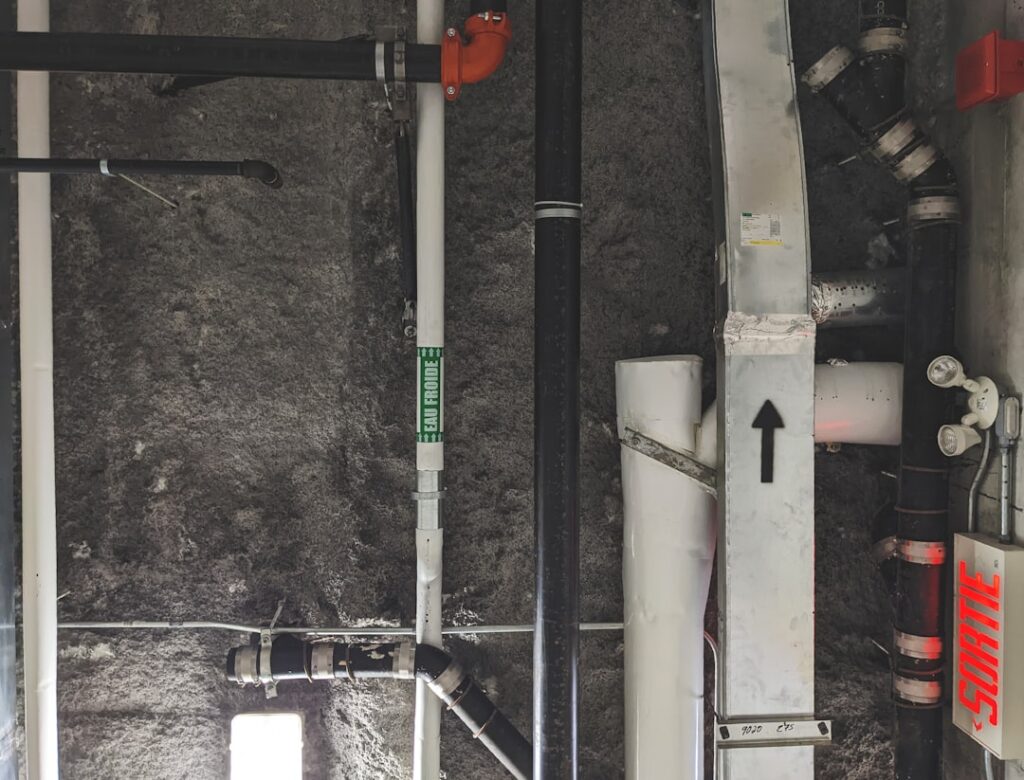
Passive radon mitigation is the fan-free approach to lowering indoor radon, relying on natural air movement rather than a powered fan to vent soil gas out of a home. It is most often built into new construction, where a vent pipe and gravel layer are installed before the slab is poured, but the question many Colorado homeowners ask is whether passive measures alone are enough. Along the Front Range, where radon levels are frequently high, the answer is often no. This guide summarizes EPA and Colorado Department of Public Health and Environment guidance current as of 2026; it is informational only, and you should rely on a certified radon professional and your physician for testing and health decisions rather than a web article.
What Passive Radon Mitigation Is
Passive radon mitigation, sometimes called a passive soil depressurization system, uses the natural stack effect of a warm building to draw soil gas up and out. A vent pipe runs from a permeable layer beneath the slab, usually a bed of gravel, up through the heated interior of the home and out above the roofline. As warm air rises inside the pipe, it creates a gentle upward draft that pulls radon-laden gas from under the foundation and releases it outdoors. No fan, no electricity, and no moving parts are involved.
Because it has no fan, a passive system is silent and free to operate. The trade-off is that the natural draft is weak and variable. It depends on the temperature difference between indoors and outdoors, wind, and how well the slab is sealed. The contrast with powered systems is laid out in the guide on how radon gas mitigation works.
How Passive Systems Are Built
New construction radon-resistant features
Most passive systems originate in new homes built to radon-resistant construction standards. During the build, the contractor lays a gas-permeable gravel layer beneath the slab, places a polyethylene vapor barrier over it, seals slab joints and penetrations, and installs a vertical vent pipe from the gravel up through the conditioned space to the roof. A capped electrical junction box is often roughed in near the pipe so a fan can be added later if needed.
The vent stack route
Routing the pipe through the warm interior, rather than up a cold exterior wall, is essential to passive performance, because the temperature difference is what drives the draft. An exterior route would cool the pipe and weaken or reverse the airflow. This is why passive systems are far easier to build into new construction than to retrofit.
How Well Does Passive Mitigation Work?
Passive systems reduce radon, but modestly and unpredictably. The EPA and state radon programs note that passive soil depressurization typically achieves smaller reductions than active systems, and the result swings with the seasons, performing better in cold weather when the stack effect is strongest and worse in mild weather. For a home with only slightly elevated radon, passive measures may be enough. For a home well above the action level, they usually are not.
This variability is the core limitation. A passive system might bring a borderline reading under the 4.0 picocuries per liter action level in winter yet allow it to climb in summer. Because radon exposure is cumulative, relying on an inconsistent reduction is risky. The way levels are measured and judged is covered in the guide on radon measurement and what readings mean.
Passive Versus Active Mitigation
The defining difference is the fan. An active system adds an inline fan that creates continuous, strong suction beneath the slab regardless of weather, reliably driving radon down. A passive system depends on natural draft and delivers weaker, weather-dependent results. Passive systems cost nothing to run and make no noise; active systems use a small amount of electricity and have a quiet fan.
The practical reality on the Front Range is that many homes need the active approach. A passive system that does not get levels low enough should be upgraded, often a simple matter of adding a fan to the existing stack. Homeowners weighing the two can read the comparison of system types in the guide on active radon mitigation systems, which explains when the upgrade is warranted.
When to Upgrade a Passive System to Active
The trigger for upgrading is always a test result. A home with a passive system should be tested for radon, and if the reading is at or above 4.0 picocuries per liter, or fluctuates above it seasonally, adding a fan converts the passive stack into an active system. Because passive systems built to current standards already include the pipe and a rough-in for the fan and electrical, the upgrade is typically quick and far cheaper than a full new installation.
A certified installer selects a fan sized to the foundation, mounts it in the attic or an exterior location, connects it to the rough-in wiring, and re-tests to confirm the result. The relative ease of this upgrade is one reason building codes favor installing passive systems in new homes: they make a future fix straightforward. Front Range homeowners with a passive system should not assume it is doing the job without a test, as the broader Colorado radon testing guide emphasizes.
Should You Rely on Passive Mitigation?
Passive mitigation is a reasonable baseline, especially in new construction, and it is better than no system at all. But it should never be assumed adequate without verification. The only way to know whether a passive system controls radon is to test, and to re-test across seasons given the system’s weather sensitivity. If results stay comfortably below the action level year-round, the passive system is working. If they do not, the home needs an active system.
For Colorado’s high-radon geology, many experts treat the passive stack as a head start toward an active system rather than a complete solution on its own. The cost-effective path is to build passive, test, and add a fan if the numbers call for it. That sequence delivers reliable protection without overbuilding, and it keeps the homeowner’s decision grounded in measured data rather than assumption.
Why Passive Systems Are Common in Colorado New Construction
Across much of the Front Range, building codes require radon-resistant construction in new homes, and that requirement is typically satisfied with a passive system. The reasoning is economic and practical. Installing the gravel layer, vapor barrier, sealing, and vent pipe during construction costs a fraction of what a retrofit would, because the work happens while the slab and walls are open. Pre-installing a capped vent pipe and an electrical rough-in also makes a future active upgrade simple, often just adding a fan rather than redesigning anything.
This code-driven approach reflects Colorado’s elevated radon reality without mandating a fan in every home. A house that turns out to have naturally low radon may never need the fan, while one that tests high can be upgraded quickly. The passive system, in other words, is a sensible default for a region where radon risk is widespread but not uniform. Buyers of new construction should confirm a passive system is present and understand that its presence does not, by itself, prove radon is controlled, a point reinforced in the guide on whether radon mitigation systems work.
Testing a Home With a Passive System
Because passive performance varies with weather, testing should account for that variability. A short-term test, typically two to seven days with a kit or continuous monitor, gives a quick reading but captures only the conditions during that window. A long-term test, lasting more than ninety days, better reflects the year-round average that actually matters for cumulative radon exposure and is especially useful for a weather-sensitive passive system.
The most informative approach is to test in different seasons, or to favor a long-term measurement, since a passive system may pass in cold weather and underperform in milder months. Following EPA testing protocol, closing windows and exterior doors during a short-term test, keeps results comparable. If any test reaches or exceeds 4.0 picocuries per liter, the home warrants making the system active. The available DIY and professional measurement options are described in the guide on the at-home radon test.
The Limits of Relying on Stack Effect
The physics that make a passive system work are also what limit it. Stack effect, the tendency of warm air to rise and escape a building, creates the gentle pressure difference that pulls soil gas up the vent pipe. That force is real but small, and it is at the mercy of conditions the homeowner cannot control. On a cold Colorado winter day with a warm interior, the draft is strong; on a mild spring afternoon, it can nearly disappear, and on a windy day pressures around the house can shift the balance further.
This variability means a passive system’s protection is inconsistent in exactly the way a health safeguard should not be. Radon exposure accumulates over months and years, so a system that controls radon only during part of the year leaves a gap. A homeowner cannot feel or smell radon and has no way to sense when the passive draft has weakened, which is why a measured test, ideally long-term or repeated across seasons, is the only honest verdict on whether the system suffices.
Active systems eliminate this uncertainty by replacing natural draft with a fan that maintains constant suction regardless of weather. That is the core reason mitigation professionals treat the passive stack as a foundation to build on rather than a finished solution, especially in a high-radon region. The full reasoning, along with system options and testing guidance, is laid out in the guide on the passive radon mitigation system.
Passive Systems and the Front Range Real Estate Market
Radon comes up routinely in Colorado home sales, and a passive system’s presence or absence often shapes the conversation. A buyer’s inspection commonly includes a radon test, and a result at or above 4.0 picocuries per liter frequently leads to a request that the seller mitigate. A home that already has a passive system holds an advantage: the vent pipe and fan rough-in are in place, so converting to an active system to satisfy the buyer is fast and inexpensive compared with a full retrofit.
Sellers benefit from testing before listing rather than discovering a high reading mid-negotiation. Knowing the level lets them address it on their own schedule, and a documented active system with a passing post-test can be a selling point. Buyers, for their part, should never assume a visible vent pipe means radon is controlled; a passive stack may or may not be doing the job, and only a measurement settles the question.
The practical etiquette for both sides is the same: test, document, and act on the data. A passive system is a head start, not a guarantee, and treating it that way protects buyer and seller alike. In a region where elevated radon is common, a clear test result and, where needed, a properly converted active system give everyone confidence the home is safe. Keeping the documentation, the test results, the system design, and any conversion records, also smooths future transactions, since the next buyer will likely ask the same questions. A home with a transparent radon history is easier to sell and reassures everyone involved that an invisible risk has been measured and managed rather than ignored.
References
- Consumer’s Guide to Radon Reduction — U.S. EPA
- Radon Reduction and Resistant Construction — Colorado Department of Public Health and Environment
- Radon Health Risk Information — American Lung Association
Front Range homeowners unsure whether a passive system is protecting their home can connect with a vetted local radon professional to test and, if needed, upgrade by reaching out through our contact page.