Mold Sampling: What Homeowners Need to Know in 2026
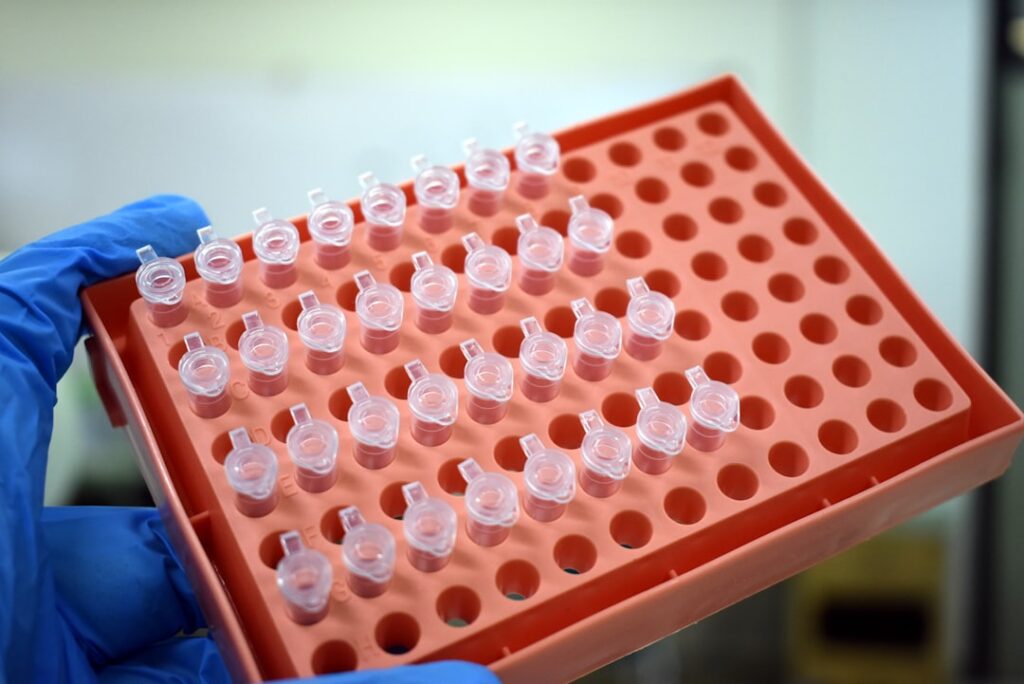
Mold sampling means collecting a physical specimen — air, surface, dust, or bulk material — and submitting it to an accredited laboratory for analysis. Each sampling method answers a different question, and the value depends on whether the result will actually change a homeowner decision. This guide explains the four common sample types, what each tells you, when each is worth the cost, and the protocol mistakes that make sampling data unreliable. The information here summarizes EPA, CDC, and CDPHE guidance current as of 2026; physicians remain the right resource for symptom evaluation, and remediation decisions should rest on a credentialed inspector’s report.
Is this mold, asbestos, or water damage? Get a free instant screen
Upload a clear photo of the suspect area. You'll get an instant AI screening opinion and what to do next. This is screening guidance, not a professional determination.
Screening guidance only. AI can be wrong. Confirm asbestos, mold type, or lead with lab testing or a licensed professional before acting.
The four common sample types
Most residential mold sampling uses one of four methods: air sampling with spore traps, surface tape lifts or swabs, bulk sampling of suspect material, and dust sampling for ERMI or HERTSMI analysis. Each requires different equipment, different lab analysis, and different interpretation.
Air sampling with spore traps
An Air-O-Cell cassette or equivalent contains a sticky slide. A calibrated pump draws a measured volume of air through the cassette for a fixed period (usually five minutes at 15 liters per minute, giving a 75-liter sample). The slide captures airborne particles for microscopic counting at the lab. Results are reported as spores per cubic meter, by genus.
Air sampling is the most common environmental test because it provides a quantitative estimate of airborne exposure. Its strength is comparability — if outdoor and indoor samples are taken simultaneously, the indoor result can be calibrated against the outdoor baseline. Its weakness is variability: spore counts swing with HVAC operation, foot traffic, weather, and time of day.
Surface tape lifts and swabs
Clear acetate tape pressed against a suspect surface picks up spores and hyphal fragments for direct microscopy. Swabs are similar but use a sterile cotton tip and can also be cultured. Both confirm what is on a specific spot rather than estimating airborne exposure.
Surface sampling is most useful when the question is “is this discoloration actually mold, and what species?” The companion identifying mold guide walks through the visual-versus-lab interplay.
Bulk sampling
A small piece of suspect material — drywall, insulation, carpet, wood — is cut out and sent to the lab. The lab examines the substrate under microscopy or culture. Bulk sampling is invasive (it requires cutting into the building) but provides the most direct confirmation of growth on a specific assembly.
Dust sampling (ERMI, HERTSMI-2)
Settled dust is collected from carpet, hard floors, or designated surfaces. The lab performs species-specific quantitative PCR to detect DNA from 36 mold species (ERMI) or a 5-species subset (HERTSMI-2). EPA researchers developed the methods for research applications. EPA’s official position is that ERMI is a research tool and has not been validated as a stand-alone remediation benchmark for individual homes.
When mold sampling earns its cost
EPA guidance is consistent: when mold is visibly growing on accessible surfaces, sampling rarely changes the remediation outcome. Cleanup proceeds the same regardless of species. For visible growth under 10 square feet, sampling is usually a wasted line item.
Sampling earns its cost in three scenarios.
Hidden growth investigation — there is a musty smell, symptoms, or moisture readings with no visible source. Sampling can confirm or rule out a problem before opening walls.
Real-estate transactions — the documentation supports the disclosure record and provides leverage in negotiations. Buyers receiving disclosed mold concerns often want defensible data, not anecdotes.
Post-remediation clearance — verifying the work area returned to a normal baseline. EPA and IICRC guidance both recommend third-party clearance after Level III remediation projects.
Designing a credible sampling protocol
A protocol describes what you sample, where you sample, how many samples, and what comparison you will make. The American Industrial Hygiene Association recommends that sampling protocols be designed by a qualified industrial hygienist or certified inspector, not chosen by the homeowner from a menu.
Outdoor controls
Indoor air sample results are nearly uninterpretable without outdoor calibration. Outdoor air normally contains hundreds to thousands of mold spores per cubic meter, mostly Cladosporium, Alternaria, and basidiospores. A “high” indoor spore count is only high relative to outdoor; without the outdoor comparison, the number is meaningless. Always require at least one outdoor sample taken simultaneously with the indoor samples.
Indoor sample locations
Common protocols use a “five-spot” plus targeted samples in suspect rooms, or a “two-spot” (one common area, one suspect room) plus outdoor control. The right number depends on the question. Three to five indoor cassettes plus one outdoor control is typical for a residential project.
Timing
Sample on a day with reasonably representative conditions. Avoid sampling during HVAC system off-cycle if normal operation includes HVAC, or vice versa. Some protocols specify aggressive sampling — agitating the air with a leaf blower or fan to dislodge embedded spores — but this is controversial because it can produce spore counts that do not reflect actual occupant exposure.
Common protocol mistakes
The most common protocol mistakes that make sampling data unreliable: no outdoor control, indoor sampling under abnormal conditions (HVAC off when it usually runs, windows open when normally closed), too few indoor samples to detect a localized problem, and reflexive maximums that generate noise without changing the outcome.
A reputable inspector explains the protocol decisions in writing before sampling. Background reading on assessment scope is available at our mold inspection pillar overview.
Two additional mistakes show up regularly in homeowner-initiated sampling. The first is single-grab sampling — taking one cassette at one moment and treating the result as definitive. Spore counts swing widely throughout the day and across rooms, so a single grab without paired samples or repeat sampling can produce a number that does not represent normal occupancy conditions. The second is sampling immediately after a recent cleanup, which depresses indoor counts artificially and may produce a clean reading that misses the underlying source. AIHA guidance recommends sampling under conditions that reflect normal occupant exposure — windows in their usual position, HVAC in its usual run mode, no recent disturbance of the suspect area — so the data actually answers the question being asked.
Lab accreditation
The lab matters. AIHA-LAP (American Industrial Hygiene Association Laboratory Accreditation Programs) accredits labs specifically for environmental microbiology. EMLab P&K, EMSL Analytical, and similar national labs hold this accreditation. If the inspector cannot name the lab or it is not AIHA-accredited, the results have weaker standing in disputes.
Reading the report
A typical air-sample lab report lists each sample by location, the genera identified, and the spore count per cubic meter for each genus. The report compares indoor samples against the outdoor control. Patterns to look for:
Elevated total spore counts indoors versus outdoors. Indoor counts substantially higher than outdoor — say, 3,000 spores per cubic meter indoors versus 500 outdoors — suggest a source inside the building.
Genus profiles that diverge. If outdoor air is dominated by Cladosporium and basidiospores (typical seasonal mix) and indoor air is dominated by Aspergillus/Penicillium or Stachybotrys, the indoor source profile is different from the outdoor and a building issue is likely.
Species associated with chronic water damage. Stachybotrys, Chaetomium, certain Aspergillus species (versicolor in particular) indicate sustained moisture in cellulose-rich materials.
Sampling cost summary
Spore-trap air cassettes: $50-$100 per cassette including lab. Surface tape lifts or swabs: $35-$75 per sample. Bulk samples: $50-$100 per sample. ERMI dust analysis: $250-$350 per sample. HERTSMI-2: similar to ERMI. Inspector sampling labor and on-site time: $150-$300 for the sampling visit (often bundled with the inspection).
A typical residential sampling project with one outdoor control plus three indoor air cassettes runs $200-$400 in pure lab pass-through, bundled with the inspection fee into a $625-$850 total. The companion mold testing cost guide walks through additional pricing scenarios.
When sampling is the wrong tool
If the answer to “what should I do with this information” is unclear, sampling is the wrong tool. Visible growth under 10 square feet on accessible surfaces gets cleaned per EPA homeowner guidance regardless of species. A musty smell with no other indicators gets a visual inspection and moisture mapping before sampling. Symptom-driven concerns belong to a physician, who can integrate environmental data if relevant but should not be replaced by it.
The CDPHE recommends starting with visual inspection and moisture management for Front Range homes; sampling is layered in when the visual data is ambiguous or when the situation requires documentation.
References
- Mold Cleanup in Your Home — U.S. Environmental Protection Agency
- Mold Cleanup and Remediation Guide — Centers for Disease Control and Prevention
- Mold Inspection Standards of Practice — InterNACHI
- Mold and Moisture in Colorado Homes — Colorado Department of Public Health and Environment
Homeowners along the Front Range looking for a credible mold sampling protocol and a vetted local inspector can connect with our team through the contact page.