Identifying Mold: What Homeowners Need to Know in 2026
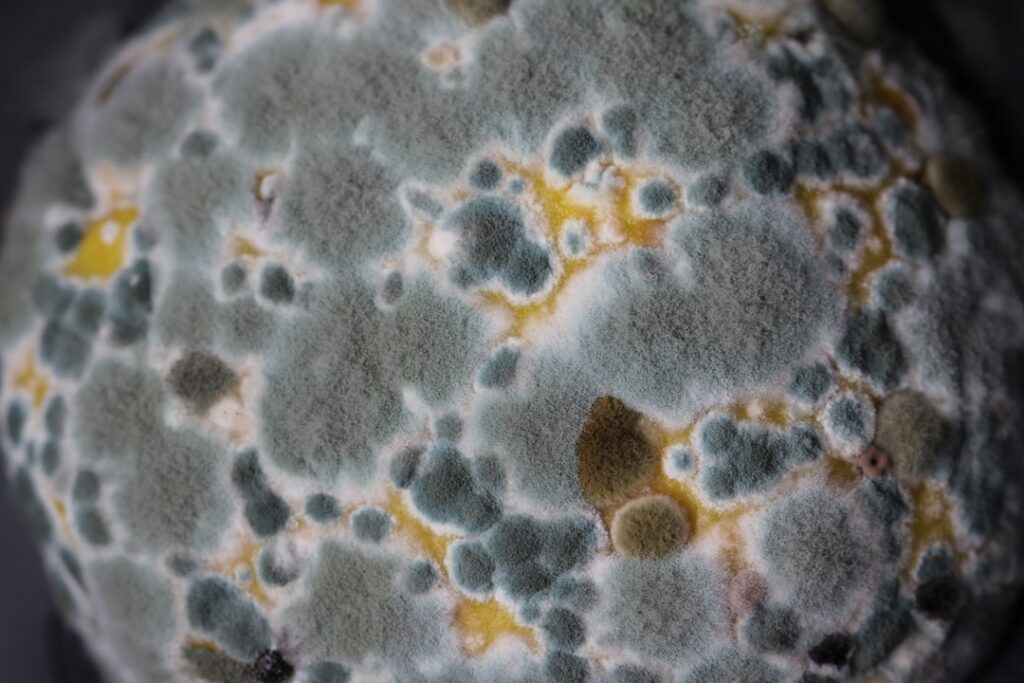
Identifying mold in a home is rarely as simple as “is that spot dark or green.” Reliable identification combines what you see, what you smell, the moisture history of the assembly, and — when the answer matters for cost or health — a sample analyzed by an accredited lab. This guide walks through what homeowners can confirm on their own, what requires a credentialed inspector, and where the limits of visual identification lie. The information summarizes EPA, CDC, and CDPHE guidance current as of 2026; physicians remain the right resource for symptom evaluation, and remediation decisions should rest on a qualified assessor’s report.
Is this mold, asbestos, or water damage? Get a free instant screen
Upload a clear photo of the suspect area. You'll get an instant AI screening opinion and what to do next. This is screening guidance, not a professional determination.
Screening guidance only. AI can be wrong. Confirm asbestos, mold type, or lead with lab testing or a licensed professional before acting.
What identifying mold actually involves
Identification has three layers. The first is visual: what does the discoloration look like, where is it, and is there a moisture pathway nearby? The second is olfactory — mold growth produces microbial volatile organic compounds, the musty basement smell homeowners describe. The third is laboratory: tape lifts, swabs, bulk samples, or air cassettes processed by a microbiologist who identifies the genus and sometimes the species.
Each layer adds confidence. None of them alone is sufficient when the stakes — a real-estate transaction, a child’s bedroom, an insurance claim — are high.
Visual identification: what to look for
Active mold growth usually presents as a discoloration that has texture rather than appearing as a flat stain. Black, green, gray, white, pink, and orange colorations all occur in residential settings. Stachybotrys chartarum, the species lay readers call “black mold,” is dark green to black and often slimy when wet, but plenty of other dark species look similar. Color alone is not diagnostic. The EPA states explicitly that homeowners cannot reliably identify mold species by appearance.
What is more telling is location. Mold prefers cellulose-rich, frequently damp substrates — paper-faced drywall, the back of vinyl wallpaper, wood framing, carpet pad, ceiling tiles. If a discoloration appears in those materials beneath a known leak, on a cold uninsulated wall, or in a basement with high humidity, the visual cue plus context is meaningful.
Smell as a clue
The musty, earthy odor associated with mold comes from a mix of compounds released as fungi metabolize cellulose. Homeowners often smell mold before they see it — typically in a basement, behind drywall, under a sink cabinet, or inside an HVAC plenum. The CDC notes that a persistent musty odor in a building is one of the indicators that a hidden moisture and mold problem may exist.
Olfactory identification is subjective. People who live in a building with chronic mold growth often stop noticing the smell. A visitor walking in for the first time is usually a better detector.
Moisture history is the third leg
Mold needs water, time, and a food source. The food source is almost always present in a finished home. What varies is the moisture. Identifying mold credibly means tracing the moisture: was there a basement flood after the September 2024 storm? A slow toilet supply leak under the bathroom? A roof valley that ices over each February? An air conditioner condensate line that backed up last summer?
When the visible growth, the smell, and a documented moisture event all point at the same assembly, identification is much more confident than any one signal alone. Our pillar overview at mold inspection for homeowners sets out the standard assessment workflow that ties these threads together.
When to take a sample
Sampling makes sense when identification will affect a decision: the scope of a remediation bid, the outcome of a real-estate transaction, or a household health question that needs more than visual evidence. The EPA’s position is that if mold is visibly growing, sampling is usually unnecessary because cleanup proceeds the same way regardless of the species. Where sampling adds value is in confirming hidden growth, documenting a baseline before remediation, and clearance testing after remediation.
Types of samples
Tape lifts press clear acetate tape against the suspected growth, which captures spores and hyphal fragments for microscopy. Bulk samples remove a piece of the affected material directly. Swab samples wipe a surface for culture or direct microscopy. Air samples — spore traps such as the Air-O-Cell cassette — pull a measured volume of air through a sticky slide that captures airborne particles for counting.
How labs report results
An AIHA-LAP-accredited lab returns a report listing the genera identified, often with relative concentrations (counts per cubic meter for air samples, qualitative ratings for surface samples). Reports compare indoor air samples against an outdoor control. Outdoor air normally contains hundreds to thousands of mold spores per cubic meter, mostly Cladosporium, Alternaria, and basidiospores. A meaningful indoor problem typically shows elevated counts compared to outdoor, an unusual genus indoors that is absent outdoors, or species associated with chronic water damage (Stachybotrys, Chaetomium, certain Aspergillus and Penicillium species).
Limits of air sampling
A single grab air sample at one moment in time is noisy data. Spore counts swing with HVAC operation, foot traffic, outdoor weather, and the time of day. The American Industrial Hygiene Association recommends paired indoor and outdoor sampling, multiple indoor locations, and a sampling protocol designed by a certified industrial hygienist who interprets the results in context. Buyers who receive a “high spore count” report from a one-off air test should ask what comparison was made.
Air sampling can also produce misleadingly clean numbers. Dormant or hidden growth behind wall cavities releases few spores into the air until the assembly is disturbed, and an assessor who samples a quiet, closed-up room may record counts that look normal even when active growth exists upstream of the HVAC return. The reverse misread happens in homes with chronic high outdoor pollen and basidiospore loads, where indoor counts look elevated simply because the outdoor baseline is high. For these reasons cumulative protocols — multiple samples taken over time, samples taken with and without aggressive air agitation, and samples paired with cavity inspection using a borescope — produce more defensible identification than any single grab cassette.
ERMI and HERTSMI scores
The Environmental Relative Moldiness Index and its abbreviated cousin HERTSMI-2 are DNA-based dust sample scores developed by EPA researchers in the mid-2000s. The methods quantify 36 mold species in settled dust using mold-specific quantitative PCR. The EPA’s official position is that ERMI is a research tool, not a validated remediation benchmark for individual homes. Several remediation companies sell it as a diagnostic anyway. Homeowners should treat ERMI numbers as one data point — useful for trending, weak for stand-alone decisions.
Common look-alikes
Not every dark spot is mold. Soot from candle burning or backdrafted appliances leaves greasy black streaks, especially on ceilings near vents and on outlet covers. Efflorescence on basement masonry is a white crystalline deposit from mineral salts moving with moisture; it looks like white mold but is calcium sulfate or carbonate. Cobwebs collect dust and look dark in corners. Black dot mildew on grout is usually surface mold that wipes off with cleaning. The companion guide on how to find black mold walks through these distinctions.
When a credentialed inspector adds value
Hire a third-party inspector when the answer drives a major decision and you do not want the remediator who quoted the job also confirming the diagnosis. A credentialed inspector — IAC2, ACAC CMI, or a licensed industrial hygienist — does not perform remediation, which removes the financial incentive to find more mold. They produce a written report with photos, moisture readings, the sampling plan, lab results, and a recommended scope of work. That document gives homeowners leverage when collecting remediation quotes.
Front Range factors
Identifying mold along Colorado’s Front Range carries some regional flavor. The semi-arid baseline keeps relative humidity low most of the year, so chronic widespread growth is less common than in the Gulf Coast or Pacific Northwest. Localized problems still occur — finished basements with vapor drive issues, swamp coolers leaking condensate, ice damming in poorly vented attics, ponding around foundations after spring snowmelt. The CDPHE’s indoor air quality program publishes guidance specifically calibrated to Colorado’s climate, and it remains a worthwhile reference for homeowners.
References
- Mold Cleanup in Your Home — U.S. Environmental Protection Agency
- Mold FAQs for Homeowners — Centers for Disease Control and Prevention
- Mold Health Topic Page — National Institute of Environmental Health Sciences
- Mold and Moisture in Colorado Homes — Colorado Department of Public Health and Environment
Homeowners in Denver, Boulder, Douglas, and other Front Range counties who want a vetted local inspector for a credible identification can reach out through our contact page.