Mold Removal Specialist Near Me: How to Choose Well
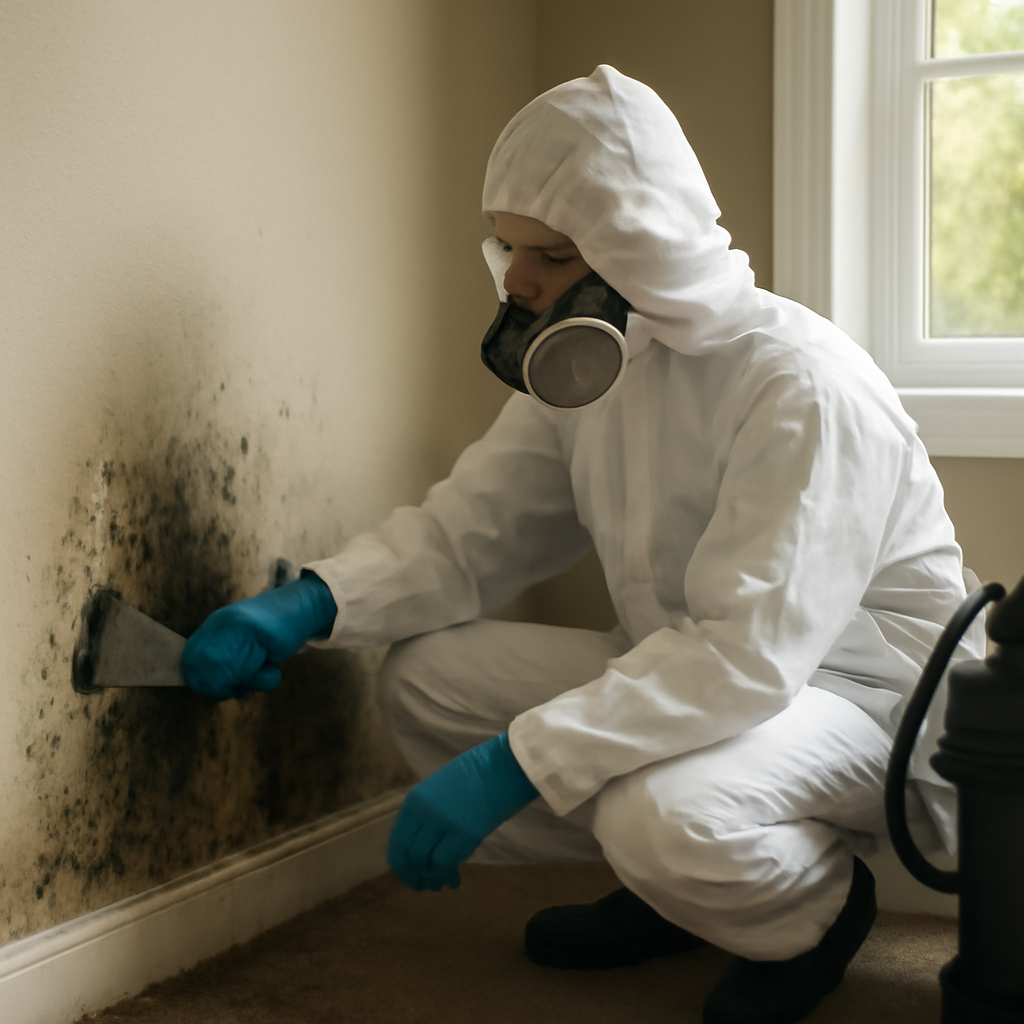
Searching for a “mold removal specialist near me” usually happens at a stressful moment — after a leak, a musty smell that will not quit, or a real-estate inspection that flagged growth. The challenge is that the mold industry is uneven: some specialists are skilled, credentialed, and honest, while others inflate scope, skip the moisture fix, or sell unnecessary services. This guide summarizes EPA and CDC guidance current as of 2026 and is informational only; it explains how to evaluate a specialist, but consult a qualified professional and your physician for decisions specific to your situation.
Part of our Mold Removal & Remediation guide — start there for the full picture →
Is this mold, asbestos, or water damage? Get a free instant screen
Upload a clear photo of the suspect area. You'll get an instant AI screening opinion and what to do next. This is screening guidance, not a professional determination.
Screening guidance only. AI can be wrong. Confirm asbestos, mold type, or lead with lab testing or a licensed professional before acting.
How to Find and Choose a Mold Removal Specialist Near You
The short version: look for a specialist who holds recognized certification, carries insurance, separates inspection from remediation when possible, fixes the moisture source as part of the job, and provides a written scope with clearance verification. The longer version is what protects you from overpaying or hiring someone who leaves the real problem in place.
Start with credentials. The most widely recognized industry certifications come from the IICRC (Institute of Inspection, Cleaning and Restoration Certification), whose Applied Microbial Remediation Technician (AMRT) designation signals training in proper containment and removal. Some states, though not Colorado, also license mold professionals; where a license exists, verify it. Then confirm general liability insurance and, ideally, pollution-liability coverage, because mold work that goes wrong can damage a home.
A trustworthy specialist will explain what caused the growth and how they will stop it from returning, not just how they will scrub it. That moisture-first mindset is the single most reliable indicator of competence, and it runs through everything in the mold inspection and testing hub.
What Credentials and Certifications to Verify
IICRC certification
The IICRC is the dominant standard-setting body for restoration and remediation. Its S520 standard defines accepted practice for mold remediation, and technicians certified under it are trained in containment, HEPA filtration, and proper material removal. Ask whether the lead technician on your job holds the AMRT certification and whether the company follows the S520 standard.
Insurance and references
Request a certificate of insurance directly from the carrier when the job is large. Ask for two or three recent references for similar work, and actually call them. A specialist confident in their work shares references readily.
Independence of assessment
The strongest protection against inflated scope is separating the party who diagnoses from the party who profits from cleanup. An independent inspector or industrial hygienist writes a protocol; the remediation company executes it; the inspector verifies the result. This is required by law in some states for larger jobs and is good practice everywhere.
What Mold Removal Specialists Charge
Pricing depends on the size of the affected area, the materials involved, accessibility, and whether reconstruction is needed. As industry-estimate ranges: a small, contained job such as a single bathroom or closet often runs $500 to $1,500. A medium job involving drywall removal across a room or a section of basement typically runs $2,000 to $6,000. Large-scale contamination — multiple rooms, HVAC involvement, or structural drying and rebuild — can exceed $10,000.
An independent assessment, where used, adds a few hundred dollars but frequently pays for itself by right-sizing the work. Beware of quotes that are dramatically lower than competitors; lowball pricing often means skipped containment or an unaddressed moisture source that brings the mold right back. For a fuller breakdown of what drives price, see our guide to how much it costs to remove mold and the companion piece on mold removal costs by job type.
The Questions to Ask Before You Hire
A short, pointed conversation reveals a lot. Ask each candidate:
- What certification do your technicians hold, and do you follow the IICRC S520 standard?
- How will you identify and correct the moisture source, not just the visible mold?
- How will you contain the work area and protect the rest of my home?
- Is your assessment independent from your remediation, or do you do both?
- Will there be post-remediation verification, and who performs it?
- What is included in the written scope, and what could change the price mid-job?
- Can you provide proof of insurance and recent references?
Vague answers, pressure to sign immediately, or refusal to put scope in writing are all reasons to keep looking. The vetting logic mirrors what we cover in choosing professional mold removal near you.
Red Flags That Signal a Bad Specialist
Some warning signs recur across the industry. Be cautious of a company that performs both the inspection and the remediation and then reports a very large, expensive scope — the conflict of interest is obvious. Watch for specialists who rely on “fogging” or “air scrubbing” as a standalone fix without removing contaminated porous material; the EPA emphasizes physical removal and moisture correction, not chemical treatment alone. Pressure tactics (“you must remediate today or it spreads through your whole house”) exploit fear.
Another red flag: a specialist who never mentions the water source. Mold is a symptom of a moisture problem. A specialist who treats the symptom while ignoring the cause is selling you a temporary result and likely a repeat visit. Finally, no legitimate company guarantees your home will be “100 percent mold-free forever,” since spores exist everywhere in normal indoor air; honest specialists talk about returning mold to normal background levels, not eliminating it from the universe.
When You Need a Specialist Versus DIY
The EPA’s threshold is a useful rule of thumb: contained mold under about ten square feet on a hard, non-porous surface is reasonable for a homeowner to clean with an N95 respirator, gloves, eye protection, and detergent. Beyond that, or whenever the situation involves porous materials, hidden growth, HVAC contamination, sewage or floodwater, or occupants with asthma or weakened immune systems, a specialist is the safer call.
Specialists bring containment barriers, negative-air HEPA machines, moisture mapping, and documentation that matters for insurance and resale disclosure. They also find the hidden source a homeowner cannot reach. If a patch keeps returning after you clean it, that recurrence itself is a signal to bring in a professional who will trace the moisture, as explained in our look at black mold in walls.
Independent Inspector First, Then Specialist
For anything beyond a small, obvious patch, a sound sequence is to hire an independent inspector before hiring a removal specialist. The inspector — who does not perform remediation and therefore has no stake in the scope — locates the moisture source, maps the extent, and produces a written protocol. You then take that protocol to removal specialists for competitive bids on a defined scope, which prevents the inflated estimates that arise when the same company both diagnoses and profits from the cleanup.
This two-party approach costs a few hundred dollars more for the inspection, but it routinely saves more than that by right-sizing the work and giving you an apples-to-apples basis for comparing specialist bids. After the work, the same independent inspector verifies the result. Home buyers, attorneys, and cautious homeowners use this structure precisely because it aligns incentives in their favor. Our guide to choosing a mold inspection company near you covers how to find an inspection-only professional.
Timelines and What to Expect Day to Day
A small contained removal often takes a single day. A medium job involving drywall removal across a room may run two to four days, with much of that time devoted to drying. Large-scale contamination with structural drying and reconstruction can stretch past a week. The drying stage is frequently the longest and the most rushed; cutting it short to finish faster is a common cause of regrowth, so a specialist who insists on verifying moisture readings before closing up is protecting your result.
Expect the work area to be sealed and possibly inaccessible during the job, with negative-air machines running continuously. The specialist should keep you informed if hidden contamination is discovered, explain any change in scope before proceeding, and provide documentation at completion. A clear, communicative process is itself a quality signal — the specialists who explain what they are doing and why tend to be the ones doing it correctly.
Health Context: Why Doing It Right Matters
The CDC associates indoor mold exposure with nasal congestion, throat and eye irritation, coughing, and wheezing, with more pronounced effects in people who have asthma or mold allergies, and potential complications in those with weakened immune systems. A specialist’s containment and HEPA filtration are not bureaucratic theater — they keep disturbed spores from spreading to clean rooms during removal, which protects everyone in the home. Cutting that corner to save money can convert a localized problem into a whole-house one.
This is also why households with vulnerable occupants — young children, older adults, people with asthma or compromised immunity — should be especially careful about who they hire and should plan to stay out of the work zone during removal. A specialist following the IICRC standard manages airflow so that the temporary spike in airborne spores during demolition stays contained. Anyone who develops or experiences worsening respiratory symptoms during or after a project should consult a physician, while the home-side priority remains finding and fixing the moisture that allowed the growth.
How a Specialist Actually Does the Work
Understanding the workflow helps you evaluate whether a specialist is competent. A proper job begins with an assessment that locates the moisture source and maps the extent of growth using moisture meters and often thermal imaging. The specialist then establishes containment — plastic barriers sealing the work area and a negative-air machine with HEPA filtration that exhausts filtered air outdoors, so disturbed spores cannot drift into clean rooms.
Removal follows the EPA’s physical-removal principle. Porous contaminated materials such as wet drywall, insulation, carpet padding, and ceiling tile are cut out, double-bagged, and discarded, because cleaning rarely reaches mold that has rooted into porous material. Hard surfaces — framing, metal, sealed wood — are HEPA-vacuumed and scrubbed. The area is then dried with air movers and dehumidifiers until moisture readings return to normal, and the underlying water problem is repaired. Finally, the result is verified, ideally by an independent party, before any reconstruction. A specialist who can describe this sequence and explain how they protect the rest of your home during it is demonstrating real competence, not just sales polish.
Fixed Bids Versus Time-and-Materials
Specialists price jobs in two main ways, and knowing the difference protects your budget. A fixed bid quotes a single price for a defined scope, which gives you cost certainty but can lead to change orders if hidden contamination is discovered once walls are opened. Time-and-materials billing charges for hours and supplies as the work proceeds, which can be fair for an uncertain scope but is harder to cap. For most residential mold jobs, a written fixed bid with a clearly stated process for handling discovered contamination is the homeowner-friendly choice.
Whatever the structure, the contract should spell out the affected areas, the materials to be removed, the containment method, the drying plan, the moisture-source repair, and the clearance criteria. Ask specifically what would trigger a change order and how those changes are priced. A specialist who resists putting any of this in writing is one to pass on. Comparing detailed written bids — not just headline prices — is how you tell a thorough specialist from a cheap one cutting corners, a point our guide to mold removal costs reinforces.
What Post-Remediation Verification Should Include
The final step separates a specialist who stands behind their work from one who simply leaves. Verification confirms the area is visually clean, dry, and that mold has been returned to normal background levels. At minimum it is a documented visual inspection; for larger or sensitive jobs it may include air or surface sampling analyzed by a lab and compared to outdoor baseline levels. The strongest arrangement has an independent party — not the remediation crew — perform the clearance, removing the conflict of interest in grading one’s own homework.
A specialist confident in their process welcomes independent verification rather than resisting it. If a company discourages any outside check or insists their own sign-off is sufficient on a large job, treat that as a yellow flag. Verification is also what gives you documentation for resale disclosure and any insurance claim, which is worth far more than its modest cost.
Front Range Considerations
Colorado does not license mold professionals at the state level, which makes IICRC certification and insurance verification even more important here, since there is no state credential to fall back on. Front Range housing has its own mold drivers: finished basements that hold humidity, snowmelt pooling against foundations, swamp coolers that raise summer indoor humidity, and the rapid wet-dry cycles that follow afternoon storms. A local specialist who understands these regional patterns is better positioned to find the moisture source than one applying a generic playbook.
Regional knowledge shows up in the questions a good local specialist asks. Do you run a swamp cooler, and if so how is the humidity managed? Is the affected space a finished basement, and how does water drain around the foundation? Has the home seen ice-damming or roof issues over winter? These questions reveal a specialist thinking about the Front Range moisture sources that feed local mold, rather than one reaching for a one-size-fits-all cleanup. Choosing carefully up front saves money, protects health, and prevents the frustration of paying twice for the same problem.
The Cost of Choosing the Wrong Specialist
The cheapest quote is rarely the cheapest outcome. A specialist who skips containment can spread spores from a contained problem into clean parts of the house, turning a single-room job into a whole-home one. A specialist who ignores the moisture source delivers a result that looks finished and fails within weeks, leading to a second cleanup, ruined new finishes, and continued exposure. A specialist without proper insurance can leave you holding the bag if the work damages your home.
Weigh those risks against the modest premium for a credentialed, insured, independent-minded specialist. Paying a few hundred dollars more for documented competence, or paying separately for an independent inspection that right-sizes the work, routinely costs less than the repeat visits and collateral damage that follow a bad hire. The decision that protects both your wallet and your household’s health is to vet thoroughly and choose on process and credentials, not on the lowest headline number.
References
- Mold Cleanup in Your Home — U.S. Environmental Protection Agency
- A Brief Guide to Mold, Moisture and Your Home — U.S. Environmental Protection Agency
- About Mold and Your Health — Centers for Disease Control and Prevention
- Mold and Your Health — Colorado Department of Public Health & Environment
Frequently asked questions
What certification should a mold removal specialist have?
Look for IICRC certification, especially the Applied Microbial Remediation Technician designation, and adherence to the IICRC S520 standard. Confirm general liability and, ideally, pollution-liability insurance. Colorado does not license mold pros, so these credentials carry extra weight here.
How much does a mold removal specialist cost?
A small contained job typically runs $500 to $1,500, a medium job with drywall removal $2,000 to $6,000, and large-scale or structural contamination can exceed $10,000. Pricing depends on area size, materials, accessibility, and whether reconstruction is needed.
Should the same company inspect and remove the mold?
Ideally no. An independent inspector writing the protocol, a separate remediation company executing it, and the inspector verifying the result removes the conflict of interest that can inflate scope. Some states require this separation for larger jobs.
What are red flags when hiring a mold specialist?
Watch for companies that both inspect and remediate then quote a huge scope, that rely on fogging alone without removing porous material, that use pressure tactics, that ignore the moisture source, or that guarantee a permanently mold-free home, which is not possible.
Front Range homeowners who want a vetted, independent perspective before hiring a remediation crew can connect with a qualified local inspector through our contact page.
Mold removal & cleanup picks
For a small, contained patch (under ~10 sq ft) these EPA-friendly removers handle surface mold. Larger or recurring growth warrants a professional assessment first.
| Product | Why | Buy |
|---|---|---|
 RMR-86 Instant Mold Stain Remover RMR-86 Instant Mold Stain Remover | Fast-acting on stains; ventilate and wear PPE. | Amazon — $29.99 |
 Concrobium Mold Control Concrobium Mold Control | No-bleach formula that also helps prevent regrowth. | Amazon — $11.26 |
 Mold Armor Mold & Mildew Remover Mold Armor Mold & Mildew Remover | Widely stocked bathroom/surface remover. | Amazon — $22.98 |