Mold Removal Specialists: What They Do and How to Hire
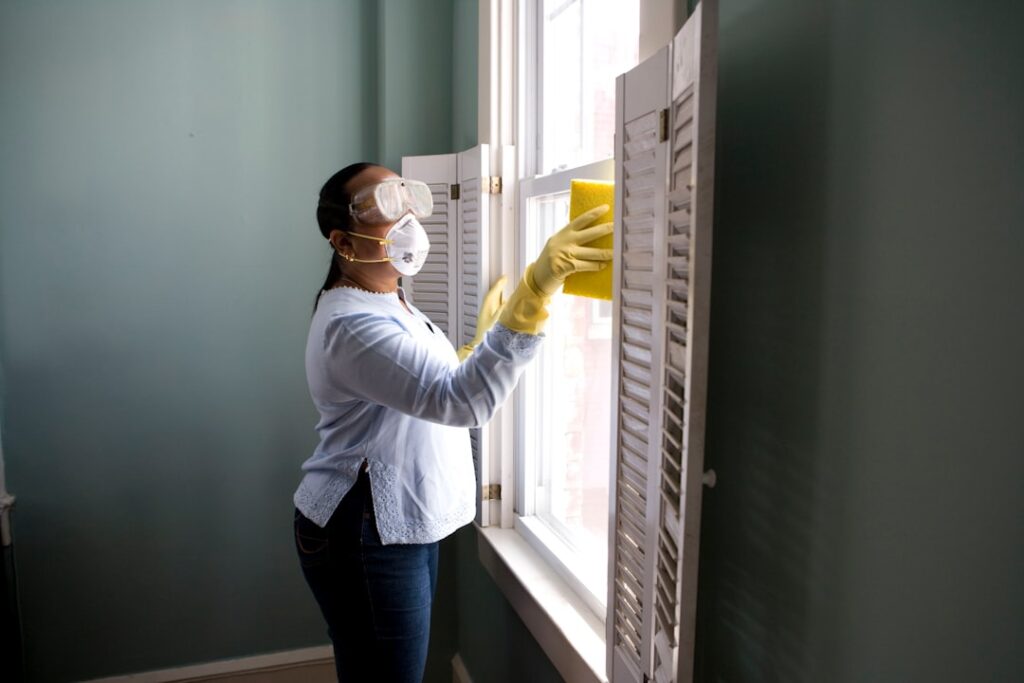
When mold spreads beyond a patch you can wipe off a tile, the next question is who to call. Mold removal specialists — also called remediation contractors — assess contaminated areas, contain them, remove affected materials, and address the moisture that caused the problem. Knowing what they actually do, and what separates a qualified one from a fly-by-night operation, protects both your home and your wallet. This guide summarizes EPA, CDC, and trade-association guidance current as of 2026 to explain when a specialist is warranted and how to vet one — consult your physician for health symptoms and a certified professional for testing decisions.
Is this mold, asbestos, or water damage? Get a free instant screen
Upload a clear photo of the suspect area. You'll get an instant AI screening opinion and what to do next. This is screening guidance, not a professional determination.
Screening guidance only. AI can be wrong. Confirm asbestos, mold type, or lead with lab testing or a licensed professional before acting.
Specialist, remediator, or restoration contractor?
The titles in this field overlap and can confuse homeowners shopping for help. “Mold removal specialist,” “remediation contractor,” and “restoration company” often describe the same work, though restoration firms also handle the rebuild — replacing drywall, flooring, and finishes — after the mold is gone. A pure remediation specialist focuses on the removal, containment, and drying, then hands off reconstruction. Some companies do both, which can be convenient but makes it worth confirming the mold work meets standard procedures rather than getting folded into a general repair.
What matters more than the label is the scope of work and the credentials behind it. Whatever a company calls itself, you want documented training, insurance, a written plan that names the moisture source, and a willingness to have results verified independently. The sections below cover those criteria, which apply regardless of which title a contractor uses on its truck.
What do mold removal specialists do?
A mold removal specialist handles remediation: the controlled process of removing mold growth and contaminated materials while preventing spores from spreading to clean parts of the home. According to the EPA, professional remediation typically follows a defined sequence — assess the extent of growth, contain the work area, control airflow, physically remove mold and unsalvageable materials, clean surfaces, dry everything, and verify the result.
Critically, a good specialist does not just scrub mold off a wall. They identify and document the moisture source, because remediation without fixing the water problem guarantees regrowth. The EPA frames moisture control as the single most important step in any mold project. Reputable contractors will either correct the source themselves or coordinate with a plumber or roofer who can, then return to confirm the area stays dry. A specialist who skips the moisture diagnosis and offers only cleaning is treating a symptom, not solving the problem.
When do you actually need a specialist?
Not every spot of mold needs a professional. The EPA’s general guidance is that homeowners can clean areas smaller than about 10 square feet — roughly a 3-by-3-foot patch — using detergent, water, and basic protection. A specialist becomes the right call when:
- The affected area exceeds roughly 10 square feet, or growth spans multiple rooms.
- Mold is inside the HVAC system or air ducts, which can distribute spores throughout the house.
- The contamination follows sewage backup or flooding (Category 3 “black water”).
- Growth is hidden behind walls, under flooring, or in a crawl space and you cannot gauge its extent.
- A household member has asthma, severe allergies, or a compromised immune system.
If you are unsure how far the problem reaches, an inspection comes first. Our parent guide to mold inspection and testing explains how professionals locate hidden moisture and decide whether sampling is justified before any removal begins. Spending on an assessment before remediation often saves money by scoping the job accurately rather than guessing.
Inspector vs remediator: keep the roles separate
There is a long-standing conflict-of-interest principle in this field: the company that tests for mold ideally should not be the same company you pay to remove it. A contractor who both diagnoses and profits from remediation has an incentive to find more mold than exists. InterNACHI and many state programs encourage separating assessment from remediation for exactly this reason.
A practical workflow is to have an independent inspector assess and, if needed, sample the area first, then hire a remediation specialist to do the removal, and finally have the original inspector perform clearance testing to confirm the job worked. For homeowners weighing the broader picture of who does what, our overview of professional mold remediation services breaks down the typical division of labor and how clearance testing closes the loop.
What certifications and credentials to look for
Colorado does not license mold remediation contractors statewide, so credentials and insurance carry extra weight when choosing a specialist. Look for:
- Industry certification from a recognized body such as the IICRC (Institute of Inspection Cleaning and Restoration Certification) or InterNACHI’s mold credential. These indicate training in containment and standard procedures.
- General liability insurance and, ideally, pollution liability coverage specific to mold work.
- A written scope of work that names the moisture source, the containment plan, and the materials to be removed.
- References and verifiable reviews from recent local jobs.
- Willingness to use third-party clearance testing rather than self-certifying success.
Be cautious with any company that quotes a price before seeing the problem, pressures you toward immediate signing, or describes the mold as a dire health emergency requiring whole-house treatment. The EPA and CDC are consistent that the response to mold is removal and moisture control, not fear-driven upselling. A specialist who walks the home, explains the moisture source, and provides a written scope is behaving the way a professional should.
How the remediation process works
Understanding the standard sequence helps you judge whether a specialist is doing the job properly.
Containment
Workers seal off the work area with plastic sheeting and often run a negative-air machine with HEPA filtration so spores do not migrate into clean rooms. For larger jobs this includes covering vents and creating a controlled entry, which keeps the rest of the home livable during the work.
Removal
Porous materials that cannot be cleaned — saturated drywall, carpet, insulation, ceiling tile — are cut out, bagged, and discarded. Non-porous surfaces like framing, metal, and tile are HEPA-vacuumed and wiped down. The goal, per EPA guidance, is physical removal of the mold, not merely killing it; dead spores can still trigger allergic reactions, which is why “fogging” alone is not remediation.
Drying and source repair
The area is dried with air movers and dehumidifiers, and the moisture source is corrected. Our explainer on mold from water damage covers why drying within 24–48 hours is the dividing line between cleanup and a recurring problem, and why a remediator must verify dryness before rebuilding.
Verification
After remediation, the area should be visibly clean, dry, and free of musty odor. Independent clearance testing — air or surface sampling compared against outdoor baselines — confirms spore counts have returned to normal before the space is reopened and rebuilt. This step is what protects you from paying for a job that did not actually work.
What mold removal costs
Costs vary widely with the size, location, and cause of the contamination. Industry estimates for the Denver metro generally place a small, contained job (one room, surface growth) in the high-hundreds to low-thousands of dollars, while extensive contamination involving multiple rooms, HVAC systems, or structural drying can reach several thousand or more. Hidden factors — the price of fixing the underlying leak, replacing flooring, or repainting — often add to the headline number. These are general ranges, not quotes. For a structured way to estimate, our mold remediation cost calculator guide walks through the variables that move the price.
Questions to ask before you hire
A short interview separates qualified specialists from the rest. Ask what certification they hold and whether they carry pollution liability insurance. Ask how they will identify and fix the moisture source, not just the visible mold. Ask whether they use containment and HEPA filtration, what materials they expect to remove, and whether they recommend independent clearance testing. Ask for a written scope and a couple of recent local references, and confirm who is responsible if mold returns within a stated period.
Clear, specific answers signal a professional; vague reassurance or pressure to sign on the spot is a reason to keep looking. The best specialists treat the moisture problem as the real job and the mold as its symptom — and they are comfortable having a third party verify their work, because they expect it to pass.
Red flags that signal a bad operator
The unregulated nature of mold work in Colorado attracts some operators who prey on homeowner anxiety. A few patterns reliably mark a company to avoid. Watch for quotes given over the phone before anyone has seen the problem, since a legitimate scope requires an in-person assessment. Be wary of dramatic health warnings framed as emergencies — the EPA and CDC describe mold as a removal-and-moisture problem, not a crisis demanding same-day whole-house treatment. Treat “we only do fogging” or chemical-spray-only approaches with suspicion, because the EPA’s standard is physical removal, and a fog that leaves dead spores in place does not meet it.
Other warning signs include refusal to provide a written scope, no proof of insurance, pressure to sign immediately or pay large sums up front, and unwillingness to allow independent clearance testing. A company that resists outside verification of its own work is telling you something. Cross-checking reviews and asking for recent local references, as our guide on professional mold remediation services recommends, filters most of these operators out before they reach your home.
How to prepare for the work and what to expect after
Once you have chosen a specialist, a little preparation keeps the project on schedule. Clear furniture and belongings out of the affected area, give the crew clear access, and move pets and anyone with respiratory sensitivity away from the containment zone — the CDC advises sensitive individuals stay clear until the work is complete. Expect the home to be noisier than usual while air movers and negative-air machines run, and expect the contained area to be sealed off and off-limits during the work.
After remediation, the area should look clean, feel dry, and smell neutral, with no lingering musty odor. If clearance testing was part of the scope, you should receive the results in writing, along with documentation of what was removed and how the moisture source was corrected. Keep those records: they matter for any future sale, for insurance, and as proof the job was done to standard. Finally, hold onto the prevention advice the specialist gives — keeping humidity controlled and fixing leaks fast is what stops the next colony, and a good contractor will have made that the centerpiece of the work rather than an afterthought. The difference between a one-time fix and a recurring expense usually comes down to whether the moisture source was truly resolved, so treat that part of the job as the real measure of whether you hired the right specialist.
References
- Mold Cleanup in Your Home — U.S. Environmental Protection Agency
- Mold Remediation in Buildings: Cleanup Methods — U.S. Environmental Protection Agency
- About Mold and Your Health — Centers for Disease Control and Prevention
- Mold Inspection and Remediation Guidance — InterNACHI
Homeowners across the Denver metro and Front Range can use our contact page to connect with a vetted inspector for an independent assessment before hiring a remediation specialist.
Mold removal & cleanup picks
For a small, contained patch (under ~10 sq ft) these EPA-friendly removers handle surface mold. Larger or recurring growth warrants a professional assessment first.
| Product | Why | Buy |
|---|---|---|
 RMR-86 Instant Mold Stain Remover RMR-86 Instant Mold Stain Remover | Fast-acting on stains; ventilate and wear PPE. | Amazon — $25.99 |
 Concrobium Mold Control Concrobium Mold Control | No-bleach formula that also helps prevent regrowth. | Amazon — $13.48 |
 Mold Armor Mold & Mildew Remover Mold Armor Mold & Mildew Remover | Widely stocked bathroom/surface remover. | Amazon — $22.98 |