Mold and Mildew Testing Service: Homeowner Guide
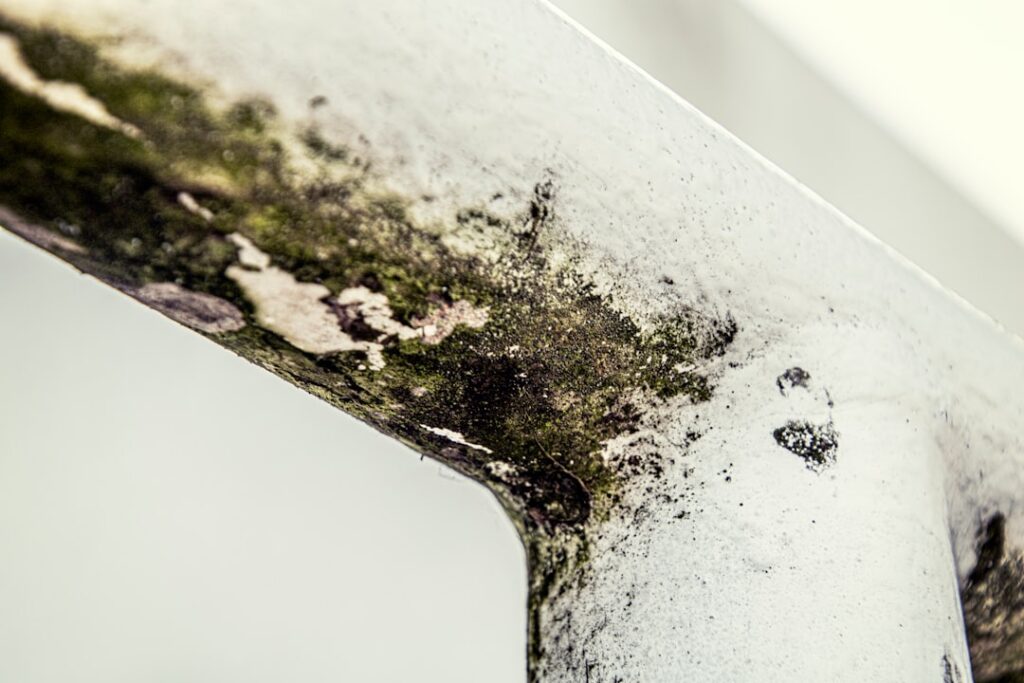
A mold and mildew testing service is fundamentally different from a remediation company. The testing service collects samples — air spore traps, surface tape lifts, bulk material samples, or dust samples for ERMI analysis — and sends them to an accredited laboratory for fungal identification and quantification. The service then issues a written report interpreting the lab results in the context of the building. No physical removal happens. This guide summarizes EPA and CDC guidance current as of 2026 and walks Front Range homeowners through how a testing service works, when it makes sense, and how to read what comes back from the lab.
Is this mold, asbestos, or water damage? Get a free instant screen
Upload a clear photo of the suspect area. You'll get an instant AI screening opinion and what to do next. This is screening guidance, not a professional determination.
Screening guidance only. AI can be wrong. Confirm asbestos, mold type, or lead with lab testing or a licensed professional before acting.
What a mold and mildew testing service actually does
The testing service’s deliverable is a sampling report, not a remediation outcome. The technician performs a visual inspection, identifies areas of visible growth or suspected hidden contamination, takes moisture meter readings on suspect surfaces, and then collects samples according to a written sampling plan. Air samples typically use spiral impactor cassettes (Air-O-Cell, Allergenco-D, or Versatrap) drawing 75 to 150 liters of air through a sticky slide that captures spores for microscopy. Surface samples use sterile swabs, tape lifts, or bulk material removal.
Samples ship to an accredited laboratory — AIHA-LAP EMLAP or equivalent — for analysis. The lab provides spore counts by genus per cubic meter of air for air samples, or qualitative identification for surface samples. The testing service then writes an interpretive report comparing indoor counts to outdoor controls, flagging genera of concern, and recommending next steps. The mold inspection and testing pillar guide covers the full sampling vocabulary, and the mold and mildew inspection guide walks through what to expect during a site visit.
The four sample types and when each is appropriate
Each sample type answers a different question, and a competent testing service explains why each one is or is not collected on a particular project.
Air samples (spore trap)
Air samples answer: “What is in the air the occupants are breathing right now?” The technician collects an outdoor control sample (baseline ambient counts), then one or more indoor samples in suspect rooms and one indoor control in a non-suspect room. Lab analysis returns spore counts per cubic meter by genus (Aspergillus/Penicillium, Cladosporium, Stachybotrys, Chaetomium, Curvularia, etc.). Interpretation focuses on indoor counts that exceed outdoor counts and on indicator genera like Stachybotrys that should not appear in indoor air at all under normal conditions.
Surface samples
Surface samples answer: “Is this visible patch actually mold, and what species is it?” A tape lift or swab from a suspect surface is shipped to the lab for direct microscopy. The result is qualitative — present or absent, with genus identification — rather than quantitative. Surface samples are useful when the question is “is that staining behind the toilet mold or something else” rather than “how much mold is in the air.”
Bulk samples
Bulk samples answer: “Is this drywall, ceiling tile, or insulation contaminated?” The technician removes a small piece of suspect material and ships it to the lab. Results are qualitative. Bulk sampling is most often used when the homeowner needs to document contamination of a specific material for insurance or remediation scope purposes.
ERMI dust samples
ERMI (Environmental Relative Moldiness Index) is a DNA-based dust sampling method developed by EPA researchers. The technician collects settled dust from carpets and floors using a Mitest cassette, ships it to a participating lab, and receives back a numeric score derived from PCR detection of 36 mold species. Higher ERMI scores correlate with more historical mold growth in the home. ERMI is useful as a retrospective screen but is not a substitute for air sampling when the question is current exposure.
What the lab report actually shows
An air sample lab report lists each fungal genus identified, the spore count per cubic meter for each, and a total fungal load. The testing service’s interpretive report should compare indoor to outdoor for each genus, flag any indoor count that materially exceeds outdoor, and call out indicator species (Stachybotrys, Chaetomium, Memnoniella) that should not be present in indoor air. A common rule of thumb is that indoor Aspergillus/Penicillium counts should be at or below outdoor levels and that no Stachybotrys spores should appear in indoor air under normal conditions.
Lab reports are not a diagnosis. They are a snapshot of conditions at the moment of sampling. A testing service should not promise that a single round of clean air samples guarantees no mold problem exists, nor that a single elevated sample proves remediation is necessary — context (moisture history, visible growth, occupant symptoms) drives the interpretation.
When to hire a testing service vs. a remediation company
Three scenarios favor starting with a testing service rather than a remediator. First, when the question is whether mold exists at all (no visible growth, but symptoms or odor). Second, when an insurance claim or real estate transaction requires documented baseline conditions. Third, when post-remediation clearance is needed (this should always be an independent testing service, never the remediation contractor). A standalone testing service has no financial incentive to recommend unnecessary remediation, which is the central reason to keep testing and remediation under separate firms.
Conversely, two scenarios make a testing-first approach unnecessary. Visible mold on a known wet surface from an identified leak (the species does not change the cleanup protocol — see EPA guidance). And small patches under ten square feet that the homeowner can clean directly with detergent and water using PPE.
Mildew vs. mold — the testing service distinction
In informal speech “mildew” usually means the powdery surface growth seen on bathroom grout and tile — Cladosporium and similar surface molds that thrive on damp non-porous surfaces. Mycologically, mildew can refer to a specific group of plant pathogens (powdery mildews) that do not typically grow indoors. A testing service treats both colloquial mildew and mold under the same lab protocol — identification by genus from a sample, with no separate “mildew test.” The cleanup difference matters more than the testing difference: surface mildew on non-porous tile responds to detergent and water cleaning, while embedded growth in porous materials usually requires material removal.
Cost ranges for a testing service visit
2026 pricing for a residential mold and mildew testing service visit ranges $300 to $600 for a single-room project with two to three air samples plus a written report, $500 to $1,000 for a whole-home survey with four to six samples, and $1,000 to $2,500 for combined air, surface, and ERMI sampling on larger projects. Lab fees account for $40 to $90 per air sample and $100 to $300 for ERMI. Post-remediation clearance testing typically runs $400 to $900 depending on the number of zones cleared.
Vetting a mold and mildew testing service
Ask three questions. Is the technician credentialed (ACAC CIE, AIHA CIH, IICRC inspector tier)? Is the lab AIHA-LAP EMLAP-accredited? Does the testing service also offer remediation, and if so, would the homeowner be encouraged to use them for both? Firms that combine testing and remediation are not automatically disqualified, but the conflict of interest is real — and the strongest practice is to use separate firms for testing and for any subsequent remediation work.
What a sampling plan should include
A defensible mold testing visit follows a written sampling plan that the homeowner can review before sampling begins. The plan identifies the rooms to be sampled, the type of sample at each location (air, surface, bulk, or ERMI), the sample volume for air collections (typically 75 liters at 15 liters per minute over 5 minutes, or 150 liters over 10 minutes for higher sensitivity), the outdoor control location for air samples, and the analytical method requested from the lab (direct microscopy for spore traps, qualitative culturable analysis for surface samples, qPCR for ERMI). The plan should also note which areas were inspected but not sampled and why — for example, a basement with visible Stachybotrys may need direct surface sampling rather than air sampling because the species sheds heavy slimy spores that do not always become airborne.
Indoor versus outdoor comparison
The single most useful interpretive comparison in an air sample report is indoor counts versus outdoor control. Outdoor air contains thousands of spores per cubic meter as a normal condition, and the genera present outdoors vary by region and season. Front Range outdoor counts during the fall leaf-decomposition window can exceed 5,000 spores per cubic meter, while winter snow-cover periods can drop below 500. Indoor counts must be interpreted against the same-day outdoor sample, not against a generic threshold. A reading of 1,500 spores per cubic meter indoors looks alarming in isolation but may be entirely normal if the outdoor control reads 4,000 on the same morning.
Common reasons a testing service gets called
Five scenarios drive most homeowner mold testing service calls. Visible growth in an unexpected location, where the homeowner wants confirmation of the species before scoping cleanup. Persistent musty odor without visible growth, where the question is whether hidden growth exists. Post-leak verification after a known water event has been cleaned up, where the question is whether residual contamination remains. Pre-purchase due diligence during a real estate transaction, where the buyer wants documented baseline conditions before closing. And post-remediation clearance after professional cleanup, where the question is whether the work achieved Condition 1. Each scenario calls for a different sampling plan, and a competent testing service tailors the plan to the question rather than running a generic sample set.
What a competent report looks like
The deliverable from a mold and mildew testing service is not just the lab results. It is an interpretive report that ties the lab data to the building condition. The report should include a description of the home and the inspection date, the technician’s observations during the visit, photographs of suspect areas, the sampling plan with locations marked on a floor plan, the lab analysis report with raw spore counts, the interpretive comparison between indoor and outdoor samples, a discussion of any indicator species (Stachybotrys, Chaetomium, Memnoniella) detected, and recommendations for next steps. Reports that consist only of a lab printout with no interpretation are less useful than reports of half the page count that include narrative context.
Common pitfalls in residential mold testing
Several patterns produce ambiguous or misleading results in homeowner-facing mold testing. Sampling without an outdoor control on the same day, which leaves indoor counts uncalibrated against ambient conditions. Sampling during heavy outdoor mold seasons (fall leaf decomposition) when indoor air naturally tracks high outdoor counts, producing alarming-looking but normal indoor results. Sampling immediately after vacuuming or other indoor activities that disturbed settled dust, temporarily elevating airborne counts. Sampling without first inspecting the building for moisture sources and visible growth, which leaves the lab data without diagnostic context. A competent testing service avoids these pitfalls by following a written sampling plan, controlling for ambient conditions, and integrating visual inspection with lab analysis.
The interpretive judgment that experience adds
A technician with hundreds of residential samples behind them recognizes patterns that a checklist-based interpretation may miss. A specific Aspergillus species mix that signals chronic damp-paper conditions. A Chaetomium presence that points to sustained water damage even when Stachybotrys is absent. A spike in Cladosporium that tracks seasonal outdoor air infiltration rather than indoor source. This pattern recognition is what separates a routine lab printout from an actually useful diagnostic report, and it is one reason homeowners benefit from selecting a testing service with documented residential experience rather than a generalist or new entrant.
References
- Mold Remediation Reference Guide — EPA
- Basic Facts About Mold and Dampness — CDC
- Mold Inspection Guidance — InterNACHI
- A Brief Guide to Mold, Moisture, and Your Home — EPA
Front Range homeowners who want a connection to an independent mold testing service can get in touch through our contact page.