Mold and Mildew Testing Near Me: 2026 Service Guide
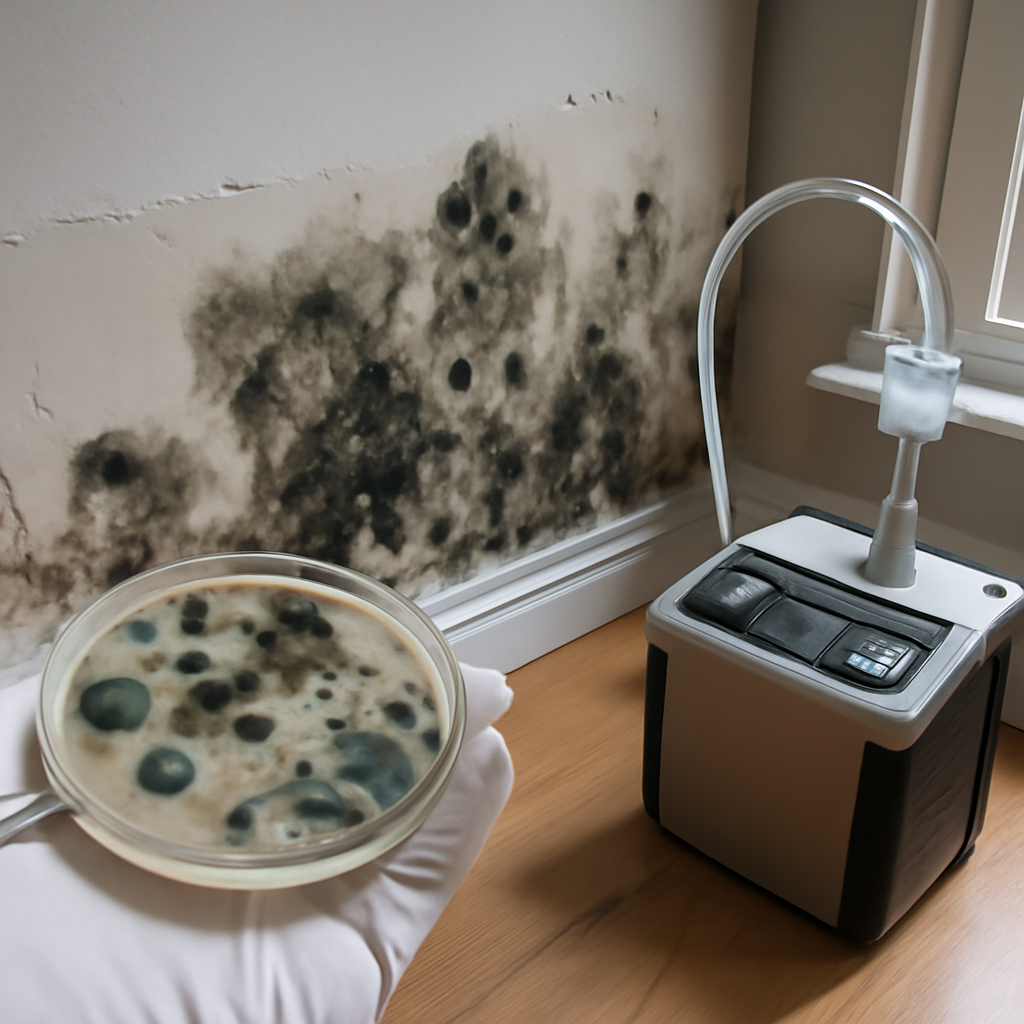
Searching for mold and mildew testing near me usually means a homeowner has either found visible discoloration, smelled a musty odor, or seen condensation patterns that suggest a hidden moisture problem. Local providers handle two related but distinct services: laboratory-quality mold sampling and a less formal mildew surface check that homeowners can sometimes do themselves. This guide explains how to evaluate local mold and mildew testing services in the Denver metro and broader Front Range, what certifications matter, what pricing looks like in 2026, and how to read a lab report without paying for an unnecessary remediation. This guide summarizes EPA and CDC guidance current as of 2026 — consult a physician for symptom evaluation and a certified professional for testing decisions.
Part of our Mold Testing & Inspection guide — start there for the full picture →
Is this mold, asbestos, or water damage? Get a free instant screen
Upload a clear photo of the suspect area. You'll get an instant AI screening opinion and what to do next. This is screening guidance, not a professional determination.
Screening guidance only. AI can be wrong. Confirm asbestos, mold type, or lead with lab testing or a licensed professional before acting.
What “mold and mildew testing near me” actually covers
Mildew is a colloquial term for surface molds — usually Cladosporium, Alternaria, or some Penicillium species — that grow on shower grout, vinyl curtains, and damp window frames. True mildew responds to surface cleaning and is rarely a structural problem. Mold testing, in the inspection trade, almost always refers to indoor air sampling, tape-lift surface sampling, or bulk sampling of suspect material, sent to an accredited laboratory and reported as spore counts or species identification.
Most local service providers will offer four products under one quote: a visual inspection (40-60 minutes), an air-cassette sample taken indoors plus one outdoor control, one or two surface tape-lifts on visible discoloration, and a written report with lab data. Pricing depends on sample count, not on whether you call the discoloration “mold” or “mildew” — the lab analyzes the same Aspergillus, Penicillium, Cladosporium, and Stachybotrys spores either way.
2026 pricing in the Front Range market
Pricing in Denver, Boulder, Douglas, Jefferson, and Arapahoe counties has firmed up through 2025 and 2026. Typical ranges:
Visual-only inspection (no lab samples). $150-$300. Walk-through with moisture meter and infrared camera, written report, no lab data. Useful for narrowing down a moisture problem before paying for samples.
Standard air sampling (one indoor, one outdoor). $300-$500. Two cassettes processed by an accredited environmental lab, results back in 3-5 business days, comparison report.
Comprehensive mold and mildew assessment. $400-$700. Visual inspection plus 2-3 air samples and 1-2 surface tape-lifts, full lab report, recommendations for next steps.
Post-remediation verification. $300-$500. Air samples taken after a remediation job to confirm spore counts have dropped to normal indoor background. Insurance and real-estate transactions often require this.
Front Range pricing skews higher in Boulder and Denver proper and lower in El Paso and Adams counties. The lab fee — typically $40-$80 per cassette — is the dominant cost driver, so providers offering “free” extra samples are usually trimming inspection time or skipping the outdoor control.
Why combined mold and mildew testing is a useful framing
Most homeowners do not distinguish carefully between mold and mildew before they search. They search after they notice three things at once: a musty smell, dark spots in a grout line, and a vague sense that something is “off” in a bathroom or basement. A combined mold and mildew testing service answers both questions in one visit. The inspector confirms whether the visible discoloration on grout is genuine biofilm or just soap scum, and whether the air in the room contains elevated spore counts that suggest hidden growth.
Some local providers market a “bathroom and basement starter package” that pairs a single air sample with one or two surface lifts and a 30-minute walk-through. The package usually runs $250-$400 and is enough to tell a homeowner whether the bathroom mildew is a cleanup problem or a symptom of a larger hidden colony. For a clean two-bathroom home with no recent water events, this is often the right entry-level test.
Certifications that matter
Anyone with a moisture meter and a business card can call themselves a mold inspector. Two credentials worth filtering for:
InterNACHI Certified Mold Inspector (CMI). Requires coursework, an exam, and continuing education. Searchable through the InterNACHI member directory.
IICRC AMRT (Applied Microbial Remediation Technician). The remediation-side credential. Important if you might hire the same firm to clean up what they find — though many ethicists argue that the inspecting firm should not also perform the remediation.
State licensing is less consistent. Colorado does not currently license mold assessors as a stand-alone trade, so the certification credentials above carry more weight than any state registration. Ask for proof of the certification number, not just a logo on a website.
Homeowners weighing inspector credentials more broadly can review our certified-inspector buyer guide for the home-inspection cousin of the same question.
How to vet a local provider before booking
Five questions to ask before you write the deposit check:
1. Which laboratory processes your samples? Accredited labs include EMSL Analytical, EMLab P&K, and Aerobiology Laboratory. If the answer is “we use a local lab” without a name, ask for the name.
2. Do you take an outdoor control sample? The outdoor reading establishes what “normal background” looks like for the day. Without it, indoor numbers are uninterpretable.
3. Do you also perform mold remediation? If yes, ask how they avoid the inherent conflict of interest. Some firms split inspection and remediation into separate legal entities. Others recommend a different remediation company.
4. What does the written report include? A good report includes annotated photographs, moisture meter readings, infrared imagery if available, the lab data, and a narrative interpretation. Spore counts without context are nearly useless.
5. Are you InterNACHI CMI or IICRC AMRT certified? Get the certification number and verify it on the credentialing organization’s website.
What a thorough on-site visit looks like
A properly executed mold and mildew assessment runs 60 to 120 minutes for a typical 2,000-square-foot Front Range home. The inspector walks the property, photographs visible discoloration, takes moisture readings on suspect substrates with a pin or pinless meter, and uses a thermal camera to scan exterior walls and ceilings for cold spots that often correlate with hidden moisture. The visual phase identifies where samples should be taken.
Sample collection itself is the shortest part of the visit. A spore-trap cassette runs for five to ten minutes per location. A tape-lift takes under a minute. The bulk of the on-site time goes into the visual diagnostics and the conversation about how the homeowner uses the rooms — long showers without fan use, basement storage against exterior walls, humidifiers running in winter. That context shapes how the lab data gets interpreted in the final report.
Expect the inspector to ask about recent plumbing leaks, roof age, sump-pump history, HVAC service intervals, and any health complaints from residents. A provider who skips the interview and goes straight to sample collection is not delivering the consulting value that justifies the price.
Mildew vs mold: when a test is overkill
Mildew on a shower curtain or bathroom grout rarely justifies a lab test. The visible pattern is consistent with surface biofilm — Cladosporium, Penicillium, or some Aspergillus species — and the remediation is the same regardless of which one is dominant: scrub with an EPA-registered antimicrobial, improve ventilation, and keep the surface dry. Spending $400 to confirm Cladosporium on grout is rarely useful spend.
Mold testing earns its cost when one of the following applies: someone in the household has unexplained respiratory symptoms; a real-estate transaction or insurance claim requires documentation; visible growth covers more than ten square feet; a recent flood, sewage backup, or roof leak preceded the symptoms; or hidden growth is suspected behind walls or under flooring. A DIY mildew identification process can sometimes answer the question for under $30 if the homeowner just needs to confirm a bathroom-grout colony.
Air sampling vs surface sampling
The two most common test types serve different purposes.
Air sampling (spore-trap cassettes)
A small pump pulls a measured volume of air through a sticky slide for five to ten minutes. The lab counts spores by genus per cubic meter. Useful for invisible or hidden mold and for comparing one room to another. Limitation: a single five-minute sample is a snapshot. Spore counts vary by time of day, HVAC operation, and recent activity in the room.
Surface sampling (tape-lifts and swabs)
A piece of clear tape is pressed onto a visible discoloration, then mounted on a slide. The lab confirms whether the discoloration is actually mold and identifies the dominant genus. Cheaper than air sampling per sample. Useful for confirming a visible suspect but cannot tell you what is in the breathing zone.
Bulk sampling
A physical piece of suspect drywall, insulation, or wood is sent to the lab. Used by remediators to confirm contamination extent before cutting walls. Rarely needed for homeowner-driven testing.
For homeowners weighing test types before booking a service, our air-sampling walkthrough covers method and interpretation in more depth.
How to read the lab report
A typical spore-trap report lists genera (Aspergillus/Penicillium, Cladosporium, Stachybotrys, Alternaria, Curvularia, etc.) and reports counts per cubic meter for each. The interpretation depends on comparison with the outdoor control sample.
Normal indoor patterns mirror outdoor patterns: if outdoor Cladosporium is high in summer, indoor Cladosporium will be moderately elevated too — that is expected and not a remediation flag. Red flags are: any detection of Stachybotrys or Chaetomium indoors (these are water-damage markers); indoor Aspergillus/Penicillium counts substantially above the outdoor reading; or a genus present indoors that is absent outdoors. The EPA does not publish “safe” numeric thresholds, which is why the outdoor control matters — it is the baseline that turns raw counts into actionable information.
Turnaround times and rush options
Standard lab turnaround for spore-trap cassettes is three to five business days. Most labs offer 48-hour and 24-hour rush options for an additional $20-$40 per sample. Real-estate transactions and insurance claims often justify the rush fee; routine homeowner curiosity rarely does.
Once samples arrive, the lab analyzes the slides under a phase-contrast microscope and reports raw spore counts. The inspector receives a PDF, interprets the data against the outdoor control and the visual findings, and produces a narrative report. Total project timeline from booking to final report is typically seven to fourteen days. Plan accordingly if the test feeds into a transaction deadline.
When the report says you need remediation
A finding that indoor Aspergillus/Penicillium is several times the outdoor level, or any detection of Stachybotrys indoors, typically warrants professional remediation. Get a separate remediation quote from a firm that did not perform the inspection. The remediator should follow IICRC S520 protocols, set up containment, run negative-pressure HEPA air scrubbers, and provide a post-remediation verification clearance.
Source-moisture correction is the prerequisite. Killing spores in a wet wall is a holding action; the colony returns within weeks if the leak, condensation, or grade problem persists. Reputable remediators refuse to start work until the moisture source is identified and a repair plan is in place.
Red flags that should disqualify a provider
Walk away from any provider who: refuses to take an outdoor control sample; quotes a remediation cost before the lab data returns; claims to “kill mold with ozone” without follow-up source repair; cannot produce certification numbers; pressures the homeowner with same-day-decision sales tactics; or recommends a $10,000+ remediation based on a single surface sample. Mold-and-mildew testing is straightforward fee-for-service work, not a sales funnel.
What to do with the report after the inspection
Homeowners often receive the report, scan the numbers, and have no idea what to do next. The provider should walk through the findings on a phone call or video conference, point to specific photographs, and translate the lab data into a recommended action list. If the visit is “drop off the report and disappear,” the service was incomplete.
Typical action lists fall into three categories. Cleanup-only: surface mildew and elevated counts traceable to a known moisture problem that the homeowner can fix without professional remediation. Mixed: surface remediation by the homeowner plus a moisture-source repair (regrade, fan upgrade, gutter extension) by a contractor. Full remediation: significant hidden growth, water-damage indicator species, or square footage that exceeds the EPA ten-square-foot threshold — call a certified remediator and follow IICRC S520 protocols.
Front Range scheduling and seasonality
Most Denver-metro providers can book a standard mold and mildew inspection within five to ten business days. Demand peaks in late spring after snowmelt exposes basement leaks, and again in late summer after monsoon storms drive condensation. Booking in winter — when Front Range humidity is lowest — sometimes produces faster turnaround but also risks underestimating a problem that worsens in warmer months.
For homeowners weighing whether to call a pro or run a DIY first pass, the mold inspection hub walks through the decision tree before any sample is collected.
Insurance, real estate, and legal considerations
Many homeowners book a mold and mildew test specifically to support an insurance claim, a real estate disclosure, or a landlord-tenant dispute. The documentation standards are higher in those scenarios than for routine homeowner curiosity. Insurance adjusters expect a written report on letterhead, a lab certificate of analysis, an outdoor control sample, moisture-meter readings logged with timestamps, and annotated photographs. A casual visual write-up will be rejected.
Real-estate transactions on the Front Range frequently involve mold testing during inspection objection periods. Buyers’ agents sometimes request air sampling after a visual inspector flags suspect discoloration. The result feeds into the inspection objection or repair-request paperwork. Sellers occasionally pre-empt this by commissioning their own test before listing, which can shorten objection negotiations.
Landlord-tenant cases are the most contested. Colorado has a habitability statute that addresses mold under broader habitability requirements, and tenants pursuing a claim usually need lab-documented elevated spore counts plus a written moisture-source diagnosis. Choose a provider who can credibly serve as an expert witness if the case escalates.
References
- Mold Testing or Sampling Guidance — U.S. Environmental Protection Agency
- Basic Facts About Mold and Dampness — Centers for Disease Control and Prevention
- Mold Inspection Standards of Practice — InterNACHI
- Find a Certified Inspector Directory — American Society of Home Inspectors
Frequently asked questions
How much does mold and mildew testing cost in 2026?
Front Range pricing typically runs $300-$500 for a basic two-sample air test, $400-$700 for a comprehensive visual inspection plus 3-5 samples, and $150-$300 for a visual-only assessment without lab work. Lab fees of $40-$80 per cassette drive most of the cost variance.
Is mold and mildew the same thing?
Mildew is a colloquial term for surface molds — usually Cladosporium or Penicillium — growing on grout, curtains, or window frames. Mold is the broader scientific category that includes mildew along with hidden, water-damage species like Stachybotrys and Chaetomium. Both are tested the same way.
Do I need an outdoor air sample?
Yes. Indoor spore counts are only interpretable against a same-day outdoor control. Many genera are normally present in outdoor air at varying seasonal levels, and the outdoor reading sets the baseline. A provider who skips this step is selling uninterpretable data.
Can I test for mildew myself?
Surface mildew on grout, curtains, and bathroom fixtures can usually be identified visually and cleaned with an EPA-registered antimicrobial. DIY surface kits exist for around $15-$30. Lab-based air sampling and species identification require professional equipment and an accredited lab.
Should the inspector also do the remediation?
Ideally not. The inspecting firm has an inherent conflict of interest if it also bids the remediation. Many homeowners use a separate inspector and remediator, or hire an inspector who explicitly does not perform remediation work and refers the cleanup out.
Front Range homeowners weighing mold and mildew testing companies can reach out through our contact page for a connection to vetted local inspectors with verifiable certifications.