Mold and Mildew Test: The Difference and Methods
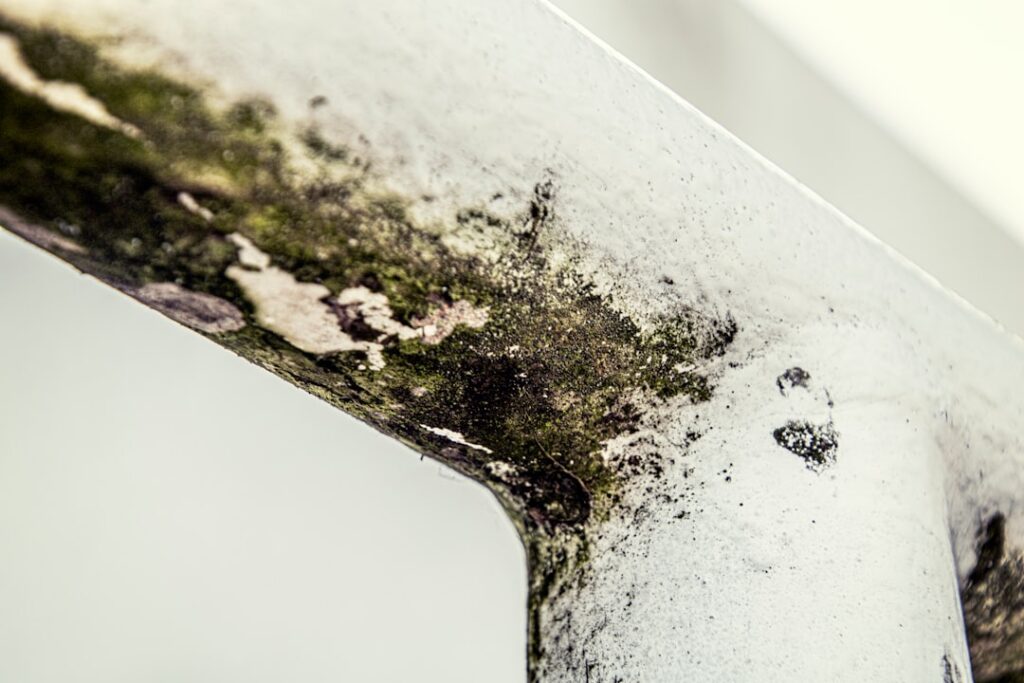
The terms mold and mildew get used interchangeably in everyday conversation, but they describe meaningfully different problems. Mildew is the common name for surface fungal growth — usually Cladosporium or other dark molds — on hard, non-porous bathroom and kitchen surfaces. Mildew responds to surface cleaning with bleach. Mold, in the deeper structural sense, describes fungal colonies growing into porous substrates like drywall, wood, and ceiling tile. Mold requires substrate-aware remediation. A combined mold and mildew test confirms which problem you have. This guide summarizes EPA and CDC guidance current as of 2026 — consult a certified mold inspector for testing decisions and your physician for symptom evaluation.
Is this mold, asbestos, or water damage? Get a free instant screen
Upload a clear photo of the suspect area. You'll get an instant AI screening opinion and what to do next. This is screening guidance, not a professional determination.
Screening guidance only. AI can be wrong. Confirm asbestos, mold type, or lead with lab testing or a licensed professional before acting.
What is the actual difference between mold and mildew?
Both are fungi. Mycologists do not formally distinguish them by genus — “mildew” in indoor contexts usually refers to Cladosporium or Aspergillus species growing on tile, grout, glass, or sealed countertops. “Mold” in everyday usage describes the same organisms growing on porous substrates (drywall, wood, ceiling tile, fabric) where they penetrate into the material rather than staying on the surface. The distinction matters because surface mildew cleans up with bleach or simple antimicrobials, while structural mold requires more aggressive substrate-specific protocols.
Mildew (surface growth)
Mildew appears as small dark spots on bathroom tile, shower grout, the underside of window casings, and the inside of laundry-room walls. The growth stays on the surface, removes with a damp cloth and a household antifungal cleaner, and recurs whenever conditions get wet again. Mildew is mostly cosmetic and rarely indicates a structural moisture problem; it indicates a humidity problem in the room.
Mold (substrate-penetrating growth)
Mold colonies penetrate into porous materials. Visible signs include fuzzy or spotted growth on drywall paper, warped or stained baseboards, soft framing inside wall cavities, and recurring stains that come back within weeks of cleaning. Mold often indicates chronic moisture intrusion that requires source repair, not just surface cleaning.
How does a mold and mildew test distinguish the two?
Lab tests do not formally separate mildew from mold — both terms refer to fungi, and the lab identifies the genus or species rather than categorizing as “mold” versus “mildew.” What the test does is reveal which species are present and on which substrate. Interpretation of the result distinguishes surface mildew from deeper mold:
- Surface swab of dark spots on tile or grout returning Cladosporium: surface mildew.
- Surface swab of growth on drywall paper returning Cladosporium or Aspergillus with elevated counts: structural mold.
- Surface swab returning Stachybotrys: structural mold, chronic moisture indicator, never “mildew.”
Pair the swab result with substrate context. The same species on a non-porous bathroom tile is mildew you clean with bleach; on drywall paper it is mold you clean with EPA-registered antimicrobials.
Testing methods for visible growth
Surface kits are the workhorse for distinguishing mildew from mold. A sterile swab against the suspect growth, sealed in the prepaid mailer, and shipped to an accredited lab returns genus or species identification within 3 to 7 business days. Cost: $35 to $80 per sample. For homes with multiple suspect locations, run swabs on each substrate type to characterize the full picture — one on bathroom grout, one on drywall above the shower, one on the wall behind the toilet, and so on.
Air sampling rarely helps distinguish mildew from mold. Both produce airborne spores at similar rates, and indoor counts will reflect the combined load. Surface sampling on the actual visible growth is the right tool for this question. The mold detection test guide covers product categories in detail.
Cleanup protocols differ by category
Mildew on non-porous surfaces
Bleach diluted 1:10 with water kills surface Cladosporium on tile, grout, glass, and sealed countertops. Apply with a spray bottle, let dwell for 10 minutes, scrub with a stiff brush, rinse with clean water, and dry. Recurrence indicates a humidity problem (often a bathroom fan running too short or undersized) rather than a structural mold problem. Run the fan longer, install a higher-CFM fan, or add a humidity-sensing fan controller to address recurrence.
Mold on porous surfaces
EPA-registered antimicrobials (Concrobium, Benefect Decon 30, RMR-86) penetrate porous substrates and kill mold below the surface. Bleach does not effectively penetrate drywall paper, wood, or grout below the surface — it removes appearance only. For drywall mold, use an EPA-registered antimicrobial or replace the affected section if growth exceeds small surface coverage. For wood framing, HEPA-vacuum, scrub with detergent, and treat with antimicrobial. The kill mold on walls guide covers substrate-specific protocols in detail.
Health considerations across both categories
The CDC notes that exposure to both mold and mildew may cause respiratory irritation, allergic responses, and asthma exacerbation in sensitive individuals. Mildew on bathroom tile usually produces lower exposure than structural mold inside walls because the airborne release from surface growth is typically modest. People with mold allergies, asthma, or compromised immunity react to both categories; the surface versus structural distinction does not eliminate health risk for vulnerable occupants.
If household members report respiratory symptoms tied to a specific bathroom, the visible mildew may be more than cosmetic. Test the actual growth, but also evaluate humidity, ventilation, and any signs of moisture penetration behind the visible surface.
When mildew is actually a sign of deeper mold
Surface mildew that recurs within weeks of careful cleaning sometimes indicates a deeper problem. Investigate further when:
- Mildew returns to the same spot despite improved ventilation.
- The mildew is on drywall or wallpaper rather than tile or grout.
- Adjacent baseboards are warped or stained.
- Moisture-meter readings on the wall behind the mildew are elevated.
- Other rooms in the house show similar growth without obvious moisture sources.
Recurring surface growth that resists ventilation improvements often points to wall-cavity moisture from a slow leak or chronic condensation. Move from surface cleaning to cavity investigation if the pattern continues.
Cost comparison for mold and mildew testing
- Surface swab kit: $35 to $80 per sample.
- Multiple samples (3 to 5 different substrates): $105 to $400 total.
- Continuous IAQ humidity monitor for prevention: $200 to $400 one-time.
- Professional inspection if surface testing returns ambiguous or alarming results: $400 to $800.
For most homeowners, $50 to $200 in surface kits across the visible suspect spots produces a defensible picture of whether the problem is surface mildew or structural mold.
Prevention strategies for both categories
The same prevention works for mildew and mold: limit moisture, improve ventilation, and maintain indoor humidity under 60 percent year-round. Specific actions:
- Run bathroom fans for at least 20 minutes after every shower.
- Upgrade undersized bath fans to 80 CFM or higher.
- Install humidity-sensing fan controllers that run until humidity drops below 60 percent.
- Wipe down shower walls after use to remove standing water.
- Replace caulk around bath fixtures every 2 to 3 years.
- Verify bath fans terminate outside the house, not in the attic.
- Use exhaust fans in laundry rooms with high-humidity loads.
- Monitor crawlspace humidity and add dehumidification if needed.
Most household mildew problems resolve with improved ventilation. Persistent mildew despite proper ventilation usually points to deeper moisture issues.
Front Range climate factors
Colorado’s generally dry climate keeps overall household humidity modest, but specific local conditions still produce mildew problems. Bathrooms in homes built before 2000 often have undersized fans that struggle to clear humidity in 10 to 15 minutes. Homes using swamp cooling all summer push indoor humidity into the 60 to 70 percent range, supporting mildew growth in closets and corner spaces. Older windows with single-pane glass produce winter condensation that wicks into adjacent drywall and supports mildew on the casing.
Homes in Adams, Arapahoe, Boulder, Broomfield, Denver, Douglas, El Paso, Elbert, and Jefferson counties all see seasonal mildew patterns tied to swamp cooler use and bathroom ventilation deficiencies. Address ventilation first; testing rarely changes the practical conclusion when surface growth is clearly present.
Common look-alikes that test as neither mold nor mildew
Dark staining on indoor surfaces is not always fungal. Look-alikes include:
- Soot deposits from candles, fireplaces, or HVAC supply registers — sticky to the touch, greasy under wipe testing.
- Tannin staining from past water damage on ceilings — yellow-brown, dry, often inactive after repair.
- Efflorescence on concrete or masonry — white salt powder, wipes off as dry powder.
- Mineral staining from hard-water deposits — chalky white or beige, common in showers with hard water.
- Cosmetic mold-pattern paint discoloration on older paint formulations — surface-only, no growth detected on lab swab.
A swab kit returning “no significant mold growth detected” on a visible stain points to one of these non-fungal causes. The cleanup approach for each look-alike differs from mold or mildew remediation; identify the actual cause before applying antimicrobials that may not address the real issue.
Surface mildew patterns by room
Mildew appears in predictable patterns by room type. Bathrooms produce mildew on shower walls, grout joints, the underside of fiberglass tub flanges, behind shampoo bottles on built-in shelves, and on the ceiling above the shower. Kitchens produce mildew along the caulk line between sink and counter, on the back wall behind the dish rack, and on the underside of cabinets near plumbing. Laundry rooms produce mildew around the rubber gasket of front-loading washers, on the walls near the dryer vent, and on the floor under the washing machine.
Surface cleaning addresses the visible growth in each location, but recurrence patterns indicate the underlying conditions — ventilation, humidity, plumbing — need attention.
Front-loading washer mildew is its own category
Front-loading washing machines develop chronic mildew on the rubber door gasket and inside the detergent drawer. The gasket traps water after every cycle, and the warm humid interior is an ideal environment for Cladosporium and Aspergillus. Manufacturers recommend leaving the door open between loads, wiping the gasket dry after each cycle, and running a monthly hot-water cleaning cycle with a manufacturer-approved cleaner (Affresh, OxiClean Washing Machine Cleaner). Persistent gasket mildew beyond manufacturer-recommended care sometimes requires gasket replacement, a $50 to $150 part plus labor.
Test the gasket growth with a surface swab if symptoms suggest occupants are reacting to laundry-room exposure. Most washer-gasket mildew tests as Cladosporium, which responds to routine surface cleaning. If the lab returns Stachybotrys or Chaetomium, the moisture problem extends beyond the gasket and warrants deeper investigation.
When to call a professional
Move past consumer testing when DIY results conflict, when growth extends across multiple rooms, when occupants have severe respiratory conditions, or when results will enter a transaction or insurance dispute. Professional fees of $400 to $800 cover calibrated equipment, paired outdoor controls, thermal imaging, moisture mapping, and a written narrative report. The mold inspection and testing pillar covers inspector engagement structure.
References
- Mold home page — U.S. Environmental Protection Agency
- Mold facts — Centers for Disease Control and Prevention
- Mold inspection standards — InterNACHI
- Mold in the home — Colorado Department of Public Health and Environment
Front Range homeowners with recurring surface growth that resists ventilation improvements can reach out through our contact page for a vetted inspector referral.