Mildew Test Kit: 2026 Buyer Guide for Homeowners
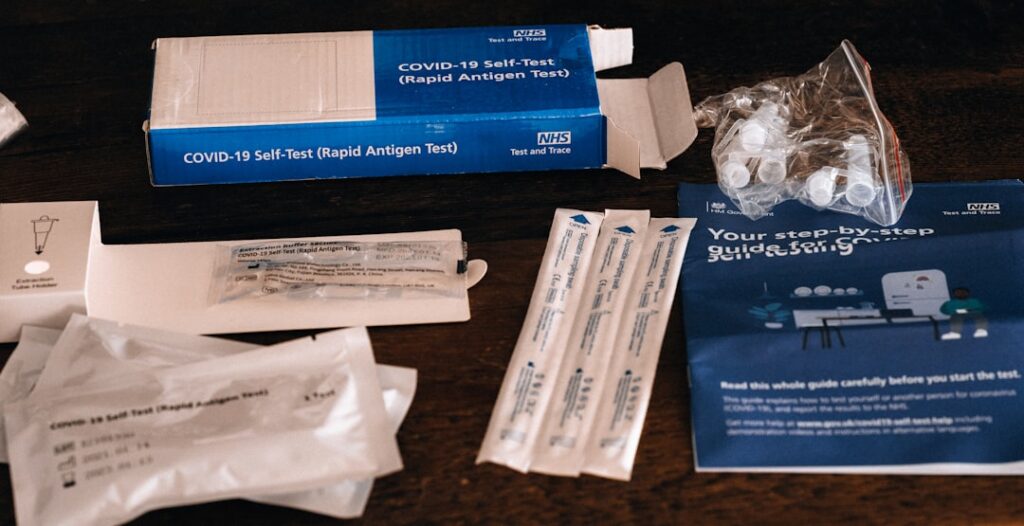
“Mildew test kit” and “mold test kit” mostly cover the same product category, but the framing differs. Homeowners who search for a mildew kit are usually targeting bathroom-grout, tile-caulk, shower-curtain, or outdoor-surface growth — surface-level Cladosporium, Alternaria, or Aureobasidium rather than wall-cavity Stachybotrys. The kit chemistry is the same; the use case is narrower. This guide summarizes EPA and CDC guidance current as of 2026 with manufacturer-published kit protocols — consult a certified professional for confirmed growth larger than ten square feet and your physician for respiratory symptoms.
Part of our Mold Testing & Inspection guide — start there for the full picture →
Is this mold, asbestos, or water damage? Get a free instant screen
Upload a clear photo of the suspect area. You'll get an instant AI screening opinion and what to do next. This is screening guidance, not a professional determination.
Screening guidance only. AI can be wrong. Confirm asbestos, mold type, or lead with lab testing or a licensed professional before acting.
Mildew vs Mold in the Test Kit Context
Mildew is a colloquial term. The organisms typically called mildew — Cladosporium and Alternaria in particular — are technically molds in the broader sense. They share the lab identification protocols used for any fungal sample. A consumer mildew kit and a consumer mold kit use the same collection medium and the same partner laboratory, just labeled differently to match the consumer’s search intent.
This means the chemistry differences a homeowner sees between products are real (settle plate versus swab versus spore trap), but the “mildew” label does not select a different test. Buying a mildew kit and a mold kit from the same lab returns equivalent reports.
What a Mildew Test Kit Actually Detects
Most consumer kits collect a sample in one of three ways: a sterile swab pressed onto the visible growth, a settle plate left open in the room for one hour, or an air-pump spore trap that draws a measured volume across an adhesive slide. The sample mails to a partner lab. The lab incubates (for settle plates and swab cultures) or examines microscopically (for spore traps) and identifies the dominant species at genus level.
For surface mildew on bathroom tile, the swab format is the natural fit. The applicator lifts material directly from the visible colony for identification. Turnaround typically runs five to ten business days. Most consumer swabs identify Cladosporium, Alternaria, Aureobasidium, or occasionally surface Aspergillus as the primary species in bathroom and laundry-room samples.
Surface Swab Kits
Direct-to-consumer surface swab kits from companies like DIY Mold Test, ImmunoLytics, and Mold Inspection Sciences run $40 to $80 all-in with lab analysis included. Hardware-store swab kits from Mold Armor or Pro-Lab run $10 to $20 for the kit plus a $40 lab fee.
The advantage of the direct-lab products is bundled pricing and integrated reporting. The advantage of hardware-store kits is immediate availability — a homeowner who notices recurring black staining on grout at 9pm Saturday can have a kit by 10am Sunday. Both formats produce comparable identification when used correctly.
Settle Plate Kits
Settle plates contain a petri dish with growth medium that the homeowner exposes by leaving the lid off for one hour in a suspect room. Spores landing on the medium during that hour grow into visible colonies over the following days. Many “mildew test kit” products at hardware stores use this format.
Settle plates undercount lightweight airborne spores that remain suspended longer than the collection window. For surface mildew on a visible colony, they are not the natural fit — a swab is more direct. For general room screening they have meaningful limitations. Total cost runs $50 to $75 per sample (kit plus lab fee).
Air-Pump Spore Trap Kits
Spore traps use a small pump to draw a measured air volume across a collection slide. The lab counts spore types per cubic meter under microscopy, returning quantitative data. Direct-to-consumer kits from GotMold?, DIY Mold Test, and similar providers run $90 to $150 for single samples, $150 to $250 for indoor-outdoor pairs.
Spore traps are the most rigorous consumer format. For homeowners concerned about airborne mildew levels affecting allergies, asthma, or recurring symptoms — rather than visible bathroom staining — the spore trap with outdoor control is the appropriate kit. Our cluster on mold spore testing covers the format in more depth.
Pricing at a Glance
- Hardware-store swab: $50 to $80 total (kit + lab fee)
- Hardware-store settle plate: $50 to $75 total
- Direct-lab swab with analysis included: $40 to $90 all-in
- Direct-lab single spore trap: $90 to $150
- Indoor + outdoor spore trap pair: $150 to $250
- ERMI dust test: $200 to $300
For a single visible-mildew identification question, the under-$100 swab is usually right. For a whole-room or whole-home assessment, the $200 to $300 spore-trap pair or ERMI is more interpretable.
What a Mildew Kit Cannot Do
No consumer mildew kit will:
- Detect growth inside wall cavities, under flooring, or in HVAC systems without disturbing those structures
- Diagnose medical symptoms or recommend treatment
- Substitute for an inspector’s source identification when growth is confirmed
- Distinguish between active growing colonies and inactive dried-out remains
- Provide the chain-of-custody documentation insurance claims often require
For visible surface mildew on tile or grout, a kit can confirm species at genus level. For deeper questions — whether airborne levels are elevated, whether the bathroom mildew is symptomatic of a larger humidity problem, whether respiratory symptoms in occupants are mildew-related — the kit alone is insufficient.
When a Kit Is the Right Tool
A mildew test kit earns its cost when:
- The homeowner wants documented identification before committing to remediation or a property transaction
- Insurance documentation requires lab confirmation of mildew presence
- Post-cleanup verification matters (was the cleaning effective)
- Multiple suspect rooms need triage to prioritize remediation order
- The homeowner is investigating recurring allergy symptoms in a specific room
It is not the right tool when visible mildew is already present, the homeowner has identified the moisture source, and no insurance or transaction documentation is needed. The EPA’s guidance in those cases is to clean the growth and correct the moisture; testing adds little.
Reading the Lab Report
Most lab reports list dominant species identified, sometimes with quantitative counts for spore traps, and occasionally a written interpretation. For mildew samples, common findings include Cladosporium (the most ubiquitous outdoor organism that also colonizes damp indoor surfaces), Alternaria (associated with damp basements and bathrooms), Aureobasidium (especially on bathroom caulk and shower surfaces), and occasionally Penicillium or Aspergillus when the sampling extended beyond surface bathroom mildew.
A report dominated by Cladosporium is consistent with normal indoor air. Cladosporium is in every breath taken outdoors. Indoor levels substantially elevated above outdoor controls, or indoor profiles with substantial Stachybotrys or Chaetomium, point toward problems larger than surface mildew. Our piece on types of mold covers the interpretation in more depth.
Common Mildew Kit Mistakes
- Submitting only an indoor sample without an outdoor control (makes counts uninterpretable)
- Choosing a settle plate when a swab on visible growth is more direct
- Letting a sealed sample sit in a hot car or mailbox for days before mailing
- Sampling immediately after applying bleach or other cleaners (kills the sample biology)
- Disturbing the colony without protective equipment while collecting
- Treating any positive result as proof of a serious problem (spores are everywhere)
The InterNACHI guidance emphasizes sampling protocol over kit brand. A correctly collected hardware-store swab usually produces more useful data than a casually collected premium kit.
What to Do With the Result
For surface mildew on bathroom tile or grout: clean the area with a hydrogen-peroxide or bleach-based mildew remover, improve ventilation (exhaust fan timer, longer fan runtime, opened window during showers), and monitor for 30 days. Recurrence indicates persistent humidity above 50% that needs a structural fix (dehumidifier, fan upgrade).
For elevated airborne levels without visible growth: investigate hidden sources. Run moisture meters along walls. Inspect under sinks, behind washing machines, around toilets, in crawlspaces. Our cluster on how to check for mold in the walls covers the non-destructive search.
For documented Stachybotrys, Chaetomium, or substantially elevated water-damage indicators: stop DIY cleanup and hire a certified remediator. The kit has done its job by identifying the problem; the next step requires source identification and containment.
Sampling Bathroom and Laundry Spaces
The most common use case for mildew kits is sampling bathroom and laundry room growth. These spaces share a few characteristics that affect sampling: high humidity from regular wet-use activities, limited natural ventilation, mechanical exhaust that may or may not be working effectively, and surfaces that include both porous (drywall, fabric) and non-porous (tile, fiberglass) substrates.
For visible surface growth on tile grout or caulk, a surface swab pressed directly onto the colony returns species identification within a week. For airborne assessment of overall bathroom air quality, a spore-trap sample with an outdoor control during a representative day provides quantitative data. Settle plates work adequately for documenting general fungal presence but are not the ideal format for either question.
Sampling timing matters. Avoid sampling immediately after cleaning (the chemistry kills the sample). Avoid sampling during or immediately after showering or laundry use (the spore burden is artificially elevated). Sample during typical occupancy conditions for the most interpretable results.
Why Recurrence Matters More Than the Test Result
A single positive mildew identification rarely changes the homeowner’s next action. The species name (Cladosporium, Alternaria, Aureobasidium) does not determine whether bleach, peroxide, or encapsulant is the right cleaner. The moisture source matters more than the species.
Recurrence patterns are the more important data. If mildew returns to the same spot within two weeks of cleaning, the underlying humidity or ventilation issue is the problem, not the cleaner. If mildew spreads to new areas, the moisture source is expanding, not just persistent. If mildew appears in newly painted or finished surfaces, the substrate moisture was not adequately addressed before finishing.
Track recurrence with monthly photographs of suspect areas. The pattern over six months tells more about the home’s moisture environment than any single test result. Use the kit when documentation is needed for a specific decision; rely on recurrence tracking for ongoing monitoring.
Mildew Prevention After Testing
A test result alone does not prevent recurrence. Maintain bathroom and laundry humidity below 60% with exhaust fans and dehumidification. Ventilate during and 20 minutes after showers. Squeegee shower walls after each use. Replace silicone caulk every two to three years before it harbors deep growth. Wash fabric shower curtains monthly in hot water with a hydrogen-peroxide additive.
These maintenance habits make most consumer mildew kits unnecessary after the first round of identification.
Cost-Benefit of Mildew Testing
For most bathroom and laundry mildew situations, the question “should I test or just clean” usually answers itself. A $50 to $80 swab kit costs about as much as 5 to 10 bottles of consumer cleaner. If cleaning is the obvious next step regardless of species, the kit money is better spent on the cleaning supplies and ventilation upgrade.
Testing earns its cost in three scenarios: documentation requirements (insurance, real estate, tenant disputes), unresolved symptoms after cleaning (knowing the species sometimes guides treatment choice), or pre-investment vetting before larger spending (a homeowner considering a $5,000 bathroom remodel may want to confirm the underlying surface mildew situation before finishing).
For routine maintenance, cleaning without testing is the rational default. The EPA’s published guidance reinforces this — visible mildew on bathroom surfaces usually does not require testing before treatment.
References
- EPA Mold Testing or Sampling Guidance — U.S. Environmental Protection Agency
- CDC Mold Frequently Asked Questions — Centers for Disease Control and Prevention
- InterNACHI Mold Inspection Standards — International Association of Certified Home Inspectors
- EPA Brief Guide to Mold, Moisture, and Your Home — U.S. Environmental Protection Agency
Frequently asked questions
Is a mildew test kit different from a mold test kit?
In practice no. The kits use the same collection chemistry and the same partner laboratories. The labeling differs to match consumer search intent. A mildew kit tends to be used for surface bathroom and laundry growth, while a mold kit framing tends to target wall-cavity or basement concerns. The lab analysis is identical.
What does a mildew test kit detect?
Most kits identify dominant fungal genera in a collected sample: typically Cladosporium, Alternaria, Aureobasidium, or surface Aspergillus on bathroom and laundry samples. Quantitative counts are available with spore-trap formats. Settle plates and swabs provide species identification without precise counts.
How accurate are mildew test kits?
Accuracy depends on the kit type and sampling protocol more than the brand. Surface swabs on visible colonies return reliable genus-level identification. Spore traps with indoor-outdoor pairs return interpretable airborne data. Settle plates undercount lightweight spores. Match the kit format to the question.
Should mildew be tested or just cleaned?
The EPA's guidance is that visible mildew can usually be cleaned without testing. Surface bathroom mildew responds to standard cleaners and ventilation upgrades. Testing earns its cost when documentation is needed for insurance, when symptoms persist after cleaning, or when growth recurs despite proper maintenance.
Front Range homeowners who tested positive for elevated species — or whose bathroom mildew keeps coming back despite cleaning — can reach a vetted local inspector through our contact page for an in-home assessment of the moisture pathway.