Mold Spore Testing: 2026 Methods, Costs, and Lab Reports
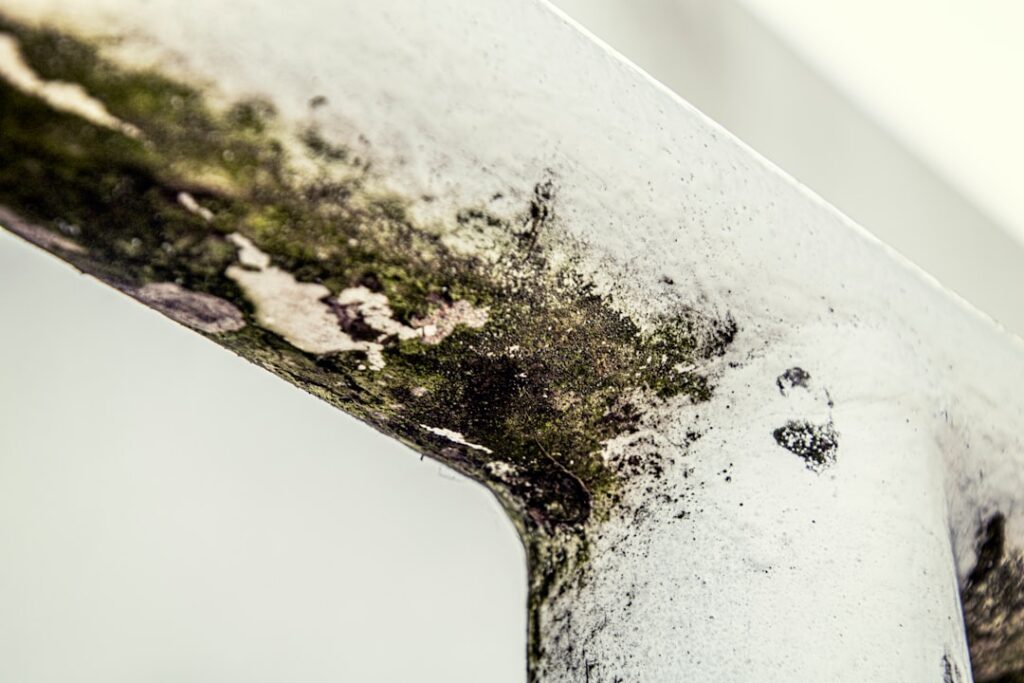
Mold spore testing covers a family of sampling techniques that count and identify the microscopic reproductive cells fungi release into air and onto surfaces. Each method answers a different question, and the right choice depends on whether you are trying to characterize what occupants are breathing, confirm a visible stain’s species, or document cumulative exposure for a health workup. This guide summarizes EPA and CDC guidance current as of 2026 and walks through air sampling, surface sampling, ERMI dust analysis, and DIY petri-dish kits with realistic costs, turnaround times, and clear use cases. Consult your physician for symptoms and a certified professional for sampling decisions.
Part of our Mold Testing & Inspection guide — start there for the full picture →
Is this mold, asbestos, or water damage? Get a free instant screen
Upload a clear photo of the suspect area. You'll get an instant AI screening opinion and what to do next. This is screening guidance, not a professional determination.
Screening guidance only. AI can be wrong. Confirm asbestos, mold type, or lead with lab testing or a licensed professional before acting.
What is mold spore testing?
Spore testing collects a controlled sample of air or material from inside a building and sends it to an accredited laboratory that counts and identifies the fungal structures present. Labs report results as spores per cubic meter for air samples, or as raw counts and species identifications for surface and bulk samples. The EPA’s standing recommendation is that testing is most useful when visible mold cannot be found but occupants suspect a problem, or when post-remediation verification is needed.
For the broader context of how spore testing fits into a full mold workup, the mold inspection and testing pillar walks through the inspection workflow alongside the lab side.
Air sampling with spore-trap cassettes
Air sampling is the most common form of mold spore testing in residential work. A calibrated pump pulls a known volume of air (typically 75-150 liters over five minutes) through a spore-trap cassette. The dominant brand is Air-O-Cell, manufactured by Zefon International. The cassette captures spores on an adhesive strip, which the lab examines under direct microscopy. A parallel outdoor sample taken the same day establishes the local background concentration.
Reports return in 48-72 hours and list spore counts per cubic meter by fungal genus — Aspergillus, Penicillium, Cladosporium, Stachybotrys, and several dozen others. The outdoor sample is the critical comparator. A 1,200-spore indoor count looks elevated in isolation but is essentially background when the outdoor sample reads 8,000.
What air sampling costs
A single calibrated air sample, collected and lab-analyzed, runs $100-200. A typical residential job collects two to four indoor samples plus one outdoor control, putting the total in the $300-700 range. Inspection plus sampling bundles run $400-900. The cluster guide on test for mold spores covers the full price-to-method comparison.
Surface sampling: tape lifts and swabs
Surface sampling answers “what is this visible stain?” rather than “what is airborne?” A clear sticky tape is pressed against the suspected growth, sealed in a slide carrier, and shipped to the lab. Direct microscopy returns species ID within 48 hours. Swabs work similarly but are better for textured surfaces where tape cannot make full contact. Cost: $35-60 per sample.
Surface samples are useful when you want to know whether a dark patch is Stachybotrys (the species often associated with chronic water damage) before deciding on professional remediation. They are not useful for measuring what occupants are breathing.
ERMI dust analysis
The Environmental Relative Moldiness Index uses quantitative polymerase chain reaction (qPCR) to count DNA from 36 indicator fungal species in a dust sample collected with a special vacuum sock. The result is a single index number ranging roughly from -10 (low) to +20 (high), compared against a database of 1,096 U.S. homes that EPA researchers developed in the 2000s.
ERMI is widely used in chronic-illness and toxic-tort contexts. EPA itself notes that the index was developed as a research tool and is not a regulatory standard. Cost runs $150-300 per sample, with two to three weeks turnaround. The technique is more sensitive for cumulative exposure than air sampling because dust integrates months of spore deposition rather than a five-minute air slice.
DIY petri-dish kits
Retail kits at hardware stores and pharmacies cost $10-30. A typical kit contains a settling petri dish, a swab, a tape lift, and a lab mailer. The user opens the dish for an hour, seals it, incubates for 48-72 hours, and reads results against a color chart or mails the dish for species ID. Common brands include DOMS, MoldCheck, and Mold Armor Quick Test.
DIY kits are reliable for confirming whether a stain is mold (versus dirt or mildew) and for screening rooms with suspected growth. They are weaker at quantifying airborne exposure because settling dishes only capture what falls into them — airborne spores that stay aloft are missed. With a mail-in lab option, total cost runs $40-80 per sample.
Reading the lab report
A typical air-sample report lists genera, spore counts per cubic meter, and a side-by-side comparison with the outdoor control. There is no federal threshold the report can compare against — the EPA explicitly declines to set one because of the wide variability in human sensitivity. Three patterns matter:
- Indoor higher than outdoor for the same genus — likely indoor source for that species
- Water-damage indicators present indoors only — Stachybotrys, Chaetomium, Ulocladium, Trichoderma flag prolonged moisture
- Indoor and outdoor counts mirror each other — normal background infiltration
The lab never declares a home unsafe. An inspector interprets the data alongside moisture readings, building history, and occupant symptoms.
Which mold spore testing method fits which scenario
- Visible stain, want to confirm it is mold: $15 DIY petri-dish kit, no lab
- Visible stain, want species ID: $35-60 tape lift, or $40-80 DIY kit with mail-in lab
- Musty smell, no visible source: Professional air sampling, $300-700
- Real-estate transaction documentation: Professional air sampling with inspection bundle, $400-900
- Chronic illness, physician requested testing: ERMI dust analysis plus professional air sampling
- Post-remediation verification: Professional clearance air sampling
Lab accreditation and chain of custody
For any sample that may be used in real-estate negotiation, insurance claims, or litigation, the lab matters as much as the collection method. AIHA (American Industrial Hygiene Association) Environmental Microbiology Laboratory Accreditation Program (EMLAP) accreditation is the standard credential. AIHA-accredited labs follow documented chain-of-custody procedures, calibrated microscopy protocols, and proficiency testing. The cluster guide on testing for mold in house covers chain-of-custody considerations for transactional contexts.
Front Range mold spore testing context
Colorado’s dry outdoor climate keeps background spore counts lower than the humid Southeast, which makes indoor source identification easier when calibrated air sampling is done correctly. Common Front Range indoor sources turn up around foundation seepage in finished basements after spring snowmelt, attic bathroom-fan terminations that vent into insulation, and evaporative-cooler ductwork that stays damp through fall transition. Outdoor sampling on the Front Range frequently returns 800-3,000 spores per cubic meter in summer, against 200-1,500 in winter.
Common pitfalls in mold spore testing
- Skipping the outdoor sample — without an outdoor comparator, indoor numbers are uninterpretable
- Sampling during weather extremes — heavy rain, snow cover, or frozen ground suppresses outdoor counts and biases the comparison
- Sampling with HVAC off — settled spores are not in the breathing zone; sample with normal HVAC operation
- Using the test-and-remediate contractor — structural conflict of interest
- Reading the report as pass/fail — there is no threshold; interpretation requires comparing patterns
When to skip mold spore testing
Skip testing when mold is visible and under 10 square feet — EPA guidance says identifying the species rarely changes the cleanup procedure. Clean it up with detergent and water, fix the moisture source, and move on. Money spent on testing is better spent on a dehumidifier, bathroom exhaust fan upgrade, or foundation drainage work.
Typical spore concentrations in U.S. homes
EPA-funded research on indoor air quality has produced descriptive ranges that help frame what spore counts mean:
- Typical U.S. indoor spore counts range from 200 to 4,000 spores per cubic meter
- Outdoor counts range from 200 to 20,000 spores per cubic meter, with summer peaks in humid regions
- Homes with active water damage often return 5,000-50,000 spores per cubic meter near affected areas
- Heavily contaminated buildings have produced counts above 100,000 spores per cubic meter in documented cases
- Front Range outdoor counts typically run 800-3,000 spores per cubic meter in summer, 200-1,500 in winter
These ranges describe what labs see across the U.S. building stock. They are not regulatory thresholds. EPA has explicitly declined to publish numeric standards because individual sensitivity varies too widely.
Viable versus non-viable spore counts
Spore-trap direct microscopy counts both viable (capable of germinating) and non-viable spores. Culture-based methods (where the sample is grown on agar at the lab) count only viable spores. The two methods produce different numbers for the same air sample. Direct microscopy is faster (48 hours) and more comprehensive for allergy and exposure assessment because dead spores still trigger allergic responses. Culture-based methods take 7-14 days and identify only the species capable of growing under lab conditions, which biases toward fast-growing common species and undercounts slow-growing or fastidious species. For most residential testing, direct microscopy is the appropriate choice.
Calibrated pump details that affect result quality
Professional mold spore testing depends on calibrated sampling equipment. The key technical details:
- Pump flow rate: Typically 15 liters per minute for spore-trap cassettes, calibrated against a primary flow standard before each job
- Sample volume: 75-150 liters total — calculated from flow rate times sample duration
- Sample duration: 5-10 minutes per sample for spore traps; longer durations risk overloading the cassette
- Cassette orientation: Inlet at breathing height (4-5 feet), facing horizontally for representative results
- Indoor versus outdoor timing: Outdoor control collected the same hour as indoor samples for valid comparison
- HVAC operation: System running normally during sampling for breathing-zone representation
Spore identification under the microscope
Lab analysis of spore-trap cassettes is performed under direct microscopy at 400x magnification. Trained technicians identify spores by morphology — size, shape, color, surface ornamentation, and presence of distinctive features like septation or pigmentation. Common identifications include:
- Cladosporium — 3-7 micrometer ellipsoid spores, often in chains, dark olive color
- Aspergillus / Penicillium — 2-5 micrometer round spores, often indistinguishable at the genus level on direct microscopy
- Alternaria — 15-50 micrometer multi-septate spores with distinctive ovoid shape
- Stachybotrys — 7-12 micrometer dark-pigmented elongated spores, often with characteristic grape-cluster conidiophore
- Curvularia — 10-30 micrometer curved multi-cellular spores
- Basidiospores — typically 4-10 micrometer round-to-oval spores from wood-decay fungi
When to call a professional
Call a certified mold inspector when growth covers over 10 square feet, when symptoms persist with no visible source, when real-estate or insurance documentation is required, or when post-remediation verification is needed. Look for InterNACHI certification, AIHA-accredited lab partnerships, and Council-certified CMI or CIE credentials.
References
- EPA: Mold testing or sampling — Environmental Protection Agency
- CDC: About mold — Centers for Disease Control and Prevention
- NIEHS: Mold health effects — National Institute of Environmental Health Sciences
- InterNACHI mold inspection standards — International Association of Certified Home Inspectors
Frequently asked questions
How much does mold spore testing cost?
DIY petri-dish kits run $10-30. Professional air sampling jobs run $300-700 for two to four samples plus the outdoor control. Inspection bundles run $400-900. ERMI dust analysis is $150-300 per sample. Tape lifts are $35-60.
What is the most accurate mold spore test?
Calibrated air sampling with spore-trap cassettes is the most defensible method for measuring what occupants are breathing. ERMI dust analysis is more sensitive for cumulative exposure because dust integrates months of spore deposition. Each method answers a different question.
Can a mold spore test tell me if my house is safe?
No. There is no federal indoor mold threshold. Lab reports compare indoor concentrations against an outdoor control sample. An inspector interprets the patterns — indoor higher than outdoor, water-damage indicators present indoors only — alongside moisture readings and building history.
How long does mold spore testing take?
On-site sampling takes 30-90 minutes. Direct microscopy lab analysis returns in 48-72 hours. Culture-based methods take 7-14 days. ERMI qPCR analysis takes two to three weeks.
Homeowners on the Front Range weighing DIY mold spore testing against a professional sampling job can get in touch through our contact page for a referral to a vetted local inspector who can match the method to the scenario before any sample is collected.