Air Quality Test for Mold: When Spore Sampling Is Worth It
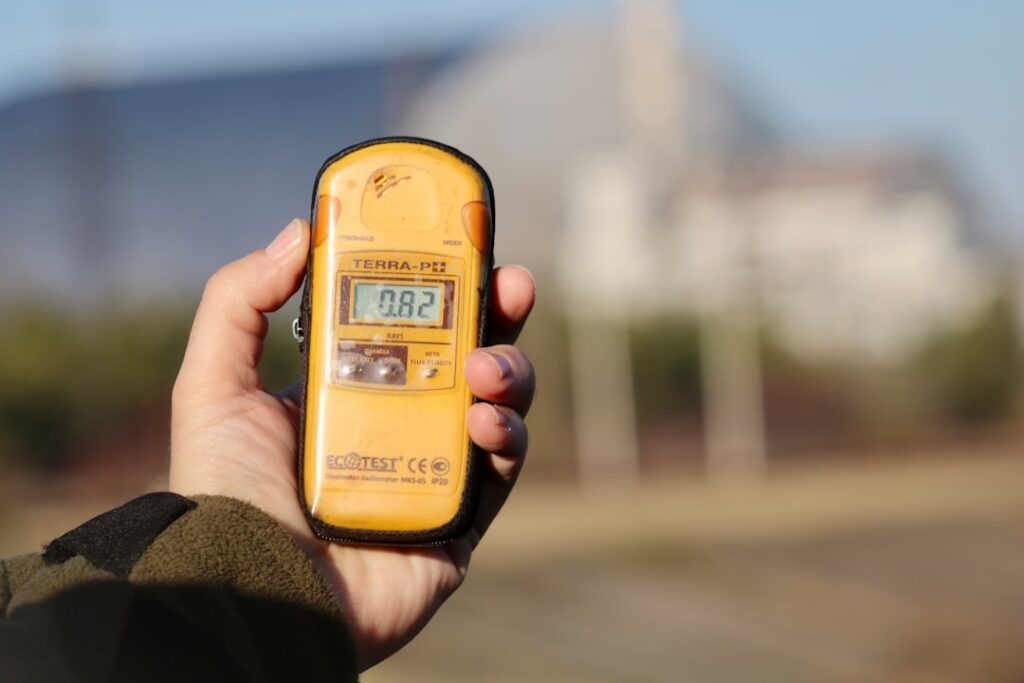
An air quality test for mold measures the airborne fungal-spore load in a building, reported in spores per cubic meter, and compares that indoor number against a same-day outdoor sample taken as a control. That control is the whole point: an indoor reading of 1,200 spores per cubic meter means nothing until you know the outdoor background was 200 or 4,000. The EPA’s standing guidance is blunter than most homeowners expect: if you can see mold or smell it, you already have your answer, and sampling is usually unnecessary because you clean it up and fix the moisture the same way regardless of the count (EPA, Mold Cleanup in Your Home). So the real question this page answers is narrower: when does paying for airborne spore sampling actually change what you do next?
Part of our Mold Testing & Inspection guide — start there for the full picture →
Is this mold, asbestos, or water damage? Get a free instant screen
Upload a clear photo of the suspect area. You'll get an instant AI screening opinion and what to do next. This is screening guidance, not a professional determination.
Screening guidance only. AI can be wrong. Confirm asbestos, mold type, or lead with lab testing or a licensed professional before acting.
How a spore-trap sample is collected
Residential air testing almost always uses a spore-trap cassette: a small plastic chamber holding a sticky slide. A calibrated pump pulls a measured volume of air, typically 75 to 150 liters over five to ten minutes at about 15 liters per minute, through the cassette. Spores strike the slide and stick. The sealed cassette ships to a lab, where an analyst counts them under a microscope and reports a total per cubic meter by genus.
Direct microscopy identifies spores to genus, not species. The report can say “Aspergillus/Penicillium types” but cannot separate Aspergillus fumigatus from Aspergillus niger without culture (which grows the organism over seven to fourteen days) or qPCR/ERMI analysis of settled dust. For most household decisions genus is enough, because your response depends on the moisture source, not the strain. Culture and ERMI cost more and are reserved for viability questions or chronic-exposure documentation.
The method’s core weakness is that it is a snapshot. A six-minute window captures conditions only during those six minutes. Spore release is intermittent, spiking when the HVAC cycles, when someone walks across a contaminated carpet, or after a recent renovation. A clean result proves airborne spores were low during that window, not that the building is free of mold.
When a test actually earns its cost
Airborne sampling is worth paying for in four situations:
- Hidden contamination. A persistent musty odor or ongoing respiratory complaints in a space with no visible staining. An indoor sample in the suspect zone, paired with an outdoor control and a clean-zone reference, can point to a source you can’t see.
- Post-remediation verification. After a contractor cleans, an independent party samples to confirm indoor counts are no higher than outdoors and that water-damage-indicator genera are gone. This is the single highest-value use of air sampling, and it protects you from paying for work that didn’t clear.
- Real-estate or insurance documentation. A buyer who saw ceiling water staining, or a party who needs a defensible record before a seller authorizes destructive investigation.
- Litigation. Chain-of-custody sampling to support a claim.
Outside those four, testing rarely changes the outcome. If mold is visible, the money is better spent finding and fixing the water. For a fuller comparison of visual inspection versus lab sampling, see mold inspection vs. testing, and our mold inspection and testing hub for the surrounding decision framework.
Getting a valid sample
A sample is only as good as the conditions it was taken in. Keep windows and exterior doors closed for at least an hour beforehand, run the HVAC in its normal state, and avoid vacuuming, cooking, or cleaning during that window so the result reflects what occupants actually breathe. Time the test at least 48 hours after any demolition, drywall cutting, or plumbing repair, all of which can spike counts for days. Note recent HEPA cleaning too, since it can suppress counts and produce a falsely reassuring reading.
The outdoor control is taken at the same time, at the same flow rate, on the upwind side of the building, away from compost, dumpsters, leaf litter, and HVAC exhaust. Indoor cassettes go at breathing height, roughly four to five feet up, in the center of the room and out of direct register airflow. A common focused scope is one indoor cassette in the suspect zone, one outdoor control, and optionally one clean-reference cassette. Record the exact air volume so the lab can convert raw counts to a per-cubic-meter concentration.
Reading the lab report
The first comparison is indoor versus outdoor. Indoor totals lower than outdoors, with a similar genus mix, are reassuring. Indoor totals well above outdoors, or containing genera absent outdoors, point to an indoor amplifier. The ratio matters more than the raw number: 800 spores per cubic meter indoors against 2,000 outdoors is normal, while 800 indoors against 100 outdoors is not.
The genus profile carries as much weight as the count. Cladosporium and Aspergillus/Penicillium types are nearly everywhere, and modest indoor elevations are often not actionable. The genera that warrant investigation even at low counts are the water-damage indicators: Stachybotrys chartarum (the mold usually called “black mold”), Chaetomium, Fusarium, and Trichoderma. These need sustained moisture, often weeks, on cellulose to grow, so finding them indoors but not in the outdoor control is a strong signal. Color alone tells you nothing; dozens of harmless molds look black, which is why a lab identification of black mold means little without moisture context.
There is no federal exposure limit for airborne mold. Counts swing with season, weather, occupancy, and recent activity, so one elevated reading is a prompt to investigate, not a verdict. Two or three samples across different days that consistently show indoor elevation with indicator genera is far more convincing than a single high number. Confirm the report lists the analytical method, flow rate, calculated air volume, genera, and the lab’s AIHA EMLAP accreditation; a report missing that metadata is hard to defend.
What air sampling can’t find
Room-air sampling can miss mold growing on the back of drywall inside a sealed wall cavity, because that growth may not release spores into room air during the sampling window. The correct method there is cavity sampling through a small drilled port, which you have to request explicitly, or a moisture-and-thermal survey. If you suspect a source behind a surface, start with detecting mold inside walls rather than an open-room air test. Two competent analysts can also return slightly different counts off the same cassette, since spore ID under a microscope involves judgment, so paired duplicate cassettes are worth the cost on high-stakes decisions.
After the report: fix the water first
The most common mistake in the days after a report arrives is calling a remediation contractor before the moisture source is found. Reverse that order. Identify and correct the water first, or any cleaning is temporary. Then scope the cleanup: the EPA’s homeowner threshold is roughly ten square feet of moldy material. Hard nonporous surfaces (glass, glazed tile, sealed metal) clean with detergent and water; porous materials (drywall, carpet pad, upholstery) usually get replaced, because hyphae penetrate the substrate. Above ten square feet, or when occupants have asthma or compromised immunity, or when HVAC is involved, the job belongs to a credentialed remediator working under containment to the IICRC S520 standard. Skip ozone and fogging as primary treatments; the EPA notes ozone at safe concentrations doesn’t kill mold and at effective concentrations harms occupants and materials (EPA on ozone generators). Budget expectations for the testing itself are covered in our mold testing cost breakdown.
On the Colorado Front Range, the moisture culprits behind most positive samples are predictable: below-grade basement walls carrying chronic capillary moisture in older Denver and Lakewood housing, spring snowmelt intrusion at window wells and rim joists, summer swamp-cooler humidity condensing on cool surfaces, and, in newer tight builds, bath fans venting into attics instead of outdoors. CDPHE has logged residential mold complaints across every Front Range county (CDPHE).
Frequently asked questions
How long does an air quality test for mold take?
Each cassette samples for five to ten minutes at the lab's specified flow rate. A single-zone job with an outdoor control usually takes 30 to 60 minutes on site. Direct-microscopy lab turnaround is two to five business days, with 24-hour rush available for an added fee.
What spore count is considered normal?
There is no federally defined normal count. The working rule is that indoor counts should be lower than outdoor counts with a similar genus mix. Indoor counts several times the outdoor reading, or genera present indoors but absent outdoors, point to an indoor source.
Can an air test detect mold inside walls?
Often not. If growth is inside a sealed cavity and not actively shedding spores into room air, an open-room sample can read clean. Cavity sampling through a small drilled port, or a moisture and thermal survey, is the right approach when hidden growth is suspected.
Should I test air quality for mold before buying a house?
It's reasonable when there's visible water staining, a musty odor, or a documented water history. On an otherwise unremarkable property, routine air sampling rarely changes the negotiation, and a standard inspection that flags moisture is the more efficient first step.
This guide reflects EPA, CDC, and CDPHE guidance current as of 2026. Consult a physician for health symptoms and an AIHA-accredited lab or credentialed inspector for testing decisions. Front Range homeowners can reach us through our contact page for a referral to an inspector who keeps testing separate from remediation.
References
- Mold Cleanup in Your Home and A Brief Guide to Mold, Moisture, and Your Home — U.S. EPA
- About Mold — Centers for Disease Control and Prevention
- Mold and Moisture in the Home — Colorado Department of Public Health and Environment
- Mold Inspection Standards — InterNACHI